
Show summary Hide summary
- How cold plasma and a “bubble” reactor split methane’s tough bonds
- Why the copper-oxide catalyst and argon matter for selectivity
- Products, efficiency and other chemical outputs
- Environmental and industrial implications of an electrified approach
- Potential use cases and advantages of small-scale reactors
- Remaining hurdles before industry adoption
Chemists at Northwestern University have found a way to turn methane gas into liquid methanol using tiny bursts of plasma inside water-submerged glass tubes — essentially creating controlled, miniature lightning to drive a chemical transformation. The approach compresses what normally requires several energy-intensive industrial steps into a single, electrified operation that could cut carbon emissions and open new routes for producing valuable chemicals on smaller scales.
The team’s method relies on short, high-voltage pulses that create a cold plasma inside a porous glass reactor coated with a copper-oxide catalyst. The plasma breaks methane and water into reactive fragments that recombine into methanol, which dissolves immediately into the surrounding water — a fast quench that prevents the newly formed methanol from degrading into carbon dioxide.
How cold plasma and a “bubble” reactor split methane’s tough bonds
Researchers have long struggled to make methane — a molecule with very stable carbon-hydrogen bonds — give up its atoms in a controlled way. The conventional industrial path forces the reaction with extreme heat and pressure, a multi-step process that emits large amounts of CO2. The Northwestern team took a different route by energizing electrons instead of bulk gas.
The Growing Demand for Data-Driven Decision Making in Silicon Valley
He quit, ran out of money, and begged to come back — here’s how his boss reacted
What the reactor looks like and how it works
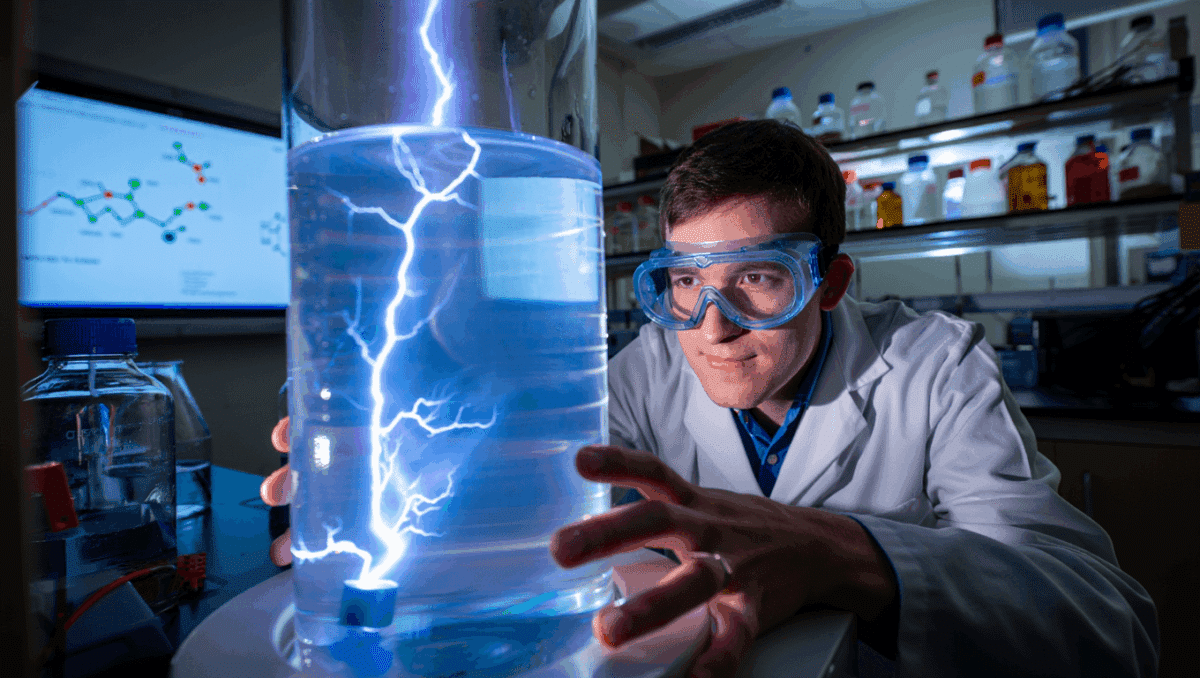
The experimental device is a porous glass tube coated with a copper-oxide catalyst and immersed in water. Methane gas flows through the glass, and short bursts of high-voltage electricity produce plasma channels inside the tube. That plasma is a state of matter where electrons reach extremely high energies while the overall gas temperature stays near room temperature — a so-called cold plasma.
- High-energy electrons break methane and water into reactive fragments.
- Those fragments recombine to form methanol, which instantly dissolves in the surrounding water.
- The rapid dissolution serves as a quench, stopping further reactions that would otherwise convert methanol into carbon dioxide.
The group referred to the effect as akin to capturing “mini lightning bolts” in a bottle: the electrical discharges provide enough localized energy to break strong bonds without heating the entire system.
Why the copper-oxide catalyst and argon matter for selectivity
Two additional elements proved critical to the process: the copper-oxide surface and a carefully chosen gas mixture. The catalyst provides sites where reactive fragments can recombine into desired products, while diluting methane with argon unexpectedly improved outcomes.
When argon is ionized inside the plasma, it increases electron density and helps steer the chemistry away from unwanted byproducts. Under optimized conditions, that combination yielded impressive selectivity toward methanol.
In the optimized runs, liquid products were composed of about 96.8% methanol, and roughly 57% of all products produced (gas plus liquid) ended up as methanol.
Products, efficiency and other chemical outputs
Besides methanol, the plasma-driven reaction produced several other useful chemicals. The team observed ethylene — a key feedstock for plastics — as well as hydrogen gas and small amounts of propane. Those co-products add potential economic value.
- Methanol: the main liquid product and a high-demand industrial chemical.
- Ethylene: precursor for polymers and plastics.
- Hydrogen: a commodity chemical and potential zero-carbon fuel.
While the single-step plasma route did not convert every methane molecule into methanol, the composition of the liquid output was dominated by methanol, demonstrating a promising direction for selective electrified chemistry.
Environmental and industrial implications of an electrified approach
If scaled and powered with low-carbon electricity, plasma-driven conversion could reduce the carbon intensity of methanol production by avoiding the extreme temperatures and pressures typical of today’s plants. It also enables a different deployment model: smaller, distributed units rather than massive centralized facilities.
That flexibility matters for tackling methane emissions. Much methane is emitted at remote or small-scale sources — leaking wellheads, venting operations, and other stranded resources. Right now, many operators simply flare methane (burn it), which converts methane to CO2 but still emits greenhouse gases. A portable plasma reactor could instead capture and convert methane on-site into transportable liquid methanol.
Potential use cases and advantages of small-scale reactors
- On-site treatment of methane leaks and flares at oil and gas operations.
- Distributed production of methanol near feedstock sources, reducing transport needs.
- Electrified chemistry that pairs well with renewable electricity inputs.
- Co-generation of valuable byproducts like hydrogen and ethylene.
Researchers highlight that converting methane into higher-value chemicals at smaller scales would change how some supply chains operate, potentially turning waste emissions into marketable commodities.
Remaining hurdles before industry adoption
Promising as the laboratory results are, several challenges must be addressed before the technology can be commercialized. Scaling plasma reactors while maintaining high electron energy density and product selectivity is nontrivial. Long-term stability of the copper-oxide catalyst, energy efficiency compared with conventional routes, and integration with renewable power sources all require follow-up work.
Key technical questions include:
- How to design reactors that handle larger gas flows without losing plasma control.
- Durability and regeneration of catalyst coatings under continuous operation.
- Overall energy balance and cost per ton of methanol compared with existing industrial methods.
The study, published in the Journal of the American Chemical Society, was led by Dayne Swearer and includes PhD candidate James Ho, who built the prototype plasma “bubble reactor.” Their results point to a new class of electrified chemical processes that use targeted energetic electrons — tiny controlled lightning — to unlock difficult reactions and capture products before they overreact.

You might also like:
- Plastic to vinegar: sunlight-powered process converts multiple plastics with no emissions
- Titan alien life: could Saturn’s moon harbor signs of life?
- EU aims to decarbonize industrial heat generation with plasma, solar and magnets
- Activated carbon from coffee and plastic waste captures CO2 in project by female-led Arab team
- Pure water and hydrogen fuel from seawater: new facility produces both for pennies

Michael Thompson is an experienced journalist covering U.S. and global news. With ten years on the front lines, he breaks down political and economic stories that matter. His precise writing and keen attention to detail help you grasp the real‑world impact of every event.


Man, splitting methane into methanol? Thats like turning trash into treasure, dude! Cold plasma, bubble reactor, copper-oxide catalyst… Its like a sci-fi plot, but in real life! Cant wait to see this tech making a green impact, you know?
I used to think methane was just a stinky greenhouse gas. Now, theyre turning it into methanol? Thats like turning lemons into lemonade, but with science! Cant wait to see where this tech takes us. Mind-blowing!
Dude, right? Its like were living in a sci-fi flick! Who knew methane could be so versatile? Lemons to lemonade, but with a science-y twist! Can’t wait to see what other surprises they have up their sleeves. The future is lookin bright, man!
Man, this methane to methanol breakthrough is like turning trash into treasure! Cold plasma and a bubble reactor? Sounds like something out of a sci-fi flick. Cant wait to see this tech in action!
I remember back in the day, folks going on about methane and its global warming gig. Now theyre turning it into methanol? Talk about a plot twist! Science is like a never-ending soap opera, man.
I remember back in the day when folks said turning methane into methanol was like turning water into wine – impossible! But hey, science is out here breaking boundaries. Cold plasma and a fancy bubble reactor, who wouldve thought? Innovations a wild ride!
Man, this methane to methanol breakthrough is like science fiction coming true! Turning greenhouse gas into something useful? Thats some next-level stuff. Cant wait to see how this tech shakes up the game. Exciting times were living in!
Man, this breakthrough with methane turning into methanol is mind-blowing! Cold plasma, bubble reactor, copper-oxide catalyst—sounds like a sci-fi movie plot. Cant wait to see how this tech evolves and helps the environment.
Oh man, I know right? Its like science fiction come to life! That whole setup with the cold plasma and bubble reactor sounds straight out of a blockbuster movie. Can you imagine if this tech really takes off and gives Mother Nature a helping hand? Exciting times ahead, for sure!
Man, I remember back in the day, methane was just a stinky greenhouse gas. Now, theyre turning it into methanol? Wild stuff! Cold plasma and a bubble reactor? Sounds like science fiction! Cant wait to see where this leads.
Man, this breakthrough with methane to methanol is like turning trash into treasure, aint it? Cold plasma, bubble reactors, copper-oxide catalysts…its like a science fiction movie come to life! Cant wait to see how this tech shakes things up!
Cold plasma? Bubble reactor? Splitting methanes bonds like its some spy mission! This breakthrough turning methane into methanol is like sci-fi meets chemistry. Cant wait to see this tech battling greenhouse gases!
Man, this breakthroughs like turning trash into treasure! Cold plasma and a bubble reactor sound like sci-fi stuff, but hey, if it works… Cant wait to see if this tech can clean up our mess!
Yo, this breakthrough got me thinking about chemistry class back in the day. Wish we had cool stuff like this instead of boring experiments. Can we turn pop quizzes into something useful too?
Man, talk about a game-changer! Turning methane into methanol? Thats some next-level science wizardry right there. Cant wrap my head around all the chemistry, but hey, if it helps the environment, count me in!
Man, I remember back in the day when methane was just a stinky nuisance. Now theyre turning it into methanol? Thats some high-tech wizardry right there! Wonder what else they can cook up with this cold plasma magic.
Man, when I was a kid, I dreamt of turning trash into treasure. Now these scientists are flipping methane into methanol! Feels like were in a sci-fi flick. Who needs Hollywood when youve got cold plasma and a funky bubble reactor doin the magic?