
Show summary Hide summary
In the barren deserts of southern Peru, where the wind has preserved secrets for more than 1,500 years, a new tool has uncovered what human eyes missed for generations. Artificial intelligence has revealed hundreds of previously unknown Nazca Lines, reshaping our understanding of one of the world’s most enigmatic civilizations.
A discovery at record speed
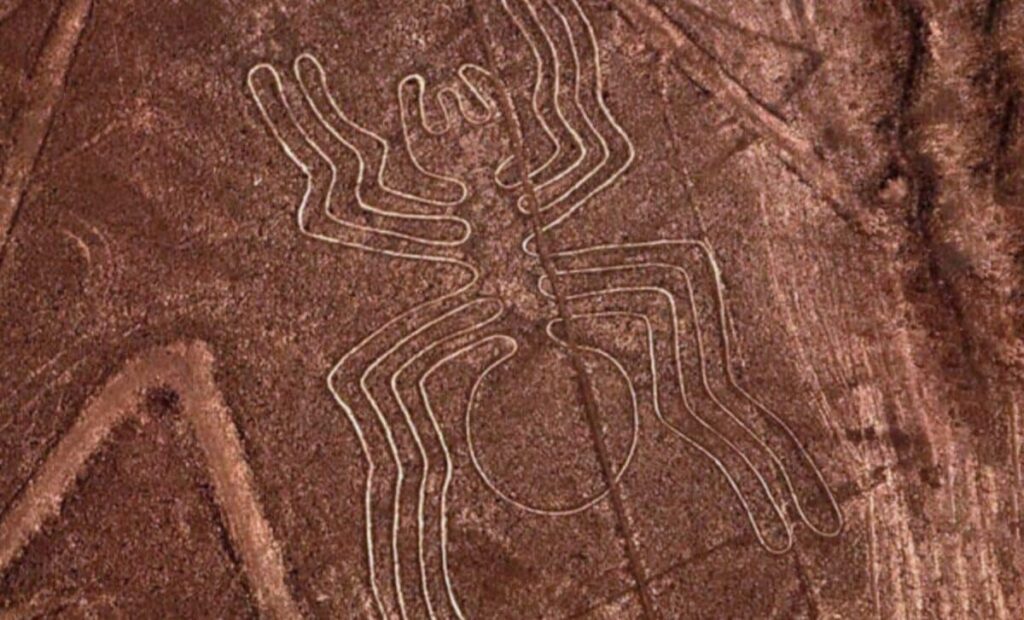
In just six months, researchers from Yamagata University in Japan, working with IBM, doubled the catalog of Nazca geoglyphs, adding 303 new figures to the list. Published in the Proceedings of the National Academy of Sciences (PNAS), the findings mark one of the fastest expansions of archaeological knowledge ever achieved at a UNESCO World Heritage Site.
The Growing Demand for Data-Driven Decision Making in Silicon Valley
He quit, ran out of money, and begged to come back — here’s how his boss reacted
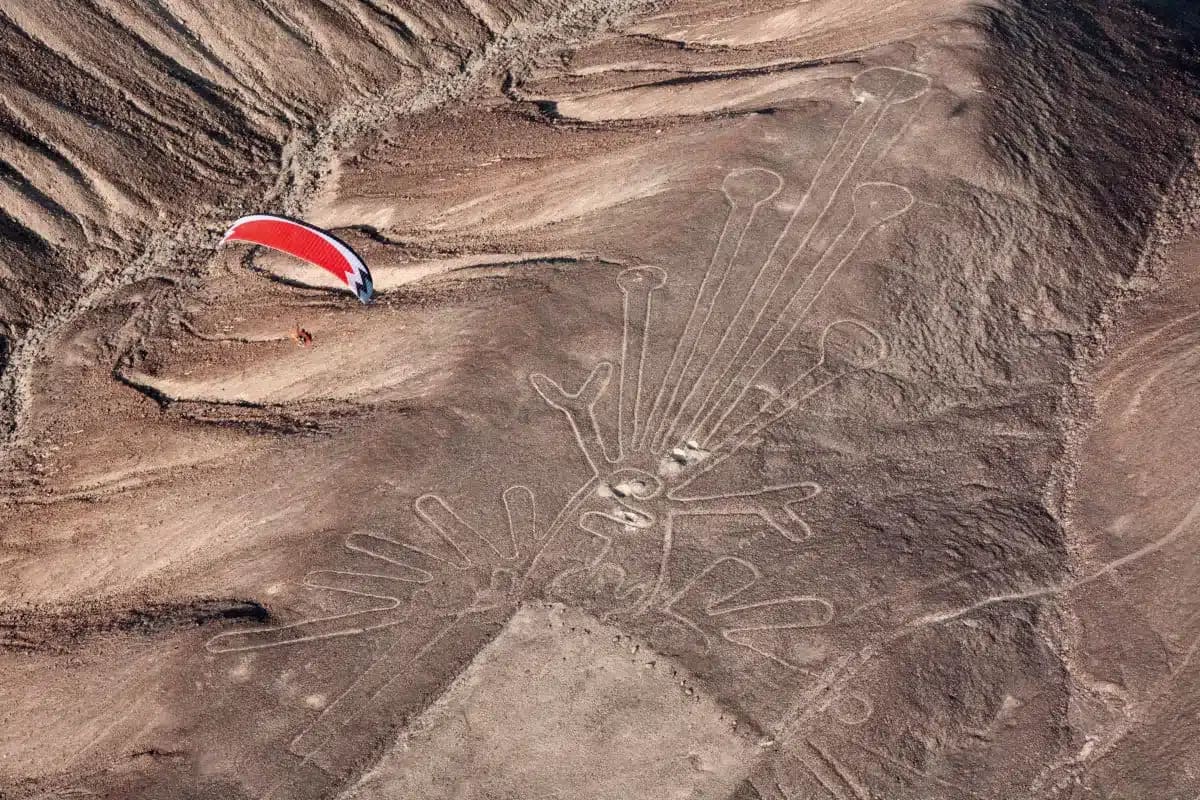
These geoglyphs — carved into the desert floor between 200 BC and 650 AD — include sprawling depictions of birds, cats, fish, and intricate geometric patterns, some spanning hundreds of meters. For decades, their sheer scale made them nearly impossible to detect with traditional surveys. Now, AI has given archaeologists a new lens.
How AI sees what humans can’t
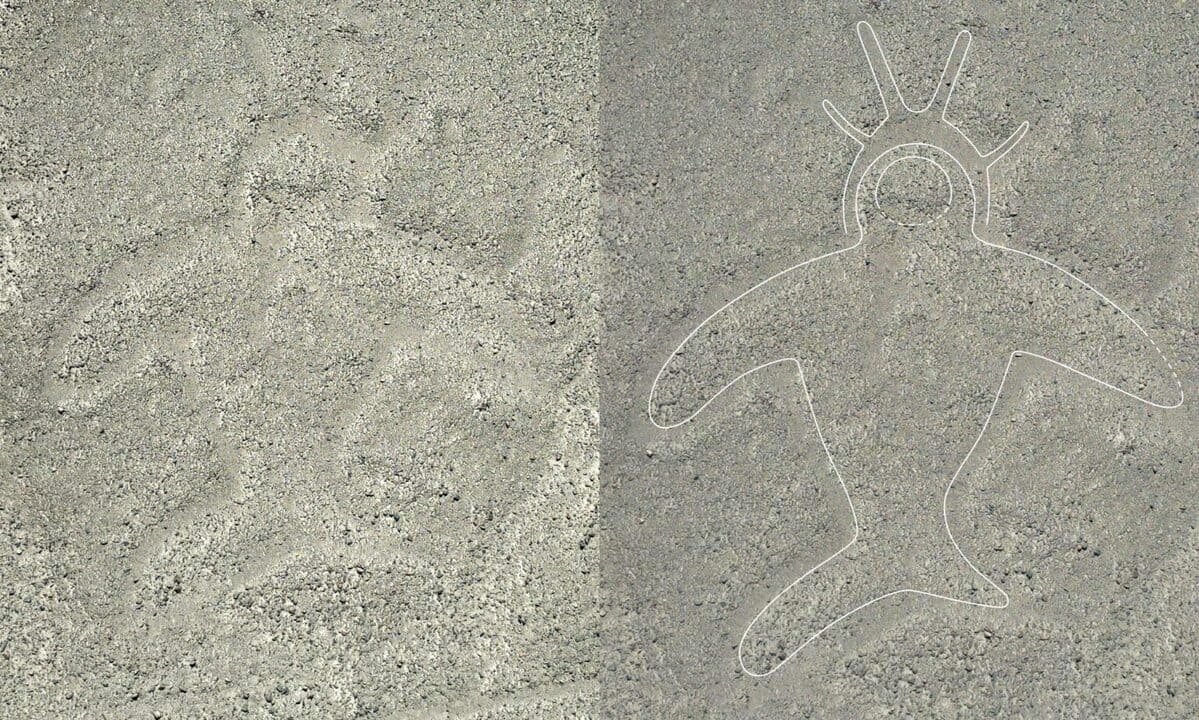
For over a century, researchers relied on aerial photography and boots-on-the-ground mapping to study the Nazca desert. But this new method trained AI algorithms on thousands of aerial images, teaching the system to pick up on faint lines and subtle patterns invisible to human observers.
The AI processed terabytes of drone and satellite data, quickly flagging potential geoglyphs. Archaeologists then verified these sites in person, ensuring context and accuracy. “The ability to complete the survey in such a short time was thanks to the use of AI,” said lead researcher Professor Masato Sakai.
The precision of these drawings, many perfectly symmetrical despite their vast size, reveals the Nazca people’s sophisticated grasp of geometry and spatial design.
Clues to ancient rituals
The Nazca Lines have long inspired wild theories — from star maps to alien runways. But Sakai’s team believes many of the figures served as ritual pathways, guiding ceremonial processions to connect with gods and the surrounding landscape.
This interpretation aligns with the work of Maria Reiche, the German mathematician who dedicated her life to studying the Lines. She argued that their geometry and scale reflected deliberate planning rather than random artistry. The newly uncovered geoglyphs, with their orientations and groupings, support the idea of a spiritual landscape rather than a cosmic mystery.
AI’s expanding role in archaeology
The Nazca project is part of a wider revolution in how archaeologists work. AI is now being used to spot burial mounds in Europe, map hidden settlements beneath dense forests, and even identify shipwrecks on the ocean floor. At a site in the UAE, algorithms analyzed satellite data to reveal artifact distribution, helping researchers focus excavations more effectively.
As Dr. João Fonte of ERA Arqueologia puts it, AI represents “a leap in efficiency.” What once took years of manual labor can now be achieved in days, freeing experts to focus on interpretation rather than endless scanning.
Humans still hold the key
Still, archaeologists stress that AI is not a replacement for human expertise. “AI isn’t perfect, especially in archaeology,” cautions Dr. Alexandra Karamitrou of the University of Southampton, who develops AI tools for the field. False positives remain common, and every discovery must still be checked in person.
Yet the momentum is undeniable. As algorithms improve, the chances of preserving fragile sites before they vanish increase dramatically. In Peru, this means a growing map of one of history’s most mysterious cultures — and a clearer look at the beliefs, rituals, and artistry that shaped the Nazca world.
With every line revealed, AI isn’t just solving an ancient puzzle — it’s proving itself as archaeology’s most powerful new partner.
You might also like:
- 600-year-old Peruvian tomb declared discovery of the decade after first unsealing
- 7,200-year-old DNA reveals unknown human lineage in Indonesia—what scientists just uncovered
- Egypt sun temple uncovered: 4,500-year-old site reveals ancient sun worship
- Viking coin hoard found in Norway by metal detectors is the largest-ever discovery
- Celtic princely tomb found in Germany: nearly unmatched ancient noble burial

David Miller is an entertainment expert with a passion for film, music, and series. With eight years in cultural criticism, he takes you behind the scenes of productions and studios. His energetic style guides you to the next big releases and trending sensations.


Man, AIs everywhere now, even digging up ancient secrets. Who needs Indiana Jones when you got algorithms, right? Wonder if itll start demanding its own fedora and whip next. Archaeology just got a futuristic upgrade, I guess.
Oh, the irony! AI solving ancient riddles faster than I find my keys. Who knew algorithms had a knack for digging up history? Maybe theyll uncover my missing socks next!
I remember scoffing at AI in archaeology, but this breakthroughs a jaw-dropper. Cant help but admit, techs onto something. Wonder what humansll find next, or if AIs gonna swipe all the cool finds!
Man, AI doin archaeology now? Whats next, robots diggin up tombs? Cant deny its cool how techs speedin things up. But, like, wonder if were missin out on some human touch in all this high-tech unravelin.
Wow, AI diving into archaeology? Reminds me of when I tried to solve that Rubiks Cube for weeks, then my lil bro just did it in minutes. Techs got skills, man.
Man, AI these days is like a history buff on steroids! Finding ancient mysteries quicker than I find my keys. Next thing you know, theyll be organizing a digital archaeological dig on my messy room!
Man, AIs on a roll! Unraveling mysteries like Sherlock on turbo. I wonder if this means well have robot archaeologists soon? Imagine a robo-Indy cracking a whip on digs!
Man, AIs are really stealing the show lately, huh? Giving Sherlock a run for his money! Can you imagine a robot Indiana Jones? Picture a robo-Indy cracking a whip and digging up ancient treasures like its no big deal. The futures looking wilder by the minute!
Man, AIs like that friend who always finds your keys in the weirdest places. Archaeologys got a new sidekick, huh? Wonder if AIs gonna start diggin up ancient gossip next. Watch out, Indiana Jones!