
Show summary Hide summary
- Why Dybantsa’s draft declaration was inevitable
- What the No. 1 pick usually means for rookie paychecks
- BYU’s NIL packages vs. NBA financial upside
- Why “I’ll return to school” has become a rare reality
- How the timeline of NBA contracts benefits early entrants
- What this means for teams, players and the draft landscape
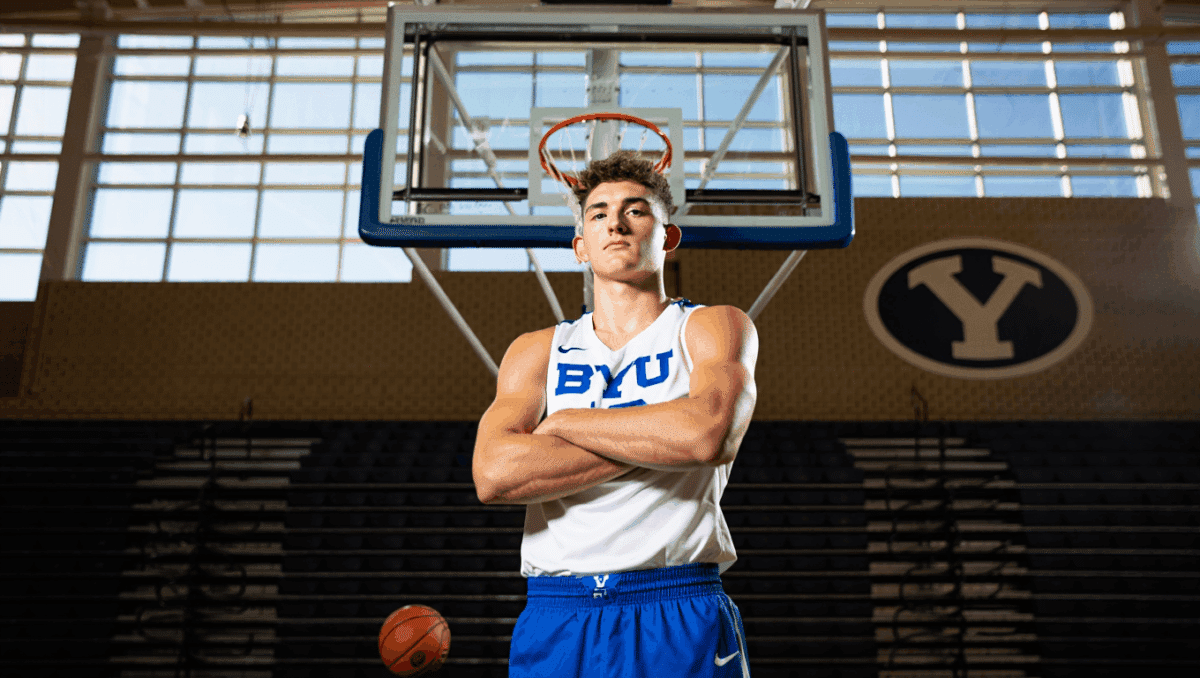
AJ Dybantsa has officially put his name in the mix for the 2026 NBA Draft, abandoning the remainder of his college eligibility at BYU. The move, shared on his social channels, completes a long-expected step for one of the draft’s most hyped prospects and immediately shifts the conversation from campus headlines to draft boards and salary projections.
For scouts, front offices and fans, the transition from college standout to professional rookie is fewer than a handful of months away. Teams will now evaluate Dybantsa solely against other elite prospects as draft night approaches, while financial models and betting markets already price his likelihood of landing at the very top.
Why Dybantsa’s draft declaration was inevitable
AJ Dybantsa’s decision to enter the draft felt more like a formality than a surprise. Several indicators—media chatter, scouting reports and public betting markets—had been signaling him as a front-runner for months. One market, Kalshi, placed his probability of going first overall at roughly 75%, reinforcing the prevailing narrative: NBA franchises view him as a franchise-changing talent.
The Growing Demand for Data-Driven Decision Making in Silicon Valley
He quit, ran out of money, and begged to come back — here’s how his boss reacted
Leaving BYU after only a freshman season removes any lingering questions about his availability. Teams that are convinced by his upside will no longer have to factor in the risk of him staying in school, which makes his status clearer for draft-night strategizing.
What the No. 1 pick usually means for rookie paychecks
The value of a top selection goes well beyond prestige. Last year’s first overall pick, Cooper Flagg, agreed to a four-year contract that has become the benchmark for high-end rookie deals. That contract pushed rookie compensation to record levels, and the NBA rookie scale typically rises each season. If Dybantsa does go No. 1 in 2026, the rookie-year payday is expected to exceed previous figures.
- Rookie scale inflation: The NBA’s rookie salary structure tends to grow year-over-year, so the top slot in 2026 should be larger than in 2025.
- Immediate earnings: A first-overall pick often receives a multi-million dollar guaranteed contract, with rookie-year compensation frequently entering double-digit millions.
- Endorsement upside: Beyond the contract, early lottery status amplifies endorsement opportunities, accelerating total income within the first 12–24 months.
BYU’s NIL packages vs. NBA financial upside
While college name, image and likeness (NIL) deals have reshaped the college basketball economy, the scale still typically favors the NBA for elite prospects. During his brief stay at BYU, reports circulated that Dybantsa had NIL agreements approaching $7 million—among the highest publicized sums in the NIL era. That’s a substantial pool of money for a college athlete, but an NBA rookie contract (plus future max deals and sponsorships) can dwarf those figures over time.
The practical trade-offs players weigh
Players and their advisors usually consider several financial and career-related factors when deciding to leave school early:
- Age and earning trajectory: Younger players can sign large extension or max deals earlier, compounding lifetime earnings.
- Injury risk: Playing another collegiate season exposes a prospect to possible injury that could significantly reduce draft value.
- Brand acceleration: Being in the NBA offers global visibility and easier access to premium endorsement partners.
- Developmental fit: Some players prefer the professional training and schedule to accelerate on-court growth.
Why “I’ll return to school” has become a rare reality
Public statements from top draft prospects about returning to campus often function more as goodwill or narrative control than genuine long-term plans. Campus celebrity and the college experience carry undeniable emotional value—but when the financial math and career opportunity line up, most elite prospects choose the professional route.
- Campus perks vs. cash: The social benefits of being a collegiate star are real, but they rarely match the immediate financial and professional upside of the NBA.
- Timing matters: Entering the NBA early means maximizing the window to sign lucrative rookie extensions and potential max contracts during a player’s prime years.
- Public face-saving: Announcing a return can be a negotiating tactic or a way to appear measured to fans and families before ultimately deciding to go pro.
How the timeline of NBA contracts benefits early entrants
The timing of contract opportunities is a major reason prospects forgo remaining college eligibility. Here’s how the economics commonly play out for a top prospect who jumps to the NBA after one season versus a player who stays all four years:
- One-and-done path: Player enters NBA at 19 or 20, completes rookie contract and may receive an early extension. By age 23, a high-performing young player could be eligible for a max-level salary or a near-max extension—pushing annual pay into the tens of millions if development continues.
- Full college path: A player who stays in school until age 22 or 23 delays entry and therefore delays the clock on extensions and peak earning windows. That can mean missing years of higher NBA-level compensation.
Teams often reward early flashes of star potential aggressively with early extensions or maximum-level contracts. The cumulative effect: players who start their NBA careers sooner generally have more years during which they can sign multiple large contracts, provided health and performance hold up.
What this means for teams, players and the draft landscape
AJ Dybantsa stepping into the draft clears the slate for teams that have been weighing trade options and draft strategies around his availability. For organizations hunting a cornerstone talent, certainty about player availability simplifies planning. For Dybantsa, the declaration triggers a compressed pre-draft timeline—combines, interviews and workouts will determine final perceptions.
- Front-office strategy: Teams now can finalize workout plans and contingency strategies tied to Dybantsa’s potential landing spots.
- Agent and brand play: Representation will pivot to maximizing pre-draft exposure and endorsement conversations that often accelerate once a player formally declares.
- Fan and market reaction: Draft odds, media narratives and betting markets will adjust rapidly as June approaches, influencing everything from mock drafts to trade chatter.
You might also like:
- NBA players returning to college expose NCAA’s broken system
- NBA draft prospects: why top picks often fail to become stars
- Pirates weigh paying Konnor Griffin early: what MLB history teaches
- Washington Wizards can’t afford to repeat their biggest mistake this season
- Washington Wizards’ No. 1 pick could transform franchise

John Davis is a sports journalist focused on the NBA, NFL, and major global championships. With seven years of live coverage, he breaks down performances and key strategies. His expertise gives you a clear view of every game and its impact.


Man, Dybantsa choosing NIL over NBA money? Thats like picking a rusty tricycle over a Lamborghini. BYUs gotta up their game if they wanna compete with the big leagues. Cant blame the guy for chasing that paper.
Man, Dybantsa choosing NIL over NBA cash? Thats like picking a rusty bike over a Lambo. BYUs NIL game aint got nothin on the big league money. Bet hes gonna regret that choice real soon.
Man, Dybantsa choosing NIL over NBA bank? Thats like picking a puddle over an ocean. Hope he knows what hes doing cause that No. 1 pick usually means big bucks. BYUs NIL vs. NBA cash? Tough call.
Man, NIL deals aint cutting it against NBA cash. Dybantsas choice was written in the stars. BYUs offers vs. NBA millions? No-brainer. Players walk a tightrope. Cant blame em.
Man, NIL deals cant touch NBA money. Dybantsa better bring his A-game. BYUs offers wont cut it when that rookie paycheck hits. The hustles real, but the rewards? Priceless.
Man, NIL deals can’t touch NBA cash! Dybantsas choice was like picking pennies over Benjamins. Gotta weigh those options wisely, huh? Hope he makes bank in the end!
Man, NIL deals aint touching NBA cash for sure! Dybantsas mustve been seeing pennies in his sleep to choose that over Benjamins. Gotta think those moves through, right? Hope he aint regretting that choice down the road!
Man, Dybantsa going NIL route? Cant blame him. NBA money calls! NIL cant compete with that financial slam dunk. Wise move, gotta secure that bag for real.
Man, Dybantsa aint foolin around. Can NIL deals really match NBA cash? Gonna be a wild ride watchin these college ballers play the money game. Time to see whos in it for the love or the green.
Dang, Dybantsas move to NIL instead of NBA, thats like choosing between a burger and a steak. Gotta respect the hustle, but that NBA money talks loud, fam. Priorities, am I right?
Man, Dybantsas choice just proves the NIL game vs. NBA cash battle. Cant blame the guy for chasing that big money dream. BYUs NIL deals aint got nothing on those rookie paychecks. Tough call, but money talks, right?
Man, Dybantsa going NIL instead of NBA? Thats like choosing a lemonade stand over a gold mine. Hope he knows what hes doing cause those NBA paychecks aint waiting around forever.
Man, NIL deals are cool and all, but NBA money? No contest. Dybantsas move was bound to happen. Gotta secure that bag! BYUs gotta step up if they wanna keep up with that kind of dough.
Man, NIL deals vs. NBA contracts? Dybantsa had to choose the cash cow. Who can blame him? BYUs offers cant compete with that NBA money. Smart move, buddy. Get that bag!
Man, Dybantsas move aint surprising. NILs cool, but that NBA cash? Next level. BYUs got game, but that NBA paycheck? Unbeatable. Gotta make them trade-offs, yknow?