
Show summary Hide summary
- On the road: live podcasts as political theater
- Campbell’s core pitch: bring Brexit back into play
- Why reopening Brexit is politically fraught
- Polling, parties, and where public opinion really sits
- A personal angle: why long fights convinced many to move on
- What voters are actually asking for
- Culture wars and the cost of endless debates
- Reclaiming substance over spectacle
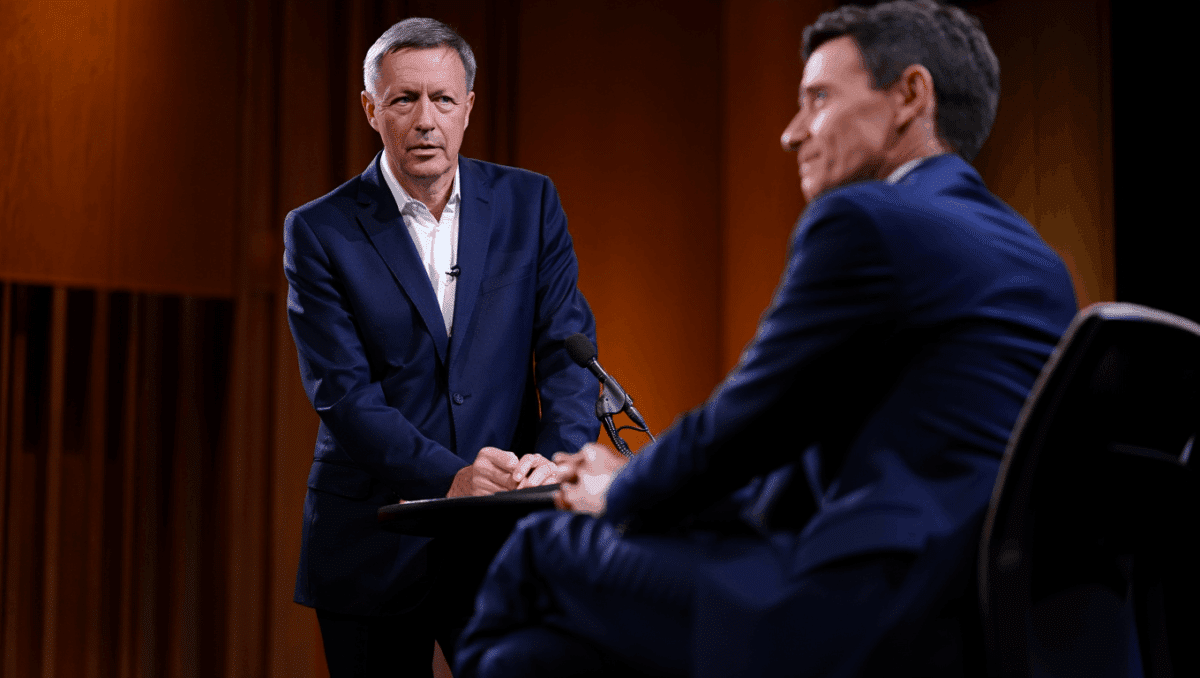
Alastair Campbell and Rory Stewart have been crisscrossing the U.K. with their live podcast tour this week, packing venues from Manchester to Glasgow. Clips from those shows have gone viral, and they offer a clear window into why many listeners find the pair alternately earnest, theatrical — and at times painfully out of touch with political reality.
Between Stewart’s dramatic flourishes and Campbell’s director-of-strategy routines, the two men are making a familiar case: that Britain should reopen old arguments, re-fight the battles of the Brexit years, and push Prime Minister Keir Starmer toward a fresh confrontation with the EU. The reaction outside the plush theaters has been stark: for some, the duo’s insistence feels like nostalgia for battles best left behind; for others, it’s a call to correct course. Either way, it’s prompting fresh debate about what voters actually want from national leadership.
On the road: live podcasts as political theater
The Growing Demand for Data-Driven Decision Making in Silicon Valley
He quit, ran out of money, and begged to come back — here’s how his boss reacted
The podcast tour blends stand-up pacing with political commentary. Audiences cheer the banter; the clips circulating on social media are polished soundbites designed to travel. Stewart’s stage moments lean into theatrical rejection of alarmist metaphors — he mocked the idea of Britain as unprepared “hobbits” in a fantasy invasion — while Campbell presents himself as a blunt, pragmatic counselor urging tougher moves from the prime minister.
Both styles have advantages in the live format: Stewart’s charisma plays well to crowds, and Campbell’s bluntness satisfies listeners seeking certainty. But the polished clips mask a deeper tension: the arguments they make on stage often clash with political realities, electoral math, and the mood of a public weary of revisiting old fights.
Campbell’s core pitch: bring Brexit back into play
At the heart of Campbell’s appeal is a simple, audacious ask: he wants Starmer to reopen the Brexit debate in a meaningful way — to push for policies or negotiations that would, in effect, rebuild the relationship with the EU. The spectacle in his speech was framed as a corrective: admit disappointment, reset expectations, and then pursue a strategic reversal where possible.
That call — powerful on a podcast stage — collides with how politics actually works. Leaders promise stability when they take office, and Starmer repeatedly vowed not to relitigate the referendum. To pivot now would not only contradict repeated assurances but would also risk inflaming divisions that many voters are ready to leave behind.
Why reopening Brexit is politically fraught
There are several structural obstacles to Campbell’s idea:
- Public fatigue: After nearly a decade of intense debate, many voters want forward-looking solutions rather than reruns of referendum arguments.
- Electoral risk: Starmer’s mandate was, in part, a promise to make the system work post-Brexit rather than undo it. Changing course risks alienating those who wanted closure.
- Practical limits: Rebuilding ties with the EU involves complex trade-offs and sovereignty questions that won’t be solved by rhetoric alone.
Put simply, the political capital required to reopen the issue is enormous, and the payoff is uncertain. Pushing hard on Brexit now could destabilize a government that, by political measures, is already under strain.
Polling, parties, and where public opinion really sits
Recent polls show mixed signals about attitudes toward the EU and Brexit. Question phrasing changes outcomes, and smaller parties with clear pro-EU platforms — chiefly the Liberal Democrats and the Greens — have benefited where those views are front and center. But greater public nuance often gets lost in viral clips and soundbite politics.
Many voters blame a range of problems on broader economic and governance failures rather than on any single decision. While some segments would favor a closer relationship with the EU, others see reopening the issue as an unnecessary distraction from daily concerns like crime, cost of living, and public services.
A personal angle: why long fights convinced many to move on
For those who voted Remain, Brexit was never an easy choice. But what followed — years of parliamentary deadlock, political maneuvering, and a messy public conversation — made fatigue almost inevitable. The chaos of negotiations and repeated attempted reversals on both sides left many people eager to see the practical outcomes rather than endless commentary.
That exhaustion helps explain why the idea of relitigating the referendum lacks broad appeal, even among critics of its effects. People want stability, opportunity, and clearer policy on immediate challenges like housing, work, and community safety.
What voters are actually asking for
The public’s checklist tends to be straightforward and pragmatic. Voters are frequently looking for leaders who will:
- Show steady stewardship and predictable decision-making.
- Address crime, health care access, and economic squeeze.
- Offer tangible improvements for younger people worried about prospects at home.
There’s also appetite for strength and clarity in leadership. That doesn’t mean a desire for authoritarianism; rather, many want a figure who seems decisive and who lays out a clear direction — someone who can rise above the constant skirmishes of social-media-driven culture wars.
Culture wars and the cost of endless debates
The past decade has seen national attention pulled by recurring cultural battles: sports and gender access, migration and asylum processing, free speech debates on social platforms, and green policy flashpoints. These arguments often circle without resolution, consuming political energy and leaving structural problems unaddressed.
As a result, many citizens feel their leaders are stuck on symbolic fights while concrete issues fester. That sense fuels frustration with both loud, performative politics and with the quieter managerial approach that promises stability but sometimes delivers only incremental change.
Reclaiming substance over spectacle
For any leader trying to navigate this landscape, the choice is tricky: chase headlines by reigniting old battles, or aim for slow, tangible reforms that may not grab viral attention but could improve daily life. The podcast circuit rewards bold narratives and theatrical reprimands. But governing rewards patient coalition-building and working through messy, technical detail.
Strategies that might move the needle include:
- Concrete infrastructure and jobs programs targeted at regions left behind.
- Practical border-management policies that balance security with humanitarian obligations.
- Clear plans for public services that address both funding and outcomes.
A final note on the podcast dynamic
Popular political podcasts thrive precisely because they package complexity into digestible dramas. That makes them powerful tools for shaping narratives — and dangerous when the narrative becomes a substitute for practical policy. Campbell and Stewart are tapping into real anxieties, but their remedy — a renewed focus on Brexit as the principal wound to heal — risks mistaking a theatrical baton drop for a meaningful roadmap.
The broadcast stage rewards certainty; governing requires trade-offs and compromise that rarely make for gripping clips.
Simon Evans is a columnist and stand-up comedian whose tour dates are available through his ticketing pages.
You might also like:
- Rory Stewart consistently wrong on major issues, critics say
- JK Rowling outshines Alastair Campbell in public clash
- Keir Starmer slipping in polls: can he hold on to Labour leadership?
- Makerfield result: what it means for Labour, Reform and Restore
- Keir Starmer accused of selling out Britain, critics say

Robert Johnson is a dedicated columnist focusing on political and social debates. With twelve years in editorial writing, he provides nuanced, well‑argued perspectives. His commentaries invite you to form your own views and engage in critical issues.


Oh, Alastair Campbell in his own political Twilight Zone? Sounds like a reality show waiting to happen. Wonder if hes got a crystal ball or just some really good tea leaves to read. Time to grab the popcorn and watch this drama unfold!
Ill tell ya, mate, Alastair Campbells living in a political fairytale land! Critics aint buying his Brexit revival tour. Its like watching a movie sequel nobody asked for, yknow? Keep the popcorn ready for this drama!
Imagine living in a world where Brexit drama never ends, mate. Campbells like a Brexit boomerang, always coming back. Critics must be tired of this sequel by now. Time for a new show, folks!
Man, this Campbell guy sounds like hes in his own Brexit-themed soap opera. Living in a parallel universe, huh? Maybe hes onto something, or maybe hes just spinning his wheels in the mud of political drama.
Man, Campbells like a character from a twisted political drama. Living in his own Brexit bubble or what? Critics must be shaking their heads. Its like a real-life soap opera, but with higher stakes. Crazy, right?
Dude, I swear Campbells is like that one dude who thinks hes the main character in his own movie. Living in a Brexit bubble? More like a Brexit black hole, sucking everyone into his drama. Critics are probably munching popcorn, waiting for the next wild episode. Its like a soap opera on steroids, but with less romance and more politics. Absolute madness, right?
Man, Campbells like a character from a twisted political novel. Living in his own Brexit bubble, huh? Critics must be shaking their heads harder than a bobblehead in a quake. What a plot twist!
Man, Alastair Campbell is like a broken record, stuck in his own political playlist. Critics aint buying his remix. Its like hes in a Brexit-themed escape room, but the doors wide open. Cant make this stuff up!
I cant believe Campbells still pushing for Brexit drama. Its like a never-ending soap opera. Cant he find a new hobby? Maybe knitting or birdwatching, anything but stirring the pot.
I swear, its like watching a soap opera with Campbell in his own Brexit-themed episode. Cant decide if its tragic or genius. Politics just got a whole lot weirder!
I mean, come on, Campbells like that friend who always brings up an old breakup at every party. Can we talk about something else for a change? Give us a new playlist, Alastair!