

Show summary Hide summary
- How a single-celled predator uses pleats to perform a head snap
- Origins of folding: natural instabilities that make patterns
- Famous folding pattern: the Miura-ori and its technological uses
- Curved creases and elastic springs: lessons from insect wings
- Design principles that unite biological folding systems
- From biology to machines: applications shaping the future of robotics and aerospace
- How researchers decode and recreate living folds
- Why folding matters beyond novelty
- Open problems and active directions for research
Tiny animals and single-celled microbes hide engineering tricks that look eerily like paper folding. From a protist that shoots out a neck dozens of times its body length to insects that unfold fragile wings without muscles, evolution has repeatedly converged on clever folding strategies. Scientists are now decoding these natural “origami” systems and borrowing their principles to build lighter satellites, more compact drones, and soft robots that snap open on command.
Researchers describe these biological systems not as mere curiosities but as robust mechanical solutions—ways to store and deploy material quickly, repeatably, and with minimal energy. The discoveries span scales and materials: membrane pleats anchored to helical skeletons, curved creases reinforced with elastic proteins, and folding patterns that naturally emerge when layered tissues grow and buckle. Each example points to design rules engineers can use to make devices that fold, lock, and spring to life.
How a single-celled predator uses pleats to perform a head snap
The Growing Demand for Data-Driven Decision Making in Silicon Valley
He quit, ran out of money, and begged to come back — here’s how his boss reacted
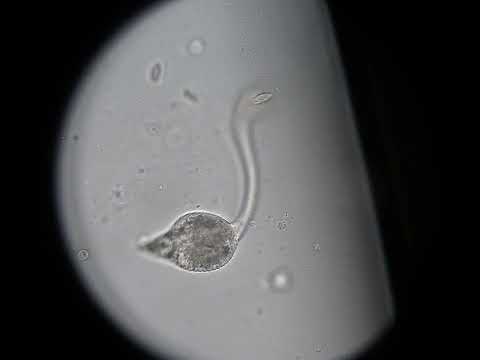
One of the most astonishing examples of biological folding comes from Lacrymaria olor, a microscopic protist that extends a neck-like protrusion more than 30 times its own body length to capture prey. Within the blink of an eye it can launch this filamentary neck, then retract it into a compact form—like an accordion tucking itself away.
Microscopy and mechanical modeling have revealed that this rapid telescoping relies on a combination of membrane pleats and an underlying helical scaffold made of microtubules. The cell’s outer membrane is not fluidly created or destroyed during each motion; instead, it’s folded into precise, curved pleats and attached to the microtubule framework so the organism can deploy and re-stow large surface area quickly.
Key mechanical features include localized kinks—called singularities—along the curved folds. These singularities act as movable hinges that concentrate bending energy and control the order in which pleats open and close. Because the fold geometry constrains alternative configurations, the protist avoids misfolds and executes this high-speed motion reliably thousands of times.
Origins of folding: natural instabilities that make patterns
Folding patterns in biology often arise not from genetic programming alone but from basic physics: when a thin, stiff layer sits atop a softer, thicker substrate and undergoes compression, the stiff layer can buckle into wrinkles, zigzags, or more elaborate crease networks. These outcomes depend on relative stiffnesses, layer thicknesses, and the geometry of growth or shrinkage.
Physicists have long used simplified experiments—drying gels, compressed sheets—to show how these patterns appear spontaneously. The same forces that wrinkle a paint film or buckled metal can produce regular crease arrangements in leaves, insect cuticle, or developing organs.
Examples where mechanics drive shape
- Leaf and wing venation: mechanical constraints can lead to regularly spaced ridges and valleys similar to engineered folding patterns.
- Developing gut and brain: differences in tissue growth and stiffness generate folds and convolutions seen in intestines and cerebral cortex.
- Thin-film buckling: lab models show Miura-like and other repeating crease patterns emerge when a stiff skin contracts on a soft base.
Famous folding pattern: the Miura-ori and its technological uses
Engineers borrowed a traditional folding pattern—now known as the Miura-ori—from paper arts to solve practical packaging and deployment problems. The Miura-ori compresses a planar surface into a compact bundle of parallelogram panels that can be opened or closed with a single pull, enabling a large surface area to unfold smoothly.
That property made it ideal for spaceflight applications: solar arrays and antennae can ride-launch in a tightly folded state and then be deployed in orbit with minimal actuation. The Miura-ori’s strength is its simple actuation pathway and predictable motion, which parallels how natural systems exploit constrained folding pathways to avoid misconfiguration.
Curved creases and elastic springs: lessons from insect wings
Insect wings show another set of elegant solutions. Many species pack large, thin hindwings beneath protective forewings, then unfurl them instantly for flight. Earwigs exemplify this strategy: a deeply folded hindwing expands into a delicate, paper-thin surface more than ten times its compacted area, and it does so without direct muscle action on each crease.
Two mechanical ideas underlie this behavior. First, the wing’s creases are often curved, which means every point along a crease must accommodate slightly different bending and stretching than a straight fold. Second, the fold zones are embedded with a resilient, elastic protein called resilin that behaves like a biological spring.
How those elements work together
- Curved creases require both radial bending (bringing panels closer) and tangential stretching (adjusting angles along the curve).
- Resilin distributes elastic energy so the wing can both spring open and lock shut; some resilin zones act symmetrically to extend creases, others asymmetrically to rotate segments.
- The combination yields a bistable mechanism—two stable states, folded and deployed—so the wing snaps into either configuration with little control input.
Engineers have mimicked these ideas with 3D-printed membranes and embedded spring elements to create self-folding devices. Such designs reduce the need for complex sequencing—where every crease must fold in a precise order—and instead let a single trigger produce reliable deployment.
Design principles that unite biological folding systems
Across microbes, plants, and animals, several recurring mechanical strategies appear:
- Constrained geometry: Fold patterns limit the number of valid configurations, preventing misfolds and ensuring repeatability.
- Bistability: Systems engineered to have two stable states require minimal energy to switch between them and hold shape without continuous actuation.
- Localized energy storage: Elastic elements or singularities concentrate bending energy at key points, enabling rapid release when needed.
- Helical or scaffolded support: Underlying frameworks (microtubules, veins, or stiff ribs) guide membrane deployment and maintain structural integrity.
From biology to machines: applications shaping the future of robotics and aerospace
Researchers are translating these biological motifs into man-made systems. Designs inspired by curved creases and resilin-like springs are already influencing soft robotics, foldable drone wings, and compact deployable structures for space. The benefits are clear:
- Smaller stowed volume for transport and launch.
- Rapid, repeatable deployment with low energy cost.
- Simplified actuation strategies that reduce system complexity and failure modes.
For example, a drone wing that folds like an earwig’s could be tucked into a small housing for storage and then pop into flight-ready form when a single latch is released. In space applications, folding patterns derived from Miura-ori reduce the need for heavy, motorized deployment rigs and increase reliability across thermal and mechanical stresses.
How researchers decode and recreate living folds
Deciphering nature’s folding often combines high-resolution imaging, physical prototyping, and mathematical modeling. Scientists examine micrographs to map protein distributions and scaffold geometries, then use paper, 3D printing, or thin-film experiments to test candidate mechanisms. Finally, mechanical models and simulations reveal which constraints and energy pathways yield the observed behavior.
Typical research workflow
- Observe: capture structural detail with microscopy and time-lapse imaging.
- Hypothesize: propose a mechanical layout (scaffold positions, crease geometries, elastic elements).
- Prototype: build scaled physical models using paper, polymer films, or 3D-printed membranes.
- Model: run simulations and mathematical analyses to test stability and deployment kinetics.
- Iterate: refine geometry and materials to achieve robust, repeatable motion.
Why folding matters beyond novelty
Folding is more than a clever trick—it’s a strategy for making structure from limited material, reacting quickly to the environment, and reliably repeating complex motions without error-prone control systems. Whether a celled predator needs to extend a neck to catch a meal or a satellite must spread solar panels across kilometers of sunlight-gathering area, folding offers compact storage paired with powerful deployment.
By mapping the rules nature uses—curved vs. straight creases, elastic concentrations, helical supports—engineers can create devices that are lighter, simpler, and more fault-tolerant. The flow of ideas runs both ways: building synthetic models also helps biologists test hypotheses about how organisms grow and function.
Open problems and active directions for research
Despite progress, many questions remain. Researchers are still unpacking how folding systems tune their speed, how they maintain reliability under wear, and how materials scale from the micro to the macro. Translating the subtleties of biological proteins like resilin into durable synthetic analogues is another active frontier.
- Understanding scale effects: which fold geometries scale up without losing robustness?
- Developing synthetic elastomers that match biological resilin’s properties.
- Designing passive control systems that use geometry rather than sensors to sequence fold deployment.
These challenges are driving collaborations across biology, physics, materials science, and engineering as teams push to make deployable systems that are as dependable as the natural ones they mimic


You might also like:
- 14-year-old wins $25,000 for origami that holds 10,000 times its weight
- Pull-string material turns flat sheets into shapes
- Kentucky teacher of the year builds prosthetic hand for student in school 3D printing lab
- Building-size magnet shrunk to the palm of your hand in physics breakthrough
- Metal grown by scientists is 20x stronger than 3D printed

Michael Thompson is an experienced journalist covering U.S. and global news. With ten years on the front lines, he breaks down political and economic stories that matter. His precise writing and keen attention to detail help you grasp the real‑world impact of every event.


Man, this origami stuff aint just about paper cranes anymore! Natures folding game is next-level, shaping tech with physics. Who knew pleats and head snaps could be so mind-blowing? Science, you wild!
Dang, right? Natures folding game is on another level! Its like shes flexing on us with these pleats and head snaps. Who knew science could be this mind-blowing? Tech aint got nothin on Mother Natures origami skills. Shes the real MVP here.
Yo, I remember trying to fold an origami crane once and it ended up looking like a blob! Reading about natures folding physics and tech now, makes me wonder how these scientists got it down to an art form!
Dude, origami aint just for paper swans anymore! Natures folding secrets are like the OG tech gurus, shaping the future with their physics magic. Bet those single-celled predators are flexing hard with their pleat-powered head snaps!
Man, origami aint just for paper no more! Natures folding up a storm and techs taking notes. From single-celled head snaps to Miura-ori magic, foldings the future, yall! Who knew physics could be so cool?
Man, origami aint just for paper cranes anymore! Natures folding game is strong, shaping tech up in here. Single-celled predators throwin pleats? Miura-ori pattern? Mind blown! Natures the OG engineer!
Man, origami aint just for paper anymore! Reading this, I felt like I was in a sci-fi flick where nature and tech do the funky dance. Folding physics shaping new tech? Mind blown!
I remember trying to make a paper crane once, failed miserably. This article on origami and tech is mind-blowing, showing how nature’s tricks inspire innovation. Makes me wanna try folding again!
I feel ya, buddy! I once attempted origami and ended up with what looked more like a crumpled napkin than a majestic crane. But hey, this tech twist on folding is a whole new level, right? Who knew natures little tricks could spark such cool ideas! Maybe this time youll nail that crane… or end up with a swan-shaped disaster! Happy folding, champ!
Bro, this origami stuff is wild! Natures folding game is on point! Who knew we could learn so much from animal origami? Its like a whole new world of tech waiting to unfold, man.
Man, origami aint just for paper swans anymore. Natures folding playbook is wild! Who knew tiny predators and tech geeks would be on the same page? Science is throwing some rad curveballs, aint it?
Man, folding physics is wild! Natures origami game is on point. Like, that single-celled predator? Using pleats for head snaps? Thats some next-level stuff. Cant wait to see how this shapes future tech!
Yo, totally feel you on that! Natures origami game is straight fire, man. Its wild to see how creatures out here using folding like a boss. Can you imagine if we could snap heads like that single-celled predator? Future tech gonna be lit!
Man, I remember trying to fold a paper crane and ending up with a crumpled mess. Reading about how natures folding physics inspires tech advancements is wild. Makes me appreciate the origami masters out there!
Man, I feel ya! I attempted a paper plane once and it ended up looking more like a crumpled napkin than anything flyable. Pretty crazy how natures folding tricks are inspiring some next-level tech stuff, right? Those origami wizards must have some serious skills up their sleeves!
Man, origami aint just folding paper anymore, huh? Natures folding game is on point! From head-snapping predators to high-tech designs, its like Mother Nature is pulling off some next-level geometry moves. Mind blown!
Man, origami aint just for paper no more! Natures folding game is on point, influencing tech like never before. Who knew physics could be this cool? Time to fold my mind around this!
Dang, aint that the truth! Natures got some serious folding skills up its sleeve. Who woulda thought physics could be this rad? Time to wrap my head around this mind-bending origami journey!
Dang, natures folding game is strong! I remember trying to fold a paper crane and failing miserably. But now, learning about how animals rock origami in real life? Mind blown! Nature is one sneaky designer, huh?
Yo, I feel ya! Natures out here flexing its origami skills like its no biggie. Paper cranes? Forget about it! Animals be like, Hold my leaf. Its wild to think about, right? Mother Natures the ultimate trendsetter, always one step ahead. Who knew the natural world was upping its design game while we were struggling with basic folds? Its like were playing checkers, and natures out there playing 4D chess!