
Show summary Hide summary
- Why the vacancy mattered less than it used to: the Church’s slipping public role
- Sarah Mullally’s appointment: milestone, message, and immediate reactions
- The Welby years: controversies that reshaped perceptions of the church
- Identity, interfaith sympathies, and shifting priorities
- When the church takes sides: marches, politics, and pastoral limits
- Mullally’s record: diversity goals, managerialism, and pandemic leadership
- What these trends mean for ordinary congregations and church life
- Key takeaways from this leadership change
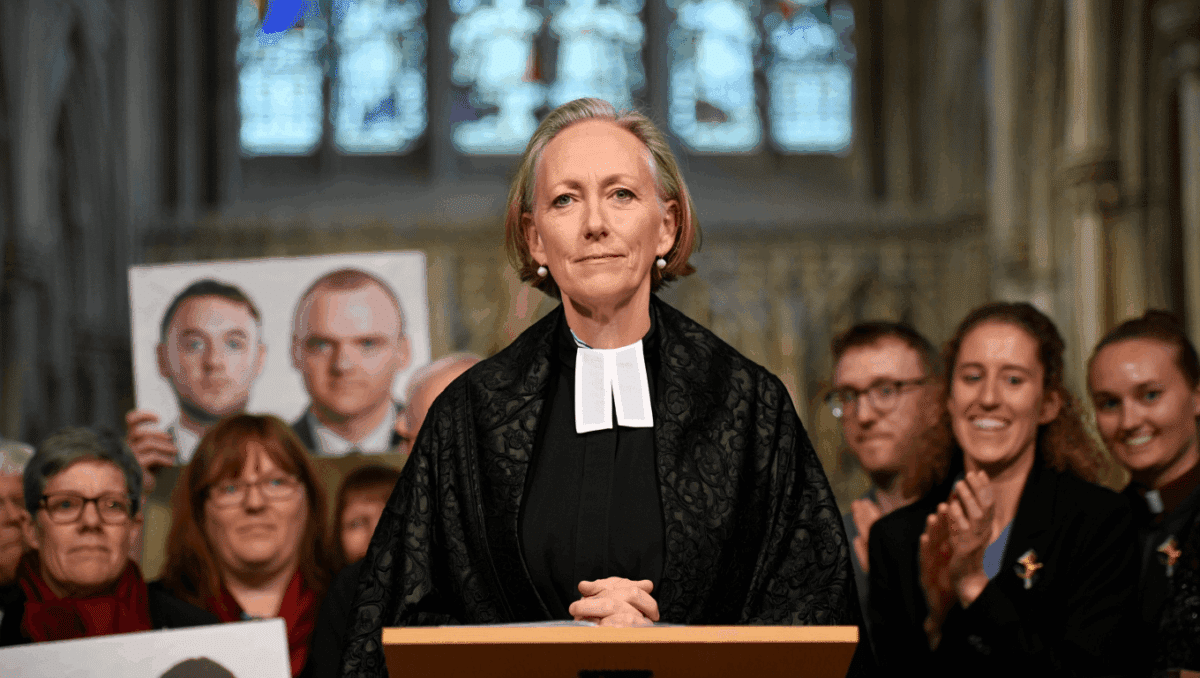
The appointment of Dame Sarah Mullally as the new Archbishop of Canterbury has landed with surprisingly little public fanfare, even though the Church of England spent almost a year without a formal leader. What might once have been treated as a national concern now passed largely without comment, a sign of how the established church’s influence has frayed in recent years.
Her elevation carries symbolic weight—she is the first woman to hold the office—but it also raises questions about whether a change at the top will alter a church that many say has already drifted from the priorities of most worshippers. The choices and controversies of the recent past make clear that leadership alone may not be enough to reverse a long slide in cultural relevance.
Why the vacancy mattered less than it used to: the Church’s slipping public role
The Growing Demand for Data-Driven Decision Making in Silicon Valley
He quit, ran out of money, and begged to come back — here’s how his boss reacted
Not long ago, leaving the Church of England without an Archbishop of Canterbury for months would have been unthinkable. Today, that gap barely registered in national conversation. Attendance, cultural authority and political influence have all dropped over decades, narrowing the church’s footprint in public life.
- Declining weekly worship attendance and fewer active parishes.
- Less deference from political leaders and the public at large.
- Growing perception that the church is preoccupied with cultural signaling rather than pastoral care.
Sarah Mullally’s appointment: milestone, message, and immediate reactions
Mullally’s selection is a milestone for gender representation in Anglican leadership. Many commentators celebrated the move as proof that the church is adapting to modern norms. At the same time, critics argue that her record suggests continuity rather than change—more administrative modernization and identity politics than a renewed focus on worship and evangelism.
Her supporters point to experience and managerial competence; detractors worry she represents a church comfortable with fashionable causes rather than focused on core Christian ministry.
The Welby years: controversies that reshaped perceptions of the church
Justin Welby’s tenure left a mixed legacy that continues to shape perceptions of the Church of England. Some of his actions were seen as earnest attempts to address historic wrongs; others were viewed as performative or politically driven, alienating parts of the church’s base.
Key flashpoints under Welby
- Historical accountability: The church’s investigation into historical links to slavery prompted large reparative commitments and the removal of some memorials. Supporters framed this as moral repair; critics called it self-flagellation.
- Racial initiatives: Welby endorsed an institutional race action plan and proposed reimagining Christian imagery to reflect ethnic diversity.
- Environmental pledges: The church publicly embraced an ambitious Net Zero target, aligning with broader political debates on climate policy.
- Political commentary: Welby publicly criticized government migration policy and the Rwanda plan, drawing fire for what some saw as political partisanship.
These moves signaled a church increasingly comfortable speaking on divisive public issues—sometimes at the expense of uniting its own parishioners.
Identity, interfaith sympathies, and shifting priorities
Under recent leadership, the Church of England has often sought common ground with other faiths and minority communities. High-profile figures, including past archbishops and even members of the royal family, have praised Islamic traditions for offering social cohesion and moral insight. That outreach has been celebrated by some as bridge-building, while others argue it has come at the cost of prioritizing Christian identity and the needs of long-standing churchgoers.
- Interfaith engagement framed as broadening social relevance.
- Critics say it sometimes appears to prioritize other faith communities over the concerns of ordinary Christians.
- Debates about whether ecclesiastical leadership should act as moral commentator or pastoral shepherd continue to rage.
When the church takes sides: marches, politics, and pastoral limits
Recent episodes show how fraught it is when church leaders weigh in on political and cultural events. After a large London rally that included Christian symbolism, senior bishops warned against the “co-opting” of Christianity by political movements. That response, aimed at distancing the institution from extremist elements, left many participants—some of whom described themselves as patriotic and religious—feeling dismissed.
These moments highlight a widening gap between church authorities and parts of the laity who expect pastoral recognition rather than rebuke.
Mullally’s record: diversity goals, managerialism, and pandemic leadership
Long before her promotion, Mullally articulated views that reflect the broader cultural concerns of the church hierarchy. She has spoken in favor of expanding church leadership to include more women and people from ethnic-minority backgrounds, a stance intended to make congregations more reflective of modern Britain. Her style, however, has been described as managerial and bureaucratic—more aligned with institutional governance than prophetic ministry.
Decisions that defined her recent ministry
- Public advocacy for diverse leadership in parishes and diocesan structures.
- Administration-heavy approach to church affairs, earning descriptions of managerialism.
- Active support for strict COVID restrictions on worship, including church closures during lockdowns.
- Promotion of symbolic art and memorials tied to pandemic-era experiences, such as a locally commissioned sculpture honoring minority women’s contributions during lockdown.
Her pandemic-era choices, in particular, revealed a willingness to align closely with government public-health measures—even when that meant curtailing in-person worship.
What these trends mean for ordinary congregations and church life
For many churchgoers, the combined effect of recent leadership decisions has been disheartening. Rather than focusing on preaching, pastoral care and community worship, critics say the church has prioritized cultural projects, political commentary and institutional reform. That shift helps explain why attendance and engagement continue to fall.
- Some parishes feel pressured to adopt secularized programming—events and attractions that look more like community entertainment than worship.
- Others worry that the church’s public stances on migration, race and identity alienate traditional congregants.
- There is a rising debate inside the church over whether to double down on cultural relevance or to refocus on spiritual revival.
The choice between cultural signaling and core religious mission will likely shape the Church of England’s future influence—and its ability to retain and attract worshippers.
Key takeaways from this leadership change
Mullally’s appointment does more than add a historical first to the church’s record: it raises immediate questions about direction and priorities. Her background and public statements indicate continuity with recent episcopal tendencies toward identity politics, administrative governance and public engagement on divisive social issues. Whether that continuity will stabilize the church institutionally or further erode its grassroots support remains to be seen.
You might also like:
- Church of England criticized for praising hardline Muslim cleric
- Massive 672-Ton Church Relocated in Arctic Town: A Historic Move!
- Stolen 18th-century St. Francis painting returned to Mexican church
- Downing Street contender labeled woke warrior surges in polls
- Persecution of Christians in Europe: claims spark debate

Robert Johnson is a dedicated columnist focusing on political and social debates. With twelve years in editorial writing, he provides nuanced, well‑argued perspectives. His commentaries invite you to form your own views and engage in critical issues.


Man, these conservatives be wildin over the Archbishop tryna be woke. Cant a church leader catch a break for tryin to be inclusive? Let the man speak his truth without all this backlash, dang.
Man, the Archbishop stirring the pot again? *eye roll* Cant folks just agree to disagree anymore? Always a show goin’ on in the Church, drama queens everywhere. #NotSurprised
I mean, can you believe the drama in the Church lately? The Archbishops accused of being too woke, and suddenly its like the ultimate sin. Guess theyre not ready for change.
Man, can you believe the drama in the Church lately? Archbishop getting called out for being too woke? It’s like a reality show unfolding. Wonder what the next episode will bring!
Man, these conservative folks need to chillax. The Archbishop aint hurting nobody by being woke. Let the man do his thing. Its not like hes out there causing chaos. Live and let live, right?
Man, the Archbishops getting heat for being too woke? Some folks act like progress is a curse word! Its 2023, not 1823. Let the guy do his job and spread some positive vibes, jeez.
Man, talk about a plot twist! The Archbishop playing the woke card? Thats bound to ruffle some feathers. Brace yourselves for the conservative storm, folks. Its gonna be a bumpy ride!
Man, the Archbishop getting heat for being woke? Its like people want the Church stuck in the Dark Ages. Let the guy spread some love and kindness, dang! Cant we all just get along and, I dunno, focus on real issues?
Man, people always gotta find something to gripe about, right? I mean, the Archbishops out here trying to sprinkle some positivity and suddenly its like the sky is falling. Im with you—let the guy do his thing and spread some good vibes. Maybe folks should save that energy for, I dunno, tackling some real problems instead of sweating the small stuff.
Man, can you believe the drama with the Archbishop? Its like a soap opera playing out in real life. Who knew being woke could cause such a stir in conservative circles? The Church is really shaking things up!
I know right, man! The Archbishops got more plot twists than a Netflix series. Who wouldve thought the Church could stir up this much drama? Its like theyre giving us front-row seats to their own reality show!
Man, the Archbishop getting called out for being woke? Its like watching a soap opera in real life. Cant decide if its juicy drama or just plain ridiculous. Wonder whats next in this wild ride.
Man, these church scandals are like a soap opera! Everyones got an opinion, but can we all just agree that drama isnt the best look for an Archbishop? Time to grab the popcorn and watch this mess unfold.
Man, the Church drama never stops. Woke Archbishop getting heat from conservatives? Its like a soap opera, but with holy robes. Cant wait to see who throws the next plot twist in this wild series!
Man, the Archbishop being called woke? What a wild twist. Reminds me of that time Auntie Mabel tried to use TikTok. Sometimes, tradition clashes hard with the modern world. Cant wait to see how this plays out!
Man, the Archbishops these days cant catch a break. Its like theyre stuck in a tug of war between tradition and progress. Wonder if this one will weather the storm or get dragged down by the controversy.
Man, the church dramas reaching peak levels! Feels like everyones got an opinion on the Archbishops woke label. Cant deny its sparking some fiery debates. Who knew religious figures could stir up so much controversy, huh?
Man, its wild how the church drama is blowing up like that! Everyones suddenly a theologian, huh? But seriously, its crazy how much talk one label can stir. Who knew the Archbishop had this much power to get people riled up?
Man, the Archbishop going woke? Its like watching a cat try to bark, just not their style, you know? But hey, controversys the spice of life, right? Keeps things interesting, even if it ruffles a few feathers!
Dude, I hear ya! Its like seeing a penguin rockin a leather jacket, right? But hey, gotta give props for stirrin the pot! Controversy does spice things up, even if its raisin a few eyebrows. Who knows, might lead to some interestin convos down the road!
Oh, the Archbishop going woke? Its like watching a cat try to be a dog, mate. Stirring the pot with the conservatives, shouldve stuck to the hymns and left the politics out of the pulpit.
Oi mate, reckon the Archbishops got some new tricks up his sleeve, eh? Mixing it up a bit with the political chat, always keeps things interesting, doesnt it? Who knows, maybe the hymns needed a bit of a shake-up anyway. Gotta keep the congregation on their toes, right?