
Show summary Hide summary
- How a Finnish politician’s statements sparked a criminal probe
- The long legal journey: interrogations, courts and appeals
- Why authorities pursue high-profile defendants
- Religious speech under pressure: what triggers enforcement
- Is there unequal enforcement of speech laws?
- Global echoes: the debate over “defamation of religion” and Islamophobia
- Legal advocacy and the fight to protect expression
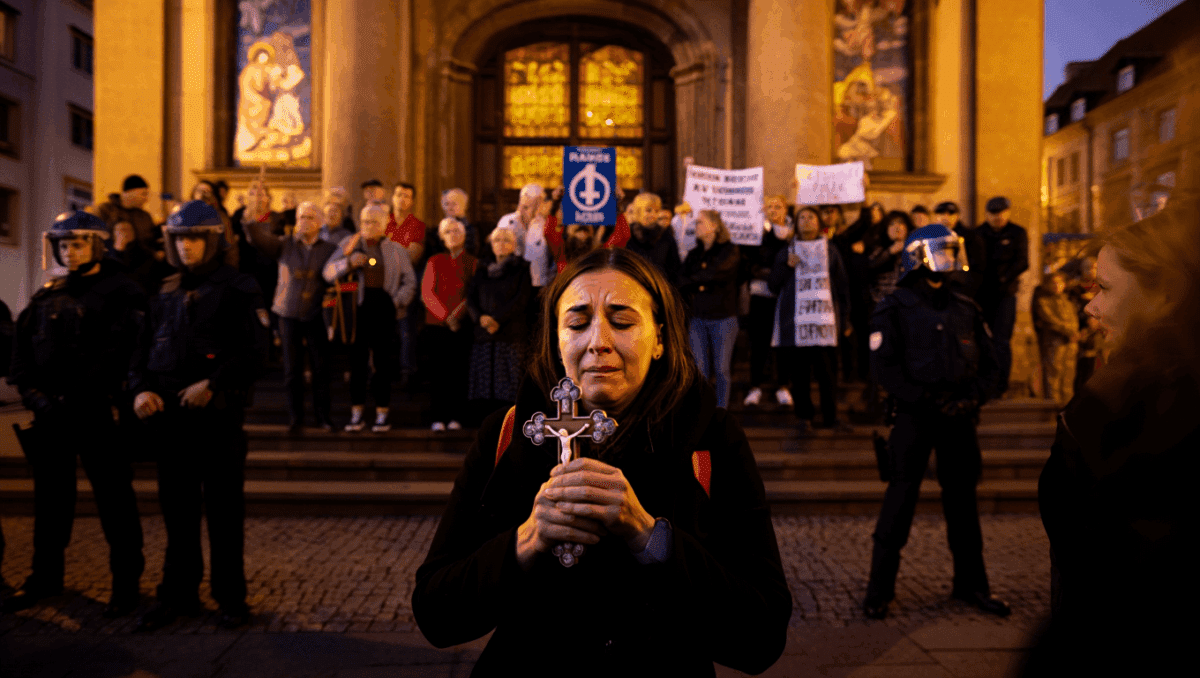
Across much of Europe, debates over religion, sexuality and national identity are increasingly settling in courtrooms rather than coffee shops. What began as disagreements over church policy or public speech have, in some cases, unfolded into lengthy criminal proceedings — a trend that legal advocates say chills open discussion and punishes religious conviction.
One emblematic case involves a veteran Finnish parliamentarian who was investigated and charged after publicly criticizing her church’s decision to sponsor a Pride event. The dispute has stretched over years and moved through multiple levels of the Finnish justice system, raising urgent questions about how modern hate-speech and blasphemy-style laws are applied to religious expression.
The Growing Demand for Data-Driven Decision Making in Silicon Valley
He quit, ran out of money, and begged to come back — here’s how his boss reacted
How a Finnish politician’s statements sparked a criminal probe
The controversy began when a leading figure in Finland’s Lutheran community voiced opposition to her church’s public backing of a Pride parade. That politician, a long-serving member of parliament and former interior minister, had also written and published short works expressing traditional Christian teachings on marriage.
Authorities later examined decades-old writings and a brief excerpt from a radio debate and used them as the basis for several criminal charges. Critics argue that applying a law enacted in 2011 to statements and publications from years earlier effectively criminalized conduct retroactively — a practice that many legal observers see as troubling.
The long legal journey: interrogations, courts and appeals
What followed was a protracted legal saga. The public figure endured numerous hours of police questioning and faced charges under hate-speech statutes. The case moved through the district court system, then an appellate court, each time producing rulings in her favor. Yet prosecutors continued to appeal, and the matter landed before Finland’s highest court.
- Length of process: Several years, with repeated legal appearances and public scrutiny.
- Judicial attention: Multiple judges reviewed the matter across three court levels.
- Scope of evidence: A pamphlet from 2004 and a minute of a longer broadcast became central pieces of evidence.
Supporters of the defendant describe the proceedings as akin to a modern heresy trial: religious belief and biblical interpretation were examined under criminal law. Even when lower courts returned unanimous not-guilty verdicts, prosecutors opted to press on via appeals — a strategy that extended the ordeal and kept the issues in the public eye.
Why authorities pursue high-profile defendants
Legal experts and civil-liberties advocates say the tactic of targeting prominent figures serves a regulatory purpose beyond any single courtroom victory. By bringing action against well-known public actors, prosecutors can send a broader message that certain lines of speech are risky, encouraging others to self-censor.
There are practical reasons why this approach is effective:
- High-profile cases attract media attention, amplifying the deterrent effect.
- Extended litigation consumes time and resources for defendants, which itself punishes speech.
- Vague statutory language allows selective enforcement, making outcomes unpredictable and chilling debate.
The result is not only a legal ruling but a social signal: if someone prominent can be investigated or charged for expressing conventional religious views, everyday citizens may choose to stay silent rather than risk legal consequences.
Religious speech under pressure: what triggers enforcement
Across Europe, cases with similar patterns have appeared in several countries. Legal actions typically arise when religious individuals or leaders express positions that conflict with prevailing social norms or state policy.
Common flashpoints in these disputes
- Statements about sexuality and marriage that adhere to traditional religious teachings.
- Comments touching on abortion and the status of the unborn.
- Comparative or critical statements about other religions, especially when discussing exclusivity of belief.
Because many monotheistic faiths assert exclusive truth claims, friction with secular or pluralistic societies is sometimes inevitable. Law enforcement responses often aim to prevent public disorder when speech is likely to provoke strong reactions, but critics caution that such prevention can become a pretext for suppressing legitimate religious expression.
Is there unequal enforcement of speech laws?
Observers have raised concerns about inconsistent application of hate-speech rules. When laws are broadly worded, officials gain discretionary power to decide which cases to pursue. That discretion can lead to perceived or real double standards.
Some argue that certain religious perspectives, particularly traditional Christian viewpoints, face more scrutiny than other types of expression. Authorities may justify selective enforcement as necessary to keep the peace, but civil-liberties groups warn that the effect is to create a two-tier system in which some voices are effectively silenced.
Global echoes: the debate over “defamation of religion” and Islamophobia
Efforts to limit criticism of religion are not confined to Europe. For more than a decade, international forums have grappled with proposals to criminalize defamation of religion, a move critics equate with modern blasphemy laws. While some Western states resisted broad bans at the United Nations, campaigns to curb religious insult have persisted in different forms.
One worrying illustration comes from outside Europe: a criminal case in West Africa where a musician faces the death penalty over private messages regarded as insulting to a religious figure. Legal advocates cite such examples to argue that normalizing criminal sanctions for “offensive” religious speech can have dire consequences in jurisdictions with harsher penalties.
These developments demonstrate a global trend: when insulting or criticizing religion becomes a legal matter rather than a matter of debate, the risk of severe punishment increases, and the space for public discourse shrinks.
Legal advocacy and the fight to protect expression
Legal organizations that defend religious freedom are increasingly involved in these cases, representing individuals who say they have been targeted for their beliefs. Advocates argue for clearer legal standards that protect both the dignity of vulnerable groups and the right to express sincerely held religious convictions.
These defenders emphasize several priorities:
- Limiting retroactive prosecution by ensuring laws are not applied to past conduct.
- Clarifying the line between unlawful incitement and protected religious expression.
- Reducing prosecutorial discretion through more specific statutory language.
As these matters proceed through courts and public debate, the balance between preventing harm and preserving robust public discussion remains contested and consequential.

You might also like:
- UK Islamic blasphemy laws defeated in free speech victory
- Musk vs EU censorship: why his fight matters for free speech
- Graham Linehan arrest shows UK needs First Amendment-style free speech protections
- Defiant resident says they can come and arrest me
- Jamie Michael jailed after social media post about Southport

Robert Johnson is a dedicated columnist focusing on political and social debates. With twelve years in editorial writing, he provides nuanced, well‑argued perspectives. His commentaries invite you to form your own views and engage in critical issues.


Man, its like a drama series with this Finnish politicians claims and the whole legal saga. Persecution of Christians in Europe? Sounds like a plot twist. Wonder how this storyline will unfold next.
Man, its like were in a time machine, back to the Roman days. But hey, instead of lions, its legal battles now. Is this the plot twist we needed or just more drama?
Man, this whole persecution debate feels like a broken record. Cant we just let folks believe what they want without it turning into a legal circus? Feels like high school drama but with grown-ups.
Man, this whole situations like a rollercoaster ride, right? The drama, the legal twists – its like a real-life courtroom thriller. Who needs Netflix with all this scandal unfolding?
Man, aint it wild how one persons words can set off a whole legal circus? Its like walking on eggshells with free speech these days. Wonder where the line is drawn between speaking your mind and crossing a legal boundary.
Man, its like a blast from the past. Reminds me of those history lessons on religious tensions in Europe. Seems like the debates still raging. Wonder if folks will ever find common ground on this.
Man, talk about a hot potato! Its like a real-life drama series, with all the interrogations and court showdowns. Wonder how thisll impact religious speech in the long run. Intriguing stuff, for sure.
I remember when folks could debate without gettin all hot under the collar. Nowadays, even a whisper can set off a spark. Aint it a wild ride seein how words become crimes?
Man, its wild how talking about faith can stir up such drama. Like, cant we all just agree to disagree? Whys it always gotta turn into a whole legal circus? Let people believe what they wanna believe, sheesh.
Man, its wild how a single statement can stir up such a storm. Makes you wonder about the thin line between free speech and crossing the legal boundaries. Cant help but feel for the Christians caught in the middle of all this drama.
Dang, aint that the truth! Its like watching a popcorn flick unfold, but with real-life consequences. The fine line between speaking your mind and getting tangled up in legal mess is thinner than a razor blade. Poor Christians, caught in the crossfire of drama they didnt even sign up for. Lifes one big messy reality show sometimes, aint it?
Man, its like historys doing a rerun! Remember the Romans and their beef with Christians? Now we got this whole modern saga. Are we stuck in a time loop or what?
Man, I remember when religion was just a Sunday thing. Now its like every word is under a microscope. Cant folks have opinions anymore without getting dragged through the legal mud? Its a wild world out there.
Man, the whole debate over the persecution of Christians in Europe is wild. Its like some twisted history lesson mixed with a courtroom drama. Wonder if this Finnish politician will end up a hero or a villain in this legal saga.
Man, the dramas heating up like a Netflix series, huh? Wonder if this Finnish politicians gonna end up as the good guy or the villain. Cant wait to see how this legal showdown unfolds. Grabbing my popcorn already!
Man, its wild how discussing beliefs can lead to such drama. Like, freedom of speech is cool, but when does it cross the line? Protecting rights vs. respecting others is a tricky dance.
I just dont get why some folks cant let others practice their faith in peace. Like, why the uproar over Christians in Europe? Live and let live, right? Lets focus on real issues, people!
Ah, remember when folks just debated over coffee? Now a politicians words spark criminal probes. How times change. Wonder whats next in this wild legal journey? Religious speech under pressure indeed.
Man, talk about a hot topic! Persecution of Christians in Europe?! Its like a plot twist no one saw coming. Who knew religious speech could stir up such drama? Lets grab the popcorn and see how this legal rollercoaster unfolds!
Oh man, talk about a twist in the plot! Who wouldve thought religious speech would stir up such drama in Europe, right? Its like a legal soap opera unfolding before our eyes. Pass the popcorn, lets see how this rollercoaster ride plays out!
Man, these claims about persecuting Christians in Europe got me thinking about history class. Remember the Inquisition? Feels like authorities still struggle with balancing rights and religious speech. Its like a never-ending battle.