
Show summary Hide summary
- Why Birecik and the Euphrates Matter for the Bald Ibis
- From Cultural Icon to Endangered Resident: The Decline of a Migratory Bird
- How a Groundbreaking Breeding Program Saved the Species
- Local Voices: A Guide’s View of Changing Attitudes
- Ongoing Risks along the Migration Path
- Conservation Lessons: What Birecik Shows the World
- Tourism, Youth, and a Renewed Interest in Wildlife
- The Cultural Thread That Keeps the Ibis Relevant
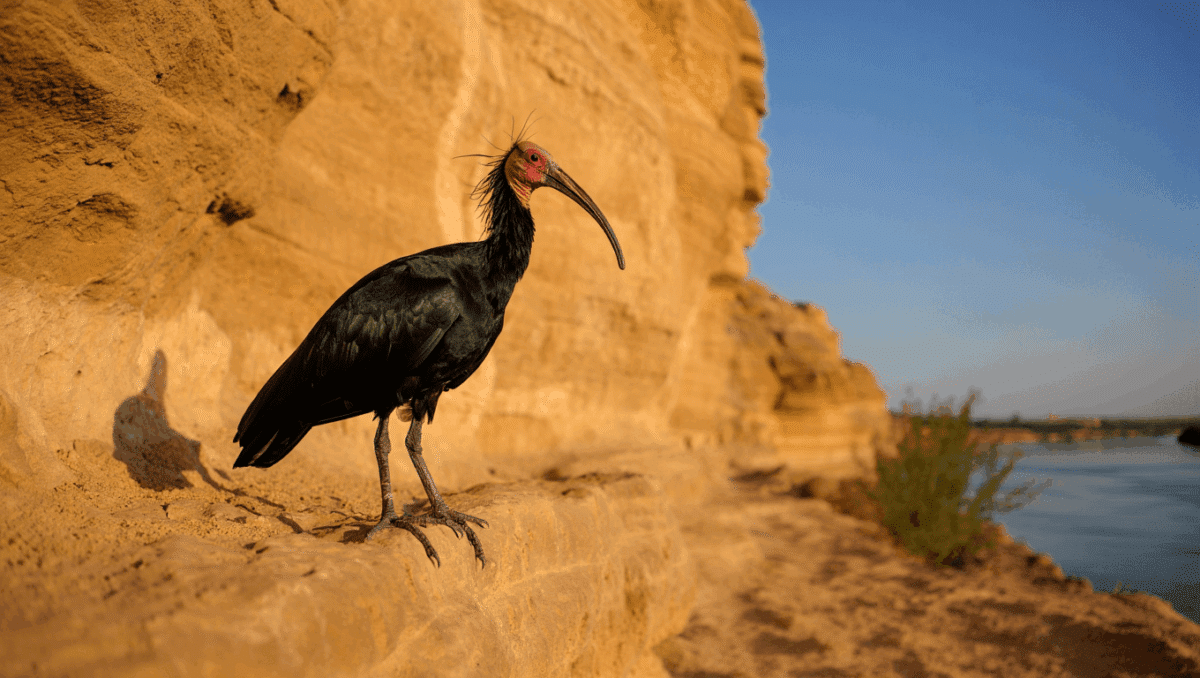
Sandstone cliffs above the Euphrates have long signaled the arrival of spring in southeastern Turkey, when the unmistakable shape of the bald ibis returns from Africa. Once a reliable seasonal sight and a local symbol, the bird’s future became uncertain as modern threats mounted along its historic routes.
Through decades of local commitment and international conservation work, however, a fragile population has been brought back from the edge. The rescue effort blends traditional knowledge, targeted breeding programs, and community engagement to keep the species alive—albeit in a new, managed form.
The Growing Demand for Data-Driven Decision Making in Silicon Valley
He quit, ran out of money, and begged to come back — here’s how his boss reacted
Why Birecik and the Euphrates Matter for the Bald Ibis
In the town of Birecik, where the Euphrates cuts through ochre cliffs, generations have watched the bald ibis nest in caves and crevices carved into the rock. The site’s geography creates ideal nesting pockets that shelter eggs and chicks from direct sun while providing access to surrounding orchards and fields for food.
Archaeological evidence suggests the bird has been part of the region’s story for millennia. Carved birds with long, curved bills appear on pillars at Gobeklitepe, a nearby prehistoric complex, linking the ibis to ancient ritual landscapes and reinforcing its place in local cultural memory.
From Cultural Icon to Endangered Resident: The Decline of a Migratory Bird
For centuries, the bald ibis was woven into local beliefs and seasonal rituals. Its return each year was a natural calendar marker; older residents recall the bird’s arrival as a sign that spring was underway.
But the 20th century brought changes that pushed populations to collapse. The introduction of synthetic pesticides after World War II devastated insect and small-rodent prey and caused direct poisoning of birds. Habitat loss, shifting land use and increased hunting along migration corridors further reduced numbers until wild birds had nearly vanished from the area.
Major threats then and now
- Pesticide poisoning in orchards and agricultural lands
- Hunting and persecution along migration routes
- Habitat alteration from development and land-use change
- Regional instability and conflict affecting safe passage
How a Groundbreaking Breeding Program Saved the Species
In 1977, a collaborative project led by international conservation groups and the Turkish government established a breeding program in Birecik. The facility protected part of the cliff face, introduced nest boxes, and started a captive-breeding initiative aimed at preventing total extinction in the wild.
The center became the first of its kind within the bird’s historic range and ultimately produced a small but viable semi-wild population. Today, several hundred northern bald ibis (Geronticus eremita) live at liberty during the nesting season, monitored and managed by conservationists and local guides.
What “semi-wild” means for the ibis
- Birds roam and nest naturally on protected cliffs during the breeding season.
- Outside nesting periods they may be guided into large aviaries to prevent risky migrations.
- Owners and staff intervene when threats are identified along migration routes.
Local Voices: A Guide’s View of Changing Attitudes
Mustafa Çulcuoğlu, a third‑generation bird guide from Birecik, describes how public perceptions have shifted. Where once these birds were simply part of life—and sometimes feared to be disturbed—they are now a focus for education and tourism. He points out differences between juvenile birds, still brown and feathered on the head, and the adults with their bare crowns and iridescent plumage.
“People used to warn children not to climb the cliffs because of the birds,” Mustafa says, recalling the protective practices of older generations. Today, he leads visitors with binoculars and camera lenses, explaining the cliffs’ ecology and the ibis’ habits.
Ongoing Risks along the Migration Path
Despite local protection efforts, migration remains perilous. Conservationists avoid forcing birds to attempt the full migration to Ethiopia until they believe the route is safe. In the meantime, a practical approach is used:
- Allow birds to live freely and breed at the cliffs during spring and summer.
- When seasonal movement would normally begin, move them into a large aviary to prevent long-distance migration.
- Continue monitoring and international advocacy to reduce hunting and hazards along flyways.
Reports indicate hunting pressure in parts of the Middle East—such as some Bedouin communities in Jordan and Saudi Arabia—combined with regional land-use changes and conflict, contributes to the ongoing danger. Until these threats are addressed at scale, the population remains dependent on managed protection.
Conservation Lessons: What Birecik Shows the World
The Birecik project demonstrates that targeted, long-term intervention can halt a regional extinction, even when migration routes remain unsafe. Important components of success include:
- Early and continued international support for local efforts
- Community involvement and education to build local stewardship
- Protected nesting sites and strategic use of captive-breeding techniques
- Adaptive management that balances wild behavior with risk reduction
Saving a species doesn’t always mean restoring its historic habits immediately; in this case, it has meant finding a working compromise that keeps birds alive until safer conditions can be created along their traditional flyway.
Tourism, Youth, and a Renewed Interest in Wildlife
Conservation has also generated fresh interest in birdwatching around Birecik. Where international visitors once dominated, younger Turkish birders now show up with binoculars and modern camera gear. This growing local engagement is boosting awareness of endangered neighbors such as the pallid scops owl, the Euphrates softshell tortoise, and the striped hyena.
Guides report that younger visitors are increasingly invested in conservation, creating a grassroots base that supports biological protection and provides economic incentives for preserving habitat.
The Cultural Thread That Keeps the Ibis Relevant
The bald ibis remains stitched into the cultural fabric of the region: a seasonal herald in folk memory and a motif in ancient art. Even if the birds no longer complete the historic Africa‑to‑Turkey journey, their presence continues to link modern communities with the deep human history of the Euphrates valley.
In Birecik, the ibis is no longer merely a wild traveler; it has become a focal point for collaboration between scientists, local people, and international organizations—an example of how cultural significance and conservation can reinforce each other to preserve a species for future generations.
You might also like:
- Eastern imperial eagle, Serbia’s national bird, sees record breeding year
- Thousands of flamingo chicks hatch in Turkey in major comeback after climate disaster
- Vietnamese pheasant returns to wild after 20 years thanks to zoo coalition
- Nightjar populations doubled in 5 years: conservationists hail remarkable comeback
- Puffin chick first in over 30 years spotted on England’s south coast cliffs

Michael Thompson is an experienced journalist covering U.S. and global news. With ten years on the front lines, he breaks down political and economic stories that matter. His precise writing and keen attention to detail help you grasp the real‑world impact of every event.


Man, those bald ibises in Turkey really lucked out! Who knew a semi-wild breeding program could save their feathery butts? Natures full of surprises. Hope they stick around this time.
Man, I remember reading bout those bald ibises in Turkey. Glad theyre makin a comeback! Natures full of surprises, aint it? Sometimes we humans gotta step up to fix what we messed up.
Man, natures full of surprises! Who wouldve thought, Bald Ibis making a comeback in Turkey? Kudos to the breeding program, giving these funky birds a fighting chance! Hope they keep thriving in the wild!
Man, I remember learning about the Bald Ibis in school, thinking they were gone for good. Hearing theyre making a comeback in Turkey? Thats like a plot twist in a nature documentary! Mother Natures full of surprises, aint she?
Dang, aint that a wild twist of fate? Bald Ibises pullin a Lazarus act in Turkey! Mother Natures playin her cards close, huh? Always keepin us on our toes with her surprises. Who knows what else shes got up her sleeve?
Man, I remember hearing about those Bald Ibises in Turkey back in the day! Their numbers were dropping like crazy. Its wild to think a breeding program could bring em back from the brink like that. Nature always finds a way, huh?
I know, right? Natures like, Hold my beer, I got this! Its pretty rad how those Bald Ibises made a comeback. Mother Natures the ultimate MVP! What other wild comebacks have you heard about lately?
Man, nature is wild! Bald ibises making a comeback in Turkey? Thats like a plot twist in a nature documentary. Who knew semi-wild breeding could save a species? Mother Nature, you sly genius!
Man, those bald ibises in Turkey really lucked out, huh? Saving a species from extinction is no small feat. Kudos to the team behind the breeding program. Nature gives us hope, man.
Man, I remember seeing those bald ibises in Turkey as a kid. Thought they were gone for good. Respect to the breeding program for bringing them back from the brink. Natures full of surprises, huh?
Man, I totally get what youre saying! Nature really be playing hide and seek with us, huh? Like, one minute theyre here, next minute theyre gone, and then bam! Theyre back like nothing ever happened. Its wild, man. Bet those bald ibises are strutting around Turkey like they own the place now. Natures got that surprise factor on lock!
Man, thats some good news! I remember learning about the Bald Ibis back in school, thought they were gone for good. Natures full of surprises, aint it? Kudos to the folks in Turkey for making it happen!
Oh man, aint that a pleasant surprise! Its like finding a forgotten tenner in your old jeans, innit? Natures definitely got some tricks up her sleeve. Big shoutout to the crew in Turkey for pulling off this Bald Ibis comeback! Good on em, mate!
Man, I remember learning about those Bald Ibis back in school! Its wild to see how close they got to biting the dust, but then bam! Theyre making a comeback in Turkey. Natures a real MVP, aint it?
Dang, I remember learning about these Bald Ibis in school! Good to hear theyre making a comeback in Turkey. Nature can surprise you, man. Maybe we should all take a page from these birds and bounce back from tough times.