
Show summary Hide summary
- How leadership styles set a new political rhythm
- Policy moves that reshaped institutions and public trust
- Economic and social consequences that followed
- David Starkey’s framing: history, identity, and blame
- Political communication and the erosion of facts
- What political parties and voters overlooked
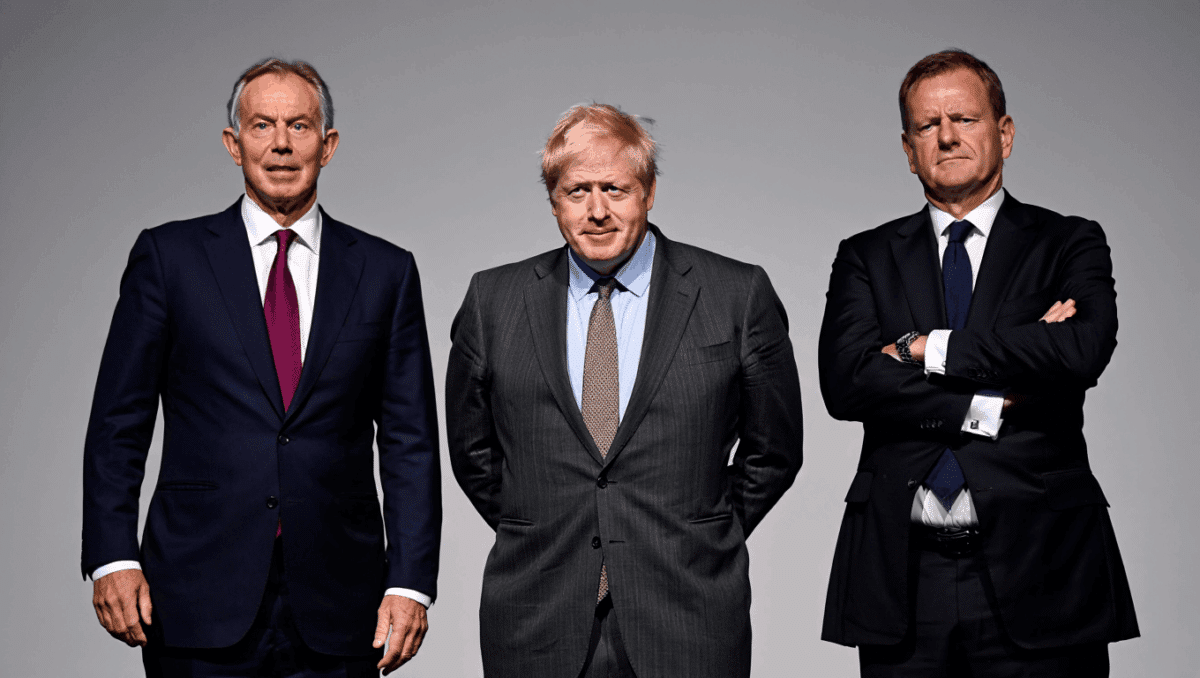
Britain’s political landscape has been reshaped over decades by personalities and choices that continue to reverberate. From the reformist zeal of Tony Blair to the populist theatrics of Boris Johnson, the arc of leadership has left institutions strained, public trust eroded, and national identity contested. Historian David Starkey’s recent commentary reframes these shifts as part of a longer story about governance, culture, and the costs of style over substance.
This investigation traces the major turning points where leadership decisions — electoral strategies, constitutional gambits, and communications tactics — compounded into systemic problems. It foregrounds Starkey’s perspective without endorsing it wholesale, placing his analysis alongside policy changes and social consequences that help explain why many observers now speak of a country in decline.
How leadership styles set a new political rhythm
Modern British politics has been defined as much by personality as by policy. Tony Blair brought a managerial, media-savvy approach that modernized the Labour Party and broadened its appeal but also centralized power in the executive. Years later, Boris Johnson leveraged charisma and stagecraft to capture public attention while using aggressive rhetoric to rally support for Brexit.
The Growing Demand for Data-Driven Decision Making in Silicon Valley
He quit, ran out of money, and begged to come back — here’s how his boss reacted
- Centralization of power: Both leaders increased the prominence of the prime minister’s office at the expense of collective cabinet decision-making and parliamentary scrutiny.
- Media-first politics: Policy choices were often shaped with an eye toward headlines, fueling short-term gains but undermining deliberative governance.
- Personality-driven narratives: Voters began to identify with leaders as brands, making institutional continuity vulnerable to abrupt shifts when leadership changed.
These shifts were not merely stylistic. They altered how decisions were made and communicated, creating incentives for quick wins rather than durable solutions.
Policy moves that reshaped institutions and public trust
Policy decisions under Blair and later under governments influenced by Boris’s tenure had long-term institutional consequences. Some reforms delivered tangible benefits, but others contributed to fragmentation and loss of confidence.
Key policy arenas
- Devolution and constitutional strain: The creation of devolved parliaments and assemblies addressed regional demands but also intensified debates about sovereignty and governance.
- Regulatory and public-service reform: Market-oriented reforms in public services aimed to boost efficiency but often created complexity and uneven outcomes.
- Immigration and social cohesion: Policy choices and political rhetoric intensified cultural debates, making integration and community trust harder to achieve.
- Brexit and legal uncertainty: The decision to leave the EU — a campaign in which Boris Johnson played a decisive role — produced enduring legal and economic ambiguity.
These policy shifts were amplified by communication strategies that prioritized momentum and narrative control over sustained institutional engagement. The result was a growing perception that official structures were failing to protect everyday interests.
Economic and social consequences that followed
The cumulative effect of governance choices is evident in several measurable trends. Economic policy, public investment decisions, and the political fallout from Brexit combined to produce slower growth, regional inequality, and challenges for public services.
- Productivity stagnation: Longstanding productivity gaps worsened amid uncertainty and weaker investment incentives.
- Regional disparities: Economic gains concentrated in certain urban centers while many regions faced decline, feeding political discontent.
- Strained public services: Health, education, and social care systems experienced chronic underfunding and organizational disruption.
These effects were not solely the consequence of any single administration, but the interaction of policy choices across governments. When leaders prioritized short-term political advantage, structural reform often suffered.
David Starkey’s framing: history, identity, and blame
Historian David Starkey places the blame for Britain’s current troubles in a broader cultural and constitutional context. His analysis underscores a belief that leadership failures are symptoms of deeper issues: a weakened political class, eroded civic education, and an identity crisis intensified by the decline of older institutions.
Starkey argues that when political life becomes dominated by spectacle and managerialism, the spaces where citizens learn civic habits and respect institutions shrink. He suggests that the celebrity-driven politics of recent decades transformed public expectations and allowed risky choices to gain traction without adequate deliberation.
Points Starkey emphasizes
- Loss of institutional memory: Rapid turnover and media cycles erode long-term thinking within parties and the civil service.
- Identity fragmentation: Debates over national identity — particularly post-Brexit — have polarized communities and weakened shared narratives.
- Elite disconnect: Starkey contends that political elites increasingly fail to bridge the gap between policymaking and popular concerns.
While Starkey’s view is forceful, it also invites pushback. Critics note that structural economic forces, globalization, and technological change play large roles alongside political leadership in shaping national fortunes.
Political communication and the erosion of facts
One of the defining features of recent British politics has been the weaponization of messaging. From spin rooms to viral videos, the incentive to win headlines sometimes outweighed the need to communicate complex truths.
- Short news cycles: Rapid reporting and social media reward bold claims over careful deliberation.
- Strategic ambiguity: Leaders used ambiguous promises to build coalitions, but ambiguity later translated into policy confusion.
- Polarizing rhetoric: Language designed to mobilize supporters often deepened social divides, making consensus-building more difficult.
That environment shapes voter expectations and constrains future leaders, who inherit polarized debate and weakened trust in institutions.
What political parties and voters overlooked
Both major parties made strategic choices that solved immediate problems while storing up difficulties for the future. Voters responded to messaging and personalities, sometimes at the expense of scrutinizing institutional consequences.
– Parties prioritized electoral realignment and short-term messaging.
– Leadership contests favored showmanship and media savvy.
– Citizens, facing economic pressures and social change, often sought decisive figures rather than systemic fixes.
These dynamics created a loop where performance politics fueled institutional erosion, and weakened institutions made it harder to implement long-term policies that could reverse decline.
You might also like:
- Uniparty dominance has shaped US politics for decades, critics say
- Trump’s messiah complex: how it shapes his rhetoric and loyal base
- Zohran Mamdani’s comments on Palestinian intifada spark controversy and debate
- Grooming gangs, cousin marriage and censorship: David Starkey interview
- Wes Streeting would make a comically bad UK prime minister, critics say

Robert Johnson is a dedicated columnist focusing on political and social debates. With twelve years in editorial writing, he provides nuanced, well‑argued perspectives. His commentaries invite you to form your own views and engage in critical issues.


I mean, politics these days, am I right? Blair, Boris, Starkey – sounds like a chaotic sitcom lineup. Wonder if theyll ever figure it out, or were just stuck in this never-ending political drama.
I remember watching those political showdowns like a drama series, man! Blair and Boris, like a tag team of chaos. Starkeys blunt take? Feels like peeking behind the curtain of power plays. Cant deny the impact!
I remember that time Starkey went off on a tangent! Blair, Boris, and the British downfall—sounds like a spicy political soap opera. Wonder if theyll do a dramatization next. Grab the popcorn!
Mate, David Starkeys always stirring the pot! Blair and Boris causing Britains downfall? Thats one spicy take! Cant deny their impact though, leadership styles and policies can really shape a nations destiny.
I cant believe the mess left behind. Blair, Boris, and their antics… Starkeys calling them out, bout time! Leadership styles run amok, reshaping everything. Wonder if Britain can bounce back from this political rollercoaster.
Man, what a mess! Blair and Boris — sounds like a comedy duo gone wrong. Starkeys spilling the tea on Britains drama. Wonder if theyll ever get their act together.
Mate, can you believe the chaos in British politics? Blair and Boris should really stick to a buddy cop movie script instead. Starkey’s spilling the tea like there’s no tomorrow on this soap opera. Wonder if theyll ever stop this merry-go-round of drama and get their act together. It’s like a never-ending reality show over there!
I remember when politics was about more than just personal vendettas and power plays. Now its all about whos stabbing who in the back. Starkeys right, Blair and Boris turned it into a circus, not a government.
Man, totally get what youre saying. Politics used to be a different ball game, right? Now its like watching a soap opera with power-hungry characters. Cant help but miss the days when it was about, you know, actual governance and not just drama for the masses. Crazy how things have changed so much.
Ah, David Starkey droppin truth bombs like its hot! Blair and Boris tag-teamin Britains downfall? Thats some spicy political tea right there. Wonder what other skeletons are hidin in the closet of history.
I always knew those two would stir up trouble! Blair and Boris, a duo for the history books, causing a right mess. Starkeys spillin the tea on their part in Britains rollercoaster ride to… wherever were at now.
Mate, Starkeys always stirring the pot, innit? Blair, Boris, Brexit—like a soap opera! Cant help but watch this political circus unfold. Wonder what theyll cook up next!
As a history buff, I aint surprised by Starkeys take on Blair and Boris. Leaderships impact aint just a game; its the real deal. Wonder what messes theyll leave for the next gen, huh?
Oh, here we go again with the blame game! Cant we break this cycle? Leadership styles do matter, but lets focus on solutions, not just finger-pointing. Time for some real change, not just talk.
Ugh, I hear ya! Its like a broken record stuck on repeat. We need action, not just pointing fingers. Lets see some real change, not just lip service. Time to roll up those sleeves and get to work, right?
Oh, Starkey always stirrin the pot with his hot takes. Blair, Boris, Britains downfall… Feel like Im watchin a drama series unfold. Wonder who hed blame for the rainy weather next!
Man, Starkeys always got some spicy opinions, right? Like a soap opera but with politicians! Whos he gonna blame for the clouds next, huh? Maybe its all Blairs secret weather machine, eh? Crazy times we live in, mate!
Mate, Starkeys not holding back, innit? Blair, Boris, and the whole shebang causing the UKs mess? Politics these days, mate, its like a soap opera but with worse consequences. Wonder whats next in this spicy drama.
Mate, blaming Blair and Boris for the whole shebang? Classic Starkey stirring the pot. Wonder if hes just trying to rile folks up or if hes onto something. Cant deny the drama theyve brought, thats for sure.