
Show summary Hide summary
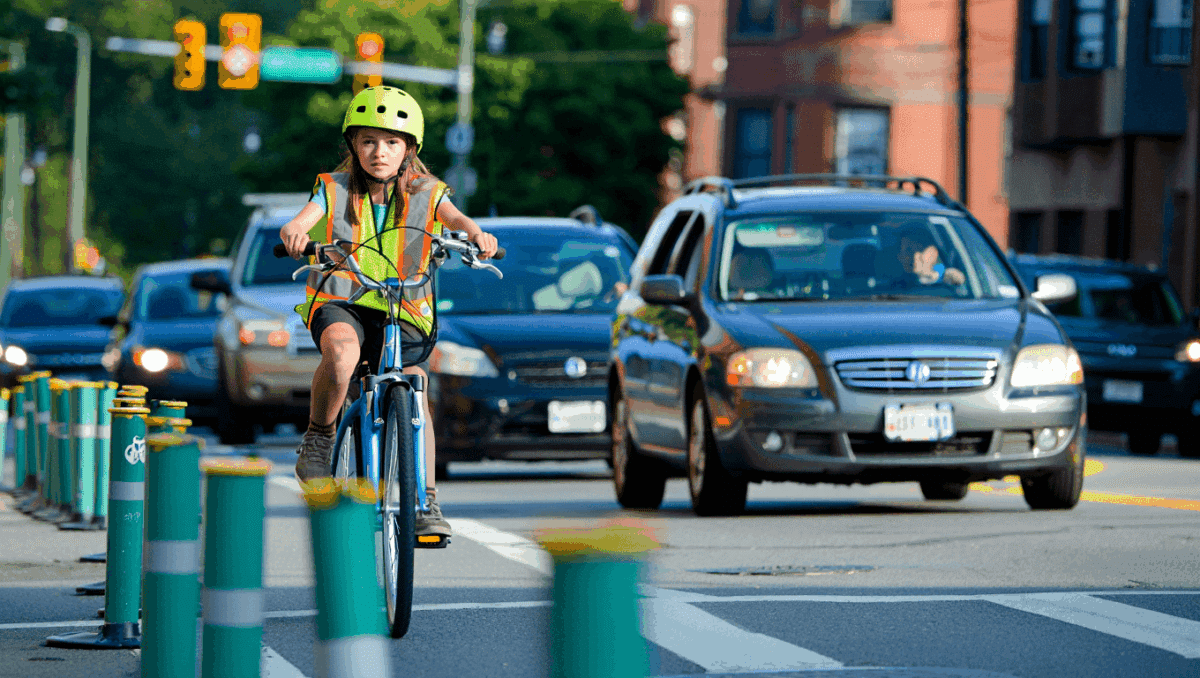
The push to add protected bike lanes across Boston has reshaped how people move through the city. Over the past year local officials tracked a sharp rise in cycling on streets that received new infrastructure, while motor-vehicle volumes showed modest declines in some corridors — a result that supporters say validates long-running calls for safer, separated bike routes.
The installations, completed mainly between 2023 and 2024, came after Mayor Michelle Wu made expanded cycling facilities a central part of her platform. A City of Boston study released this year sought to measure whether the infrastructure met riders’ demand and whether it changed travel behavior across neighborhoods.
Rider numbers surged on corridors with protected lanes
The city’s counts reveal wide variation by street, but the overall trend points to more bicycles on the road where protected facilities were added. Some locations saw steady upticks; others experienced dramatic gains.
The Growing Demand for Data-Driven Decision Making in Silicon Valley
He quit, ran out of money, and begged to come back — here’s how his boss reacted
- Boylston Street (Back Bay): Observed daily bike trips jumped sharply — roughly an 83% increase — climbing from about 615 to 1,127 rides after bollarded, protected lanes were installed to keep parking-seeking motorists out of the cycleway.
- Milk Street (Downtown): The new one-way bike lane recorded nearly 200 more daily cyclists than the previous arrangement, when riders shared lanes with cars.
- Western Avenue (Allston/Brighton): Counts along several segments showed more than 200 additional daily bike trips, about a 51% rise in average weekday cycling.
- South Street (Brighton): Gains were more modest in some places, with about a 22% increase — roughly 16 more bikes per day compared with pre-installation levels.
Traffic volumes nudged downward in measured spots
City sensors compared vehicle counts between September 2022 and September 2024 at selected sites. Results showed small but noticeable decreases in vehicular flow near some new bike lanes, suggesting a share of trips may be shifting to bicycles.
- Near Fairfield Street, average motor-vehicle volumes fell by about 9%.
- Counts around Arlington Street recorded a larger decline of roughly 14%.
These numbers don’t mean every new cyclist gave up a car; some riders previously lacked access to an automobile, while others shifted modes for short trips. Still, municipal planners point to the combined effect of higher bike traffic plus modest car reductions as evidence that protected infrastructure can expand mobility options without worsening congestion.
Safety, predictability and policy: perspectives from advocates and officials
Local cycling advocates framed the data as a win for predictable, safer streets. Tiffany Cogell, executive director of the Boston Cyclists Union, told a local outlet that the protected lanes are cutting crashes and making movement more reliable for everyone who uses the road. She described the results as supporting what she called practical, data-driven policymaking.
City transportation staff have emphasized the multi-year nature of behavioral change and the importance of continuing to monitor how people travel as networks expand. The new lanes, designers say, help reduce conflicts between drivers and riders while encouraging more people to consider cycling for daily trips.
How Boston counted changes and what the numbers mean for cities
The city relied on automated counters and manual spot counts before and after lane installation to assess changes. That combination allowed planners to estimate average daily trips and compare seasonal variations.
Key takeaways from the methodology
- Comparisons used like-for-like months to minimize seasonal bias.
- Observers separated bikes that used newly protected lanes from those that previously rode in traffic lanes.
- Vehicle counts at nearby locations served as a proxy for mode shift where direct surveys weren’t available.
For urban planners watching Boston, the report offers a case study in quickly building out protected cycling facilities and tracking their impacts. The data suggest that where cities invest in separated lanes, riding increases significantly in many corridors and motor vehicle counts can decline modestly — a pattern that may encourage other cities weighing similar projects.
Related transportation developments across the U.S.
- First electric passenger ferry service rolling out at Lake Tahoe with zero-emission vessels
- New cycling-focused bridge unveiled as part of a long-planned urban thoroughfare
- Major bridge replacement completed under budget without interrupting rail service
You might also like:
- Air pollution falls sharply in 19 cities including London, San Francisco and Hong Kong
- 165-mile Minnesota bike trail completed after 30 years, now one of America’s longest
- Zero-emission commuter ferry to serve historic river in European capital
- Two years ago, I bought an e-bike. I wish someone had told me I also needed these accessories
- Lonely 4-year-old rallies neighborhood in viral video

Michael Thompson is an experienced journalist covering U.S. and global news. With ten years on the front lines, he breaks down political and economic stories that matter. His precise writing and keen attention to detail help you grasp the real‑world impact of every event.


I remember when I was dodging cars left and right in Boston on my bike. So glad theyre finally stepping up their game with more lanes. About time, right? Lets keep those wheels spinning and the traffic thinning!
Man, member when wed be stuck in traffic for ages in Boston? Now with those bike lanes, it feels like a breeze! Its like the city heard our cries and did somethin bout it. Kudos, Boston!
Man, member when folks said bike lanes were just for show? Now Bostons seeing less traffic cause of em! Residents really made a diff. Maybe more citiesll catch on, huh?
Oh man, I totally member! Bike lanes were like the underdog hero in a cheesy movie, but now theyre Bostons main squeeze, huh? Its wild how something so simple can shake up the traffic game. Maybe soon well be cruising on two wheels all over, dodging cars like pros. Who knows, right?
Man, member when Boston was all like Nah, we good on bike lanes? Now look at em, reducing traffic like its no biggie. Props to the residents for pushin! Maybe other cities should take notes, eh?
Man, member when folks in Boston were all up in arms bout them bike lanes? Now look at the traffic easing up. Crazy how pushback can lead to progress, right? Maybe more cities need a lil nudge from their residents!
Man, bout time they added those bike lanes! Traffic was a nightmare. Now, if only theyd fix those potholes… Riders surgin, cars sittin. Its like a race out there!
Man, member when we were all like, More bike lanes, Boston!? Now look at this – less traffic cause of em lanes! Good on ya, residents! Maybe we know a thing or two, huh?
Oh, let me tell ya, Ive been pushin for those bike lanes forever! Finally, folks are realizin theyre not just for show. Traffics down, riders are up — its a win-win, baby! Time to pedal on to progress!
I remember when biking in Boston felt like dodging cars in a game of Frogger. Now, with more lanes, its like a whole new world. Props to the residents who made this happen. Lets keep pedaling forward!
Man, member when we used to fight for bike lanes in Boston? Now theyre cuttin traffic like a hot knife through butter. Guess pushin for change pays off! Time to pedal on those protected lanes, folks.
Man, Bostons bike lanes were a game-changer! Finally, some sweet relief from that crazy traffic. Cant believe it took so long for them to listen to us, but hey, better late than never, right? Lets get those wheels rolling!