
Show summary Hide summary
- Lašiša: Vilnius’ electric river shuttle and what it offers
- Why Vilnius prioritized a zero-emissions ferry
- Passenger experience and early reactions
- Technical design choices and energy savings
- Debate over speed, transparency and city communications
- Next steps: fleet expansion and future routes
- What the new ferry means for urban mobility and tourism
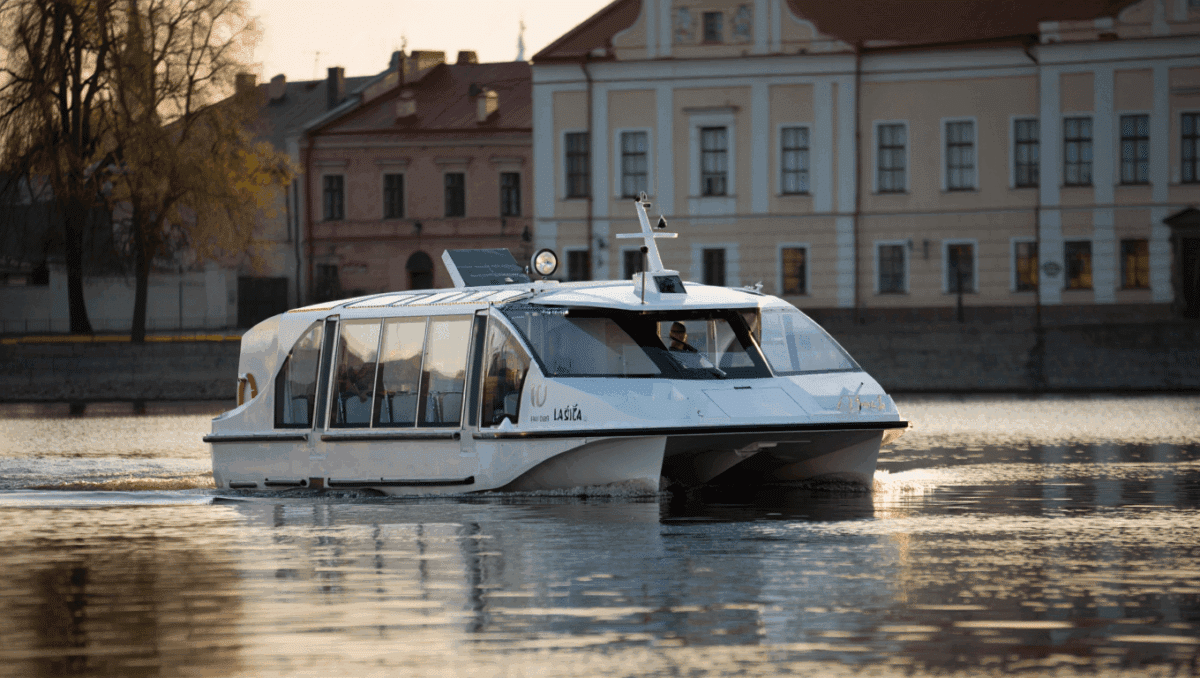
Vilnius has quietly added a new electric ferry to its transport network, offering a calm, low-emission way to move along the River Neris. Branded Lašiša, the compact vessel is already operating between the city’s business and residential districts, stopping near several cultural and historic points of interest and aiming to reshape short commutes with quieter, greener trips.
The launch is part of a larger push as Vilnius prepares to serve as the European Green Capital for 2025. City officials and the public rushed to meet a tight timeline to have the ferry in service by late July, a visible example of the municipality’s environmental ambitions applied to everyday travel.
Lašiša: Vilnius’ electric river shuttle and what it offers
The Growing Demand for Data-Driven Decision Making in Silicon Valley
He quit, ran out of money, and begged to come back — here’s how his boss reacted
The Lašiša ferry is small but purpose-built for inner-city river transit. It seats up to 32 passengers and focuses on energy efficiency rather than speed, using a hull that displaces water rather than skimming the surface. That design choice, combined with broad solar coverage, helps reduce electricity demand and maintain a quiet ride.
- Capacity: 32 passengers
- Ticketing: €3 when purchased online or via the city app; €4 when bought aboard
- Connectivity: free Wi‑Fi for passengers
- Energy features: roughly 80% of the vessel’s surface is fitted with solar panels
- Speed: top speed around 7.5 km/h, often limited to about 5 km/h to minimize wake
Why Vilnius prioritized a zero-emissions ferry
Winning the European Green Capital title put urgency on visible, measurable sustainability projects. City mobility officials fast-tracked the procurement and construction of the ferry to demonstrate practical green transport solutions. The municipal transport operator coordinated with the boatbuilder to deliver the vessel in a compressed timeframe, stressing civic responsibility and pride in meeting the deadline.
Local goals and broader context
Lašiša joins an expanding roster of electric and low-emission ferries across Europe — from the Elbe to Copenhagen’s harbor — where cities are exploring waterways as extensions of urban transit. For Vilnius, the new service is both symbolic and functional: it offers commuters an alternative route across the river while signaling the city’s commitment to low-carbon mobility ahead of its Green Capital responsibilities.
Passenger experience and early reactions
Residents who’ve tried the new service describe a relaxed, scenic option for short trips. For some, the ferry adds a pleasant, almost recreational element to the commute; for others it’s a convenient connection between neighborhoods that are otherwise separated by the river.
One local noted that the river ride can feel like a peaceful way to decompress after a workday, while others appreciate the novelty and environmental benefits. The free onboard Wi‑Fi has also been highlighted as a practical perk for riders who want to use travel time productively.
Technical design choices and energy savings
The design team prioritized efficiency over speed. Instead of a planing hull that skims over water, Lašiša’s displacement-type hull reduces drag at the steady, modest speeds the vessel is intended to maintain. That approach, combined with extensive solar-fitting on the roof, cuts the boat’s reliance on shore charging and maximizes the eco-benefits of electric propulsion.
How the numbers add up
- Solar integration: Approximately 80% of the craft’s exterior is solar-capable, supplementing battery power.
- Energy economy: The slower cruising speed means lower instantaneous power draw and reduced wake, which also protects riverbanks.
- Operational pacing: Speeds commonly held at around 5 km/h in sensitive zones balance service time with environmental care.
Debate over speed, transparency and city communications
The ferry’s modest pace has generated some debate. Critics, including an outgoing transport minister, questioned whether municipal messaging had downplayed how slow the vessel can be compared with motorized road transit. City transport officials countered that Lašiša’s performance is on par with similar water shuttles across Europe and that operational limits are in place to limit wake and shoreline erosion.
Officials emphasized that the design choices are deliberate trade-offs: slightly longer trip times in exchange for dramatically lower emissions and quieter operation in dense urban areas.
Next steps: fleet expansion and future routes
Officials say the pilot will grow. The city has ordered two additional electric ferries currently under construction in Latvia, planning to expand service coverage and frequency once those vessels arrive. The expansion aims to integrate river transit more fully into Vilnius’ public transport network, making it easier to combine ferry trips with buses, trams and bike routes.
- Planned procurement: two more electric boats on order
- Construction partners: shipbuilding being carried out by companies in neighboring Latvia
- Integration goals: align ferry stops with major transport interchanges and cultural sites
What the new ferry means for urban mobility and tourism
Beyond daily commuting, Lašiša adds a fresh element to Vilnius’ tourist offerings, linking key attractions and offering a pleasant river perspective on the city’s architecture and green spaces. For planners, the ferry serves as a test case in how waterways can contribute to multimodal transport systems without increasing pollution.
As the service settles into regular schedules and two more boats join the fleet, Vilnius will be watching rider numbers, customer feedback, and environmental metrics to guide future river transport decisions. The outcome will help determine whether urban electric ferries become permanent fixtures in the city’s mobility mix or remain niche options for leisure and limited commuter flows.
You might also like:
- Boston bike lanes reduce traffic after residents pushed for more
- Tunisian solar-powered cars charge 30 miles for free each day using African sunshine
- Air pollution falls sharply in 19 cities including London, San Francisco and Hong Kong
- Aberdeen hit hard by net zero policies as oil jobs and economy suffer
- Singapore 3D-printed bridge to open in 2028 after rigorous testing

Michael Thompson is an experienced journalist covering U.S. and global news. With ten years on the front lines, he breaks down political and economic stories that matter. His precise writing and keen attention to detail help you grasp the real‑world impact of every event.


Man, that electric river shuttle in Vilnius is the future! Imagine cruising on a zero-emission ferry, soaking up the history of the river. Eco-friendly vibes all the way, baby. Can we get more of these cool initiatives everywhere?
Dude, totally dig your vibe! Electric river shuttle, eco-friendly all the way, right on! Its awesome how Vilnius is leading the pack. Makes you wonder, why aint these cool rides poppin up everywhere yet? Lets spread those green vibes, man!
Man, this zero-emission ferry in Vilnius sounds like a game-changer! Imagine cruising down the river, soaking in the historic vibes without harming the environment. Kudos to them for prioritizing sustainability and innovation. Time to book a ticket!
Man, this electric river shuttle in Vilnius is like something out of a sci-fi flick! Zero emissions, eco-friendly vibes, and cruising down a historic river? Count me in for that futuristic ride. Gotta love when cities prioritize sustainable transport.
Man, this electric river shuttle in Vilnius is like something out of a sci-fi flick! Zero emissions? Historic river? Count me in for a ride! Hope its as cool as it sounds.
I remember my granny telling tales of the river, now a zero-emission ferry? Thats some high-tech twist! Hope it keeps the old charm. But hey, progress is progress, right? Excited to see how it pans out!
A curious urban planner here! Electric river shuttles sound cool, but will they truly make a dent in emissions? Vilnius initiative is inspiring, but lets keep pushing for sustainable transport solutions worldwide!
Man, Vilnius really stepping up their game with this zero-emission ferry on the river. Gotta give props for going green and preserving the historic charm. Hope its not just a flashy facade, though. Time will tell!
Man, eco-friendly ferries are the future! Imagine cruising down the river, taking in the sights without a care for emissions. Vilnius is onto something cool with this zero-emission commuter ferry. Lets hope more cities follow suit!
Man, I remember when ferries were all smokin engines and pollution. Now, this zero-emission vibe in Vilnius? Thats some next-level eco-friendly transport! Wonder if other cities will catch up or stay stuck in the fumes.
Man, electric ferries? Whats next, flying cars? Vilnius is really upping its eco-game with this zero-emission ferry. Hope its smooth sailing for the passengers, cause that historic river deserves some clean vibes.
Man, I remember the first time I took a ferry down that river—smog everywhere, felt like I was inhaling a car exhaust cocktail. Now, a zero-emission ride? Thats progress! About time we give Mother Nature a breather.
Man, I remember the time I took a ferry in Vilnius. Such a vibe cruising down the river. Now with this zero-emission setup, its like the citys stepping up its game, eco-style. Cant wait to hop on board!
Man, I remember when them old diesel ferries used to chug along that river, belching out smoke like theres no tomorrow. Good to see Vilnius stepping up with this fancy zero-emission ferry. Bet the river appreciates the breather!
Man, that zero-emission ferry in Vilnius sounds like a game-changer. Bet its gonna be a smooth ride along the river, soaking in the historic vibes. Kudos to them for setting the eco-friendly bar high!
Man, this zero-emission ferry in Vilnius is like a breath of fresh air! Makes me wanna ditch my car and hop aboard. Hope more cities take notes on sustainable transport like this. Cheers to a greener future!