
Show summary Hide summary
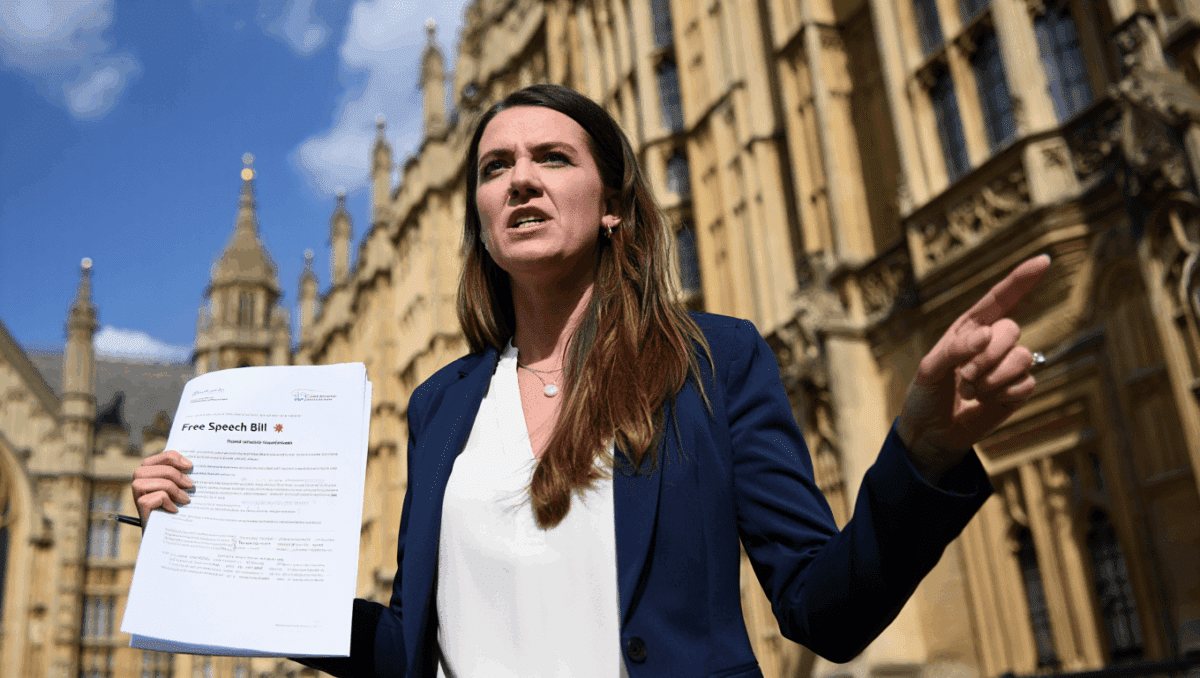
The Adam Smith Institute has released a compact but sweeping draft Free Speech Bill for the UK that aims to redraw the legal boundaries of expression. Birthed with help from American constitutional specialists, the proposal challenges many of the statutes and practices that have, critics say, quietly narrowed public debate in Britain.
The bill is intentionally bold: it would establish a clear, positive right to speak freely, narrow the grounds for criminal sanctions, and limit institutions — from regulators to employers — that currently police what people say. Supporters see it as a practical route to revive robust free speech protections modeled on the US First Amendment; opponents predict fierce pushback from a political establishment increasingly comfortable with speech controls.
Key provisions of the proposed Free Speech Bill
The Growing Demand for Data-Driven Decision Making in Silicon Valley
He quit, ran out of money, and begged to come back — here’s how his boss reacted
- Affirmative free-speech guarantee — The draft creates an explicit legal right to free expression, subject only to narrowly defined exceptions such as incitement to violence or criminal conduct.
- Limits on content-based restrictions — The bill would bar suppression of speech simply because it is offensive, shocking, insulting, blasphemous or causes emotional upset.
- Ban on compelled speech — Individuals could not be forced by the state or public bodies to express particular viewpoints.
- Reduced employer powers — Public and private bodies would face tighter limits when disciplining staff for off-duty comments, shrinking employers’ reach into employees’ private speech.
- Protection for online intermediaries — Website owners and platforms would be shielded from being treated as the publisher of every user contribution.
- Removal of vague criminal offences — Provisions such as section 127 of the Communications Act, which outlaws posting “grossly offensive” material online, would be repealed or curtailed.
How the bill would dismantle existing censorship tools
The draft targets a web of laws and administrative practices that have expanded enforcement of speech norms beyond traditional criminality. Its sponsors argue that simply proclaiming support for free speech is useless unless the legal props that enable censorship are taken down.
Rewriting the Communications Act and Public Order offences
At the center of reform lies the Communications Act and parts of the Public Order Act. The Communications Act’s vague criminal language has long been criticized for empowering prosecutions based on subjective notions of offensiveness. Under the new bill, such broad standards would not survive; criminal liability would be confined to clearly defined harms.
Ending “non-crime hate incident” records and chilling practices
Police recording of so-called non-crime hate incidents — reports that don’t amount to criminal conduct but label behavior as prejudicial — would be outlawed. Advocates say this practice chills speech by creating official records that can affect employment, housing and reputation even when no crime has occurred.
Protecting speech in public employment and licensing
The proposal would prohibit conditions on public employment, licenses or benefits that are contingent on particular opinions. In practice, this would make it harder for authorities to demand ideological conformity as a term of public service or state support.
Where European human-rights law fits in
The bill also seeks to reduce the reach of the European Convention on Human Rights (ECHR) in ways that surprise some civil-liberties advocates. While many assume the ECHR is a bulwark for free expression, parts of its jurisprudence have supported significant restrictions. The draft would carve out space for stronger domestic protections distinct from ECHR case law, an approach likely to spark debate among human-rights lawyers.
American legal influence and the role of Preston Byrne
One striking aspect of the initiative is its transatlantic pedigree. American constitutional ideas, especially those inspired by the First Amendment, helped shape the draft. A notable contributor is attorney Preston Byrne, who has been active in contesting media regulation and Ofcom’s reach into content decisions affecting US-based platforms.
That American lawyers are investing effort in UK debates underscores growing international concern about Britain’s approach to speech regulation. For the bill’s proponents, importing First Amendment-style principles offers a tested model for limiting state interference and protecting a broad range of controversial expression.
Political opportunities and the shifting Overton window
Presenting this draft to the public is as much a political act as a legal one. By converting abstract principles into concrete legislative text, the Adam Smith Institute hopes to make free-speech reform a campaign issue rather than a theoretical argument.
- Political actors could seize the moment: A party or leader willing to promise strong speech protections would draw voters who resent state or employer intrusion into private expression.
- The spotlight would intensify on parties accused of authoritarian tendencies, particularly in debates about policing online content and workplace discipline.
- High-profile supporters, whether from across the political spectrum, could move the conversation from niche legal circles into mainstream political debate.
Practical obstacles and likely resistance
Despite its clarity, the Free Speech Bill faces steep political and cultural hurdles. The current governing class and many human-rights advocates are likely to resist changes that they see as removing tools to combat hate speech, harassment or disinformation. Regulators such as Ofcom, which have expanded their role in online content governance, would oppose restrictions on their remit.
Even if the bill cannot pass immediately, its publication aims to shift public opinion and policymaking toward firmer speech protections, reframing what counts as acceptable government regulation of expression.
Andrew Tettenborn is a professor of commercial law and a former Cambridge admissions officer.
You might also like:
- Graham Linehan arrest shows UK needs First Amendment-style free speech protections
- Workers’ right to private opinions threatened by employers: what to know
- UK Islamic blasphemy laws defeated in free speech victory
- Defiant resident says they can come and arrest me
- Musk vs EU censorship: why his fight matters for free speech

Robert Johnson is a dedicated columnist focusing on political and social debates. With twelve years in editorial writing, he provides nuanced, well‑argued perspectives. His commentaries invite you to form your own views and engage in critical issues.


I remember when me and the lads debated free speech over a pint. A First Amendment in Britain? Might stir the pot real good, but gotta watch out for the chaos it could bring. Whats your take on this spicy topic?
Man, imagine needing a whole new amendment just to protect free speech in Britain. Shouldnt that be, like, a given? Feels like theyre playing catch-up. But hey, better late than never, I guess.
Mate, imagine if we had a First Amendment in Britain! Free speech galore. But hey, this Free Speech Bill sounds alright, dismantling censorship tools and all. Hope it doesnt backfire, though. Who knows with these laws, eh?
Mate, reckon Britain should jump on the First Amendment train? Free speechs a tricky dance. Better protect it or risk ending up in a real pickle, innit? Lets see where this Bill leads us, eh?
Mate, freedom of speechs a must in any democracy. Britains Free Speech Bill could be the real deal. Lets see if itll cut the mustard or just add more red tape. Whats your take on this spicy topic?
Oh mate, freedom of speechs a hot topic, innit? The Britains Free Speech Bill sounds like a game-changer, but will it really spice things up or just leave us with more red tape? Gotta admit, Im curious to see if its gonna be a flavor blast or a damp squib. Whats your two cents on this zesty debate?
I aint no expert, but aint free speech a basic right? Why all the fuss? If a First Amendment helps folks speak their minds in Britain, then why not give it a shot?
Wait, hold up, mate! Free speech in Britain? Now that’s a spicy idea! But imagine if it goes all bananas and everyone starts spouting gibberish left and right. Chaos, innit? But yeah, gotta admit, freedom of speech does sound pretty sweet on paper. Will it be a wild ride or a total disaster? Only one way to find out, I guess!
I once thought Britain was all about the stiff upper lip, but now its like, give us some free speech already! If they need a First Amendment to get it, hey, why not shake things up a bit?
Im all for free speech, mate, but do we really need a whole amendment for it? Seems like a right faff. Cant we just agree to, yknow, not be twats to each other without all the legal palaver?
I remember when me nan used to say, Free speech aint so free if its caged up, innit? Maybe a First Amendments what the UK needs to let folks speak their minds without all the hassle. Just a thought, mate.
Man, imagine if Britain had a First Amendment like the U.S. Thatd stir up some chaos, eh? Free speech is a tricky beast to tame. Wonder if this bill will really make a difference or just add fuel to the fire.
Mate, free speechs a tricky bugger, innit? Britain might need a First Amendment to stop all this censorin madness. Bout time we get to say what we want without walkin on eggshells, yknow?
Man, the idea of a First Amendment in Britain feels like mixing oil and water. Can they handle that much freedom? Its like giving a toddler a chainsaw. Could be messy, could be liberating. Whats your bet?
I mean, come on, Britain! Free speech is like the spice of life, innit? First Amendment or not, let folks speak their minds. Its a basic right, mate. Let the words flow, no need for all the red tape.
Oi, mate, youre spot on! Free speechs like the cherry on top, innit? Let the words flow, no need for all the red tape, just like a good ol chat down the pub. People should be able to speak their minds without all the fuss. Cheers to that!
Man, imagine if Britain had a First Amendment like the U.S.? Free speech battles would be lit! But, like, censorship tools dismantled sounds rad. Time to shake things up and end those sketchy non-crime hate incident records, am I right?