
Show summary Hide summary
- Arrest at the airport: what happened to Graham Linehan
- Numbers and laws: how online remarks become criminal cases
- When words become punishable: vagueness and its consequences
- How the US framework contrasts: Brandenburg and free-speech thresholds
- Why critics call for clearer legal protections in Britain
- Public attitudes and the policing of speech
- Comparative protections and the call for constitutional guarantees
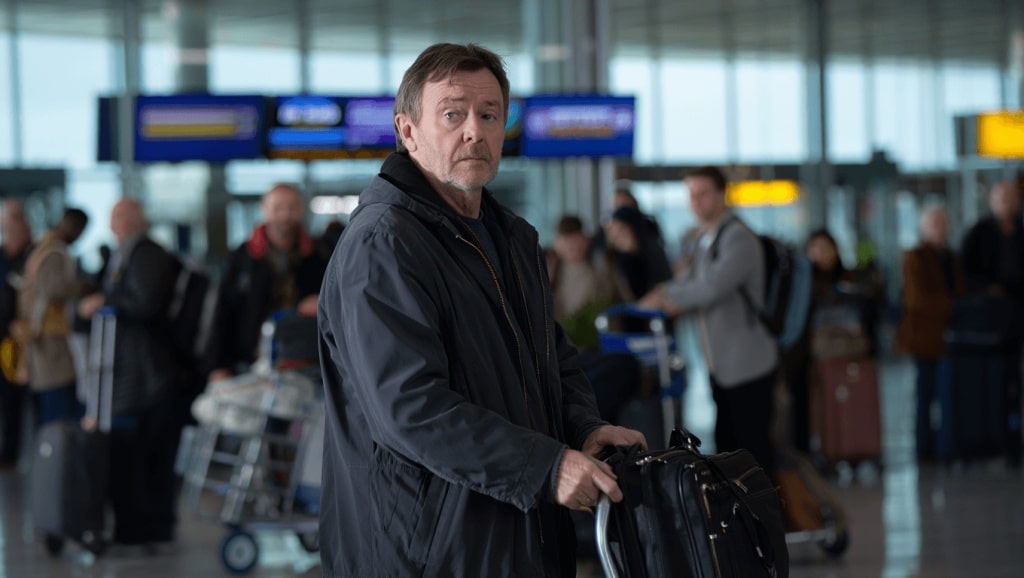
Graham Linehan’s arrest at Heathrow this week for comments he posted online has reignited a heated debate about how far the state should go to police speech. The creator of hit sitcoms landed back in Britain after a flight from Arizona and was stopped by armed officers minutes after touching down — not for a violent act, but for what he wrote on social media. That clash between digital words and physical enforcement has many asking whether the UK’s current laws hand police too much discretion to criminalize expression.
The incident is far from isolated. Recent custody figures and several high-profile prosecutions show a wider pattern: social-media posts are increasingly triggering arrests and even prison sentences. As courts and police apply old statutes to 21st-century platforms, critics argue the result is arbitrary enforcement and a shrinking space for robust public debate.
Arrest at the airport: what happened to Graham Linehan
Graham Linehan says he was detained by the Metropolitan Police Aviation Unit just after landing at Heathrow. Officers arrested him on suspicion of “inciting violence” based on a small number of posts on X (formerly Twitter). According to Linehan, one post advised people to create a scene and, if necessary, resort to violence against someone described as a trans-identified male in a women-only space.
The Growing Demand for Data-Driven Decision Making in Silicon Valley
He quit, ran out of money, and begged to come back — here’s how his boss reacted
Linehan was granted bail but with a striking restriction: he must not return to X. He has described that condition as a form of legal gagging. The deployment of multiple armed officers to make the arrest has prompted criticism that the response was disproportionate and an inefficient use of scarce armed policing resources.
Numbers and laws: how online remarks become criminal cases
Police forces across England and Wales are routinely using a handful of statutes to charge people for their online posts. Recent data obtained by a national paper shows thousands of arrests for social-media content in one year.
- 12,183 arrests in 2023 by 37 police forces — roughly 33 arrests a day.
- Commonly used laws include Section 127 of the Communications Act 2003 and Section 1 of the Malicious Communications Act 1998.
- Prosecutions have also relied on provisions of the Public Order Act 1986 in cases involving alleged hate offences.
Those statutes criminalize communications that are “grossly offensive”, “menacing”, or “indecent,” or that are intended to stir up racial hatred. Critics say these phrases are highly subjective and leave enormous room for inconsistent enforcement.
When words become punishable: vagueness and its consequences
The language of several UK offences turns on terms such as “insulting” or “offensive,” which are open to interpretation. One stark example: a mother in Northampton, Lucy Connolly, received a 31-month sentence after pleading guilty to a charge under the Public Order Act for a single inflammatory post. Prosecutors argued the post was intended to stir up racial hatred.
Legal experts and civil-liberties advocates warn that criminalizing “insults” or “hurt” puts private sensibilities above public liberty. The result can be chilling: people avoid controversial topics for fear of police attention or court action. In practice, enforcement not only varies by case but by region and by the priorities of local police forces.
How the US framework contrasts: Brandenburg and free-speech thresholds
The United States sits on a different legal baseline. The First Amendment, interpreted by the Supreme Court, sets a notably high bar before speech can be criminalized. A landmark case, Brandenburg v. Ohio (1969), established that speech advocating illegal action is protected unless it is directed to inciting imminent lawless action and is likely to produce such action.
Under the Brandenburg test:
- Speech must be intended to cause immediate unlawful acts.
- There must be a real likelihood that the speech will cause those acts right away.
Applying that standard to many recent UK prosecutions, including the Linehan case and the Connolly conviction, would likely have prevented criminal charges. Incitement under the US approach demands both intent and a high probability of imminent harm, not mere offensiveness or the possibility that words might wound.
Why critics call for clearer legal protections in Britain
Public-policy commentators and free-speech advocates argue that the UK needs sharper limits on when expression becomes criminal. The current patchwork of statutes and guidance lets officers and prosecutors convert provocative online remarks into arrestable offences without a consistent test for seriousness or intent.
Policy proposals commonly suggested include:
- Amending communications laws to require proof of intent and a serious likelihood of harm before charging someone for speech.
- Removing or narrowing criminal offences that hinge on whether something is “insulting” or “offensive”.
- Introducing statutory protections for political or artistic expression that is controversial but not imminently dangerous.
- Creating oversight mechanisms to review police decisions to arrest people for online content.
Proponents say these steps would protect debate, satire, and social critique from being transformed into criminal acts simply because they offend. Opponents warn that loosening laws could leave vulnerable groups exposed to harassment. The tension between protection from harm and protection of expression is at the center of the debate.
Public attitudes and the policing of speech
Since the pandemic, arrests for social-media content have surged — estimates suggest an increase on the order of 60 percent. That rise reflects not only legal enforcement but shifting cultural norms: many institutions and opinion leaders now treat certain words as capable of inflicting serious harm. Terms like “hate speech” and the notion that “words wound” are increasingly influential in official decision-making.
This reframing changes how law enforcement views its role. Where police once focused mainly on physical threats, they now increasingly interpret offensive or provocative speech as a matter for criminal investigation. Critics warn this is a slippery slope: once the state starts policing words broadly, the boundary between protected debate and criminal conduct becomes fluid and unpredictable.
Comparative protections and the call for constitutional guarantees
Advocates for stronger safeguards point to the American First Amendment as a model of high-level protection for expression. They argue that a clear, constitutionally anchored guarantee — or equivalent statutory clarity — would prevent future arrests for online posts that, while offensive or coarse, fall far short of true incitement to violence.
Legal scholars who favor reform emphasize the need to:
- Define incitement narrowly and objectively.
- Ensure proportionality in policing responses to speech-based complaints.
- Protect legitimate satire, artistic expression, and political critique.
Those changes would not immunize genuinely dangerous speech. Instead, they would raise the threshold so that only communications that present a real, imminent threat of lawless action become criminal matters.
Reem Ibrahim is Head of Media and a Linda Whetstone Scholar at the Institute of Economic Affairs
You might also like:
- Trans activists accused of using police for errands
- Police Transform into Controversial Enforcers for Trans Activists: A Deep Dive into the Shift
- Zack Polanski urged not to be arrested over Nigel Farage t-shirt
- Britain: does it need a First Amendment to protect free speech?
- UK Islamic blasphemy laws defeated in free speech victory

Robert Johnson is a dedicated columnist focusing on political and social debates. With twelve years in editorial writing, he provides nuanced, well‑argued perspectives. His commentaries invite you to form your own views and engage in critical issues.


Man, Linehans airport arrest is wild. UK needs clearer free speech laws. Its like, one day youre just tweeting, next thing you know, cuffs at the airport. Crazy times we live in, huh?
I remember when Linehans wit was all the rage. Now hes in hot water. Free speechs a tricky path, innit? Wonder if UK will ever sway like the US on this.
Man, this Linehan arrest is wild. Makes you think about how fragile free speech can be, right? We need clearer boundaries, like the US. UKs laws are too vague, its a mess.
Man, I remember when you could speak your mind without fear of getting cuffed. UK needs to catch up with the times, protect free speech like the US. Graham Linehans arrest aint right, mate.
Man, this Linehan arrest is a wild ride. UK needs to chill with the speech crackdowns. Its like, wheres the line? Gotta protect free speech, or well all be walkin on eggshells.
I remember when you could crack a joke without worrying bout the thought police. Graham Linehans arrest aint cool, man. We need more free speech backup in the UK. Lets keep it real.
Man, that Linehan arrests a wake-up call. UK needs some free speech backup, like that First Amendment vibe in the US. Cant have folks getting cuffed for just speaking their minds, yknow? Free speech is a must.
Oh man, Linehans situation really shook things up, didnt it? Its wild how different the free speech scene is on each side of the pond. The US with its First Amendment swagger, and then the UK with… well, a bit more controversy, apparently. Cant deny it, people should be able to speak their minds without handcuffs showing up. Its like, wheres the chill, right?
Man, the Linehan arrest is wild. UK needs to sort out its free speech laws, mate. Cant be cuffing folks for tweets. Its like theyre playing a game of Whos Offended Today? and everyones losing.
Man, the line between free speech and legal trouble is getting blurrier. Graham Linehans arrest is a wakeup call. Do we need stronger protections like the First Amendment in the UK? Its a real head-scratcher.
Mate, its like the wild west out there with free speech these days. Graham Linehans debacle did stir some feathers, didnt it? Stronger protections like the First Amendment in the UK? Bloody hell, could be a game-changer. But then again, wheres the line between speaking your mind and crossing the line? Its a proper head-scratcher, innit?
I remember when I got called out on social media for a harmless joke. If UK had clearer free speech laws like the US, maybe fewer folks would face arrests over online comments. #FoodForThought
Man, if the UK had First Amendment-style free speech protections, maybe Graham Linehan wouldnt be in this mess. Its like walking on eggshells out here with words. Let people speak their minds without fear of getting cuffed, ya feel me?
Man, Linehans arrest is a real wake-up call. Need some US-style free speech protection here. Its getting wild how online remarks can turn into criminal cases. Gotta watch what you say these days, huh?
Oh man, Linehans arrest really shook things up, huh? Its like a reality check on how sticky this online speech stuff can get. Its wild how a simple remark can snowball into a whole legal mess. Gotta start watching our backs before hitting send, aint that the truth?
Man, its like a minefield out there! The Linehan arrests a wake-up call. One wrong tweet, and bam! The laws on your tail. Gotta watch those words, folks. Free speechs in the hot seat.
Man, Linehans arrests a can of worms. UKs gotta sort this mess out. Free speechs a right, not a luxury. Hope they learn from this, mate.
Man, the Linehan arrest is wild. Its like if you fart in the wrong key, youll get cuffed. UK needs to chill and embrace free speech, like America with their say what you want, bro vibe.