
Show summary Hide summary
- Why the march mattered: unity, symbols, and a warning about rising hatred
- What the Union flag signaled about belonging and civic patriotism
- Roots in political thought: why civic identity is more than nostalgia
- The current erosion of civic bonds: forces breaking at the seams
- Why defending free speech and the rule of law matters for national cohesion
- Economics, identity, and the limits of grievance-based politics
- Practical elements of a resilient civic nationalism
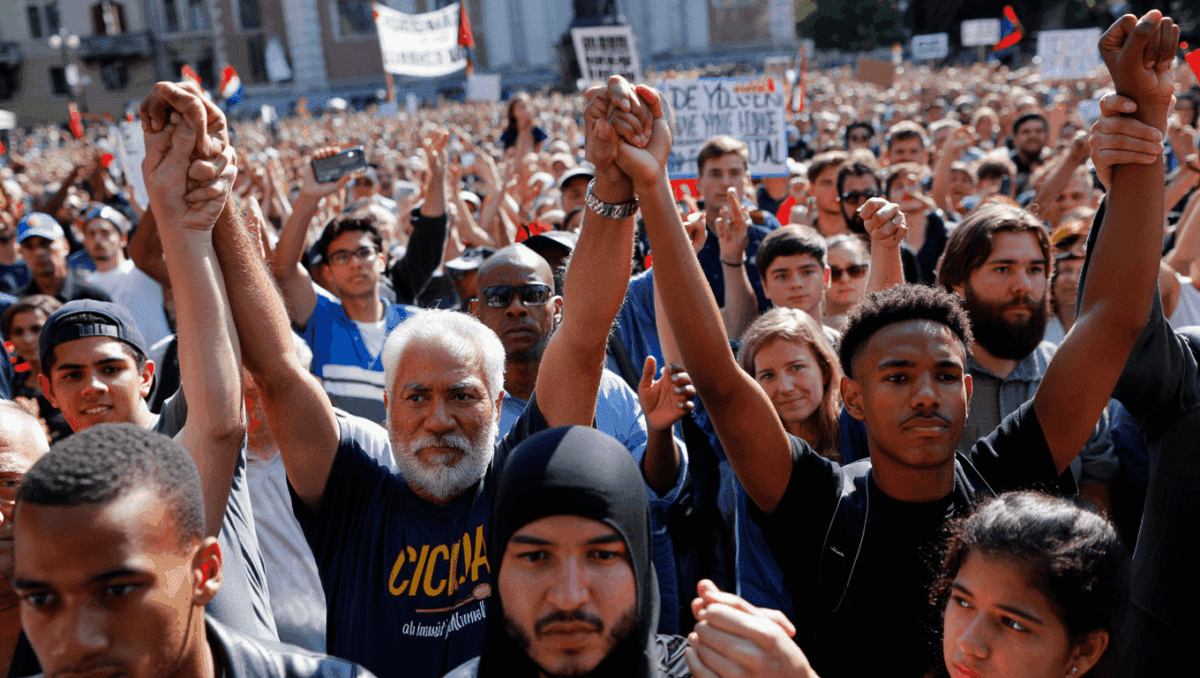
Early September’s demonstration against anti-Semitism in Britain wasn’t just a protest about one form of hatred — it became a public statement about what binds a modern democracy. Tens of thousands showed up in the streets, carrying not only the flag of Israel but the Union flag too, transforming a moment of alarm into a collective appeal for shared freedoms and civic belonging.
Those images — a diverse crowd, national symbols, and urgent speeches — forced a simple question into the open: what does national identity mean today, and can it be a force that protects liberty rather than erodes it? The answer matters because the threats to liberal values are not confined to one ideology or one political camp; they emerge across institutions and from competing visions of who “we” are.
Why the march mattered: unity, symbols, and a warning about rising hatred
The Growing Demand for Data-Driven Decision Making in Silicon Valley
He quit, ran out of money, and begged to come back — here’s how his boss reacted
The march that drew roughly 70,000 people came on the heels of disturbing events: attacks on synagogues, heated pro-Palestinian demonstrations in London, and a palpable rise in anti-Jewish abuse. Organizers and speakers used the gathering to do two things at once — condemn hatred and insist on common civic commitments.
One organizer reminded the crowd that the Union flag stands for a set of rights and protections that many in the Jewish community have historically valued: the protection of individual liberties, the necessity of free speech, and the integrity of the rule of law. Those were not empty slogans slapped on banners; for many attendees, they represent the real social contract that keeps plural societies functioning.
What the Union flag signaled about belonging and civic patriotism
At the march, waving the Union flag was less an act of exclusion and more an affirmation that national symbols can be inclusive when tied to shared principles. Civic patriotism — the kind that anchors identity in laws and responsibilities rather than ethnicity or religion — was on display.
- Inclusive membership: Civic nationalism defines belonging by agreement to democratic rules, not by ancestry.
- Shared responsibility: Citizens accept obligations to protect the rights of others, including minorities.
- Symbolic unity: Flags and rituals can help people commit emotionally to a polity they actively choose to defend.
That combination — legal frameworks backed by communal commitment — is what allows a diverse country to act as one when its institutions, or its people, are under threat.
Roots in political thought: why civic identity is more than nostalgia
Rousseau and the idea of voluntary political association
The intellectual tradition behind civic nationalism stretches back to Enlightenment thinkers who rejected blood-based tribalism in favor of voluntary, reasoned membership. One influential view held that citizens unite around a “general will” — a commitment to common laws and mutual obligations that transcends narrow self-interest.
This is not a plea to turn the clock backward. Rather, it’s an argument that national cohesion built on shared values is a contemporary necessity: it provides the moral and institutional scaffolding that lets democracies absorb differences without fragmenting.
The current erosion of civic bonds: forces breaking at the seams
Over recent decades, the idea of civic patriotism has come under pressure from multiple directions. Below are key trends eroding the shared public culture that once helped democracies function.
- Identity politics and cultural fragmentation: Some progressive movements reduce citizenship to group identities, weakening the sense of a common civic project.
- Ethnic or exclusionary nationalism: On the opposite end, some illiberal actors push narrow, ancestry-based definitions of “us,” excluding those who don’t fit a particular profile.
- Institutional constraints on free expression: Universities, workplaces, and public bodies increasingly restrict speech, shifting the balance away from open debate.
- Legal and administrative distortions: When courts, immigration systems, or policing priorities bend to political pressures, public confidence in the rule of law weakens.
Combined, these trends risk leaving civic life either empty — reduced to transactional economic interests — or fragmented into competing grievances that do not add up to a functioning polity.
Why defending free speech and the rule of law matters for national cohesion
Free expression, an independent judiciary, and equal treatment under the law are not abstract luxuries; they are the mechanisms by which a plural society negotiates difference. When these mechanisms are eroded, trust frays and polarization deepens.
- Free speech: It allows minority voices to be heard and contested ideas to be tested in the public square.
- Rule of law: It ensures that disagreements are resolved according to impartial rules rather than raw power.
- Equal citizenship: It guarantees that all people, regardless of background, stand before the same laws and can claim the same rights.
Without these guardrails, national identity becomes hollow — either an emotional veneer or a banner for illiberal projects.
Economics, identity, and the limits of grievance-based politics
There is no denying the importance of economic justice: fair wages, reliable public services, and equal opportunity matter deeply to citizens. But when political narratives reduce citizenship to economic grievance alone, they risk turning people into passive claimants rather than active participants in a civic enterprise.
That approach tends to depoliticize belonging: instead of being co-authors of a shared future, people become consumers of state benefits. The consequence is a weaker, less resilient national community that can’t mobilize around collective defenses of freedom when they’re needed.
Practical elements of a resilient civic nationalism
Rebuilding a robust civic identity requires concrete steps that reinforce both principle and practice. Policymakers, institutions, and communities can act in ways that revive the civic glue.
- Promote civic education that teaches rights, responsibilities, and democratic procedures.
- Protect institutions that guarantee free speech and judicial independence.
- Encourage symbols and rituals that emphasize inclusive membership rather than exclusion.
- Support public debates that allow disagreement without delegitimizing opponents.
These are not nostalgic trimmings; they are investments in the structures that let plural societies survive differences and defend freedoms.
Neil Davenport is a writer based in London.
You might also like:
- Cambridge Islamist: what we know
- England flag reportedly declared haram by Birmingham council
- Birmingham fatwa: imam issues ruling on England flag display
- Islamists and progressives: surprising common ground and why it matters
- Kemi Badenoch takes on the uniparty in UK politics

Robert Johnson is a dedicated columnist focusing on political and social debates. With twelve years in editorial writing, he provides nuanced, well‑argued perspectives. His commentaries invite you to form your own views and engage in critical issues.


Man, its like we forgot to be neighbors. Remember when folks actually cared about the block, not just their own yard? Lets bring back that civic spirit. Its what we need to stitch up this torn flag.
Ah, man, I feel ya on this one! Remember when Mrs. Jenkins used to organize those block parties with the best BBQ? Good times. We gotta revive that community vibe, yknow? Like, lets get everyone together for a good ol street cleanup or a potluck. Patching up that torn flag starts with us coming together, one neighbor at a time. What do you say, ready to bring back the good old days?
Man, I remember when folks used to rally around civic pride like it was the town fair. Bringin back that unity could be the secret sauce to fixin this mess. Lets dust off that ol civic nationalism, yall!
Man, back in the day, folks had this unity vibe, you know? Civic nationalism… like a big BBQ where everyones invited. Maybe its time to dust off that good ol spirit to patch up the mess were in.
Man, back in the day, civic nationalism felt like a unifying force. Now? Feels like its lost in the noise. Maybe its time to dust off that ol concept and give it a fresh spin. Can it really help heal this mess were in?
Man, back in the day, I remember civic nationalism being like the cool kid at the party, bringing everyone together. Now? Its lost somewhere in the social media noise, like that one sock that vanishes in the laundry. Maybe its time to dig it out, dust it off, and give it a fresh coat of paint. Who knows, maybe it could be the secret ingredient to untangling the mess were stuck in.
Man, I remember when civic nationalism wasnt a dirty word. Its like weve forgotten how to come together for the greater good. Maybe its time to revive those old ideals for some much-needed healing in the U.S.
Man, remember when we were all about that civic nationalism vibe? Bringing people together, focusing on what unites us rather than what divides. We need that energy back to mend these political fences, yknow? Unity over division, always.
Yeah, man, those were the days! Remember when everyone was on that unity train? Feels like were lightyears away from that vibe now. We could definitely use some of that old-school civic nationalism energy to patch up these political rifts. Its all about bringing folks together, focusing on what bonds us rather than what tears us apart. Lets bring back that unity over division mantra, am I right?
I remember when folks used to talk real, like neighbors, about values and unity. Now its all this divide and conquer game. Maybe we gotta dust off that civic nationalism talk, eh? Couldnt hurt.
Man, what happened to the good ol days when folks could agree to disagree without going all bonkers? Reviving civic nationalism might just be the ticket to patching up those crazy divides in the U.S. Seems like were all in the same boat, after all.
Man, its like we forgot to appreciate the glue that holds us together. Civic nationalism aint about exclusion, its about unity in diversity. Lets bring back that sense of belonging for a stronger America.
Man, we gotta get back to that civic nationalism vibe, yknow? Like, unity, respect, all that jazz. Were so divided, its cray-cray. Bring back the good ol days, I say.
Man, this reminds me of that heated family debate last Thanksgiving. We gotta find a way back to civic nationalism. Its like fixing a leaky roof before the whole house falls apart. Lets get on it, America!
Man, back in the day, civic nationalism was all about unity and pride. We need that vibe again to bridge the gap in the U.S. These divisions aint helping no one. Lets bring back that patriotic spirit!