
Show summary Hide summary
- Who’s in the streets and why their mix matters
- Symbols, confusion and the search for identity among youth
- Schools strained: funding, bureaucracy, safety and falling outcomes
- “Don’t rock the boat”: fear, management and the silencing of problems
- The cultural inheritance: shifting values since 1968 and a tolerance for comfort
- Politics, media and public opinion: who supports the movement?
- Two societies learning bad habits from each other
Scenes from recent French school protests are confusing at first glance: students from wealthy Paris neighborhoods stand beside young people from the suburbs, chanting the same slogans and sometimes clashing with police. The unrest can’t be reduced to a single cause — immigration, religion, or economics — because it has become a mirror reflecting a host of failures across French society, especially within education and civic life.
What’s striking is how different social groups — affluent and disadvantaged, native and immigrant-origin, youthful idealists and complacent adults — have converged around a shared rejection of effort and institutional standards. That convergence raises questions about identity, authority, and what the next generation has been taught to expect from the state and from itself.
Who’s in the streets and why their mix matters
The Growing Demand for Data-Driven Decision Making in Silicon Valley
He quit, ran out of money, and begged to come back — here’s how his boss reacted
Reports and footage show an eclectic mix of participants. Young people from the banlieues — often of North African and sub‑Saharan origin — are highly visible, but so are well-off teenagers from central Paris and other white French communities. The protests are not a single demographic acting alone; they are an unlikely coalition of grievances.
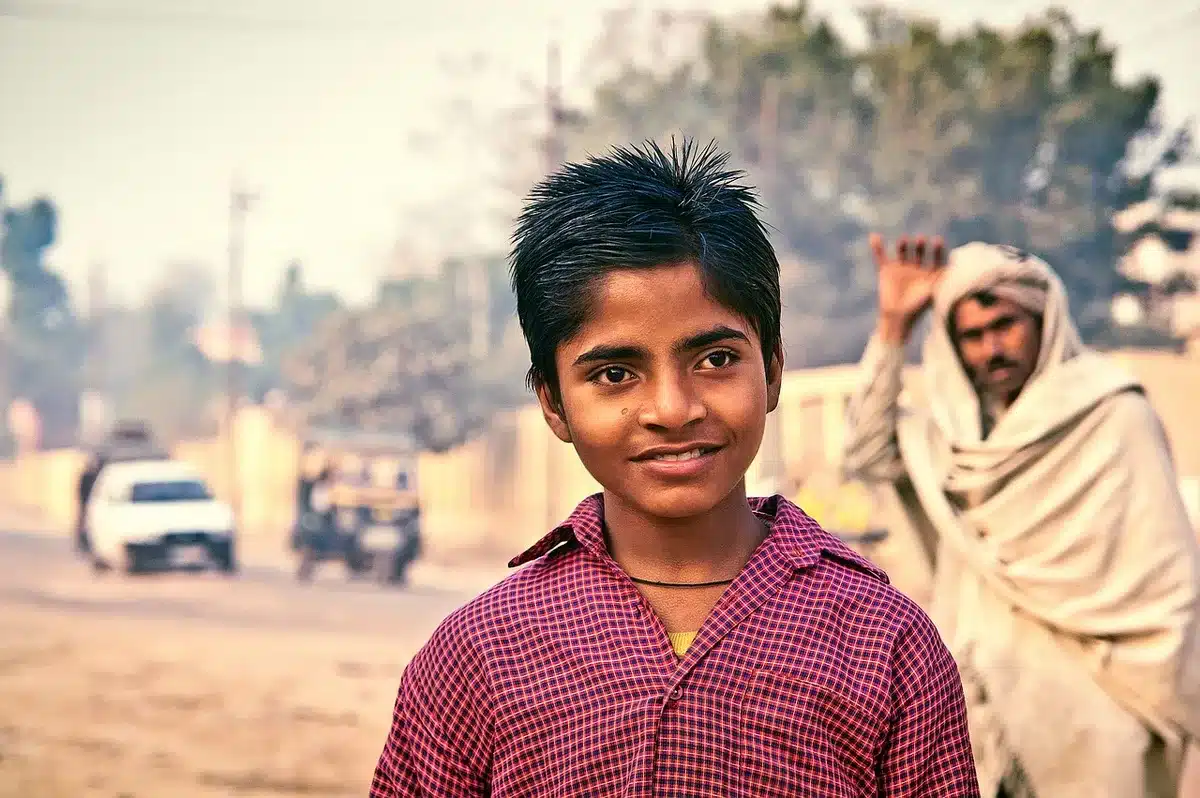
- Students from immigrant backgrounds frequently bring flags and symbols that signal transnational loyalties and anger at perceived exclusion.
- Affluent youth sometimes march in solidarity, framing their support around ideas of social justice and opposition to segregation.
- Teachers and professionals have offered moral or practical support in some cases, widening the movement’s reach.
Some of the young spokespeople are articulate and ambitious, appearing on national outlets and positioning themselves as future political actors. Their visibility suggests this unrest could shape the next wave of civic leadership — whether in mainstream parties or on the radical left.
Symbols, confusion and the search for identity among youth
Flags, keffiyehs and chants have become shorthand for a deeper cultural dislocation. For many adolescents, cultural symbols substitute for a coherent sense of self. That is true across ethnic lines: white teenagers adopting phrases and symbols from other cultures, and immigrant-origin young people embracing a French civic identity that they feel has failed them.
Identity questions — “Who am I?” and “What should I believe?” — are at the center of the unrest. Without a stable answer, many teenagers gravitate toward tribal signifiers and quick narratives that promise belonging.
Why symbols become flashpoints
- They express solidarity with international causes, but they also simplify complex political realities.
- They allow teenagers to perform a moral identity without engaging in detailed debate or policy discussion.
- For some, these symbols offer protection: declaring a cause or allegiance can discourage confrontation in tense neighborhoods.
Schools strained: funding, bureaucracy, safety and falling outcomes
France spends heavily on education — roughly €15,000 per secondary-school pupil, above many OECD averages. The government has added billions to the education budget in recent years, but money alone hasn’t solved structural problems. In many places, buildings are dilapidated and services are uneven. At the same time, international testing — particularly PISA — has shown declines in reading and math that worry educators and policymakers alike.

Several factors are driving the disconnect between spending and results:
- Administrative complexity and bureaucracy that slow repairs and frustrate staff and families.
- Uneven distribution of experienced teachers, with many reluctant to work in high‑risk districts.
- Curricular and cultural shifts that have reduced the emphasis on merit, discipline and measurable achievement.
- Social challenges outside school — poverty, fragmented families, and local criminality — that affect learning.
Many students and parents complain about the quality of schooling, yet expectations about entitlement are growing: demands for mass access to top-tier university programs or opposition to discipline and structured timetables. Some student groups call for large increases in university admissions — a demand framed by protest leaders as a matter of fairness, and by critics as unrealistic.
“Don’t rock the boat”: fear, management and the silencing of problems
Across the education system there is a culture of caution. School leaders often prioritize calm and continuity over confrontation, a stance summed up in the French phrase pas de vagues — literally “no waves.” That approach can leave staff feeling helpless when threats emerge.
Teachers and headteachers cite legitimate worries: threats to personal safety in certain neighborhoods, the career penalties of taking a stand, and institutional reluctance to confront sensitive issues. The murder of teacher Samuel Paty shocked the nation and highlighted how vulnerable educators can be when warning signs go unheeded. Many educators felt that when Paty sought help, the response was insufficient — a failure that has reverberated through teacher morale and public confidence.
Institutional obstacles that undermine protection and accountability
- Local administrations reluctant to expose problems for fear of reputational damage.
- Complex chains of command that delay decisive interventions.
- A tendency to treat security issues as isolated incidents rather than symptoms of broader social breakdown.
The cultural inheritance: shifting values since 1968 and a tolerance for comfort
The political and cultural revolutions of the late 1960s reshaped Western attitudes toward authority, work and pleasure. In France, those changes have fed into educational expectations and family norms. For many young people today, comfort and personal fulfillment are prioritized over duty and perseverance.
This isn’t just youthful rebellion — it is a transmission of values across generations: the parents and grandparents of today’s teenagers grew up in a society that questioned institutions and celebrated personal liberation. Where that shift became a wholesale rejection of standards and merit, its consequences are now apparent in classrooms and on the streets.
Politics, media and public opinion: who supports the movement?
Polling indicates substantial sympathy for the protests among certain segments of the public, particularly younger and left-leaning voters. Many political figures and segments of the media have amplified student voices, seeing in them a vehicle to mobilize support on issues of inequality and education policy.
At the same time, critics stress that broad public backing masks deeper tensions: large swaths of the population remain skeptical of demands that they see as unrealistic or as undermining standards. The result is a polarized landscape where the same acts of protest are alternately framed as legitimate dissent, youthful entitlement, or social pathology.
Two societies learning bad habits from each other
The street unrest can be read as the meeting point of different social dynamics: disadvantaged communities frustrated by exclusion and discrimination; and comfortable middle-class youth drawn to symbolic causes and resistant to rigorous expectations. Each side has adopted behaviors and attitudes from the other: some affluent teens borrow the defiant postures of marginal neighborhoods, while some marginalized youth adopt a faith in the state’s ability to deliver solutions without reciprocal civic obligations.
The result is a mutual reinforcement of dysfunction rather than a healing of divides. Institutions that once transmitted common values — schools, civic organizations, and civic rituals — are weakened, leaving young people without steady answers about responsibility, effort, and belonging.
Driss Ghali, a Franco‑Moroccan commentator and author, has written about these trends and the historical forces behind them, arguing that the crises on the streets point to deeper cultural and institutional decay rather than a single political event.
You might also like:
- Shocking Study Reveals: America’s Sex Ed Fails Students!
- Unrest in Nepal: What You Must Know About the Deadly ‘Gen Z’ Protests
- Migrants must integrate, says Giorgia Meloni: what it means for Europe
- Pandemic changed young people for the better: why the COVID generation grew more resilient
- Battle for America’s soul: 2026 election deepens partisan divide

Robert Johnson is a dedicated columnist focusing on political and social debates. With twelve years in editorial writing, he provides nuanced, well‑argued perspectives. His commentaries invite you to form your own views and engage in critical issues.


Yo, imagine being so privileged you riot over school lunches. French students need a reality check. Education aint just about books, yknow. Time to grow up and fight for something real, not croissants.
Man, these French students got some fire in em! Reminds me of the rebellion back in my day… But yknow, rioting for a cause, thats some serious passion. Wonder if itll lead to real change or just more chaos.
Man, these French students acting all entitled – riots for what? Back in my day, we just protested homework. Kids these days, cant even deal with a pop quiz. Whats happening to the world, I tell ya.
Man, those French students really ruffling feathers with these riots. Its like a pressure cooker ready to blow. Wonder if thisll lead to real change or just more chaos. Whats your take on the whole mess?
Man, these French school riots got me feeling like, Whats going on with these entitled students? Its like a whole drama series unfolding on the streets. Makes you wonder about youth identity and society, huh?
Man, those French students need a reality check. Riots over what, really? Entitlement issues much? Get back to class and study, kids. Education first, drama later. #TooMuchDrama
Man, those French students got some fire! Reminds me of the time we protested cafeteria food back in high school. But seriously, entitlement or activism? Tough call. Guess it depends on which side of the picket line youre on.
Man, those French students sure know how to rally! Kinda like when we boycotted the mystery meat at our school, huh? Activism or entitlement… its like choosing between fries or salad – depends on the day! Which side of the picket line you standin on, mate?
Man, these students rioting are like a page out of my wild teenage years! Back in the day, we protested for the weirdest reasons. But hey, at least its sparking some serious debates now. Crazy times, huh?
Oh man, I hear ya! Its like a blast from the past, right? Those rebellious teenage years, protesting for who knows what. But hey, gotta admit, its stirring up some real talk now. Crazy how history kinda repeats itself, huh?
Man, these French students riotin over every lil thing. Back in my day, we just wanted to chill and play ball. Whats with all this drama? Kids these days, I tell ya…
Man, these French school riots got everyone heated! Reminds me of that time in high school when we all thought we were fighting the power by skipping class. But, like, whats the real deal here? Are these kids making a point or just causing chaos?
Man, these school riots got everyone fired up! Reminds me of that time in 09 when we all thought the cafeteria pizza was a conspiracy. Crazy how symbols can spark such chaos, right?
Man, these French kids rioting over nuthin remind me of my wild school days. But wait, aint it all about deeper issues like identity and education quality? Lets not get distracted by the drama, folks.
Man, these French students, they think they own the place! Rioting for what, really? Back in my day, we protested with a bit more class. Kids these days need a reality check!
Man, these French students raisin havoc, makin me question my uni days. Are they fightin for justice or just stirrin the pot? Symbols sparkin fires, but wheres the real change?
Man, those French students gotta chill. Riots over what? Entitlement? Back in my day, we just skipped class for a peaceful protest. Kids these days, am I right?
Man, those French students need to take a chill pill, huh? Riots over what, like seriously? Back in my day, wed just play hooky for a peaceful protest. These youngins nowadays, always gotta take it to the extreme. Cant blame em though, times are changing faster than we can keep up with. Whats your take on it?
Man, those French school kids aint playin around! Riots and protests all over. Reminds me of that time we tried to protest the cafeteria food back in high school. Except, you know, on a slightly larger scale. Wild times.
Man, these French students need a reality check. Riots over what? Entitlement? Back in my day, we protested for real issues. These kids and their symbols, just confused or looking for trouble?
Man, these French students rioting over… what was it again? Ah, yeah, school stuff. But hey, maybe their passion will shake things up. Who knows, maybe we need a bit of that fire in our bellies too, right?
Man, these French students need a reality check. Riots over what? Entitled much? Back in my day, we protested real issues, not this symbol charade. Kids these days… *shakes head*
Man, these French students really need to get their priorities straight! Riots over what, right? I hear ya, back in my day, we were out there protesting for some real change, not getting all worked up over symbols. Kids these days need a reality check, for sure!