
Show summary Hide summary
- How near-infrared light and Raman spectroscopy detect glucose under the skin
- Clinical testing: shoebox device shows promise versus implanted sensors
- Making it wearable: cellphone-sized prototype and plans for a watch-sized sensor
- Benefits, obstacles, and what remains to be proven for noninvasive glucose monitors
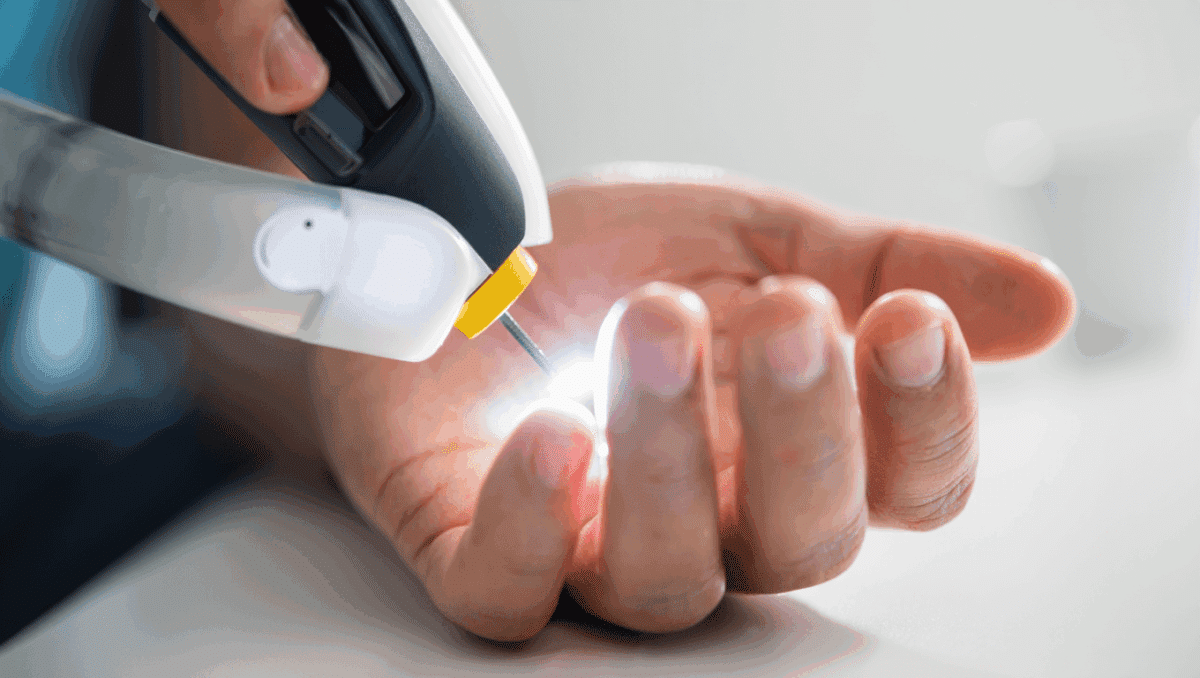
For millions managing diabetes, the ritual of finger pricks is an unwelcome daily routine. Researchers at MIT are developing a needle-free alternative that reads blood glucose by shining light on the skin — a technique that could dramatically cut down on painful checks and improve long-term monitoring.
The team has built a bench-top device roughly the size of a shoebox and has already shrunk that prototype into smaller, wearable formats now entering early human testing. Their approach uses optical analysis to detect glucose signals noninvasively, producing results that align closely with current continuous glucose monitors that rely on subcutaneous sensors.
How near-infrared light and Raman spectroscopy detect glucose under the skin
The Growing Demand for Data-Driven Decision Making in Silicon Valley
He quit, ran out of money, and begged to come back — here’s how his boss reacted
The new system is built around a form of optical fingerprinting called Raman spectroscopy. In simple terms, the method illuminates tissue with near-infrared light and analyzes how molecules in the skin scatter that light. Each molecule shifts the light in a subtly different way, creating a spectral pattern that can be read like a chemical barcode.
Glucose produces a very faint Raman signal compared with the many other molecules in skin and interstitial fluid. The MIT team overcame that problem by changing how light enters and leaves the tissue: they illuminate the skin at one angle and collect the scattered light at a different angle. That geometry reduces background noise and makes the glucose signature far easier to identify.
Rather than recording a full spectrum made up of thousands of data points, the researchers discovered they could extract meaningful glucose readings by focusing on just a few spectral bands — one that reflects glucose plus two reference bands to account for background. This selective approach cuts down on hardware complexity and cost, allowing accurate measurements with a far smaller, cheaper instrument.
Clinical testing: shoebox device shows promise versus implanted sensors
Researchers evaluated the original device in a controlled clinical setting at the MIT Center for Clinical Translation Research. In one experiment, a healthy volunteer rested an arm on the instrument while the team recorded glucose readings roughly every five minutes; each scan took about 30 seconds to complete.
To provoke a meaningful change in blood sugar, the participant drank two 75-gram glucose beverages during the four-hour session. The optical device tracked rises and falls in glucose concentration and produced results that matched closely with two commercially available continuous glucose monitors worn simultaneously — devices that measure interstitial glucose with a sensor placed under the skin.
- Measurement cadence: readings taken every five minutes, ~30 seconds per scan
- Validation stimulus: two standardized 75-gram glucose drinks
- Comparative baseline: two invasive CGMs worn by the subject
Those early findings suggest the noninvasive technique can reach clinically useful accuracy levels, at least in the small study population tested so far.
Making it wearable: cellphone-sized prototype and plans for a watch-sized sensor
After the shoebox prototype, the team rapidly moved to miniaturized designs. A cellphone-sized unit is currently being trialed on healthy and prediabetic volunteers, and engineers are working to reduce the form factor to a watch-sized device.
What the next-generation devices aim to deliver
- Continuous, needle-free glucose tracking that avoids skin punctures.
- Reduced skin irritation compared with subcutaneous, sensor-based CGMs.
- Lower recurring cost because there’s no implanted sensor to replace every few weeks.
Researchers say the smaller prototypes retain the same optical approach used in the initial device while employing more compact optics and electronics so the monitor can be worn comfortably for extended periods. A larger clinical trial in partnership with a local hospital is planned for the coming year to include participants who have diabetes.
Benefits, obstacles, and what remains to be proven for noninvasive glucose monitors
Replacing finger sticks and implanted sensors with light-based monitoring could have broad public health benefits: better testing adherence, fewer skin infections and irritations, and easier daily life for people with diabetes. But technical and regulatory hurdles remain.
- Benefits:
- Noninvasive: eliminates routine pricking and implanted leads.
- Potentially lower long-term cost and waste from disposable sensors.
- Fast measurements that can be taken frequently without discomfort.
- Challenges:
- Robustness across diverse skin tones, ages, and body types must be confirmed.
- Motion, ambient light, and sweat can introduce noise that needs compensation.
- Regulatory validation requires large, multi-center trials comparing the device against clinical blood glucose references.
- Next technical steps: improving miniaturization, extending battery life, refining algorithms for calibration and drift correction, and ensuring consistent performance in real-world conditions.
The research team includes MIT postdoctoral researcher Arianna Bresci as lead author and MIT research scientist Jeon Woong Kang as the senior author. Their findings are published in the journal Analytical Chemistry and mark an important step toward a practical, noninvasive glucose monitor that could one day spare millions from routine finger pricks.
You might also like:
- Root canal treatment reduces heart disease and diabetes risk, study finds
- Type 1 diabetes reversed in mice by Stanford without insulin or immune suppression
- Self-healing contact lenses repair scratches in 1 hour with UV light
- Cancer breath test hailed as most significant step toward lifesaving breakthrough in 50 years
- Double neural bypass surgery helps paralyzed man feed himself and pet his dog

Michael Thompson is an experienced journalist covering U.S. and global news. With ten years on the front lines, he breaks down political and economic stories that matter. His precise writing and keen attention to detail help you grasp the real‑world impact of every event.


Man, I remember those finger-prick tests, like a mini-horror show every time. This light skin scan thing sounds like sci-fi magic! Hope its not just another tease, cause my poor fingers cant take it anymore.
Hear me out, mate. Imagine ditching those finger-prick tests for glucose with a light scan! Like, are we finally entering the sci-fi realm where gadgets do the tricky work for us? Sounds like a game-changer, if you ask me!
Man, I remember my grandma always complainin about those finger-prick tests for diabetes. This light skin scan thing sounds like a game-changer. No more blood and pain? Count me in, fam!
Man, back in the day, pricking my finger for glucose tests felt medieval. This new light-based scan sounds like a game-changer! Hope its as smooth as they say. Cant wait to ditch the old-school finger pricks!
Man, technologys wild these days! I remember my grandpa cursing those finger-prick tests like they were the devil. If this light scan thing works out, hed probably think its straight outta sci-fi!
Dude, I feel ya! Technologys runnin wild, like a crazy rollercoaster, right? Your grandpa would be like, What in the sci-fi world is goin on here? I can almost hear him cursin those old tests! Its like were living in some futuristic movie with these light scans now. Wild times were in, man!
Man, the thought of ditching those finger-prick tests for a light scan sounds like a dream! Bring on the future tech that can make managing diabetes less of a hassle. Cant wait to see these innovations in action!
Man, back in the day, I had to prick my finger every day for glucose tests. A skin scan instead? Sign me up! Technology moving fast, huh? Hope its as good as they say.
Oh man, I feel your pain! Pricking your finger daily sounds like a nightmare. A skin scan for glucose checks definitely sounds like a game-changer. Technology sure is zooming ahead, aint it? Lets hope this new-fangled contraption lives up to the hype and makes life a tad easier for us all. Cheers to progress!
Man, I remember those finger-prick glucose tests, not fun at all. Glad to hear about this light-based skin scan innovation! Sounds like a game-changer for folks managing diabetes. Cant wait to see this tech in action.
Man, I remember when glucose tests were all about finger pricks. That was a pain! This light scan tech sounds like a game-changer. Cant wait for when its as easy as checking the time on my watch!
Oh man, I totally feel you on that! Finger pricks were like a daily torture session, right? This light scan thing sounds like a dream come true. Imagine just casually swiping your wrist and boom, you know your glucose levels! Its like living in a sci-fi flick, but, like, in a cool way. Cant wait for that kind of tech to be as easy as checking your Insta notifications. The future is now, my friend!
I remember the days of pricking my finger for glucose tests like a DIY vampire. This light-based skin scan sounds like sci-fi magic! No more painful pokes? Count me in! Where do I sign up for this futuristic tech upgrade?
Man, I remember those finger-prick glucose tests – not fun times! This light-based skin scan sounds like a game-changer. Imagine ditching the pricks for some sci-fi tech? Count me in!
I remember the days of pricking my finger for glucose tests like it was a torture routine. This light-based skin scan sounds like magic! If its accurate, bring it on – no more blood sacrifices to the glucose gods!
Man, I remember my grandpa always complaining about those finger-prick tests for diabetes. Glad to hear about this light scan thing! Feels like were finally stepping into the future where tech makes life easier for folks with health issues.
Man, I remember my grandma dealing with those finger-prick tests for diabetes. This light-based skin scan breakthrough sounds like a game-changer. No more painful pricks, just a quick scan – technologys really pushing boundaries, huh?
Man, I remember my grandpa cursin every time he had to prick his finger for that glucose test. If this light-based scan thing works out, hed be over the moon. Progress, huh?
Man, I remember back in the day when glucose tests were all about those painful finger pricks. This light-based skin scan sounds like a game-changer! No more wincing every time you check your levels. Sign me up for that tech revolution!