
Show summary Hide summary
- How Wales became a testing ground for tighter speed limits
- An on-the-ground view: why some drivers are frustrated
- Key elements of the new Road Safety Strategy
- Does a lower drink-drive limit actually save lives?
- Age-based testing: safety benefits versus mobility costs
- Putting road fatalities in perspective
- Who is blamed when accidents happen?
- Policy trade-offs: enforcement costs, signage chaos, and rural impacts
- Questions policymakers still need to answer
- About the author
Keir Starmer’s recently unveiled road-safety plan has reignited a debate about how far government should go in reshaping everyday travel. What started as a public-safety pitch reads to many as a strategy to discourage driving—one that relies heavily on tighter rules, more enforcement and signals that motorists are increasingly unwelcome.
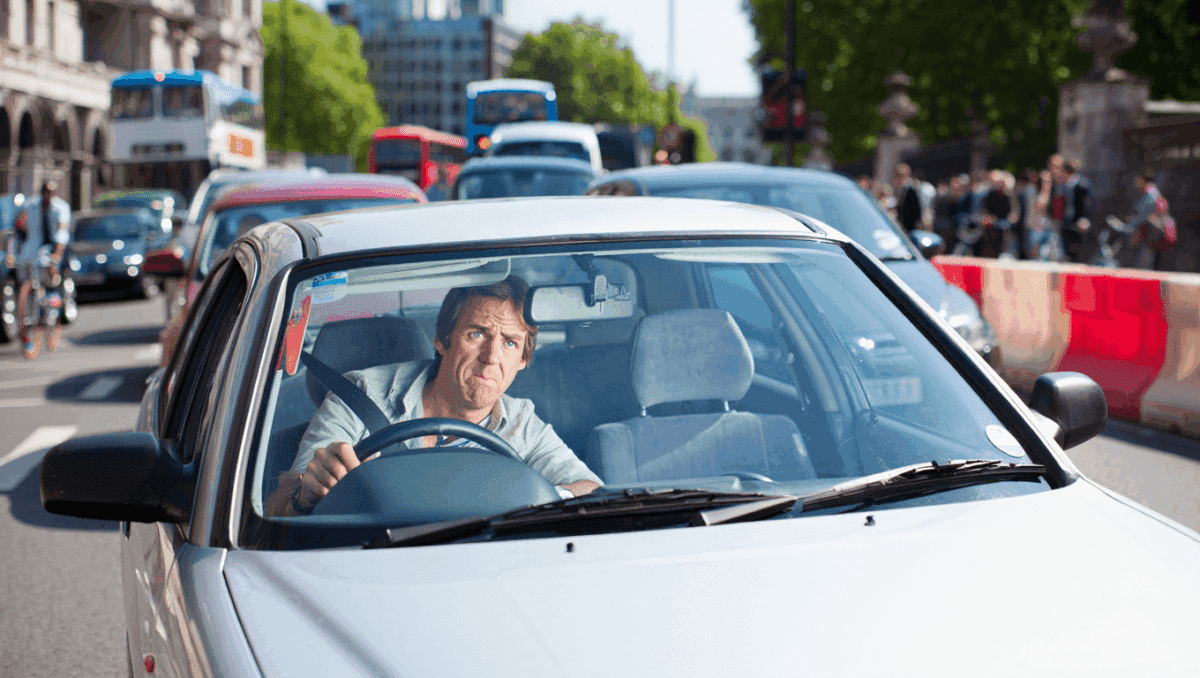
My own recent experience driving across Wales during the holidays crystallized that impression. A journey meant to be simple and practical turned into a series of reminders that transport policy now often prioritizes restrictions over convenience.
How Wales became a testing ground for tighter speed limits
The Growing Demand for Data-Driven Decision Making in Silicon Valley
He quit, ran out of money, and begged to come back — here’s how his boss reacted
Wales’ move to widespread 20mph zones in 2023 is a clear preview of the kind of urban interventions Starmer’s plan champions. The change was rolled out rapidly, with new signage installed across many towns and cities. That rollout came with a hefty price tag and an aggressive enforcement campaign.
- Signage costs: Officials reported the switch cost roughly £34.4 million—a large public expense for a visible but symbolic measure.
- Enforcement spike: Some half a million speeding notices were issued in 2024 as authorities sought to enforce the new limits.
- Policy reversal: Following widespread complaints, much of Wales began reverting many streets back to 30mph at the start of 2024—an about-face that added another estimated £3–5 million in costs and created confusion for drivers while signs were updated.
The episode shows how quickly well-intentioned policies can become costly and chaotic when they collide with public frustration and logistical realities.
An on-the-ground view: why some drivers are frustrated
Long-distance drivers, rural residents, and people who rely on a car for errands felt the practical impact most. Public-transport performance—such as unreliable trains—prompted some travelers to choose driving, only to find road policies that made journeys slower and enforcement stricter.
For many travelers the math is straightforward: if transit alternatives are poor, the car remains necessary. But modern road policy often assumes drivers can simply switch to other modes. That assumption doesn’t hold up in places with limited bus or rail options.
Key elements of the new Road Safety Strategy
Starmer’s package bundles a number of measures aimed at reducing collisions and casualties. While framed as lifesaving, several proposals raise practical and political questions:
- Lowering the legal blood-alcohol limit from 80mg to 50mg per 100ml of blood.
- Mandatory eyesight checks for drivers over age 70 on a three-year schedule.
- Enhanced enforcement of speed limits and measures designed to reduce vehicle traffic in urban areas.
The policy language stresses casualty reduction and safer streets. Critics argue the measures risk disproportionately affecting rural communities, older drivers and local businesses without clear evidence of proportional benefit.
Does a lower drink-drive limit actually save lives?
Supporters cite public-health logic: lower limits should reduce alcohol-related collisions. But international experience offers a mixed picture. Scotland adopted a 50mg limit in 2014; follow-up analyses showed little to no measurable decline in traffic fatalities attributable directly to that change.
Practical implications are immediate: for many people, one ordinary drink—often a single pint—could put them over the new threshold and make post-work or social trips illegal. That shift is likely to accelerate closures of rural pubs and reduce informal socializing spaces, further changing rural life.
Age-based testing: safety benefits versus mobility costs
Requiring eyesight tests every three years for drivers over 70 is sold as a targeted safety improvement. But the evidence base is thin:
- Statistically, older drivers are among the least likely cohorts to cause collisions.
- Mandatory checks could significantly reduce mobility for seniors who live in areas with limited public transport, increasing isolation and dependence.
The trade-off is clear: a small gain in screening could impose a large loss in independence for many older people, especially outside urban centers.
Putting road fatalities in perspective
Road deaths have fallen dramatically over decades. Annual fatalities peaked in the mid-1960s and have been on a long downward trend since. In 2025 there were about 1,579 road fatalities in Great Britain—tragic, but far fewer than in previous generations.
To provide further context, other everyday risks can be as or more deadly. The Royal Society for the Prevention of Accidents documented thousands of accidental deaths at home in single years, highlighting how public attention and policy often focus unevenly across hazards.
Who is blamed when accidents happen?
Official collision reports often list “failed to look properly” as a common factor, and many incidents involve pedestrians or other vulnerable road users. Data from the five years to 2023 showed almost 1,872 fatalities involving pedestrians impaired by alcohol identified as a contributing factor. That figure suggests many tragedies occur when intoxicated pedestrians are present in the roadway, not solely from reckless driving.
Assigning blame solely to drivers obscures the complex mix of behaviors that produce collisions: infrastructure, lighting, intoxication of all parties, and split-second errors.
Policy trade-offs: enforcement costs, signage chaos, and rural impacts
Experimentation with tougher limits and stricter checks can generate unintended consequences:
- High administrative and signage costs when limits are changed repeatedly.
- Enforcement surges that penalize drivers for small infractions, sometimes tied to policy reversals.
- Economic harm to rural businesses and social venues if even light drinking becomes a barrier to driving home.
Any credible road-safety campaign should weigh these trade-offs and test measures in pilot programs before sweeping national rollouts.
Questions policymakers still need to answer
For a strategy that promises to save “thousands of lives,” more clarity is needed on which measures will produce measurable declines in fatalities versus which ones mainly shift patterns of travel and social life. Policymakers should outline:
- Clear metrics for success tied to reductions in specific causes of collisions.
- Evidence from comparable jurisdictions showing causal effects, not just correlations.
- Plans to protect rural mobility and prevent social isolation among older adults.
About the author
Austin Williams directs the Future Cities Project and edits the Five Critical Essays series, focusing on urban policy, transport and civic life.
You might also like:
- Labour’s culture war targets rural pubs
- Pedestrian traffic fatalities in the U.S. fell last year more than any year since records began
- VIDEO – A driver punished by a truck after a dangerous overtake
- Tesla Autopilot swerves to avoid 75 mph head-on collision, saving lives
- 12-year-old saves mom’s life after she passes out while driving, takes wheel and calls 911

Robert Johnson is a dedicated columnist focusing on political and social debates. With twelve years in editorial writing, he provides nuanced, well‑argued perspectives. His commentaries invite you to form your own views and engage in critical issues.


Man, these new rules gonna make driving feel like a minefield, innit? Labour takin no prisoners. But hey, safety first, right? Better watch my speed and stick to the limit before they start takin licenses away like candy.
Man, these new rules got me feeling like theyre takin the joy outta drivin. Cant catch a break these days. Whats next, speed bumps on the motorway? Its like theyre tryna turn us all into snails on wheels.
Man, these new rules got me feeling like Im driving through a minefield. Labours crackdown means no more playing fast and loose on the roads. But will it really make things safer, or just leave us all crawling at a snails pace?
Dude, I hear ya! Its like trying to navigate a maze blindfolded out there. Feels like were all stuck in slow-mo, right? Wonder if this crackdown will really zap the crazy drivers or just jam us up even more. Stay safe out there, man!
Man, these rules got me feelin like Im back in driving school! Labours really cracking down. Gonna need a cheat sheet for all these new speed limits! Drive safe, folks!
Man, these new rules feel like a punch to the gut. Cant even drive in peace anymore. Labours really going all out. Wonder if this crackdown will actually make a difference or just drive us all crazy.
Man, these new road rules got me feeling like Im in a maze, dodging fines left and right. Its like a speed limit minefield out here! Cant a driver catch a break anymore? Gonna need a GPS just for all these changes!
Man, these new rules got me feeling like Im back in driving school. Cant catch a break with all these changes. Gonna need a manual just to keep up with the road signs at this rate!
Man, these new rules are making my head spin! Feels like theyre cracking down on us drivers left and right. Cant catch a break, can we? Wonder if all this fuss will actually make the roads safer or just drive us all crazy.
Man, these new rules got me feeling like Im in a racing video game, dodging penalties left and right. Cant decide if its a safety upgrade or just a hassle for us drivers. Whats next, speed bumps on the motorway?
Man, these new driving rules got me feeling like Im in a never-ending game of Twister. Cant keep up with all the changes! Are they really making the roads safer or just more confusing? Guess well find out, one red light at a time.
Man, these new rules in the UK got me stressed. Labours crackdown on drivers is no joke. Gotta watch those speed limits like a hawk now. Wonder if its gonna make the roads safer or just tick off everyone behind the wheel.
Man, the UK roads turning into a real minefield, innit? Those speed limits are tighter than skinny jeans at a hipster convention. Wonder if theyll actually stop the mad rush or just raise everyones blood pressure. Stay zen behind the wheel, mate!
Man, Labours really cracking down on drivers in the UK. Reminds me of that time I got a ticket for going 5 over. But hey, safety first, right? Wonder if this will actually make a difference on the roads.
Mate, these new rules got me feeling like Im playing a real-life racing game with all these obstacles! Cant decide if its a challenge or just a big ol headache. Whats your take on the UK Labours crackdown on drivers?
Man, these new rules got me feeling like Im stuck in a speed trap! Labours crackdown is hitting us hard. But hey, safety first, right? Wonder if these changes will really make a difference, or just tick off drivers more.