
Show summary Hide summary
- What Ella McCay is about: trauma, marriage, and family patterns
- Emma Mackey on why she accepted the role and the film’s themes
- Signs of people-pleasing and why it matters in the film
- Jamie Lee Curtis on the family realism and the film’s emotional anchor
- How the storytelling balances drama and hope
- Expert perspective: healing from childhood wounds
- Cast, credits, and where to see Ella McCay
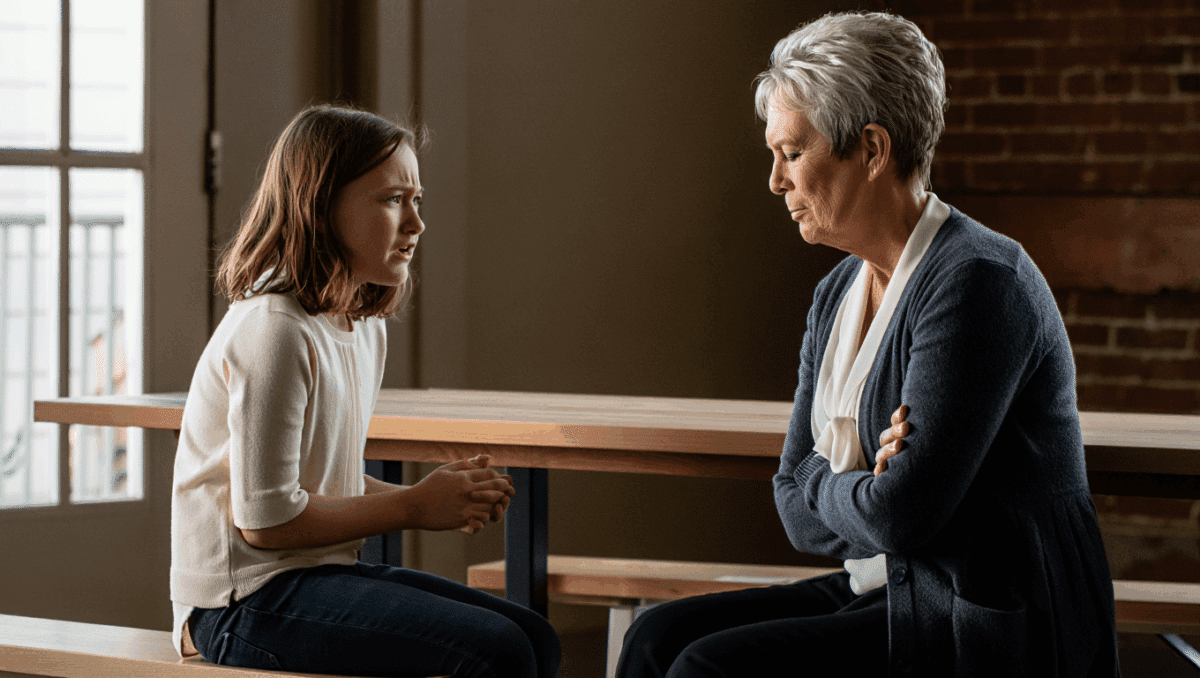
Emma Mackey steps into the title role of Ella McCay in a film that digs into how family wounds shape the adults we become. Directed by three-time Oscar winner James L. Brooks, the drama blends sharp character work with quiet moments of reckoning, asking whether the past can be unlearned or will always echo through our relationships.
At the heart of the movie is a woman trying to build a life while old patterns tug her back toward familiar pain. With Jamie Lee Curtis as a blunt, protective aunt and Jack Lowden as Ella’s husband, the story tracks the ripple effects of betrayal, grief, and the small acts that either reinforce or crack open cycles of behavior.
What Ella McCay is about: trauma, marriage, and family patterns
The Growing Demand for Data-Driven Decision Making in Silicon Valley
He quit, ran out of money, and begged to come back — here’s how his boss reacted
Ella McCay follows a lieutenant governor named Ella who is navigating the fallout from her mother’s death, a fraught relationship with her father, and an increasingly hollow marriage. The film frames those struggles as symptoms of a deeper inheritance: the way childhood experiences — especially witnessing infidelity — can shape our instincts in love and power.
Its central question is simple but persistent: when you inherit a pattern of hurt, can you choose differently, or will you repeat what you’ve always known? Brooks’ script leaves that question open, using intimate scenes and family arguments to show how easy it is to slip back into old roles.
Emma Mackey on why she accepted the role and the film’s themes
Mackey says she was drawn to the project because it explores fundamental human choices — how cycles begin and whether they can be stopped. She describes Ella’s journey as a study of identity: not just what happened to her, but what she decides to become in response.
Ella’s relationship with her Aunt Helen is a key emotional engine. Mackey explains that having someone who points out uncomfortable truths can feel both destabilizing and oddly reassuring. In her words, Aunt Helen functions as a corrective force — the kind of person who forces you to confront reality and then do the work to change it. That tension between discomfort and comfort is central to Ella’s growth.
Signs of people-pleasing and why it matters in the film
The movie portrays Ella’s tendency to people-please as more than a personality quirk: it’s a survival strategy rooted in childhood insecurity. After seeing her father’s repeated betrayals, Ella seeks safety in others, prioritizing the appearance of normalcy over her own needs.
Common indicators shown on screen
- Taking responsibility for others’ happiness at the cost of personal boundaries
- Suppressing anger or doubts to avoid conflict
- Choosing partners based on their “normal” family background rather than compatibility
- Difficulty asserting needs or recognizing manipulation
Dr. Carly Dober, a clinical psychologist, notes that this kind of behavior often stems from an attempt to create a false sense of safety and can be tied to emotional dependency. People-pleasing can be a way to avoid rejection and protect fragile self-worth, she explains, and it frequently coexists with anxiety, depression, and low self-esteem.
Jamie Lee Curtis on the family realism and the film’s emotional anchor
Curtis says the film’s honest depiction of family dynamics is what makes it resonate. Rather than offering tidy answers, Ella McCay presents recognizable family roles: the enabler, the betrayer, the protector. For many viewers, those archetypes will feel familiar.
She emphasizes the importance of figures like Aunt Helen — relatives or friends who refuse to look away and who fight for someone even when that person keeps getting hurt. According to Curtis, that kind of advocacy is what can begin to undo damaging cycles.
How the storytelling balances drama and hope
While Ella’s path includes painful setbacks, the film deliberately keeps a thread of possibility running through the narrative. Characters stumble and sometimes make the same mistakes again, but those failures also create perspective and, potentially, change.
Mackey argues that missteps are necessary for growth: without them, characters (and people) can’t learn what truly matters or be pushed to search for a different way to live. The movie doesn’t promise neat redemption, but it does suggest that hope — however imperfect — can counterbalance trauma.
Expert perspective: healing from childhood wounds
Therapists often point out that healing is neither linear nor guaranteed. Recovery typically requires recognizing repeating patterns, tolerating discomfort, and actively choosing new behaviors. In cinematic terms, that process makes for compelling character arcs because it mirrors the messy reality of change.
- Recognition: naming the pattern and its origin
- Accountability: acknowledging choices and their consequences
- Support: relying on trusted people who speak truth
- Practice: experimenting with different responses to familiar triggers
Cast, credits, and where to see Ella McCay
Directed by James L. Brooks and starring Emma Mackey, Jamie Lee Curtis, and Jack Lowden, Ella McCay blends dramatic weight with moments of levity to examine how families shape identity. The film is playing in theaters now.
You might also like:
- Zendaya’s Emma in The Drama is unlike any character we’ve seen
- Luxury fashion and cool-girl brands boosted by Freakier Friday costumes
- The Sheep Detectives review: is it worth watching?
- Michael Jackson movie Screentime review: entertaining but incomplete
- Forgotten Island: DreamWorks film celebrates Filipino culture in bittersweet story

David Miller is an entertainment expert with a passion for film, music, and series. With eight years in cultural criticism, he takes you behind the scenes of productions and studios. His energetic style guides you to the next big releases and trending sensations.


Man, watching Emma Mackey and Jamie Lee Curtis get real about childhood trauma hits deep. Its like a mirror reflecting our own struggles. Makes you wonder, can we truly heal from those wounds, or are they just scars we learn to live with?
Man, those two really hit the nail on the head, didnt they? Its like theyre peeking into our souls with a flashlight. Makes you wonder if were just patching up holes or actually fixing the darn thing, doesnt it?
Man, that article hit hard. Emma Mackey and Jamie Lee Curtis getting real about childhood trauma and grief, its heavy stuff. Makes you wonder if recoverys possible, you know? Gotta give props to them for tackling such raw themes.
Dang, that piece hit me right in the feels! Emma Mackey and Jamie Lee Curtis really baring it all about trauma and grief? Thats some heavy stuff, man. Makes you think, right? Can people really bounce back from that kind of darkness? Props to them for keeping it real and diving deep into those raw themes. Its a wild ride when celebs get down to the nitty-gritty of life, aint it?
Man, seeing Emma Mackey and Jamie Lee Curtis talk about childhood trauma hits different, you know? Its like peeling back layers of your own past. Makes you wonder if recoverys possible or just a pipe dream. Deep stuff.
Dude, I feel you! Hearing Emma Mackey and Jamie Lee Curtis lay it all out there about childhood trauma hits deep, like a punch to the gut. Its like theyre shining a light on parts of ourselves weve kept locked away. But hey, maybe seeing them speak out can give us a nudge in the right direction, you know? Like maybe recovery aint a fairy tale, but a rocky road worth walkin. Who knows, maybe their words can be the start of something new for us too.
Man, watching Emma Mackey and Jamie Lee Curtis talk about grief hits different, yknow? Its like peeling an onion, layers of emotions. Makes me wonder, can we really heal from childhood trauma or were just pretending we are? Deep stuff, man.
Man, watching Emma Mackey and Jamie Lee Curtis talk about childhood trauma hits different. Its like peeling back layers of your own past. Makes you wonder, can we truly heal from those wounds, or are they just scars we carry forever? Deep stuff, man.
Man, watching Emma Mackey and Jamie Lee Curtis dive into grief hits hard. You ever feel like childhood traumas lurking in your own shadows? Ella McCays gonna make us face some real stuff, huh? Gotta buckle up for this emotional rollercoaster.
Man, watching Emma Mackey and Jamie Lee Curtis dive into grief hits hard. You ever feel like childhood traumas lurking in your own shadows? Ella McCays gonna make us face some real stuff, huh? Gotta buckle up for this emotional rollercoaster.
Man, that interview hit hard. Emma Mackey and Jamie Lee Curtis get real about childhood trauma. Makes you wonder if recoverys even possible. The films gonna be heavy, but maybe itll shed some light on deep stuff.
Geez, watching Emma Mackey and Jamie Lee Curtis dive into childhood trauma hits close to home. Can recovery be real? Makes me wonder how many of us are carrying that baggage without even knowing it. Heavy stuff.
I remember that flick hitting hard, man. Emma Mackey and Jamie Lee Curtis nailed those emotions. Its like peeling layers, seeing how childhood messes you up. Real talk.
Gosh, watching Emma Mackey and Jamie Lee Curtis delve into childhood trauma hits close to home. Reminds me of my own struggles. Wonder if recoverys possible or just a Hollywood dream. Lifes full of surprises, huh?
Lifes a rollercoaster, innit? Watching those two on screen, diving into deep stuff, its like peeking into cracked mirrors reflecting our own mess. Recovery? Who knows? Maybe Hollywood magic, but hey, hopes a good start, right? Surprises aplenty, mate. Whod have thought, eh?
Man, this topic hits close to home. Emma Mackey and Jamie Lee Curtis diving into childhood trauma? Thats heavy, but real. No quick fixes, but maybe some hope in there. Gotta face it to heal it, right?
Man, Emma Mackey and Jamie Lee Curtis really hit hard on that childhood trauma topic. Makes me wonder, can you truly recover from it? Their insights in this interview got me thinking about some deep stuff, you know?
I remember watching a movie where the characters dealt with childhood trauma. It hit close to home, yknow? Emma Mackey and Jamie Lee Curtis delving into this topic sounds intense. Wonder if itll resonate with viewers.