
Show summary Hide summary
- Why the palm cockatoo is so vulnerable and why hollows matter
- Designing a substitute: how researchers mimicked natural tree hollows
- The first hatch: what happened and who was involved
- Ecological ripple effects and conservation implications
- Next steps: scaling up, monitoring, and community involvement
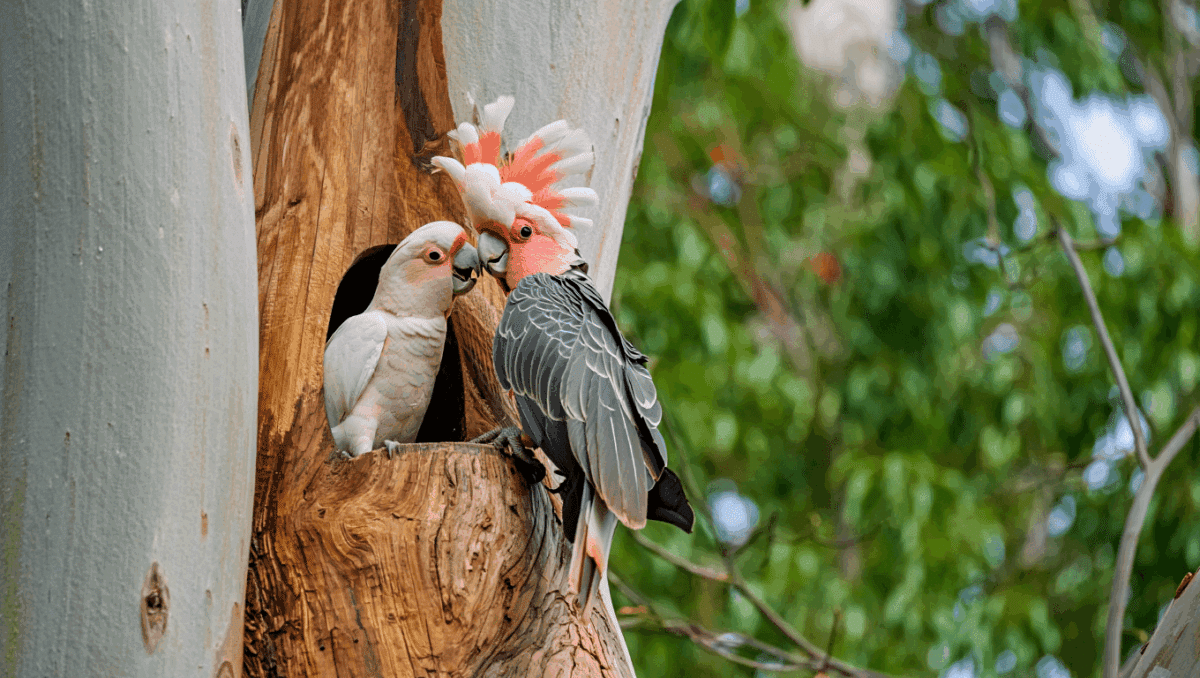
The future for one of Australia’s most striking parrots has brightened after conservationists coaxed a palm cockatoo to raise a chick inside a man-made tree hollow. The small victory follows years of fieldwork and a creative collaboration that mimics the rare natural cavities these birds need to breed.
This result comes as habitat loss and changing fire regimes make the cockatoo’s specialized nesting requirements increasingly scarce. Conservationists say the success offers a practical tool to protect the species and the many animals that depend on the same tree hollows.
Why the palm cockatoo is so vulnerable and why hollows matter
The palm cockatoo (found in the far north of Queensland) depends on tree cavities that are themselves the product of long, unusual ecological processes. These hollows are not simply rotted-out trunks — they form when factors like termites, fungi, cyclonic winds and many decades without wildfire combine to create the right internal space in very old trees.
The Growing Demand for Data-Driven Decision Making in Silicon Valley
He quit, ran out of money, and begged to come back — here’s how his boss reacted
- Time: Ideal hollows can take centuries to develop;
- Agents: Termites or wood-decay fungi often initiate the cavity;
- Disturbance regime: Cyclones can open or enlarge hollows while frequent fires or logging destroy the trees before hollows form.
Because of this specificity, the palm cockatoo has an unusually limited breeding supply. Estimates put the species at under 2,000 individuals, a figure that conservationists warn could fall further unless nesting opportunities are restored. The birds are also notable for their size, black crest and red cheek patches, and for their uncommon tool use — males tap sticks on hollow trees in rhythmic displays during courtship, earning one famous individual the nickname the “Ringo bird.”
Designing a substitute: how researchers mimicked natural tree hollows
People for Wildlife, an NGO working in the region, teamed up with an experienced woodcarver to replicate the physical and tactile properties of old-growth tree hollows. The result: the “Palm Cockatube,” a hollowed segment of aged trunk shaped to simulate the cavities palm cockatoos prefer.
What the artificial hollows replicate
- Internal geometry that resembles termite- or decay-made hollows;
- Surface texture and angles that provide a familiar feel for birds inspecting potential nests;
- Durable materials and finishes intended to withstand the tropical weather while aging naturally.
How the team deployed the artificial nests
Twenty-nine custom hollows, representing three different internal profiles, were mounted in trees throughout known palm cockatoo habitat where the birds had been observed but were not currently nesting. The placements were guided by long-term observations and local knowledge, including input from the Apudthama Traditional Owners, who have ties to the landscape and its wildlife.
Field teams monitored the installations over months, documenting inspection visits, territorial behavior, and eventually, an egg laid inside one of the cockatubes.
The first hatch: what happened and who was involved
Researchers found the first successful nest while conducting routine checks. After seeing adult birds return repeatedly to a particular artificial hollow, field biologists discovered an egg and then later a chick — a milestone confirming that palm cockatoos can accept and rear young in the human-made cavities.
People for Wildlife associate researcher Christina Zdenek and colleague Benjamin Muller were among those who observed the progression from inspection to occupancy. Local Traditional Owners also celebrated the outcome, which carries cultural as well as ecological importance for communities tied to the land.
Ecological ripple effects and conservation implications
Tree hollows are keystone features across Australian forests, offering shelter and nesting sites for a wide array of species beyond cockatoos: gliders (nocturnal arboreal marsupials), parrots, owls, bats and small mammals rely on them. Conservationists point out that helping palm cockatoos find nesting sites can have a multiplier effect.
- Palm cockatoos act as an umbrella species — protecting the cockatoo’s needs can indirectly protect dozens of other hollow-dependent animals.
- Artificial hollows can offset losses from logging and increased fire frequency while long-term habitat restoration proceeds.
- Monitoring and adaptive design improvements will refine what works best for different species and site conditions.
Next steps: scaling up, monitoring, and community involvement
The initial success has prompted plans to expand the program, refine nest designs, and continue careful monitoring. Conservationists emphasize collaboration with Indigenous custodians of the land, because integrating local knowledge increases the likelihood of locating suitable sites and achieving community-supported outcomes.
Ongoing research will track chick survival, breeding frequency, and whether other cavity-dependent species begin using the artificial hollows. Field teams will also test variations in cavity size, placement height and exposure to see which combinations perform best under changing environmental conditions.
You might also like:
- Endangered cahow hatches on Nonsuch Island in Bermuda
- Thousands of flamingo chicks hatch in Turkey in major comeback after climate disaster
- Eastern imperial eagle, Serbia’s national bird, sees record breeding year
- Ecosia: 250 million trees planted for Earth Day milestone
- 158 giant endangered tortoises released on Galápagos island after being extinct for 180 years

Michael Thompson is an experienced journalist covering U.S. and global news. With ten years on the front lines, he breaks down political and economic stories that matter. His precise writing and keen attention to detail help you grasp the real‑world impact of every event.


Man, these cockatoos are really out there hustlin for their future! Who knew artificial nests could be the answer? Natures got some competition now! Wildlife 1, extinction 0. Keep it up, feathery friends!
Man, I remember seeing those majestic palm cockatoos in the wild. Glad to hear about this win for conservation. We gotta protect these beauties and their habitats. Kudos to the researchers for stepping up!
Man, these cockatoos are onto something! Building their own crib, literally! Maybe I should take notes for my next DIY project. Jokes aside, its heartwarming to see these endangered cuties getting a helping hand in the wild. Kudos to the conservation team!
Man, those cockatoos are really hustlin in the conservation game! Big ups to the researchers for creating those fake nests. Natures got some sneaky ways to keep the circle of life going, huh?
Man, these cockatoos are smarter than we think! Creating their own little family in an artificial nest. Nature always finds a way, huh? Gotta give props to the conservation efforts. Keep it up, feathered friends!
Yeah, mate, natures full of surprises, innit? Those cockatoos are like the OG architects, building their own crib with a touch of style. Its wild how they adapt to survive. Gotta clap for the conservation crew, looking out for our feathered buddies. Keep on rocking, bird squad!
Man, these cockatoos are really out there hustlin for their survival, huh? Big props to the conservation crew for setting up those artificial nests. Natures gotta adapt, and so do we. Keep the chicks coming!
Heck yeah, those cockatoos aint playin around! Its like a real-life survival game out there. Mad respect to the crew for hooking them up with those crib-like nests. Gotta hand it to Mother Nature for keepin us all on our toes, right? Lets keep those fluffy chicks rollin in!
I remember seeing those big white birds on a trip once, majestic creatures! Glad to hear about the new chick – hope it grows up strong. Artificial nests, huh? Nature and tech teaming up for the win!
Man, these cockatoos are really out there playing the survival game, huh? Artificial nests and all that jazz. Nature can be a real piece of work—hope this little chick thrives, though. Natures wild, man.
I remember seeing a palm cockatoo once, majestic bird. Glad to hear about the chick hatching in the artificial nest, conservation wins! We gotta protect these beauties, man. Natures too precious to lose.
Man, those cockatoos are somethin else! Nature finds a way, right? Hope those artificial nests keep em safe. We gotta protect these feathered friends, they bring joy to us all.
Man, those cockatoos sure know how to adapt! Artificial nests, huh? Nature meets tech. Hope the little chick thrives. Heres to more wins for conservation!
Man, those cockatoos really be out here showing us up with their tech-savvy moves! Nature and artificial nests – who wouldve thought? Heres hoping that little chick grows up strong and proud. Cheers to more wins for conservation efforts!
Ive always said, give nature a chance and itll surprise you! Artificial nests for cockatoos? Thats some next-level conservation work! Big shoutout to the team behind this innovative idea. Lets keep those birdies safe and sound.
Who woulda thought, right? Nature throwin us curveballs! I mean, artificial nests for cockatoos? Thats wild, man! Gotta give props to the team behind this move. We all in for keepin those birdies safe. Kudos to the innovative thinkers!
Man, I remember seeing those majestic cockatoos in the wild. Glad theyre getting some help with these artificial nests. Nature needs all the backup it can get, right? Hope the chick thrives!
Man, natures full of surprises, innit? Cockatoos hatching chicks in fake nests! Conservationists aint messing round. Gotta give em props for thinkin outside the box to help these vulnerable birds. Wildlifes got some real fighters on their side.