Show summary Hide summary
- Why immigration and integration are at the heart of school unrest in France
- Unpacking the term “Islamo-left” and its alleged influence
- How the school uprisings unfolded: actors, triggers, and escalation
- Policy options Myers highlights to reduce future clashes
- Listen to the conversation: podcasts and episodes exploring the French unrest
- FULL: The French insurrection, Labour’s civil war and the Hamas-defending wife — 22 October 2026
- The French insurrection: a warning to Europe? — 22 October 2026
- FULL: The Battle of Ideas live pod – and the audience Q&A — 20 October 2026
- The Burnham bubble, civil war in Britain and the Palestine omnicause — 20 October 2026
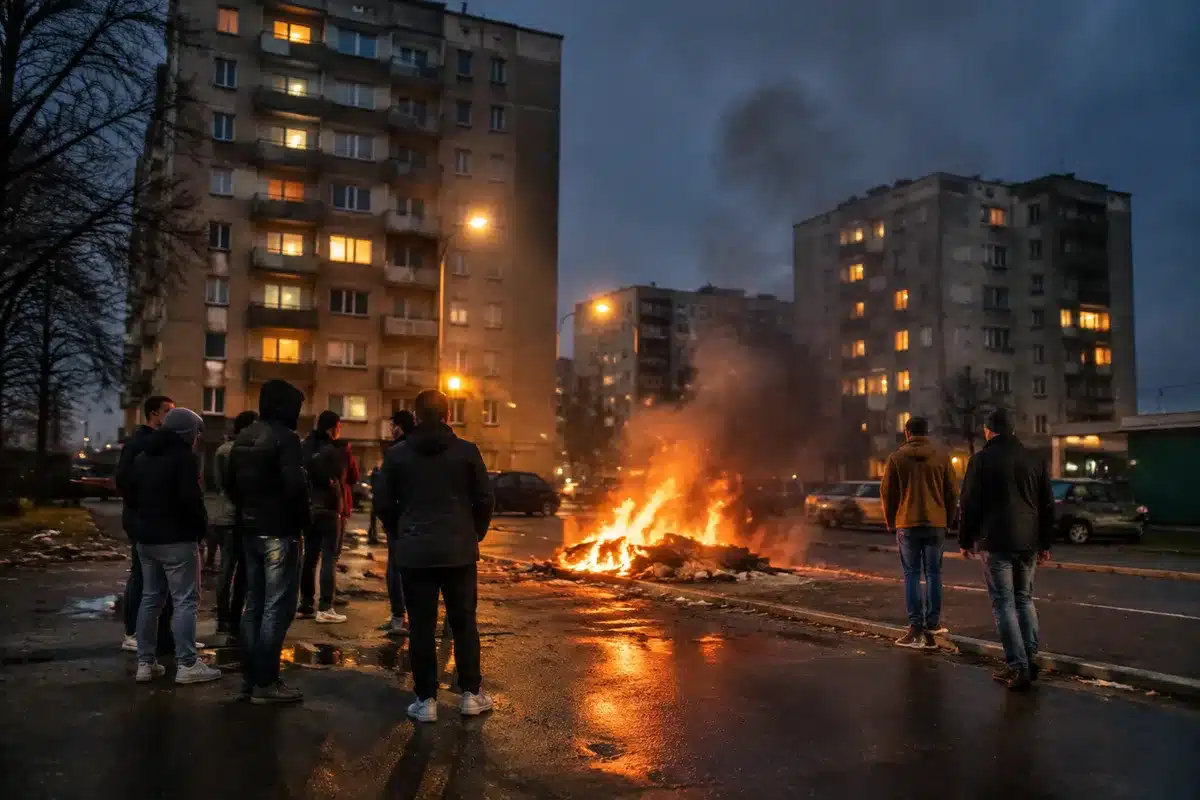
Fraser Myers lays out a sharp critique of how immigration and integration failures have intersected with political alliances to fuel unrest in French schools. His account frames recent campus clashes not merely as isolated disciplinary breakdowns but as the visible surface of deeper social fault lines involving identity, education, and political strategy.
What Myers calls the “Islamo-left” — a loose coalition of activists on the left who, he argues, have shown sympathy or tactical alignment with Islamist causes — is central to his analysis. He contends that this alignment has shaped narratives inside schools and helped transform local tensions into wider public disorder.
Why immigration and integration are at the heart of school unrest in France
The Growing Demand for Data-Driven Decision Making in Silicon Valley
He quit, ran out of money, and begged to come back — here’s how his boss reacted
Myers argues that the tensions seen in schools are rooted in broader patterns of migration and uneven integration policies. Rather than viewing incidents as random acts of indiscipline, he places them within a longer story of social exclusion, failing public services, and contested national identity.

- Demographics and concentration: Large populations of immigrant-origin youth are often clustered in under-resourced neighborhoods, creating pressure on local schools and social services.
- Education system strain: Schools become the frontline for integration — when they lack resources or coherent civic curricula, they struggle to transmit shared republican values.
- Economic marginalization: High youth unemployment and weak upward mobility feed resentment that can spill into classrooms and public protests.
Unpacking the term “Islamo-left” and its alleged influence
The phrase “Islamo-left” is contested, but Myers uses it to describe a political tendency he sees as blending elements of far-left anti-imperial rhetoric with Islamist grievances. He suggests that, in some cases, activists sympathetic to anti-Western narratives have prioritized cultural or identity-based solidarity over criticism of illiberal practices.
This argument rests on several claims:
- Alliances form around opposition to perceived state racism and police violence, sometimes sidelining concerns about gender equality or secular education.
- Within schools and community organizations, some activist networks emphasize victimhood narratives that can discourage open debate and reinforce group isolation.
- These dynamics can make it harder for moderate civic voices to reach young people, leaving a political vacuum that more radical actors may fill.
Myers stresses that these are political observations rather than sweeping indictments of communities or faiths. He frames them as warnings about how certain political strategies, when left unchallenged, can unintentionally amplify social fragmentation.
How the school uprisings unfolded: actors, triggers, and escalation
The uprisings Myers examines tended to follow a pattern: a local incident — a clash between students and teachers, a disciplinary decision, or a police intervention — becomes a flashpoint that spreads through social networks and protests. He maps the roles played by several groups.
- Students and youth networks — often driven by immediate grievances related to discipline, respect, or perceived humiliation.
- Local activists — community organizers who amplify incidents, framing them as part of broader injustice narratives.
- Political actors — national figures who either try to calm tensions or exploit them for political gain.
- Media and social media — platforms that accelerate rumor and outrage, sometimes distorting the original facts.
Myers points to the rapid information cycles as a key reason local incidents can escalate into nationwide episodes, noting the difficulty schools face in containing narratives once they go viral.
Policy options Myers highlights to reduce future clashes
In response to the unrest, Myers outlines a series of policy directions aimed at addressing root causes rather than only policing symptoms. He emphasizes a blend of civic education, targeted investment, and clearer enforcement of secular norms.
- Invest in schools: More resources for teachers, smaller classes, and support services in underserved neighborhoods.
- Strengthen civic instruction: Curricula that teach republican values, critical thinking, and shared civic responsibilities.
- Support community bridges: Programs that foster dialogue between local leaders, parents, and educators to rebuild trust.
- Hold political discourse accountable: Encourage politicians and activists to avoid narratives that polarize or dehumanize groups.
Listen to the conversation: podcasts and episodes exploring the French unrest
For listeners who want deeper context, Myers’ analysis appears alongside a set of recent podcast episodes that explore the French situation and broader political fallout.
-
FULL: The French insurrection, Labour’s civil war and the Hamas-defending wife — 22 October 2026
This extended episode gathers multiple voices to debate the causes of the unrest and its implications for European politics. Note: full episode marked for supporters.
-
The French insurrection: a warning to Europe? — 22 October 2026
A focused discussion on whether the events in France could presage similar tensions across Europe, with analysis of migration, identity politics, and state responses.
-
FULL: The Battle of Ideas live pod – and the audience Q&A — 20 October 2026
Recorded live, this session includes audience questions that probe the cultural and political roots of recent unrest. Available in full for subscribers.
-
The Burnham bubble, civil war in Britain and the Palestine omnicause — 20 October 2026
An episode connecting domestic political fractures in the UK to broader geopolitical debates that also shape discourse in France and beyond.
You might also like:
- Zohran Mamdani’s comments on Palestinian intifada spark controversy and debate
- French school riots expose entitled students and spark nationwide debate
- Zack Polanski accused of being a useful idiot for Islamism
- Manchester protests described as intifada escalate after Gaza rally
- Migrants must integrate, says Giorgia Meloni: what it means for Europe

Robert Johnson is a dedicated columnist focusing on political and social debates. With twelve years in editorial writing, he provides nuanced, well‑argued perspectives. His commentaries invite you to form your own views and engage in critical issues.