
Show summary Hide summary
- From Rhetoric to Reality: Merz’s Promises and the Follow-Through
- Turning Points in the Middle East: Statements, Walkbacks, and an Embargo
- Ukraine and Cyprus: Testing Germany’s Will
- Coalition Constraints and Political Reality in Berlin
- Public Trust, Leadership, and the Cost of Indecision
- Who Wins and Who Loses When Germany Hesitates?
- Voices on the Right and the Limits of Change
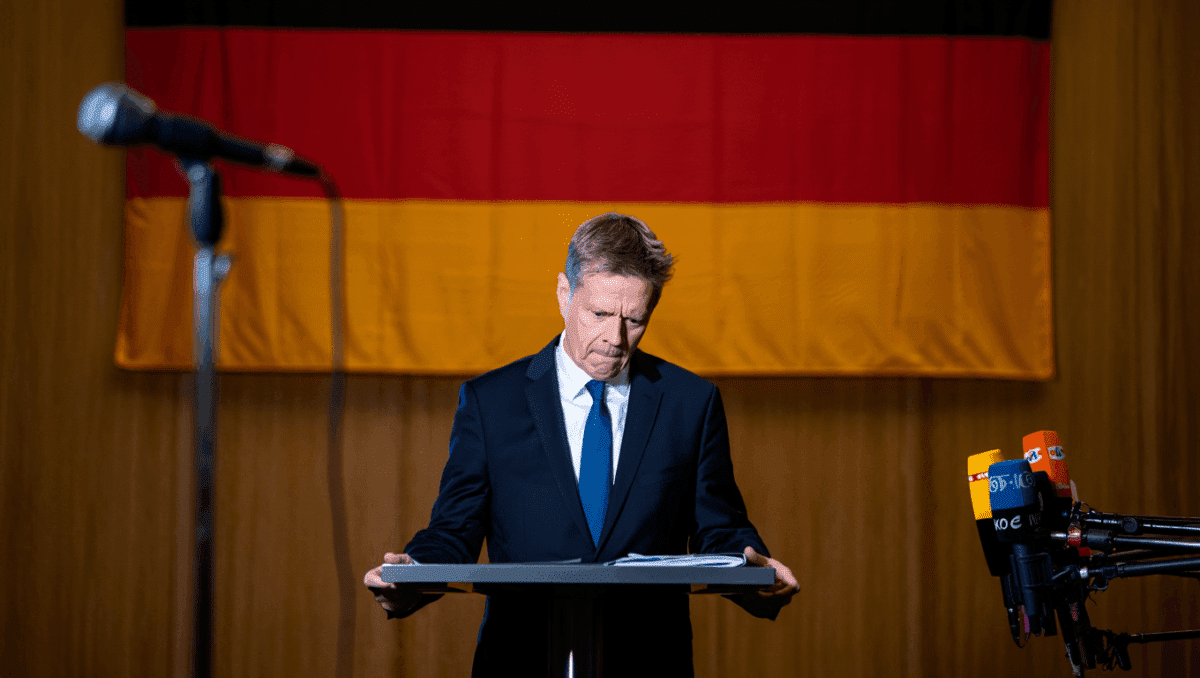
Germany’s foreign policy under Chancellor Friedrich Merz has become a study in contrasts: bold rhetoric that excites expectations, followed by rapid retreats when tough decisions arrive. Supporters hail a promised shift toward strategic realism and a stronger military posture; critics see a leader who talks tough but hesitates when action is required.
This pattern—firebrand speeches succeeded by cautious backtracking—has shaped Germany’s recent reactions to crises from the Middle East to Eastern Europe. The gap between words and deeds is not only a personal failing for Merz but a symptom of broader political and institutional limits that constrain Germany’s ability to act decisively on the world stage.
From Rhetoric to Reality: Merz’s Promises and the Follow-Through
The Growing Demand for Data-Driven Decision Making in Silicon Valley
He quit, ran out of money, and begged to come back — here’s how his boss reacted
When Friedrich Merz took office, many observers expected a clear departure from Germany’s postwar caution: a so-called Zeitenwende that would remake Berlin’s defense posture and base decisions on national interest as much as on multilateral legal frameworks. Early speeches suggested a willingness to break with the past.
Yet the actual policymaking has often fallen short. Merz has a pattern of making forceful declarations and then softening them after political pushback or new developments. The result is a leadership style defined more by reaction than by strategy.
Turning Points in the Middle East: Statements, Walkbacks, and an Embargo
Merz’s handling of the Middle Eastern conflicts—particularly regarding Iran and Israel—illustrates the tension between rhetoric and restraint.
Strong words that didn’t hold
- In a high-profile address during escalating tensions involving Iran, Merz dismissed the notion that strict adherence to international law alone would solve the problem of a regime pursuing nuclear capabilities and repressing its population. The speech signaled a shift toward realism over what he presented as empty moralizing.
- That bluntness earned public praise abroad, including from the U.S. president at the time, but within days Merz had toned down his stance after returning from a Washington trip—citing concerns about the lack of a coherent military plan and saying a prolonged conflict would not serve Germany’s interests.
The Israel arms pause and its fallout
Perhaps the most controversial move was the summer 2025 suspension of weapons deliveries to Israel. The decision came while hostages, including Germans, remained in captivity, prompting sharp criticism from German Jewish organizations and international allies who saw the pause as a rupture with long-standing policy.
Merz defended the embargo as a conscience-driven choice, pointing to humanitarian concerns over Israeli military actions in Gaza. That defense, however, has not quelled criticism that such statements undercut Germany’s rhetorical commitment to Israel and encouraged public protests against the chancellor.
Ukraine and Cyprus: Testing Germany’s Will
Merz’s record on Europe’s other major flashpoints has been equally uneven, revealing a pattern of conditional commitments that fail to translate into action.
Promises on Taurus missiles
As opposition leader, Merz once issued a stark ultimatum: give Moscow 24 hours to stop targeting civilians or Germany would arm Ukraine with Taurus cruise missiles. Since becoming chancellor, that decisive posture has softened. Germany has not delivered Taurus missiles, and public statements on Ukraine have become more ambiguous—contributing to doubts about Berlin’s reliability as a partner.
Support for Cyprus—words without hardware
After Iran-linked drones struck Cyprus, German officials initially vowed robust support. That pledge was quickly watered down when the foreign minister later said there was no need for military assistance. These swift reversals underscore a tendency to pledge solidarity in principle, then retreat in practice.
Coalition Constraints and Political Reality in Berlin
Merz’s behavior cannot be explained by personality alone. Germany’s coalition politics create structural limits on how far any chancellor can shift policy.
- Coalition partners with different priorities restrain bold moves, especially on issues that provoke deep public emotion or international controversy.
- Parliamentary arithmetic and the need to maintain domestic consensus often push leaders toward compromise, even when that undercuts strategic clarity.
Political analysts have described Merz as energetic but constrained—capable of signaling change but boxed in by the coalition arrangements and institutional habits of German governance.
Public Trust, Leadership, and the Cost of Indecision
Beyond parliamentary mechanics, the chancellor’s inability to convert strong words into consistent policy has eroded public confidence. Leaders who prepare citizens for difficult trade-offs and explain the reasoning behind controversial choices tend to build lasting support; those who oscillate risk undermining the state’s credibility.
Germany’s international influence depends as much on predictable policy as on moral posturing. Without a clear strategy and the willingness to follow through, rhetorical commitments ring hollow and allies grow skeptical. Under Merz, critics argue, Germany increasingly looks reactive—keeping afloat rather than steering.
Who Wins and Who Loses When Germany Hesitates?
Indecision in Berlin affects multiple stakeholders:
- Allies who expect reliable support may recalibrate their own strategies if German assistance proves erratic.
- Domestic constituencies—victims of regional conflicts, migrant communities, and businesses—face uncertainty when policy shifts are abrupt or reversed.
- Adversaries may interpret hesitation as an opportunity to press advantages, while partners may grow impatient or seek other security arrangements.
These dynamics feed into a broader debate about Germany’s role in the world and whether a rhetoric-first approach can be reconciled with the realities of geopolitics.
Voices on the Right and the Limits of Change
Conservative commentators and foreign-policy experts have urged Merz to be bolder, yet they also point to institutional barriers that dilute his influence. Observers note that substantive transformation in Germany’s foreign policy requires breaking with entrenched habits, building public trust, and reshaping coalition priorities—none of which happen overnight.
One well-known characterization captures this tension: a leader eager to act but hemmed in by political constraints—a dynamic that helps explain why many of Merz’s toughest pronouncements have not produced the sweeping policy shifts his backers expected.
Sabine Beppler-Spahl covers German politics for spiked and has followed these developments closely from Berlin.
You might also like:
- German elites attacked in public beating, sparking widespread outrage
- Mocking politicians in Germany: is it illegal?
- Islamo-left gains influence in Berlin
- Andy Burnham facing backlash over pandering to anti-Israel groups
- Anti-Semitism surges as Israel’s fair-weather allies pull back support

Robert Johnson is a dedicated columnist focusing on political and social debates. With twelve years in editorial writing, he provides nuanced, well‑argued perspectives. His commentaries invite you to form your own views and engage in critical issues.


I remember when Merz talked big on global politics, seemed like a boss. Now Iran spills the tea, calls him out for flip-flopping. Man, politicians and their empty promises, am I right?
Man, Merz reminds me of my old boss — all talk, no action! Iran just called him out, and hes squirming like a fish on dry land. Cant wait to see how he tries to worm his way out of this one!
Man, Merz is like watching a squirrel trying to cross the road. Always darting back and forth, never committing. Iran calling him out is just adding insult to injury. Cant decide if its comedy or tragedy.
Dude, Merz is like that one friend who cant pick a place to eat. Always tossing options out there, but never committing to one. Irans callout is just rubbing salt in the wound. Is this a comedy or a tragedy? Its like watching a never-ending game of indecision.
Ya know, Merzs flip-flopping is like watching a squirrel cross the road—cant decide which way to go! One day its all Ill do this and that, next day, poof! Whered the promises go? Cant keep up!
Mate, Merzs back-and-forths a rollercoaster, innit? Like, one day its all Ill do this and that, next day, boom! Promises vanish into thin air. Cant keep track of em. Its like trying to follow a squirrel in rush hour traffic!
Man, Merz keeps flip-flopping like a fish outta water. Irans callin him out, sayin hes all talk, no action. Cant have a leader who cant stick to his guns, can we? Time for Merz to step up or step out.
Man, Merz really be flippin and floppin like a fish outta water, huh? Irans callin him out, sayin hes all bark, no bite. Cant be havin a leader who cant stick to his guns, you feel me? Time for Merz to either step up or step out. Gotta show some backbone!
Man, Merz is like that friend who talks big but never delivers! Iran just aired his dithering ways. Promises, follow-through? Nah, just empty words. Cant wait for the next episode of Merzs Misadventures in Politics.
Well, well, well, seems like Friedrich Merz got caught in a tangled web of dithering decisions. Iran really knows how to expose a technocrat when they see one. Wonder how Merz plans to talk his way out of this mess!
I mean, Merz just keeps flip-flopping like a fish outta water, right? One minute hes all talk, next minute, crickets. Iran calling him out is just the cherry on top of this messy sundae.
I get you, mate! Merz really be playing hopscotch with his opinions, huh? One minute hes all fire, next minute the silence is deafening. Irans callout? Talk about adding spice to the drama! Always something with that guy, innit?
Man, Merz cant catch a break! Iran calling him out? Thats like being roasted by the cool kids at school. Wonder how hell spin this one. Cant wait for the drama to unfold!
I mean, Merz being called out by Iran? Thats like getting roasted by your cat for not sharing the tuna. Dude needs to step up his game before he becomes the punchline of global politics.
When Merz got caught dawdlin by Iran, I nearly spat out my coffee! Man talks a big game but cant back it up. Should stick to makin speeches, not policy. Iran saw right through that techno-guy!
I know, right? Merz is all bark and no bite. Iran saw through his facade like a hot knife through butter. Stick to the script, buddy – leave the policy to the big leagues. Maybe he needs to switch his morning coffee to espresso for a jolt of reality!
Merz, buddy, youre like a GPS with a broken speaker—lost in translation! Iran just put you on blast. Shouldve stick to your lane, Friedrich. The worlds watching your dance moves, and they aint impressed.
I always knew Merz was all hat and no cattle. Iran just confirmed it. Dithering around like a lost cat in a thunderstorm. Guess the technocrat mask finally slipped, huh? Time to step up or step out, buddy.