
Show summary Hide summary
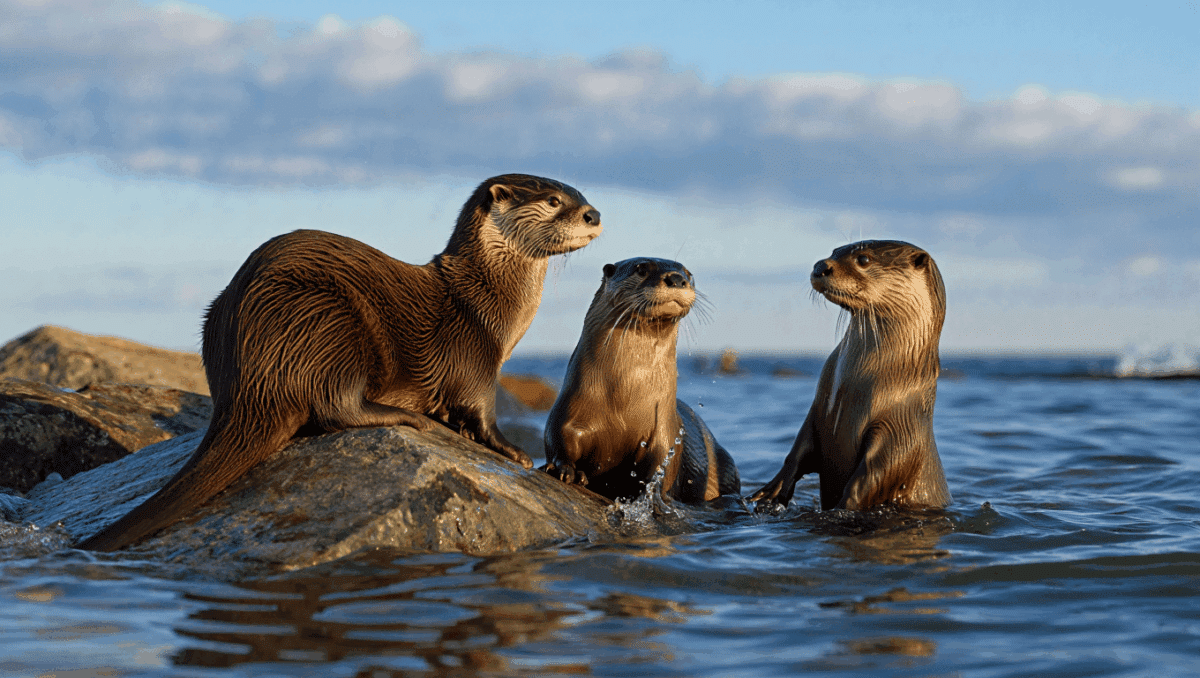
River otters have quietly retaken rivers, creeks and shorelines across the Great Lakes basin after decades of decline. What started as targeted reintroduction efforts in the 1980s has intersected with cleaner water and habitat recovery to produce one of the region’s clearer conservation successes.
Reintroduction efforts that sparked a recovery
In the mid-1980s state wildlife managers began moving North American river otters back into waters where they had nearly vanished. Ohio’s Department of Natural Resources launched a program in 1986 that released animals transplanted from healthy southern populations. New York followed with its own relocations, shifting otters from robust inland areas into western tributaries tied to the Great Lakes.
The Growing Demand for Data-Driven Decision Making in Silicon Valley
He quit, ran out of money, and begged to come back — here’s how his boss reacted
From local losses to renewed presence
Decades earlier a 1980 survey had painted a bleak picture: otters were locally extinct across many states and had suffered sharp declines in others. Hunting for pelts and a collapsing aquatic food web made a top predator’s comeback unlikely without hands-on intervention.
Those hands-on steps — moving animals, restoring habitat and cutting pollution — set the stage for population rebounds across Ohio, Michigan, New York and Ontario. The reintroductions provided seed populations that could expand once water quality improved and prey species rebounded.
Cleaner water and policy laid the groundwork
The Great Lakes hold roughly one-fifth of the planet’s fresh surface water, supporting industry, millions of people and countless species. Recovery of otters didn’t happen in a vacuum: policy and environmental cleanup played a major role.
- International agreements: The 1972 Great Lakes Water Quality Agreement between the U.S. and Canada helped push reductions in toxic discharges and spurred habitat restoration programs.
- Deindustrialization and shoreline restoration: As heavy industry receded from some waterfronts, rivers received investments to reduce runoff and treat sewage, improving conditions for fish and invertebrates that otters depend on.
- Community and agency action: State wildlife departments coordinated translocations and long-term monitoring that allowed otter populations to expand beyond isolated refuges.
What a recovered otter population means for the ecosystem
Otters occupy the top tier of freshwater food webs, so their return signals more than just cute sightings. A stable otter population often indicates healthier fish communities, cleaner sediments and richer biodiversity on riverbeds and shorelines.
Across the region, waterways once fouled by industrial waste have shown notable improvement. Rivers that were once unsafe for swimming or fishing have become more welcoming to people — and to predators like otters that require abundant, uncontaminated prey.
Where recovery is uneven and the work continues
Despite gains in the Great Lakes and parts of the Midwest, river otter recovery remains patchy in other regions. Urban sprawl, altered stream flows, and persistent pollution continue to block recolonization in some areas.
Some western and southwestern populations are still sparse. However, there are encouraging signs: for example, recent monitoring in New Mexico has documented notable population increases after local restoration efforts, with numbers roughly tripling in the past several years.
Lessons from the otter rebound for future conservation
The comeback offers a clear playbook for restoring other species and ecosystems: combine targeted reintroductions with long-term habitat improvement and enforceable pollution controls. When those elements align, top predators can return and help rebalance aquatic food webs.
- Coordinate across jurisdictions to tackle pollution and habitat loss.
- Use science-based translocations to reestablish breeding populations.
- Invest in water-quality improvements that support prey species.
- Maintain monitoring to ensure populations remain resilient to new threats.
You might also like:
- River otter video in Lincoln rewards decades of conservation work
- River otter spotted in the Bronx for first time in 100 years along the Bronx River
- Maine river herring run tops 20 million, highest in decades
- Salmon run restored after farmer destroyed critical shoreline
- Rare fisher spotted on trail cam in Cleveland area, first seen since 1800s

Michael Thompson is an experienced journalist covering U.S. and global news. With ten years on the front lines, he breaks down political and economic stories that matter. His precise writing and keen attention to detail help you grasp the real‑world impact of every event.


Man, those otters are like the party animals of the Great Lakes, aint they? Its rad to hear theyre making a comeback. Hope they keep flourishing, cause we need those lil guys to keep the ecosystem in check!
Heck yeah, those otters are like the real MVPs of the lakeside shindigs! Its awesome theyre bouncing back. Gotta root for those lil party animals to keep the nature balance in check, right? Go, otters, go!
Man, those otters are like the rockstars of the Great Lakes, aint they? Its rad to see em bounce back from the brink. Natures got its own groove, and these little guys are groovin hard!
Man, otters making a comeback in the Great Lakes? Thats like a nature superhero story! Its rad seeing how cleaner water and conservation efforts can really turn things around for these cute critters. Mother Natures got some tricks up her sleeve, huh?
Man, those otters are like the rockstars of the lakes, I tell ya! Seeing them bounce back in the US and Ontario is like a comeback story you cant help but cheer for. Nature showing us humans how its done!
Yo, did you see those otters making a comeback in the Great Lakes area? Its like a real-life underdog story, man. Natures resilient, aint it? Gives me hope for other endangered critters out there.
Man, those otters are like the rockstars of the lakes, aint they? Remember when folks thought they were gone for good? Now theyre back, splashing around like they own the place. Natures full of surprises, innit?
Man, those otters are like the cool kids at the conservation party, right? Finally getting the recognition they deserve. Props to the efforts paying off, nature hitting that balance; its pretty rad.
Man, otters are like natures little clowns, always goofing around in the water. Its rad to hear theyre making a comeback in the Great Lakes! We all need more otter energy in our lives, keeping things playful and lively.
Man, those otters be thrivin like they own the Great Lakes! Wasnt long ago we thought they were gone for good. Natures full of surprises, aint it? Keep doin your thing, little water buddies!
Man, these otters are making a comeback like a boss! Its rad to see nature gettin back on track. Hopin we keep up the good work cause a healthy ecosystem is where its at, you feel me?
Man, those otters are making a real comeback, huh? Reminds me of the time I saw one chilling in a creek. Good to hear theyre flourishing again thanks to all that conservation effort. Natures way of saying, Hey, we got this!
Man, those otters are like the cool kids of the Great Lakes, making a comeback from the brink of extinction. Its like a real-life redemption story, showing that with some effort and care, we can undo our mess.
Man, those otters sure bounce back like champs! Its like a comeback story but in the animal kingdom. Natures resilient, aint it? Makes you wonder what other species could thrive with a bit of help.