
Show summary Hide summary
- Why China put the Yangtze on a 10-year pause from fishing
- What the new field surveys found across the basin
- How policy actions translated into ecological gains
- Social and economic strategies: reemployment and compensation
- Physical limits on recovery: dams and altered hydrology
- Lessons for other large rivers and the global restoration conversation
- Early wins and the path ahead
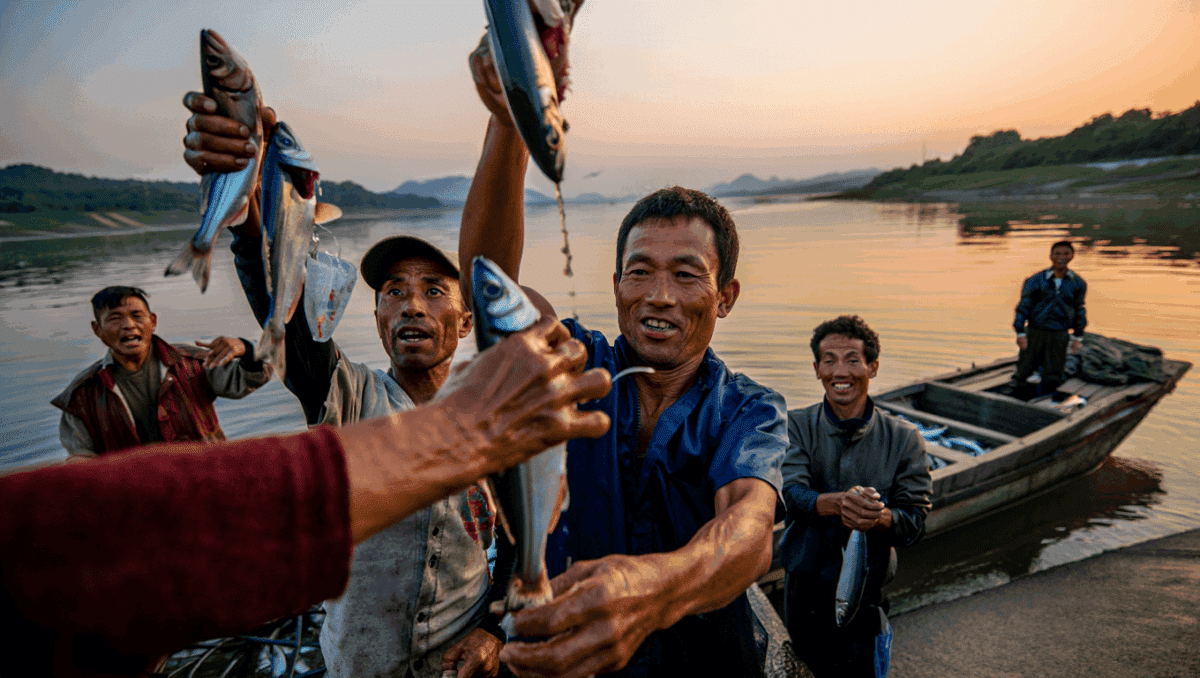
The Yangtze River — long a symbol of China’s economic might and cultural identity — is showing striking signs of recovery just five years into a decade-long fishing moratorium and a multi-billion-dollar restoration campaign. Once choked by dams, pollution, and intense fishing pressure, the river system is now registering sharp increases in fish populations and early rebounds of vulnerable species, giving scientists and policymakers fresh evidence that bold, coordinated action can reverse long-term environmental decline.
Researchers who tracked changes across the basin say the rebound is already measurable: fish biomass has surged, larger game fish are making a comeback, and the Yangtze finless porpoise is recovering in numbers. The progress follows sweeping measures that removed fishing pressure, curbed extractive activities, and invested heavily in replacing the livelihoods of displaced fishing families.
Why China put the Yangtze on a 10-year pause from fishing
The decision to halt commercial fishing along vast stretches of the Yangtze was framed as both an ecological lifeline and a social challenge. Authorities and scientists argued that only a sustained, uncompromising pause in extraction would allow depleted populations and damaged habitats to begin healing.
The Growing Demand for Data-Driven Decision Making in Silicon Valley
He quit, ran out of money, and begged to come back — here’s how his boss reacted
Key elements of the program included:
- Large-scale financial backing: A restoration fund of roughly $2.7 billion to support enforcement and rehabilitation projects.
- Employment transition for fishermen: Extensive reemployment and compensation plans intended to absorb more than 200,000 workers dependent on freshwater fisheries.
- Immediate curbs on destructive activities: Impoundment of tens of thousands of boats, suspension of shoreline sand mining, and limits on industrial discharges.
- Habitat and water quality measures: Steps to reduce vessel traffic, lower noise pollution, and restore riparian zones.
What the new field surveys found across the basin
An international team of biologists sampled 57 stretches of the Yangtze system and compared conditions before the moratorium (2018–2020) to the first years afterward (2021–2023). Their findings show clear ecological shifts in a relatively short time span.
Highlights from the surveys:
- Fish biomass roughly tripled overall, with game species such as bream showing even stronger rebounds.
- Body condition and species diversity improved, signaling healthier and more resilient populations.
- The Yangtze finless porpoise population grew by about one-third, from an estimated 445 animals in 2017 to roughly 595 in 2022.
- Reductions in fishing gear mortality, fewer collisions with vessels, and quieter waters likely helped marine mammals and larger fish recover.
How policy actions translated into ecological gains
Scientists emphasize that the recovery is not the result of a single intervention but of a package of mutually reinforcing measures. Stopping fishing pressure removed the most immediate mortality factor for many species, while parallel investments improved the conditions those species need to thrive.
Measures that made a visible difference:
- Impounding and compensating for around 110,000 fishing boats, which immediately cut extraction rates.
- Legal and regulatory steps to improve water quality and restrict polluting discharges from industrial facilities along the river.
- Habitat restoration projects that reconnected river margins, and removal of multiple smaller dams to improve migration and spawning corridors.
Social and economic strategies: reemployment and compensation
A central political challenge was ensuring the moratorium did not unduly harm communities that rely on the river. Officials rolled out a large-scale welfare and work-replacement program tied to the restoration effort.
Program components included:
- Direct compensation payments for boat owners and fishers whose livelihoods were affected.
- Job placement and retraining aimed at transitioning workers into alternative livelihoods in sectors such as aquaculture, tourism, and public works.
- Community investments to stabilize local economies while ecological benefits accrue over the longer term.
Physical limits on recovery: dams and altered hydrology
Despite clear improvements, scientists caution that the Yangtze’s full recovery faces constraints. Massive hydropower projects — most notably the Three Gorges Dam — have permanently altered flow regimes and blocked historical migration routes for many species. These structural changes set upper bounds on how much of the river’s former diversity can be restored without additional engineering or fish passage solutions.
Points to consider:
- Large reservoirs change water temperature and sediment transport, reshaping habitats downstream.
- Even with extensive dam removals and retrofits, some spawning grounds remain inaccessible, limiting the scope of natural rebounds.
Lessons for other large rivers and the global restoration conversation
The Yangtze’s partial recovery provides a practical blueprint for other major river systems struggling under similar pressures. The authors suggest that combining extraction bans with social safety nets, pollution controls, and habitat work can yield significant gains within a few years.
How the approach could be adapted elsewhere:
- Adopt long-term moratoria or seasonal no-take zones to allow reproductive cycles to restore stocks.
- Pair ecological restrictions with financial and employment programs to reduce social resistance and protect livelihoods.
- Target complementary actions — water quality upgrades, dam mitigation, and vessel management — so benefits compound.
Early wins and the path ahead
The data from 2021–2023 signal a strong early response to the moratorium and investment plan. Researchers caution that continued funding, enforcement, and adaptive management will be necessary to sustain and build on these gains. At the same time, the visible uptick in fish biomass and wildlife offers a hopeful example of how large-scale human interventions can shift long-term ecological trends when they are well-funded and socially accountable.
Key numbers to remember: a $2.7 billion restoration program, a 10-year fishing ban, more than 200,000 fishery-dependent people targeted for reemployment, about 110,000 boats impounded, 57 surveyed river sections, and an observed fish biomass increase in the neighborhood of 200%–235% for various groups.
You might also like:
- Maine river herring run tops 20 million, highest in decades
- 500,000 young sturgeon released into Amur River by Chinese and Russian biologists
- River otter spotted in the Bronx for first time in 100 years along the Bronx River
- Great Lakes otters: conservation success as populations flourish in US and Ontario
- River otter video in Lincoln rewards decades of conservation work

Michael Thompson is an experienced journalist covering U.S. and global news. With ten years on the front lines, he breaks down political and economic stories that matter. His precise writing and keen attention to detail help you grasp the real‑world impact of every event.


Man, the Yangtze River bouncing back is like the ultimate plot twist! 200,000 fishermen rehired? Thats some serious redemption arc. Maybe Mother Natures finally getting that happy ending she deserves.
I remember when the Yangtze was on life support, now its bouncing back! 200,000 fishermen rehired? Thats some serious positive change. Hope other countries take notes on this eco-friendly fishing ban!
Wow, man, thats some epic news about the Yangtze River! 200,000 fishermen back on the job – talk about a major comeback! Its rad to see eco-friendly moves paying off. Hopefully, other places catch on to this positive trend!
Man, I remember when the Yangtze was in a real bad spot. Good to hear about the rebound! Hope those 200,000 fishermen are back on their feet now. Props to China for taking action.
Man, that fishing ban in Chinas Yangtze River really did the trick, huh? Good to hear those investments are bringing back jobs for the fishermen. Hope they keep protecting that precious ecosystem.
Man, I remember when the Yangtze was struggling hard. Good to hear theyre making a comeback. Hope those fishermen find solid gigs in other fields. Maybe theyll discover a passion for, I dunno, basket-weaving or something!
Man, I remember when the Yangtze was in bad shape, like a sad fish graveyard. Now, seeing it rebound and fishermen getting back to work? Gives me hope, yknow? Props to China for making big moves!
Man, the Yangtzes bounce-back is like a plot twist in a movie! From a fishing halt to rehiring 200K peeps, Chinas playing the long game. Hope its not just a short-term win, ya know?
Man, the Yangtzes comeback is like a phoenix rising from the ashes, innit? 200,000 fishermen get their jobs back, thanks to the ban and government moves. Hope this trend keeps rolling for Mother Natures sake!
Man, that Yangtze River story got me thinking. Its like hitting pause on a game to let the players catch a breather. Hope those fishermen feel the tide turning with those new opportunities rolling in.
I totally get what you mean, man! Its like life throwing a curveball, right? Those fishermen must be feeling the vibes of change coming their way. Its like leveling up in a game and unlocking new skills. Exciting times ahead for them, for sure!
Man, the Yangtze River bouncing back like that is wild! Imagine the stories those 200,000 fishermen have now. Bet theyve seen some real changes. Natures full of surprises, huh?
Ah, the Yangtze River, bouncing back like a champ! Reminds me of that time I bounced back after eating way too many dumplings. Kudos to China for giving those fishermen a new lease on life. Lets all do our part to keep those waters thriving!
Man, Chinas really making moves with that fishing ban on the Yangtze River, huh? 200,000 fishermen gettin rehired thanks to government investments. Thats quite the turnaround. Wonder if other countries gonna take notes on this eco-friendly playbook.
Oh, lemme tell ya, its like natures doing a comeback tour! Yangtze Rivers bouncing back after that fishing hiatus, rehiring 200,000 workers. Its like a real-life eco miracle, right? Just shows what a lil gov push can do!
Dang, I hear ya! Mother Natures out here droppin beats like a DJ at a comeback concert! The Yangtze River makin a comeback too — hirin back 200,000 folks! Its like eco-magic happenin before our eyes, aint it? Its wild what a lil push from the gov can stir up in the environment, huh?
Ah, the mighty Yangtze making a comeback! Reminds me of when I tried to save my dying basil plant. Kudos to China for investing in nature and giving those fishermen a fresh start. Lets hope its a win-win for everyone involved!
Man, China really went all out with this Yangtze River rebound, huh? Hiring back 200,000 fishermen after that fishing ban is a bold move. Wonder if the fish are throwing a party down there now!