
Show summary Hide summary
- How AI turns a breast X-ray into a heart-health alert
- Large-scale evidence: what the study found
- Why this matters for women’s health and cancer screening
- Voices from the field and real-world uptake
- What needs to happen next: integration, guidelines, and trials
- Broader implications for AI in medical imaging
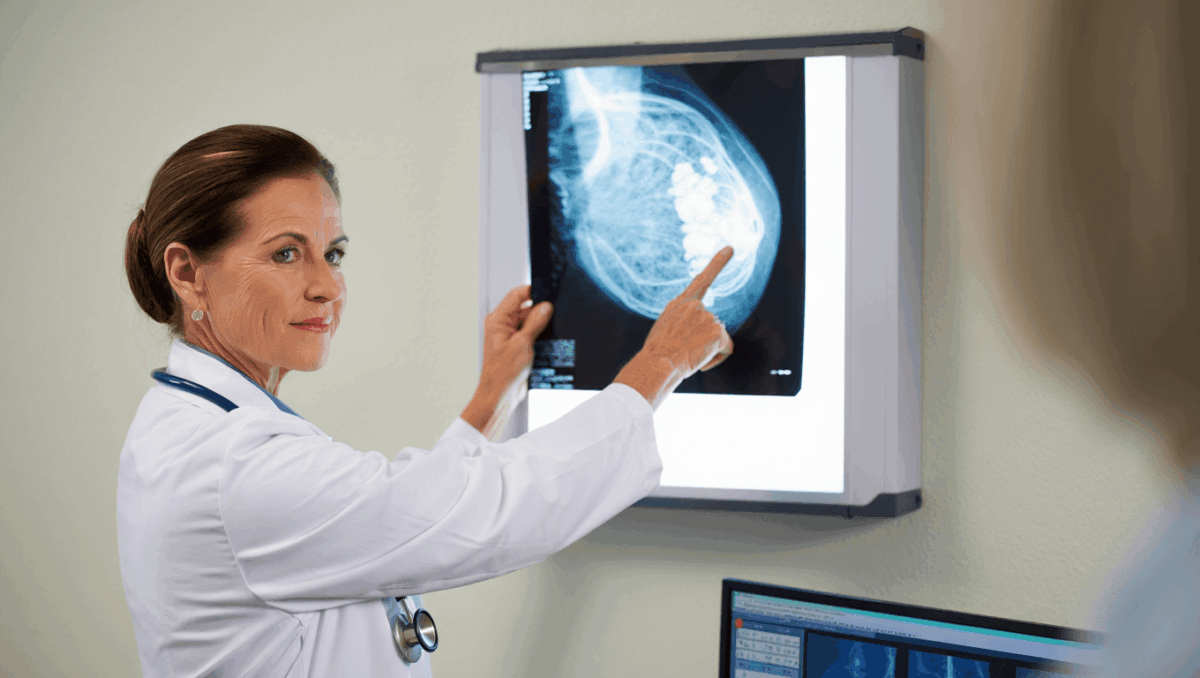
A large new study shows routine mammograms—already a standard part of women’s health care—can reveal more than signs of breast cancer. Using artificial intelligence to measure calcium build-up in breast arteries, researchers were able to predict who is more likely to develop serious heart disease now and later in life.
Researchers analyzed thousands of screening X-rays and found a clear link between visible arterial calcium on mammograms and future cardiovascular events, suggesting a simple, low-cost opportunity to flag at-risk women during exams they already attend.
The Growing Demand for Data-Driven Decision Making in Silicon Valley
He quit, ran out of money, and begged to come back — here’s how his boss reacted
How AI turns a breast X-ray into a heart-health alert
Standard screening mammograms capture breast tissue on low-dose X-ray. Within those images, deposits of calcium can form along breast arteries—an indicator called breast arterial calcification (BAC). While BAC has long been visible to radiologists, the process of quantifying it at scale has been slow and inconsistent. That’s where machine learning steps in.
Researchers trained an AI model to recognize and measure the amount of arterial calcium on routine mammography images. The algorithm sorts findings into four categories—absent, mild, moderate, and severe calcification—and then links those categories to later cardiovascular events such as heart attacks and strokes.
Large-scale evidence: what the study found
The paper, published in the European Heart Journal, evaluated mammograms from 123,762 women who had no known cardiovascular disease at the time of screening. The analysis produced striking, graded associations between BAC level and future heart-related illness.
- Women with mild breast arterial calcification faced about a 30% higher risk of major cardiovascular events compared with women who had no calcification.
- Those with moderate calcification showed roughly a 70% greater risk.
- Participants with severe calcification experienced a two- to threefold increase in risk.
Importantly, the associations persisted after the researchers adjusted for common risk factors—such as diabetes and smoking—and were present even among women younger than 50, an age group often perceived as low risk for cardiovascular disease.
Why this matters for women’s health and cancer screening
Heart disease is the leading cause of death among women worldwide, yet many women do not receive the same level of cardiovascular screening and treatment as men. Mammography is already a widely used preventive visit, and the new approach would use that same visit to flag heart risk without extra imaging, radiation, or appointments.
Key practical implications:
- Radiology practices could incorporate validated AI tools into existing mammogram workflows to automatically assess BAC.
- Patients identified with elevated BAC could be referred for cholesterol testing, lifestyle counseling, or preventive medications.
- Care teams would need protocols for notifying both patients and primary care clinicians and for following up on abnormal findings.
Voices from the field and real-world uptake
The lead investigator, a cardiologist at Emory University, framed the work as a way to catch women who may otherwise slip through the preventive-care net. Independent experts welcomed the research, arguing that mammography is an underused touchpoint for cardiovascular prevention.
In an editorial accompanying the study, a University of California San Diego professor highlighted screening reach: in the European Union roughly two-thirds of women aged 50 to 69 reported a mammogram within the previous two years, and in the United States nearly 70% of women 45 and older were up to date on screening per American Cancer Society guidance. Yet many of those same women are unaware of their heart disease risk.
What needs to happen next: integration, guidelines, and trials
Researchers say practical steps remain before BAC reporting becomes routine. Those steps include technical integration of AI into imaging software, establishing standardized thresholds for reporting, and defining care pathways so that flagged patients receive appropriate follow-up.
Planned and recommended next actions
- Deploy AI tools within radiology systems and run pilot implementations to check performance in real-world settings.
- Create consensus guidelines for when and how to report BAC findings to clinicians and patients.
- Launch clinical trials to test whether acting on BAC findings—through testing, lifestyle intervention, or medication—actually reduces heart attacks, strokes, and deaths.
Broader implications for AI in medical imaging
This work is part of a growing wave of studies showing how artificial intelligence can extract additional, clinically useful data from existing medical images. From flagging undiagnosed conditions to improving diagnostic accuracy, AI has the potential to multiply the value of screening programs already in place.
Potential benefits include:
- Enhanced disease detection without new tests or added radiation exposure.
- More equitable identification of cardiovascular risk in populations that may be underdiagnosed.
- Efficient use of radiology data to support preventive medicine.
At the same time, experts caution that careful validation, clear reporting standards, and thoughtful patient communication are essential before broad adoption. The researchers are now planning a clinical trial to test the best ways to notify patients and clinicians and to evaluate whether intervention based on AI-detected BAC improves outcomes.
You might also like:
- Breast cancer risk lower after childbirth and breastfeeding, new study finds
- Cancer survival rates reach 70% after 20 years of research
- Treatment-resistant breast cancer: antibody breakthrough offers new hope
- Root canal treatment reduces heart disease and diabetes risk, study finds
- AI detects heart disease markers from simple ECG readings

Michael Thompson is an experienced journalist covering U.S. and global news. With ten years on the front lines, he breaks down political and economic stories that matter. His precise writing and keen attention to detail help you grasp the real‑world impact of every event.


Wait, hold up, so now mammograms are out here giving heart attack warnings? Man, technologys really doing the most these days. Wonder whats next, a dental x-ray predicting your next vacation spot? Crazy times we livin in, I tell ya.
Man, I feel ya! Technologys really on a roll with these predictions. Next thing you know, your toasters gonna start guessing your mood based on how crispy you like your bread! But hey, at least well never have to worry about burnt toast ruining our day, right?
Ah, the ol switcheroo from boobies to hearts, AIs really out here multitaskin! Whats next, my toaster diagnosing my migraines? Jokes aside, mixin up health checks like this could be a game-changer, bet some docs are sweatin bullets now!
I cant believe it! AI turning mammograms into heart warnings? Whats next, a dental X-ray predicting your next vacation spot? Science is wild, man. Gotta stay ahead of the game, I guess.
Man, AI now telling me my mammograms not just about the boobs but also my heart? Cant catch a break! Gotta admit, though, cool tech, but dang, 70% higher heart risk? Thats a plot twist I didnt sign up for!
Man, AIs stirring the pot here. Mammograms giving heart warnings? Crazy stuff. Gotta wonder about the trade-offs, yknow? Healths a maze, and this studys adding a twist. Curious to see how folks take this news.
AIs really be throwing curveballs these days, huh? Mammograms suddenly doubling as fortune tellers, giving heart warnings? Thats some next-level craziness, mate. Healths already a jungle gym, and now this studys tossing in a loop-de-loop. Wonder how folks gonna digest this bombshell.
Man, talk about a plot twist! Mammograms turning into heart-health alerts? AIs playing a crossover game, huh? Gotta admit, thats some serious multitasking. Wonder what else those machines are cooking up behind the scenes!
Man, my aunt always said those mammograms were more trouble than theyre worth. Now theyre saying it could spike heart disease risk? AIs supposed to help, not scare us more. Whats next, our toaster warning about cholesterol levels?
Dang, for real? Mammograms causing heart probs now? Thats a wild ride. A toaster warning about cholesterol levels could be the next big thing, huh? Better watch out for that health-conscious breakfast!
I aint no doctor, but AI getting mammograms wrong? Sounds like my GPS taking me to the wrong city. Cant trust tech with everything, I guess. Gotta keep an eye on these heart-health alerts!
Oh man, AI detecting heart disease from mammograms? Whats next, my toaster diagnosing my allergies? Techs getting too nosy. Cant trust a machine to know my heart like my grandmas chicken soup recipe.
I mean, who knew that getting a routine mammogram could be like opening a can of worms? AI turning breast X-rays into heart warnings? Talk about unexpected plot twists in real life!
I mean, aint technology wild? Turning a breast X-ray into a heart heads-up sounds like sci-fi coming true. But wait, 70% higher heart risk from mammograms? Thats a twist I didnt see coming. Life, man, full of surprises.
Man, AIs getting too smart for its own good! First, they help with breast X-rays, now theyre predicting heart risks from mammograms? Whats next, my toaster telling me to cut down on carbs? Crazy times, man.
Dang, talk about AI stepping up its game! First, its helping with X-rays, now its playing doctor with mammograms? Next thing you know, your toasters gonna call you out for those late-night carb snacks! Who needs a doc when we got appliances with attitude, right? Crazy times indeed, buddy.
Oh, great, my mammograms predicting heart issues now? Whats next, my toaster telling me my horoscope? AIs getting a bit too nosy for my liking. Cant a lady just get a check-up without a crystal ball into her future health?
Man, AIs playing both sides now? Turning a breast X-ray into a heart alert? Thats some sci-fi crossover I didnt sign up for. Cant decide if its cool or creepy. Thoughts, anyone?
Man, AI really be throwin curveballs! Mammograms for hearts? Thats like ordering a burger and getting sushi, yknow? Gotta keep an eye on these tech surprises, who knows whats next!
Man, AIs really shakin things up, huh? Mammograms turnin into heart-health alerts? Whats next, your toaster diagnosin your cholesterol levels? Gotta admit, its both fascinatin and kinda freaky at the same time.
Whoa, hold up! Mammograms now spilling the tea on heart disease risk? AIs on a roll, huh. Next thing you know, the fridge will be telling me to cut down on ice cream. Where does it end, folks?
Oh, great, now even my mammograms getting in on the drama. First its possible cancer, now its hey, watch out for your heart! Cant catch a break. Whats next, a pap smear predicting my future career choices?
Man, AI now spilling the tea on our health secrets? First, its breast X-rays hinting at heart risks. Whats next, my fridge judging my diet? Better watch out, the machines are onto us!
Wait, AI spotting heart risks on mammograms? Thats like a two-for-one deal! But, 70% higher risk? Sounds sketchy. Cant they just stick to breasts and leave the heart out of it?