
Show summary Hide summary
- Why criticism of Islam often prompts immediate “Islamophobia” accusations
- How different religious traditions influence public perceptions and policy
- Why some secular and liberal responses miss the point
- Jürgen Habermas and the limits of technocratic Europe
- How worn-out phrases have replaced genuine thinking in politics
- Practical takeaways for public conversation about religion and pluralism
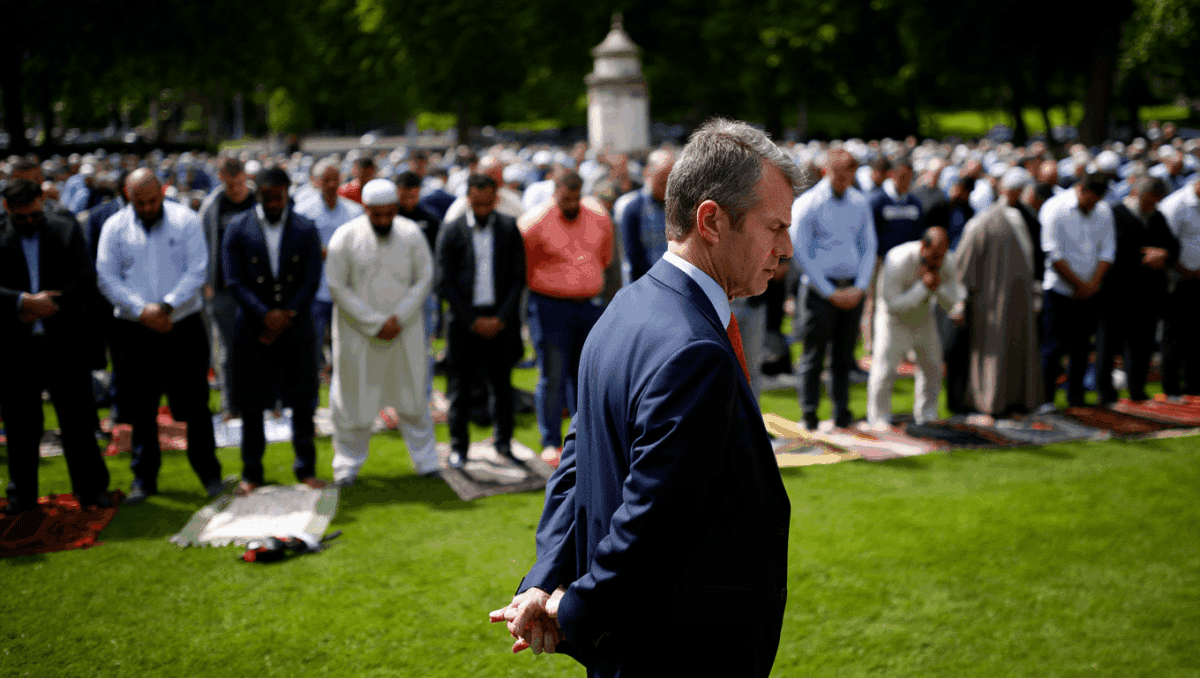
The debate over public expressions of Islam in Britain has become a flashpoint, exposing how quick political and cultural reflexes can stifle honest discussion. When a politician labels a large public prayer in central London an “act of domination,” the reaction is often less about engaging with the claim and more about scoring rhetorical points—accusing critics of bigotry or pivoting to hypothetical comparisons that avoid the core issue.
This piece examines why criticism of certain forms of Islam in Britain triggers predictable responses, how religious doctrines shape public anxiety differently, and why contemporary political language has become a poor substitute for careful thought.
Why criticism of Islam often prompts immediate “Islamophobia” accusations
The Growing Demand for Data-Driven Decision Making in Silicon Valley
He quit, ran out of money, and begged to come back — here’s how his boss reacted
When public figures question Islamic practices, two familiar rebuttals usually surface.
- Accusations of prejudice: Critics are frequently labeled racist or Islamophobic, shutting down discussion rather than addressing arguments. Political leaders often deploy this tactic to frame opponents as morally suspect instead of engaging with their claims.
- Deflection through equivalence: Others respond by asking whether similar scrutiny would be applied to Jewish, Christian, Sikh, or Hindu rituals, turning the conversation into a competition of outrages rather than a factual examination.
Both responses can be politically useful but intellectually evasive. They focus on perceived intent or fairness, not on whether there are legitimate concerns about particular practices or movements within a religion.
How different religious traditions influence public perceptions and policy
Religions vary deeply in doctrine, organizational culture, and historical relationship with the state. These differences help explain why some public religious displays are accepted while others make people uneasy.
- Historical integration: Christianity has been woven into British public life for centuries. That familiarity makes public Christian worship feel less threatening to many people.
- Mission and worldview: Some strains of Islam, as practiced by certain communities, articulate a dualistic vision of the world—between spaces where their authority is established and spaces where it is not. That worldview can feel more assertive to outsiders.
- Security context: Societies are naturally more anxious about religious movements that, historically or ideologically, have produced violence or political aims incompatible with liberal pluralism.
Put simply, few people worry about Christian, Jewish, Sikh or Hindu adherents committing acts of politically driven violence with broad doctrinal endorsement. That fact—and how a faith’s political theology interacts with public life—shapes public reactions.
Why some secular and liberal responses miss the point
Many secularists and cultural liberalists assume all religions are interchangeable, and therefore that criticism of one faith must be an attack on religion as such. That assumption creates blind spots:
- It overlooks doctrinal and cultural diversity within religions.
- It treats pluralism as a simple count of faiths rather than a matter of reciprocity, tolerance, and willingness to live with difference.
- It can lead to an unhelpful moral equivalence that prevents targeted critique of problematic movements.
Religions that seek domination or reject pluralism deserve scrutiny in the same way political ideologies that pursue power do. Respect should not be automatic; it must be earned by accepting the rules of a pluralistic society.
Jürgen Habermas and the limits of technocratic Europe
Late in life, Jürgen Habermas—who passed away this month at age 96—was widely remembered for his advocacy of dialogue and rational public debate. His views on European integration evolved over time, and he later warned that certain EU institutions risked hollowing out democratic life by leaning into technocracy.
Why his later critique matters for public debate
- Habermas argued that decision-making by remote bureaucratic bodies can weaken democratic accountability.
- He worried that economic orthodoxy within institutions could stifle political contestation and citizen voice.
- His insistence on open, reasoned discourse is relevant to debates about religion in public life: democratic legitimacy depends on transparent argument, not on silencing dissent through labels.
How worn-out phrases have replaced genuine thinking in politics
Political debate increasingly relies on catchphrases—“diverse,” “inclusive,” “systemic,” “hate”—that act like verbal shortcuts. These terms can be useful, but when they’re deployed reflexively they stop signaling analysis and start signaling conformity.
Writers and thinkers from different eras have warned about this trend. The danger is not only rhetorical laziness but intellectual complacency: citizens are less likely to evaluate claims critically if public language is full of prefabricated judgments.
- Signs of lazy political language:
- Automatic condemnation without engagement.
- Substituting labels for argument.
- Using moral alarm as a rhetorical shield.
- Combatting this requires patient explanation, historical context, and a willingness to treat controversial claims on their merits.
Practical takeaways for public conversation about religion and pluralism
- Distinguish between faith as personal devotion and religious movements that pursue political goals.
- Respond to specific practices and doctrines with evidence and argument, not blanket accusations.
- Preserve the space for critical debate by rejecting both smears and evasions that avoid the substantive issues.
Patrick West contributes commentary and cultural criticism and is the author of Get Over Yourself: Nietzsche For Our Times. Follow his work and commentary online.
You might also like:
- Tucker Carlson sharia law: why critics say he’s promoting it
- John Cleese adopting based views?
- UK Labour Islamic blasphemy code criticized as concession to sectarians
- Islamists and progressives: surprising common ground and why it matters
- Greens under fire after lawmaker calls party lunatic, deranged and evil

Robert Johnson is a dedicated columnist focusing on political and social debates. With twelve years in editorial writing, he provides nuanced, well‑argued perspectives. His commentaries invite you to form your own views and engage in critical issues.


Man, its like folks forget history. Islam aint just one thing! Its diverse, complex. Labeling criticism as Islamophobia shuts down convo. Lets dig deeper, peeps.
Man, its like some folks think criticizing Islam is a one-way ticket to Islamophobia land. Cant we have nuanced discussions without jumping to extremes? Lets aim for understanding, not just labels.
Man, some folks act like criticizing Islams taboo. Its not about bashing people, its about discussing ideas! Lets all chill and have real conversations without the name-calling. Peace out, yall.
Man, these so-called liberals need a reality check on Islam. Its not just black and white, you know? Lets get real and have a nuanced convo, people! Time to break through those narrow views.
Dude, for sure! People act like its all straightforward, but Islams like a whole universe, man. It aint all black and white, gotta dive into the shades of gray. Lets spark up that convo and break free from those narrow lenses, yo!
Man, some folks just cant separate critique from hate. Islam isnt immune to criticism, and it aint Islamophobia every time. Lets have nuanced chats without jumping to extremes, eh?
Man, these so-called secular liberals need a reality check. Criticizing Islam doesnt equal Islamophobia. Its about addressing real issues. Lets move past the knee-jerk reactions and have some honest conversations, people!
Man, these secular liberals gotta chill a bit and really dive into the complexities of Islam. Its not all black and white, you know? Understanding the nuances goes a long way in avoiding those knee-jerk Islamophobia accusations.
Man, these secular liberals, always missing the whole picture on Islam. Like, its not just about politics, its deep-rooted in culture and history, you know? They need to dig deeper than just surface-level critiques and accusations.
Man, its like some folks dont get that criticizing Islam isnt the same as hating on Muslims. We gotta learn to separate ideas from people, dig deep, and have those tough convos without throwin labels around like confetti.
Man, its like folks forget Islam aint a monolith. Just cause you criticize parts dont make you Islamophobic. Lets break stereotypes, dig deeper, and have real convos, yknow?
Man, some folks think criticizing Islam equals Islamophobia. Its like saying you cant dislike pineapple on pizza without hating all fruit. Lets embrace nuance and debate, not shut it down.