
Show summary Hide summary
- Polling snapshot: Gaza and religious identity top the list
- How local campaigns are changing: From bins to borders
- Antisemitism data and political consequences
- Views on blasphemy, public order, and cultural freedoms
- What this means for British democracy and parliamentary politics
- Survey methodology and limits to interpretation
- Political strategies to watch in upcoming local contests
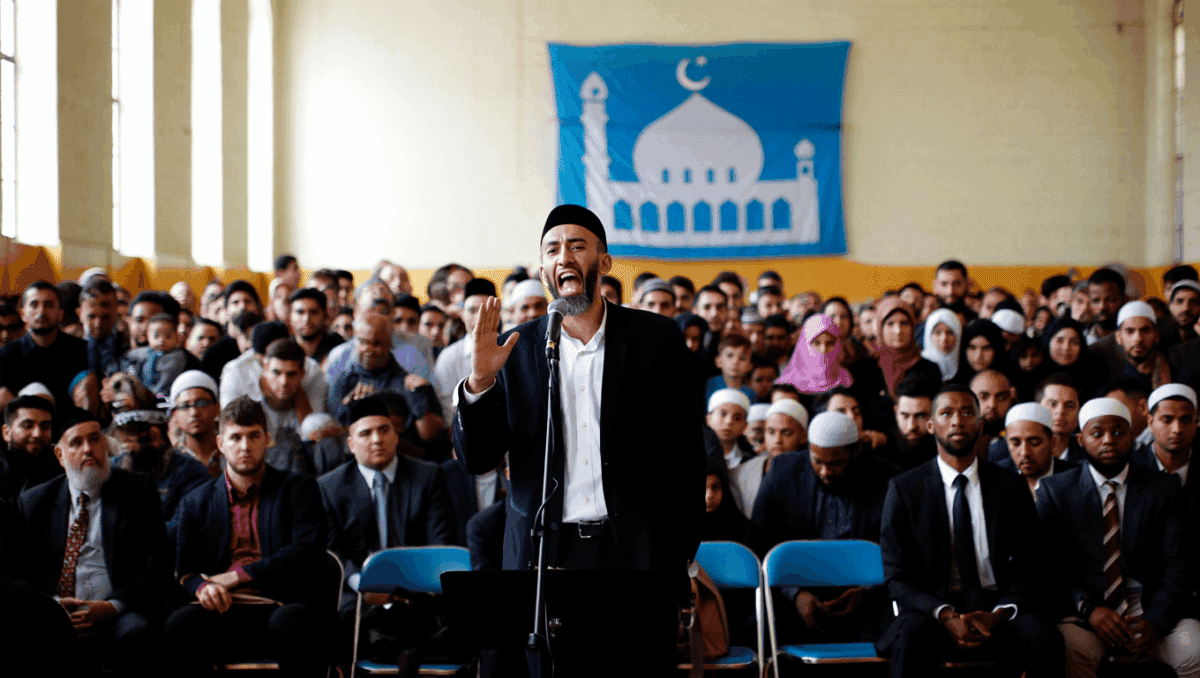
A fresh Policy Exchange report and new polling suggest the political loyalties of many British Muslims are shifting—pulling local races away from traditional party lines and toward candidates who foreground Islamic concerns. That change is already visible on the campaign trail, where issues tied to the Middle East are dominating contests that used to revolve around local services and potholes.
The findings raise hard questions about identity, representation, and the future of community politics in the U.K. As campaign messages realign and new candidates gain traction, the long-term effects on party strategy and social cohesion are becoming harder to ignore.
Polling snapshot: Gaza and religious identity top the list
The Growing Demand for Data-Driven Decision Making in Silicon Valley
He quit, ran out of money, and begged to come back — here’s how his boss reacted
Policy Exchange commissioned JL Partners to survey more than 1,000 British Muslims. The survey—summarized in a report by Rakib Ehsan—identifies priorities and attitudes that diverge sharply from those of the broader public. Most notably, respondents placed the Gaza conflict above traditional domestic concerns like housing, health care, education, and the economy.
- Gaza as the dominant issue: A plurality of respondents rated Gaza as their leading concern in political decision-making.
- Identity priorities: The poll found that roughly 63% of respondents say their Muslim identity takes precedence over their British identity.
- Survey size and scope: More than 1,000 British Muslims were questioned, providing a focused look at attitudes within a significant minority community.
How local campaigns are changing: From bins to borders
Across several recent council contests, candidates who emphasize Islamic or pro-Palestinian messages have won support in wards that previously swung to mainstream parties. Campaign materials in community languages, targeted messaging on Israel and Gaza, and promises to “be the voice” of affected constituencies have become central to some campaigns.
Examples of tactical shifts
- Leaflets and videos translated into Urdu and other languages to reach voters in specific communities.
- Promises to sever or limit local ties with Israel and to prioritize foreign-policy stances in local fora.
- Independent Muslim candidates and the Green Party positioning themselves as alternatives to Labour among disaffected Muslim voters.
Antisemitism data and political consequences
The survey also highlights troubling attitudes toward Jewish people and organizations. Compared with the general population, respondents were more likely to agree with statements suggesting Jewish influence in areas like finance, media, and government. Additionally, a notable minority expressed favorable views of Hamas, an organization proscribed in the U.K.
Key numbers and implications:
- Respondents were over twice as likely as the average Briton to report beliefs that Jews hold excessive influence across various sectors.
- A sizeable portion—around one quarter—expressed favorable sentiment toward Hamas, raising concerns about tolerance for an organization linked to violence.
- These attitudes have contributed to tensions inside parties now courting Muslim voters, especially where antisemitic incidents have led to police inquiries.
Electoral fallout for parties
Parties that have come to represent the Islamo-left alliance—most visibly the Greens in some areas—are seeing both ballot gains and controversy. Arrests and accusations related to hate speech have not necessarily translated into lost votes, according to recent polling, creating a dilemma for party leaders balancing electoral opportunity against reputational risk.
Views on blasphemy, public order, and cultural freedoms
Beyond foreign policy and intercommunal attitudes, the report finds broad support among respondents for legal restrictions on insults to religious figures and texts. Majorities favored criminal laws penalizing depictions of the Prophet Muhammad and desecration of the Qur’an—positions that intersect with free expression, school safety, and law enforcement practice.
- Criminalizing blasphemy: Many respondents back legal measures to prohibit depictions of religious figures and the desecration of sacred texts.
- Real-world consequences: Teachers and public figures have already been targeted or threatened over perceived insults, and arrests for related offenses have occurred.
What this means for British democracy and parliamentary politics
If the current trajectory continues into the next general election cycle, the parliamentary landscape could see more representatives elected primarily on the basis of advocating for a single faith community’s priorities. That raises questions about how Parliament can balance group-specific mandates with responsibilities to the wider electorate.
- Increased representation focused on religious identity could shift legislative debates toward foreign policy and religious protections.
- Mainstream parties may need to decide whether to adapt their messaging or risk further erosion of support in diverse communities.
- There is a risk that voices within the Muslim community who align more closely with broader British political norms will be sidelined.
Survey methodology and limits to interpretation
The JL Partners poll provides a snapshot, not a full portrait, of British Muslim opinion. Sampling design, question wording, and local variations all affect how findings should be read. While the report highlights trends worth attention, it also notes that most British Muslims do not endorse extremist violence and contribute positively to society.
- Sample size: Just over 1,000 respondents—sufficient for indicative trends but not definitive of every subcommunity.
- Context matters: Views vary by age, education, country of origin, and degree of religiosity.
- Policy implications: Parties and civic leaders will need nuanced responses rather than broad generalizations.
Political strategies to watch in upcoming local contests
As councils and mayoral races proceed, expect continued campaigning that foregrounds international issues, faith-based outreach, and messaging translated for specific communities. How national parties manage these local dynamics—whether by engagement, accommodation, or pushback—will shape electoral maps and community relations in the months ahead.
You might also like:
- Greens under fire for embracing Islamic sectarianism
- Elsewheres: who they are after anywheres vs somewheres
- Elections on island of strangers expose social fault lines
- Reform success shows deeper support, not just a protest vote
- Islamo-left alliance: are Gorton and Denton making one final push?

Robert Johnson is a dedicated columnist focusing on political and social debates. With twelve years in editorial writing, he provides nuanced, well‑argued perspectives. His commentaries invite you to form your own views and engage in critical issues.


Man, this whole Islamic sectarianism mess is like watching a bad soap opera unfold in real life. Its crazy how its messing with democracy. Cant people just get along and focus on making things better for everyone?
Oh man, tell me about it! Its like a never-ending drama series with plot twists no one asked for. Its wild how religion can mess with politics like that. Seriously, why cant we all just vibe together and focus on, like, not ruining everything? Its like they missed the memo on teamwork or something.
Man, its like a never-ending cycle, innit? Sectarianism just keeps pulling democracy down. We gotta break free from this loop, shake things up, or were stuck in this mess forever. Time for some real change!
Man, its like a never-ending cycle of division and conflict. Cant we just focus on building each other up instead of tearing each other down? Democracy needs unity, not this constant bickering.
Man, its exhausting to see all this division and conflict, huh? Like, cant we just agree to disagree sometimes and focus on lifting each other up instead of tearing each other down? Imagine the things we could achieve if we actually worked together for once. Democracy needs a bit of that good ol unity juice, not this endless drama-filled soap opera.
Man, its like a never-ending game of tug-of-war between different Islamic sects, always pulling in opposite directions. Democracys caught in the middle, getting stretched thin. How can we find unity when divisions the name of the game?
Man, I hear ya! Its like a never-ending game of tug-of-war between these Islamic sects, each pulling in their own direction. Poor ol democracy is stuck in the middle, getting stretched thin. Its like tryna make a sandwich with no bread – just ends up messy, right? How can we ever find unity when everyones playing for the winning team instead of the same one?
Yo, have you noticed how Islamic sectarianism is like that one family reunion where everyone just cant get along? Its messing with democracy big time. Time for some serious conflict resolution skills up in here!
Man, the whole Sunni-Shia rift been going on for ages. Its like theyre stuck in a time loop, forgetting about the bigger picture. Democracys taking a hit while theyre busy playing the blame game. Priorities, people!
Man, the division within Islam is like a messy breakup that never ends. Its hard to build a future when everyones stuck in the past. Democracy needs unity, not this never-ending drama.
Man, its like a never-ending loop of division. Cant we just focus on, I dont know, common ground for once? Democracy cant thrive if we keep letting sectarianism call the shots. Time for a reality check, folks.
Man, its like a never-ending cycle, yknow? Sectarianism tearing at democracys seams. Makes you wonder if well ever break out of this mess or just keep spinning our wheels. Crazy times were living in.
Man, Islamic sectarianism… Its like a never-ending soap opera, but with real consequences. Democracys taking hits left and right. When will they realize unitys the real power move?
Man, its like a never-ending playground fight with these sects! Democracys just standing there, getting beaten up. Cant they see were all in this together? Time to grow up and play nice, folks.
Whats up with these sects, man? Its like a never-ending playground brawl, and democracys just there taking hits. Aint they realize were all in this mess together? Time to put on our big-boy pants and start playing nice, ya know?
Ugh, cant believe were still stuck on this whole Islamic sectarianism thing. Like, come on, cant we just get along and focus on, I dont know, actually making democracy work for everyone? Priorities, people!
Man, its like watching a never-ending tug of war between different groups. Cant we all just work together for once? Democracys supposed to unite, not divide. But hey, what do I know, right?
Ah, mate, tell me about it! Feels like were stuck in a never-ending loop of tug-of-war drama, doesnt it? Its like everyones pulling in different directions, but forget to realize were all on the same dang team! Why cant we just put our heads together and make things work for once, right? But hey, what do I know, Im just a bystander in this circus.