
Show summary Hide summary
- How a Short Statement Masked a Complex Reality
- Who Is Hezbollah and Why It Matters for Regional Security
- From 2006 to 2024: A Timeline of Missed Opportunities and Growing Risks
- How Media Coverage Has Framed — and Sometimes Distorted — the Conflict
- Security Logic: Rockets, Buffer Zones and the Litani Line
- Evidence from the Ground: Bunkers, Plans and the Human Cost
- The International Response: Humanitarian Appeals and Accusations of Bias
- Voices from Lebanon: Fear, Resentment and Complicated Loyalties
- Questions Raised by the Current Coverage and What to Watch Next
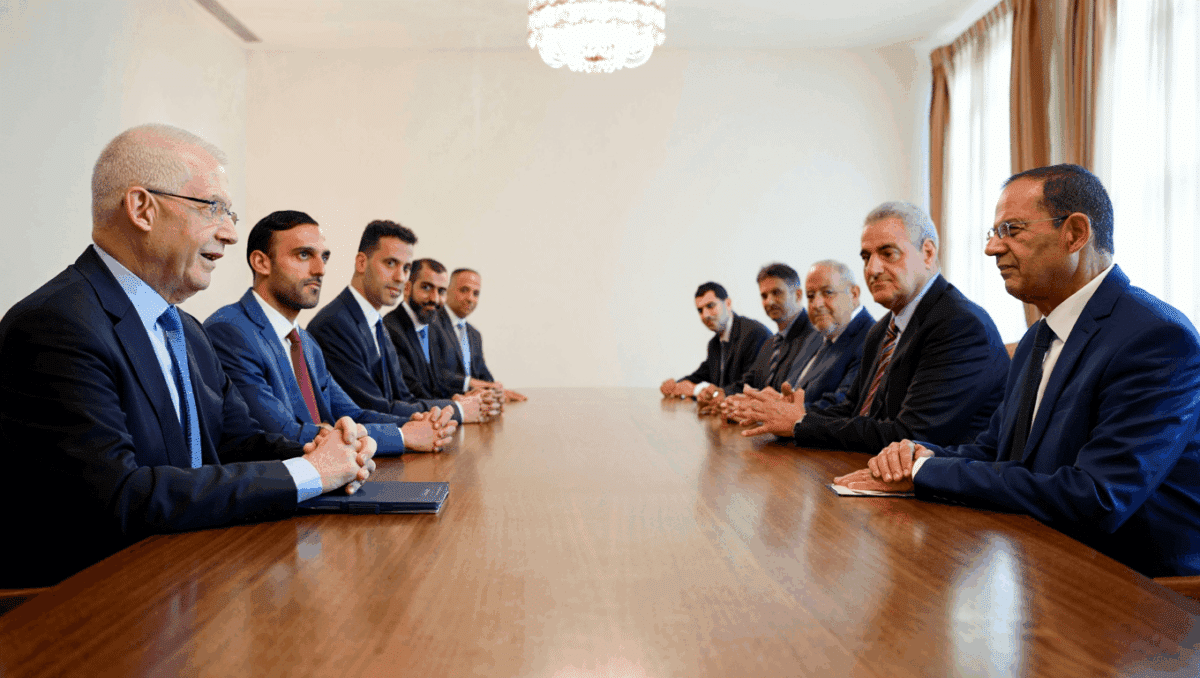
The terse joint declaration from Israel and Lebanon this week — that the two states “are not at war” and will pursue direct talks — landed like a puzzle for anyone who followed months of headlines, footage of ruined villages and breathless cable-news coverage. The words themselves were plain, but the reporting around the conflict has been anything but.
Behind the diplomatic phrasing lies a far messier reality: a shadow war driven by a powerful non-state actor based in Lebanon. That actor’s influence, methods and goals often go unmentioned in mainstream coverage, creating a gap between what viewers are shown and what’s actually happening along the border.
The Growing Demand for Data-Driven Decision Making in Silicon Valley
He quit, ran out of money, and begged to come back — here’s how his boss reacted
How a Short Statement Masked a Complex Reality
The joint announcement emphasized negotiations and an absence of formal war between the two governments. Yet it also acknowledged “significant challenges” posed by armed groups operating inside Lebanon — a diplomatic way to point to Hezbollah without saying the name outright.
This diplomatic vagueness has consequences. When international broadcasters treat the conflict as if it were a straight state-to-state confrontation, they erase the role of a militia that has operated as both a political party and an armed network for decades. The effect is predictable: public understanding skews toward seeing Lebanon itself as the aggressor, rather than a country partially occupied by a powerful militia whose agenda often diverges from the state’s interests.
Who Is Hezbollah and Why It Matters for Regional Security
Hezbollah is not simply another political movement in Beirut. Since its formation in the 1980s, the group has grown into a multi-faceted organization with armed, political, and financial wings. Backed by Iran, it has accumulated weapons, social services and a degree of autonomy from Lebanon’s national institutions.
- Origins: Founded with Iranian support in the mid-1980s, initially in response to Israel’s presence in southern Lebanon.
- Capabilities: A large arsenal of short- and medium-range rockets, trained units, and fortified positions along the border.
- Political role: An influential player in Lebanon’s political system, often accused of corruption and leveraging violence as a form of power.
These attributes make Hezbollah both a domestic force within Lebanon and a direct security threat to Israel. Understanding that dual nature is essential for interpreting any military action taken by Jerusalem inside Lebanese territory.
From 2006 to 2024: A Timeline of Missed Opportunities and Growing Risks
To make sense of current events, it helps to review key turning points that shaped the present standoff.
- 2006 — UN Security Council Resolution 1701 called for the disarmament or redeployment of militias and pushed Hezbollah away from the Israeli border, notably north of the Litani River.
- Post-2006 — The absence of robust enforcement and weak implementation allowed Hezbollah to rearm and remain embedded in southern Lebanon.
- October 7, 2023 — Hezbollah began launching rockets and conducting operations in coordination with other groups, dramatically escalating cross-border attacks.
- 2024 — IDF operations uncovered weapons caches, bunkers and operational plans that pointed to premeditated intentions to strike Israeli towns and civilian targets.
Each stage reveals a pattern: international resolutions without teeth, political paralysis in Beirut, and a militia that used the resulting vacuum to fortify its position.
How Media Coverage Has Framed — and Sometimes Distorted — the Conflict
Much reporting has presented the fighting as a bilateral clash between Israel and Lebanon, despite the near absence of Lebanese military action against Israeli territory. That framing routinely omits or downplays Hezbollah’s central role, which changes the viewer’s sense of culpability and context.
One recent example is a televised interview in Beirut where senior UN officials and journalists discussed the humanitarian fallout but conspicuously avoided naming the militia most directly responsible for the attacks that prompted Israel’s response. Leaving out that detail shifts the narrative toward a universal condemnation of war’s human toll, which is true — but incomplete.
Why naming the actor matters
- Naming Hezbollah makes clear who is conducting cross-border strikes and why Israel has targeted certain military objectives in southern Lebanon.
- Omitting the group risks equating civilian suffering caused by a non-state militia with state action by Lebanon.
- Explicit identification helps explain defensive measures taken by the Israeli government and why locals on both sides of the border experience long-term insecurity.
Security Logic: Rockets, Buffer Zones and the Litani Line
The security argument advanced by Israeli officials centers on the need to prevent Hezbollah from positioning rockets and fighters within a few kilometers of the border, where short-warning attacks endanger civilian life. The 2006 UN blueprint that pushed Hezbollah north of the Litani was meant to create just such a buffer.
When that plan failed — through lack of enforcement and the militia’s ability to hide weapons in populated areas — Israeli strategists concluded they needed to restore a protective depth on their side of the border. That calculus produced the operations aimed at disrupting caches, destroying launch sites and preventing cross-border incursions.
Evidence from the Ground: Bunkers, Plans and the Human Cost
Israeli forces have reported discovering fortified positions, stockpiles of rockets and written plans laying out targets and infiltration routes. Those findings, officials say, demonstrate intent and organization that go beyond sporadic skirmishing.
At the same time, the security moves have inflicted heavy civilian hardship in southern Lebanon. Entire villages emptied as families fled ahead of combat, and the social and economic damage has been severe. The tension between defensive necessity and humanitarian consequences is at the heart of the debate.
The International Response: Humanitarian Appeals and Accusations of Bias
International voices, including UN officials and broadcasters, have repeatedly emphasized Lebanese suffering and demanded immediate humanitarian access and the safe return of displaced people. Those pleas are urgent. But critics argue some of these calls overlook the proximate cause of the displacement: a militia that embedded itself among civilians and used populated areas as shields.
Critics say framing Israel’s security measures solely as an aggressive occupation ignores the agency of the militia pushing the conflict forward — and in some cases reduces complex strategic dilemmas to a simple moral condemnation of one side.
Voices from Lebanon: Fear, Resentment and Complicated Loyalties
Not all Lebanese support Hezbollah. Inside Lebanon, many people resent the group’s dominance and the way its agenda has distorted national politics and security. Some fear to voice criticism publicly for safety reasons, while others express frustration that the militia’s priorities bring devastation to their communities.
Lebanese academics and commentators describe a long-running alliance between political elites and armed actors that has enabled corruption and weakened state institutions. That context helps explain why international measures to disarm militias have repeatedly failed.
Questions Raised by the Current Coverage and What to Watch Next
- Will international actors press for meaningful enforcement of weapons restrictions inside Lebanon, or continue to call primarily for ceasefires without addressing the militia’s capabilities?
- Can humanitarian aid be delivered safely without allowing armed groups to exploit relief efforts as cover?
- How will continued media framing shape public opinion in the West, where many audiences receive a simplified narrative of the conflict?
As the diplomatic dance continues — talks mediated, statements issued, and humanitarian pleas repeated — the story on the ground will keep unfolding according to a mix of military realities and political choices. Those choices, and the actors who shape them, will determine whether the current lull becomes a lasting peace or another prelude to renewed violence.
You might also like:
- Iran strikes push Middle East toward regional war
- Trump deals devastating blow to anti-Israel sentiment
- Terrorist state: leader says we can’t make peace
- Keir Starmer emboldens extremist groups, critics say
- Andy Burnham facing backlash over pandering to anti-Israel groups

Robert Johnson is a dedicated columnist focusing on political and social debates. With twelve years in editorial writing, he provides nuanced, well‑argued perspectives. His commentaries invite you to form your own views and engage in critical issues.


Man, the tension between Israel and Lebanon always keeps me on edge. Its like watching a never-ending chess game with high stakes. Wonder how long this so-called peace will hold up. One wrong move, and boom!
I remember when tensions were high between Israel and Lebanon. Its a relief to hear theyre not at war now. Lets hope for continued peace and dialogue. Its a delicate situation that requires constant attention and diplomacy.
I totally get what you mean, mate. Its like walking on eggshells with those two countries, innit? The peace is a breath of fresh air, but who knows when the storm might brew again. Its like theyre playing chess with peoples lives. Lets hope they keep the dialogue going, yeah?
I heard this news, bro, about Israel and Lebanon not duking it out. Its like when two kids in the playground finally decide to chill and share snacks. Hope it lasts longer than my last diet!
Man, the media twists things more than a pretzel! Always portraying drama. Cant they report peace without stirring pots? Lets celebrate the small wins, folks! Peace in the Middle East, who wouldve thought?
Yknow, its like a game of hide and seek between Israel and Lebanon, but with missiles instead of hiding spots. They keep saying theyre not at war, but the tensions thick enough to cut with a knife. Whats the deal, guys?
Man, the tension between Israel and Lebanon always keeps us guessing, huh? Its like a never-ending drama series with plot twists. Wonder how things will unfold next. Lets hope for peace in the region.
Man, its like a game of cat and mouse between Israel and Lebanon. One minute theyre throwing shade at each other, next theyre claiming theyre not at war. Cant keep up with these political rollercoasters, man.
Man, politics are like a bad telenovela. One day theyre all fiery drama, next theyre playing nice? Cant keep up with these plot twists! Whats next, a group hug?
Man, the tension between Israel and Lebanon always keeps me on edge. Its like a never-ending game of chess, with each move having serious consequences. Hope they can find a way to coexist peacefully, for everyones sake.
Man, the whole Israel-Lebanon tension always keeps me on edge. Its like a never-ending drama series with unexpected plot twists. Cant believe theyre not at war, like, whats the catch this time?
Man, the tension between Israel and Lebanon always keeps me on edge. Its like a never-ending rollercoaster ride of political drama. Glad to hear theyre not at war, but who knows whats brewing underneath the surface, right?
Man, the tension between Israel and Lebanon always keeps me on edge. Its a rollercoaster of emotions. Lets hope for some peace talks and a break from all this drama, for everyones sake.