
Show summary Hide summary
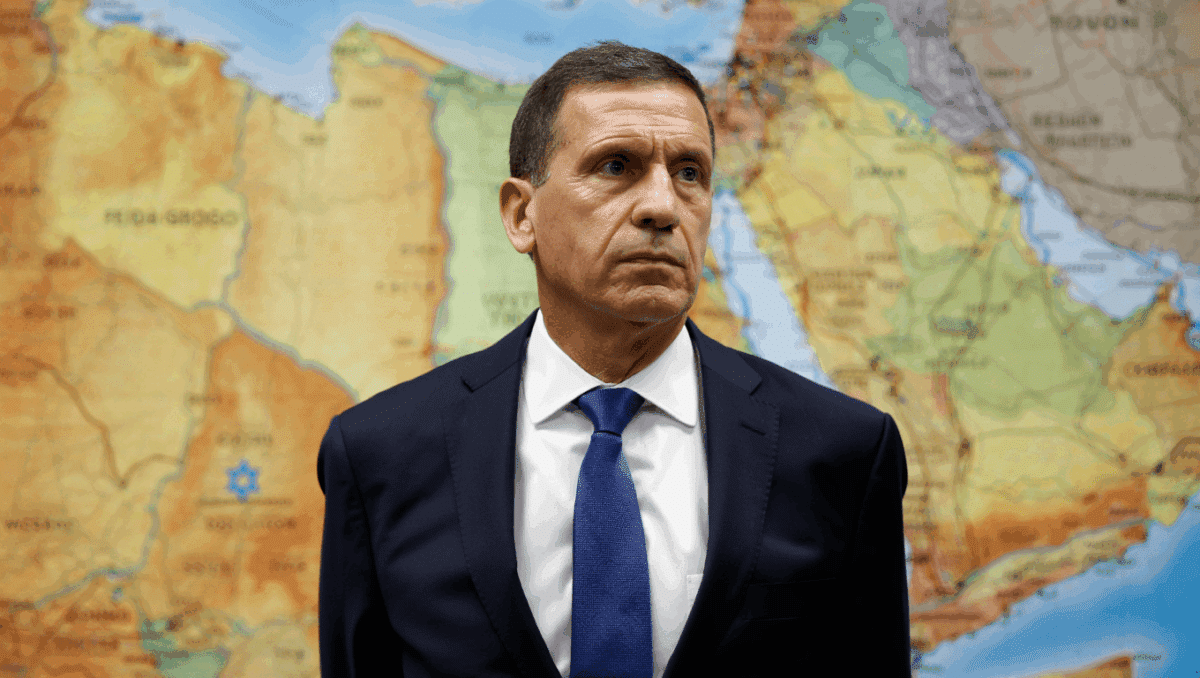
Michael Oren, Israel’s former ambassador to Washington, is sounding the alarm about a potential ceasefire between the United States and Iran, arguing that a hurried deal could carry serious risks for regional stability and long-term security. His concerns center on how a pause in hostilities might allow Tehran to regroup, deepen ties with proxy forces, and erode deterrence that has kept wider conflict in check.
As diplomats weigh options and headlines track negotiations, Oren’s perspective frames a larger debate: can de-escalation be achieved without surrendering leverage? His warnings underscore the tension between immediate calm and strategic consequences that could reshape the Middle East for years.
Why some experts say a US-Iran ceasefire could be dangerous
The Growing Demand for Data-Driven Decision Making in Silicon Valley
He quit, ran out of money, and begged to come back — here’s how his boss reacted
Oren and other analysts argue that a formal or informal ceasefire would not automatically translate to a lasting peace. Instead, they fear it could offer Tehran the breathing room to pursue objectives that are harder to reverse once the world attention drifts away.
- Reconstitution of military capabilities: A pause could let Iran accelerate missile and drone programs with less interference, replenish stockpiles, and refine tactics used by its regional proxies.
- Strengthening proxy networks: Groups in Lebanon, Iraq, Yemen and Syria could use the lull to expand recruitment, logistics, and cross-border coordination, raising the baseline threat level across multiple fronts.
- Undermining sanctions leverage: Any relaxation tied to a ceasefire risks diluting the economic pressure that has been a key lever over Tehran’s strategic choices.
- Perception of diminished deterrence: An agreement perceived as one-sided or premature could encourage aggressive behavior by states that doubt the long-term resolve of the US and its allies.
How a ceasefire could change the regional balance of power
Beyond tactical concerns, Oren highlights broader geopolitical shifts that might follow a US-Iran truce. These shifts would not be limited to bilateral relations but would ripple through alliances, proxy dynamics, and nuclear calculations.
- Proxy emboldenment: Hezbollah, Houthi forces, and Iraqi militias could interpret a ceasefire as validation, expanding their operational footprint.
- Nuclear program trajectory: Reduced pressure may enable Tehran to redirect resources into nuclear research or covert pathways, complicating nonproliferation efforts.
- Regional arms races: Neighboring states could accelerate their own military programs in response, prompting an arms buildup and raising the risk of miscalculation.
- Shift in alliance behavior: US partners, including Israel and Gulf states, might recalibrate their security strategies—ranging from deeper self-reliance to covert operations—if they perceive decreased US commitment.
Practical policy options to mitigate the risks of a ceasefire
Policymakers face a delicate task: pursuing de-escalation while preserving deterrence and verification. Oren’s critique points to a mix of diplomatic and security measures that could accompany any pause in violence.
- Link ceasefire terms to robust verification mechanisms, including international inspectors and transparent reporting.
- Maintain targeted sanctions that close loopholes and preserve pressure on key Iranian programs.
- Enhance intelligence sharing and defense cooperation with regional partners to deter proxy attacks.
- Negotiate clear timelines and benchmarks for phased relief tied to verifiable behavior changes.
- Plan contingency steps—diplomatic, economic, and military—to respond swiftly if Tehran or its proxies violate terms.
Domestic politics and credibility risks in Washington and Jerusalem
Oren also points to the political dimension: any agreement will be read through the lens of domestic audiences on both sides of the Atlantic. Leaders face pressure to show tangible results while avoiding measures that appear to reward bad behavior.
- US considerations: Administrations must balance the appetite for diplomacy against congressional skepticism and the potential electoral fallout if a deal is seen as weak.
- Israeli concerns: Israeli policymakers and public opinion demand assurances that national security won’t be compromised, prompting calls for security guarantees or unilateral measures.
- Regional credibility: Gulf states and other partners watch closely; perceived US softness could push them toward hedging strategies, including arms purchases or closer ties with alternative powers.
Scenarios to monitor as talks progress
- Best-case: A strictly monitored, reversible agreement that reduces immediate violence while preserving pressure and oversight.
- Middle ground: A temporary lull tied to vague commitments, leaving open the prospect of renewed escalation once international attention shifts.
- Worst-case: A deal that relaxes constraints without verification, enabling Tehran to expand influence and accelerate sensitive programs.
You might also like:
- Iran nuclear threat persists as Tehran expands uranium enrichment program
- Iran’s Islamic Republic: why it must fall
- Trump deals devastating blow to anti-Israel sentiment
- Iran’s regional influence raises alarms over authoritarian expansion
- Kurds betrayed by the West: what it means for regional stability

Robert Johnson is a dedicated columnist focusing on political and social debates. With twelve years in editorial writing, he provides nuanced, well‑argued perspectives. His commentaries invite you to form your own views and engage in critical issues.


Man, this whole situation is like watching a messy soap opera unfold! Cant believe some leaders prefer drama over peace. Time to grab the popcorn and see how this ceasefire saga plays out. Drama, politics, and power moves, oh my!
Man, this whole ceasefire talk got me thinking back to that time when my neighbors kept arguing about whose dog pooped on whose lawn. Its like, cant we all just get along and pick up the poop together? Sheesh!
Man, this whole situation is like a rollercoaster ride. You think theyre finally gonna hug it out, but then bam! Its back to square one. Feels like watching a soap opera, but with nukes involved. Stay tuned for the next episode, I guess.
I once tried makin peace with my cat after a bath – didnt end well. But leaders playin with ceasefire talks? Sounds like a cat-astrophe waitin to happen. Diplomacy or disaster, whats your bet?
I mean, seriously, can we trust a leader whos like, Yeah, guys, peace is a no-go? Its like trying to bake a cake without sugar. Whos gonna eat that dry mess? Peace is the sugar, man!
Man, this whole situation is like trying to untangle headphones – frustrating and messy. Cant make peace? Whats next, a peace treaty with a side of chaos? Leaders need a reality check, seriously.
Man, this whole situation is like a bad soap opera. Cant they just sit down and talk it out like adults? The drama is getting old real fast. Maybe they need a mediator or something. Peace shouldnt be this hard, right?
Man, leaders always talkin tough. Cant they just sit down, have a cuppa, and sort things out? Peace aint rocket science. But hey, what do I know, right?
Yeah, man, totally getcha. Like, why all the tough talk when a chill chat over tea could do the trick? Peace is like, the simplest recipe, right? Sometimes these leaders need a reminder to take it easy and just vibe. Who knew finding harmony could be so tricky for them?
Man, its like dealing with a toddler throwing a tantrum. Cant make peace? Seriously? How about acting like grown-ups for once and finding a way to end the madness without dragging everyone else down with you.
Sounds like a messy situation, huh? Its frustrating when folks cant just sit down and work things out like adults. Maybe they need a timeout and a juice box to calm down. Lets hope they figure it out soon before we all get dragged into the drama!
Man, leaders always playin’ games. Can’t they see we’re tired of this drama? Peace ain’t a joke. Gotta wonder if they even want it. Same old story, different day.
You know, its like watching two stubborn kids fighting over a toy. Someones gotta step in and make em play nice. But hey, peace talks are messy. Lets hope they figure it out without causing more trouble.
Man, its like dealing with a stubborn toddler. Wonder if a ceasefire would really change anything. Will they ever learn to play nice? *sigh* Diplomacys a tough game.