
Show summary Hide summary
- How shifting cases off juries reduces ordinary people’s role
- Jury trials as a check on state power and a civic practice
- Lessons from ancient democracy: why random selection mattered
- How the English jury evolved into a modern democratic safeguard
- Contradictions in current political rhetoric about citizen involvement
- Practical impacts: what the proposed change would mean
- Why the debate over juries is fundamentally about democracy
- About the author
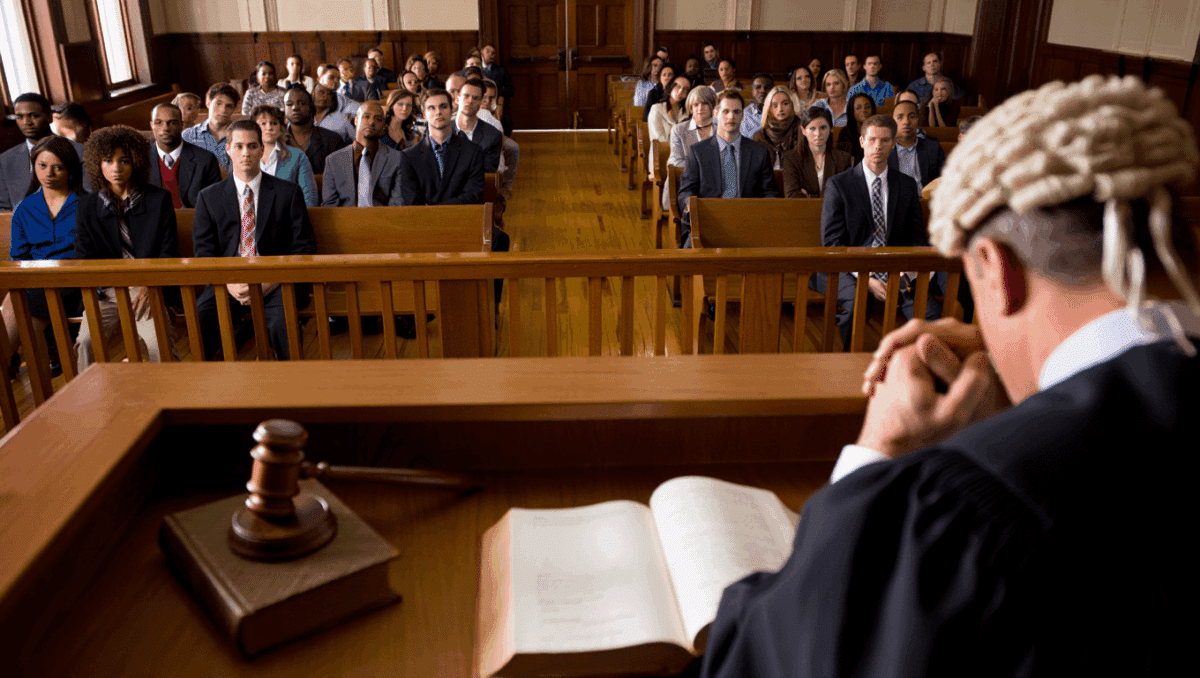
Last month I sat in the audience at an event called In Defence of Trial by Jury, where lawyers, academics and campaigners pushed back against proposals from UK justice secretary David Lammy to shift more Crown Court cases away from juries. The conversation felt urgent: it wasn’t merely about court logistics, but about who gets to decide the most serious questions in our public life.
Speakers challenged the notion that juries are the primary cause of the Crown Court backlog — currently close to 78,000 cases — and instead pointed to chronic underfunding, procedural complexity and an increasing volume of marginal claims. But beyond efficiency, the debate opened up a deeper tension over civil liberties and democratic participation that deserves closer scrutiny.
The Growing Demand for Data-Driven Decision Making in Silicon Valley
He quit, ran out of money, and begged to come back — here’s how his boss reacted
How shifting cases off juries reduces ordinary people’s role
At stake in Lammy’s proposal is not only the speed of the criminal justice system but the amount of direct public involvement in verdicts. When judges replace juries, decision-making is concentrated in a professional legal class rather than distributed among randomly selected citizens. That change alters the relationship between the state and the governed.
- Fewer juries means fewer citizens deciding guilt or innocence, reducing opportunities for everyday people to engage with the law beyond voting or occasional public meetings.
- Decisions shift from a cross-section of the public to a narrower group of career jurists and legal experts, who may bring different priorities and assumptions.
- Public confidence in the justice system can be affected when ordinary voices are sidelined, especially in controversial or politically sensitive cases.
Jury trials as a check on state power and a civic practice
Defenders of juries often emphasize civil liberties: the idea that a defendant should be judged by peers rather than by the state’s appointed officials. This is vital when criminal statutes are broad or politically charged. Recent prosecutions for online speech about immigration illustrate the point — juries sometimes act as a restraint on overreach.
Still, the importance of juries goes beyond protecting the accused from coercion. They are a rare, enduring mechanism for civic participation in institutions that are otherwise dominated by professionals and elites. Removing juries reduces the channels through which citizens practice deliberation and exercise collective judgment.
Lessons from ancient democracy: why random selection mattered
What Athens got right about citizen juries
Random selection of jurors is not a novelty. In classical Athens, juries were massive bodies drawn by lot from the citizenry and entrusted with duties that included both verdict and sentence. While exclusionary by modern standards — excluding women, slaves and resident foreigners — Athenian practice reflected a clear democratic principle: ordinary citizens, acting collectively, would carry out the most consequential decisions of the state.
That arrangement had flaws — Socrates’ conviction in 399 BC remains a grave example — but the underlying logic was straightforward: the people who made the laws should have a direct role in enforcing them. Those juries were part of a broader system that randomized service in governance, from the Council of 500 to civic boards, all aimed at preventing concentrated power and encouraging civic engagement.
How the English jury evolved into a modern democratic safeguard
Our jury system didn’t arrive fully formed from ancient Greece. Medieval and early modern England developed a different model, influenced by Norman institutions and local customs. Initially, jurors were often local men selected by sheriffs who might know the case; over centuries, the idea of impartiality strengthened, and statutes standardized selection and eligibility.
- Selection moved from local acquaintance toward random, representative pools.
- Expectations changed: jurors were increasingly seen as neutral fact-finders rather than local adjudicators.
- The modern jury became one of the few places where ordinary people still exercised direct authority over the legal consequences of public policy.
That continuity matters. While the form has changed, the function — embedding citizen judgment within the justice system — remains a unique democratic practice, especially compared with many continental systems that rarely use juries.
Contradictions in current political rhetoric about citizen involvement
Within the Labour movement there are mixed signals about participation. Senior figures have publicly supported citizens’ assemblies — bodies of randomly selected people who deliberate on public policy — as a way to reconnect politics to ordinary lives. Yet proposals to shrink jury trials would diminish another long-standing form of random selection that places citizens at the center of consequential decisions.
If the goal is genuinely to expand meaningful civic engagement, the logic points toward preserving or even strengthening juries rather than curtailing them. Reducing jury trials while praising citizens’ assemblies raises an awkward question: why encourage citizen deliberation in some arenas but curtail it in the courts?
Practical impacts: what the proposed change would mean
Officials defending the reforms say the adjustments are modest — perhaps reducing the share of Crown Court cases tried by jury from roughly 30% to just over 20%. But modest changes can have a disproportionate effect on public participation and trust. A smaller percentage of jury trials translates directly into thousands fewer citizens serving on juries each year, diminishing the civic habit of participation.
- Fewer citizens called for jury duty annually;
- Reduced public exposure to criminal procedure and legal reasoning;
- Greater discretion for judges in high-profile or politically charged cases.
These are not abstract outcomes. Consider a recent high-profile case in which an individual charged over contentious online speech was acquitted by a jury in less than twenty minutes. The speed and result sparked discussion about whether a bench trial would have produced the same outcome. Where state power is expanding over speech or protest, ordinary jurors can serve as an important brake on prosecutorial or legislative overreach.
Why the debate over juries is fundamentally about democracy
Opponents of Lammy’s plan are often cast as defenders of legalism or specific liberties, but there’s a democratic argument at the heart of their case. Juries are among the last surviving arenas where citizens, randomly chosen, deliberate together and decide outcomes with serious public consequences. Curtailing that practice narrows the channels for democratic participation to a handful of electoral and institutional mechanisms that already concentrate influence.
Preserving jury trials is not merely nostalgia for a quaint custom; it’s an argument for distributed civic responsibility. As governments and bureaucracies become more complex and professionalized, institutions that let ordinary people take part in governance — even in limited ways — acquire greater value.
About the author
James Kierstead taught Classics at university level and now works as an adjunct fellow at a public policy think tank. His research and writing focus on the intersection of legal history, civic institutions and democratic practice.
You might also like:
- Labour’s Lammy attacks juries, exposing the party’s authoritarian leanings
- Palestinianism critics warn it threatens free speech and reshapes Middle East politics
- Manchester Airport brawlers: did they escape arrest?
- Jamie Michael’s never-ending punishment continues to draw scrutiny
- Keir Starmer accused of undermining democracy

Robert Johnson is a dedicated columnist focusing on political and social debates. With twelve years in editorial writing, he provides nuanced, well‑argued perspectives. His commentaries invite you to form your own views and engage in critical issues.


Man, messing with jury trials? Thats like playing with fire, aint it? Peoples voice matters, yknow. Gotta keep the power in the peoples hands, not some fancy suits. Democracy aint a game.
I once served jury duty, sat there, bored outta my mind. But hey, its our civic duty, right? Labours trying to mess with that? Nah, cant let em. Jury trials keep power in check!
Man, I feel ya! Jury duty is like a snoozefest marathon sometimes. But youre right, its all about keeping the power in check, aint it? Labours messin with that? Hah, gotta stand our ground on that one! Cant let em mess with the sacred duty of judging folks. Keep on fighting the good fight, buddy!
Man, Labour really stirring the pot with this one. Jury trials aint perfect, but they keep the system in check, you know? Taking em away? Feels like playing with fire. Gotta keep that balance, man.
Man, messing with jury trials? Thats like playing with fire, mate. Theyre like the peoples shield against injustice. Dont go pulling the rug from under us, Labour. Democracy needs those checks and balances, innit?
Mate, youre spot on about Labour messing with the jury trials. Its like playing with fire, innit? Theyre our shield against injustice, our last line of defense. Gotta keep those checks and balances in place, or else democracys just a fancy word. Whos gonna watch our backs then, eh?
Mate, attacking jury trials? Thats like taking the cream out of an Oreo – ruins the whole thing! Juries are the backbone of democracy, keeping the big guys in check. Labour, what you playing at?
Man, attacking jury trials? Thats like taking away a fundamental right. Juries keep the system in check, give us a voice. We cant let that slip away. Democracys gotta stay real, yknow?
So, Labours dissin jury trials now? Jeez, thats like takin away our voice in the courtroom! We gotta keep that check on state power, man. Cant let em mess with democracy like that!
Man, Labours dissin jury trials? Thats like dissin grandmas apple pie. Juries keep the system in check, yknow? We need those regular folks in the mix, not just suits callin the shots.
Man, jury trials are like the OG of democracy, yknow? Taking that away feels like a betrayal to the roots. Gotta keep that balance, or were just pawns in the system.
Dude, totally get what youre saying bout jury trials being the original gangstas of democracy. Like, theyre the OGs keepin it real. Mess with that, and its like were playin Monopoly without the bank. Gotta keep the balance, or were just pawns in the system, right?
Man, Labours dissing jury trials? Thats like dissing your own grannys cooking! Jury trials keep the system in check, man. Cant mess with the OG democracy system, yo.
I mean, taking away jury trials? Thats like removing the cherry on top of a sundae. Juries are the essence of democracy – our chance to have a say. Lets not mess with a good thing, Labour!
Removing jury trials? Come on, Labour, thats like ditching the sprinkles on a donut! Juries give us a voice, ya know? Lets not fix what aint broken. Lets keep the democracy sundae fully loaded!
Man, Labour messing with jury trials? Thats like messing with the fabric of democracy! Jury duty might suck, but its our shield against unchecked state power. Random folks deciding the fate of the accused? Thats power to the people!
I mean, seriously, messing with jury trials? Thats like playing with fire, man. Let the people have their say, yknow? Democracy aint a buffet where you pick what suits ya. Keep it real, Labour.
Messing with jury trials? Man, thats like playing with dynamite at a BBQ! Letting the people speak their minds is like the golden rule of democracy, right? You cant just switch up the game whenever it suits ya. Stay true to the roots, Labour!
Mate, jury trials aint just a legal thing, its about trust and power. Labours messing with democracy here. Random folks need a voice, not bureaucrats deciding behind closed doors. Its about accountability, innit?
Mate, I totally get ya. Trust and power, thats the name of the game, innit? Labours and their shenanigans, messing with the whole democracy vibe. Random folks deserve a say, not them bureaucrats pulling strings behind closed doors. Its all about keeping em in check, you know? Accountability, mate, thats the ticket. Whos really calling the shots here?
Man, Labours dissin jury trials? Nah, thats a democracy no-no. Juries keep it real, yo. Cant let em fade away. Gotta keep the power in the peoples hands, ya feel?
Mate, jury trials are like the OG democracy move. Labour messing with that? Nah, not cool. Ordinary folk need their say, not just the bigwigs. Let the people decide, innit?
Fam, youre spot on! Jury trials are like the OG democracy move, letting the regular peeps have a voice. Labour messing with that? Nah, not the one. We all gotta have our say, not just the big shots. Let the people decide, ya know?
Folks, if we lose jury trials, were toast. Its like playing poker without cards – no bluffing, just the dealers rules. Gotta keep the power in the hands of the people, ya know? Dont let em take our voice!
Man, you hit the nail on the head with that one. Losing jury trials is like walking into a party with no invite – youre just stuck at the door, watching everyone else have all the fun. We cant let em snatch away our say in things. Power to the people, right? We gotta keep that voice loud and clear!