
Show summary Hide summary
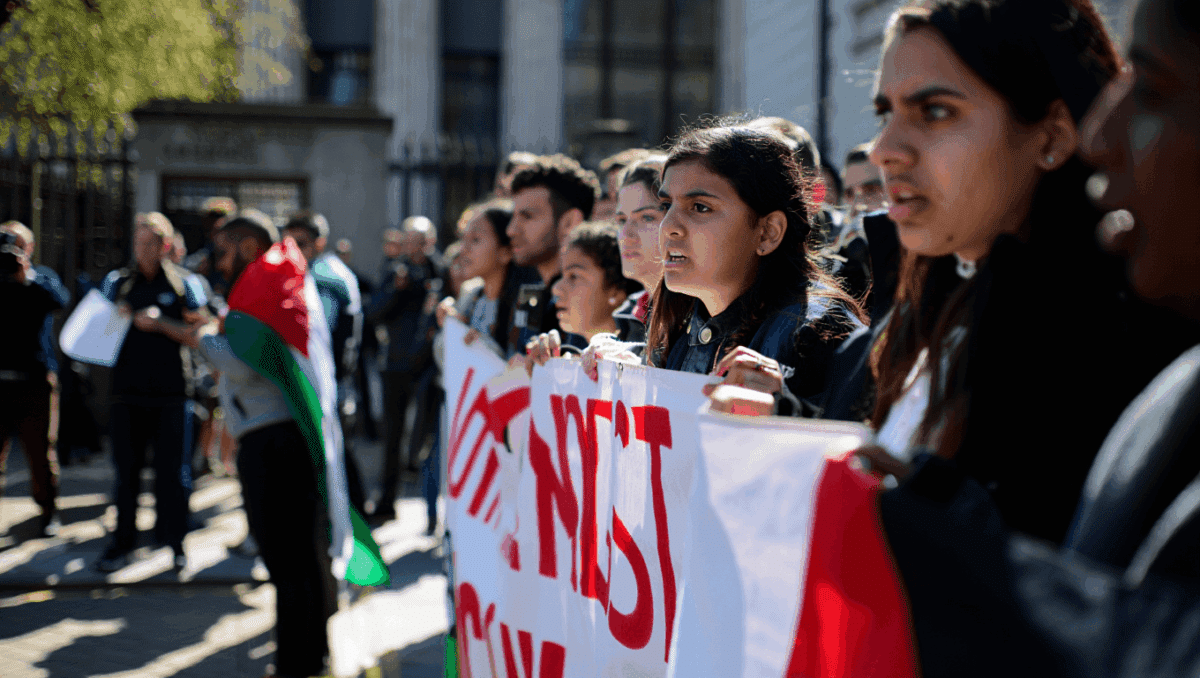
A jury at Woolwich Crown Court has cleared six Palestine Action activists of aggravated burglary, a verdict that has ignited fierce debate about protest, law, and perceived double standards in public life. The trial examined a dramatic August 2024 break-in at an Elbit Systems facility, and the ruling — along with the arguments presented in defense — has left critics warning about the wider cultural and legal consequences.
Beyond the courtroom drama, the case has become a flashpoint for conversations about how deeply held political beliefs shape legal outcomes. Supporters celebrate the verdict as a vindication of moral protest; opponents see it as evidence that hostility toward Israel has become a protected, even privileged, posture in certain circles.
Details of the case and the charges the jury considered
The Growing Demand for Data-Driven Decision Making in Silicon Valley
He quit, ran out of money, and begged to come back — here’s how his boss reacted
The six defendants faced multiple charges arising from a coordinated entry into an Elbit Systems factory. Prosecutors described a planned operation involving red boiler suits, sledgehammers and a vehicle used to force access. The police alleged that officers and security staff were attacked — including claims that a sledgehammer was swung at a police sergeant and that a security guard was struck with a whip. Video footage was entered as part of the prosecution’s account.
- Alleged actions: forced entry with a vehicle, use of sledgehammers, damage to property, assaults on officers/security staff.
- Primary charges: aggravated burglary, criminal damage, violent disorder; one defendant faced an allegation of causing grievous bodily harm.
- Jury outcome: all six acquitted of aggravated burglary; three acquitted of violent disorder, three had no verdict on that count; no jury verdict on the grievous bodily harm allegation against Samuel Corner.
- Next steps: the Crown may seek retrials on unresolved counts. Most defendants were released on bail; one remains in custody.
How the defense framed the activists’ motives
Defense lawyers argued that the defendants acted from a sincere belief that their actions were necessary to pressure Israel over its conduct in Gaza. In court, that motive became central: the legal team urged jurors to see the activists not merely as lawbreakers but as political protesters driven by conscience.
Comparisons and courtroom rhetoric
The defense drew a historic parallel, likening the protesters to suffragettes — invoking language of sacrifice, desperation and moral urgency. The activists and their supporters have portrayed the verdict as a triumph for conscience-driven protest, describing the clearance as a moral victory rather than simply a legal outcome.
Why some commentators say the ruling is worrying
For many observers the verdict raises uncomfortable questions about whether certain political commitments can function as a shield in criminal trials. Critics argue that when belief becomes the central mitigating factor, ordinary legal boundaries risk being blurred.
Key concerns raised include:
- That intense hostility toward Israel — described by some as Israelophobia — is being treated as a legitimizing justification for property damage or violence.
- That cultural elites and sympathetic media amplify a narrative of moral necessity that affects jury perception.
- That such decisions could create a precedent where motive rooted in a highly politicized cause reduces culpability for actions that would otherwise be criminal.
Opponents paint a hypothetical slippery slope: if deep conviction alone can excuse aggressive direct action, what limits remain? They point to past incidents allegedly linked to similar activism — including suspected racially motivated damage to Jewish-owned shops in Stamford Hill — as evidence that the line between protest and criminality can already be perilously thin.
Wider implications for public order and equal treatment under law
Beyond the immediate litigants, this case feeds into a broader debate about whether the criminal justice system applies evenly across different political views. The concern is not merely academic: court rulings set norms and communicate what kinds of behavior are tolerated in a democratic society.
- Two-tier justice fears: Some fear a system where establishment-approved positions receive implicit leniency while dissenting or minority viewpoints face harsher enforcement.
- Potential copycat risks: If politically motivated property damage or violent tactics are perceived as likely to be excused, the incentive structure for extremism could intensify.
- Impact on targeted communities: Groups who feel threatened by demonstrators — including Jewish communities — may see acquittals as eroding their protection under the law.
Critics also draw attention to how public conversation around the trial — from op-eds to social media — may affect jury deliberations and public confidence in impartial justice. The argument advanced in court, that the activists “genuinely believed” their actions would serve a greater good, has become the focal point for those who worry about moral justifications supplanting legal standards.
Questions this ruling raises for juries, culture, and enforcement
Supporters of trial by jury stress that juries are the right forum for weighing motive and circumstances. But commentators on both sides agree that cultural currents can influence verdicts — and that raises uncomfortable questions about where to draw the line between civil disobedience and criminal behavior.
Points for public discussion include:
- How should courts balance sincere political conviction against clear acts of property damage or violence?
- What safeguards are needed to ensure consistent application of criminal law regardless of the politics involved?
- How can law enforcement and prosecutors maintain public trust when high-profile cases intersect with hot-button international issues?
Some legal observers recall past miscarriages of justice — reminding us that juries can both err and correct institutional overreach. Others contend the central problem here isn’t the jury system itself but the broader cultural climate that valorizes some forms of protest while demonizing others.
Brendan O’Neill writes on politics and culture and hosts a regular podcast. His recent book on the wider fallout from the October 7 events and their global reverberations is available in online bookstores. He is active on social media and contributes regularly to public debate on protest, free speech and civil liberties.
You might also like:
- Diddy guilty on two counts, acquitted of most serious charges: what happens next?
- Labour’s attack on jury trials threatens democracy
- Manchester Airport brawlers: did they escape arrest?
- Jamie Michael’s never-ending punishment continues to draw scrutiny
- Labour’s Lammy attacks juries, exposing the party’s authoritarian leanings

Robert Johnson is a dedicated columnist focusing on political and social debates. With twelve years in editorial writing, he provides nuanced, well‑argued perspectives. His commentaries invite you to form your own views and engage in critical issues.


Man, these critics always finding something to squawk about. Free speech? More like selective speech. Cant people support Palestinians without getting labeled? Its like walking on eggshells in a minefield.
I once saw this doc that blurred the lines btwn activism & extremism. Now this case? Makes me wonder where we draw that line. Messy stuff, man.
Man, I feel you on that. Its like, one minute youre rooting for the underdog, next thing you know, theyre crossing some shady lines. Where does activism end and extremism begin? Its a slippery slope, for sure. Like, when fighting for a cause turns into causing chaos… Messy stuff indeed.
Man, these critics always on edge! Free speech is vital, but aint it a thin line between criticism and censorship? Gotta navigate with care in the Middle East political waters. One wrong step, and boom, controversy explodes.
Man, these critics always stirrin the pot! Cant folks speak up bout Palestine without catchin heat? Free speech aint free, huh? Gotta watch every word now. Middle East politics always a hot mess, add this to the mix… chaos!
Man, these critics goin all out on Palestinianism. Free speech or not, its like a minefield. Cant folks just discuss things civilly anymore without it blowin up in everyones faces?
Man, these critics are really stirring the pot, huh? But seriously, free speech is a delicate balance. Gotta wonder how this case will shape the future of activism and politics in the Middle East.
Man, these critics got me thinking… Free speech is a delicate flower, yknow? But when does criticism turn into censorship? Its like walking on eggshells in the Middle East these days. Wheres the line, folks?
Man, the whole debate around Palestinianism is like a rollercoaster ride, aint it? Free speech, Middle East politics, jury charges… its a whirlwind. Gotta stay sharp to navigate this mess.
Man, these critics need to chill. Free speech aint about silencing voices, its about hearing em out, even if we disagree. Lets not turn every debate into a battlefield, yknow?
Man, these critics always stirrin the pot! Cant people speak up without gettin slammed? Free speech aint free if folks gotta watch every word. Gotta keep an eye on where this is headin.
Man, these critics always stirring the pot! But hey, aint free speech all about hearing diverse views? Gotta wonder, though, how this whole deals shapin up the political landscape in the Middle East. Curious minds wanna know, right?
Critics always throwin shade, amirite? But hey, diversity of opinions is what keeps things spicy! Middle East politics? Thats a whole kettle of fish! Wonder if the critics got their popcorn ready for that show!
Ugh, the whole free speech under attack debate again? Feels like a broken record. Cant folks criticize without being labeled? Lets hope theres room for nuanced discussions without shutting down voices.
Man, these critics always jumping on the bandwagon. Free speech is important, but seems like theyre missing the point. The Middle East is a whole other ball game. Wonder if they really get it.