
Show summary Hide summary
- From choking smoke to a local solution: how an asthma attack ignited action
- How a door-to-door idea became OneStepGreener
- Scaling up: growth, challenges and measurable results
- Why precise sorting matters for recycling success
- Community buy-in and changing behavior in dense cities
- What the movement looks like on the ground
- Recognition, momentum and the road ahead
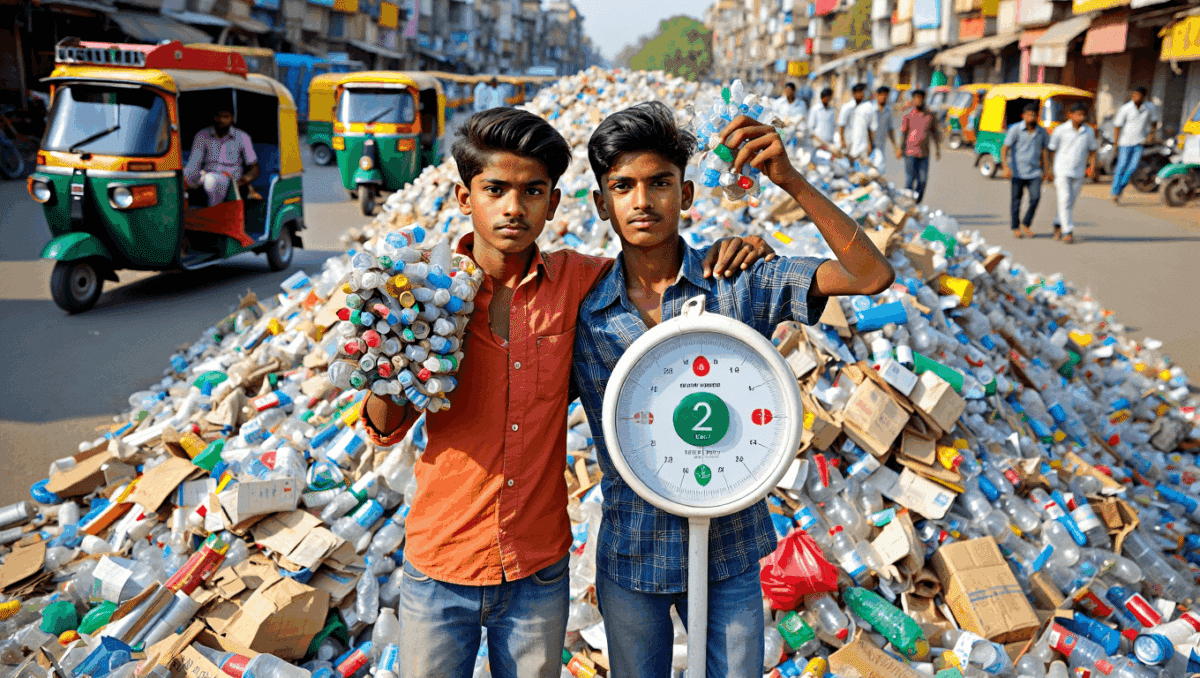
When a severe asthma flare-up forced two brothers to look at the air in New Delhi through a new lens, it launched an unexpected campaign that would transform how thousands handle trash across India. What began as a household experiment to ease breathing became a grassroots recycling movement spanning cities, warehouses and award stages.
Today their nonprofit oversees source-separated collection in more than a dozen urban centers and has recycled the equivalent of New Delhi’s daily waste output. The story that follows tracks how two teenagers turned personal health concerns into a practical model for urban waste management.
From choking smoke to a local solution: how an asthma attack ignited action
The Growing Demand for Data-Driven Decision Making in Silicon Valley
He quit, ran out of money, and begged to come back — here’s how his boss reacted
In 2017, smoke from a burning landfill in Delhi rolled across neighborhoods and made respiratory problems worse for many residents. For one of the brothers, worsening asthma made the problem personal. Instead of waiting for government fixes, the siblings began separating their family’s trash to see if better recycling could reduce local burning and pollution.
Trash collectors initially refused small, home-separated bags, so the brothers adopted a different tactic: they convinced neighbors to join. When enough households demanded separate pickup, municipal collectors had to take notice. That early victory proved a simple truth for them: local pressure and organized habits can change municipal behavior.
How a door-to-door idea became OneStepGreener
What started as a few households evolved into OneStepGreener, a youth-led nonprofit that now organizes segregated waste collection across multiple cities. The group focuses on precise sorting so recyclable materials don’t get lost in contamination—the difference between paper that is reused and paper that ends up in a landfill.
Key elements of their model
- Household-level source separation: Residents sort waste into distinct streams before collection.
- Community organizing: Teams recruit and train residents, turning a handful of homes into neighborhood networks.
- Centralized processing: Collected material is delivered to warehouses where workers further separate items—newspapers from office paper, PET from other plastics, and electronic components apart from general e-waste.
- Urban greening: The nonprofit also plants trees to counter air pollution and improve urban livability.
Scaling up: growth, challenges and measurable results
From an initial pilot of 15 households, OneStepGreener expanded to manage the segregated waste of thousands of households across 14 Indian cities. Their warehouses enable fine-grain separation that increases the odds recyclers will actually use the material rather than discard it.
- Households served: Grew from a small local experiment to servicing around 3,000 households directly.
- Recycling milestone: The organization recently reported recycling roughly 2 million pounds of waste—about the same volume New Delhi produces in a single day.
- Awards and recognition: The founders received the International Children’s Peace Prize for their impact on sanitation and environmental health.
Why precise sorting matters for recycling success
Contamination is one of recycling’s biggest enemies. Mixed or dirty waste often forces recyclers to send material to landfill or incineration. OneStepGreener’s insistence on detailed separation—right down to distinguishing different types of plastics and paper—dramatically improves the likelihood that materials are reclaimed and reused.
Warehouse workers manually inspect and further sort incoming loads, separating items like computer screens from keyboards and different grades of paper from one another. This extra effort is what allows the program to move beyond symbolic recycling and produce industry-ready bales of material.
Community buy-in and changing behavior in dense cities
Part of the young organization’s success rests on overcoming the common mindset that waste management is someone else’s problem. The team focuses on outreach and simple, repeatable habits that make recycling feel like a shared responsibility rather than an individual chore.
Nav Agarwal, one of the cofounders, points out that if these practices can take hold in Delhi—among the most populous and polluted cities in the world—they can be adapted elsewhere. Their experience suggests that scalable behavior change combines clear instructions, accessible collection systems, and visible results.
What the movement looks like on the ground
Volunteers and staff visit neighborhoods, demonstrate sorting techniques, and organize collection schedules. In many places, small community demands forced local collection services to accept segregated bags. This community-first method turned households into stakeholders in a larger environmental effort.
- Doorstep education and training sessions
- Regular pickup days coordinated with local volunteers
- Warehouse processing and partnerships with recyclers
- Tree planting drives to address air quality
Recognition, momentum and the road ahead
The founders’ achievement—transforming a health scare into an operational recycling network—has drawn public attention and honors. Their model combines grassroots organizing with practical logistics, offering a reproducible template for other cities struggling with waste and air pollution.
Watch their work firsthand to see how small, sustained civic action can change the way a city handles its refuse and improves public health for residents who desperately need cleaner air.

You might also like:
- 6 million pounds of compost delivered to NYC gardeners in 2025 as part of an organic waste program
- School uniform donations by teens save 1,400 families $140K
- Teens set world record recycling 2,675 pounds of sports balls in one day
- AI extracts valuable materials from trash to boost recycling and resource recovery
- San Francisco Trash Art Wows: 35 Years of Creativity From Recycled Garbage at Free Gallery Event

Michael Thompson is an experienced journalist covering U.S. and global news. With ten years on the front lines, he breaks down political and economic stories that matter. His precise writing and keen attention to detail help you grasp the real‑world impact of every event.


Man, these New Delhi teens aint playing around! Turning a health scare into a city-wide cleanup crusade? Thats some next-level stuff. Makes you wonder, whats my excuse for not recycling more, huh?
Yo, for real! Those New Delhi teens are on another level with their cleanup game. Its wild how theyre turning a health scare into a positive movement. Makes you stop and think, right? Like, whats my excuse for not recycling more? We all gotta step up our game!
Man, these New Delhi teens are straight-up inspiring! Turning a health scare into a massive recycling movement? Thats some next-level stuff. I wish more folks would take action like this, no excuses.
Man, those New Delhi teens are really making waves! Recycling 2 million pounds of waste after an asthma attack? Thats some serious dedication. Inspiring to see young people taking charge like that. Kudos to them!
Dang, those New Delhi teens are straight-up superheroes! Recycling a whopping 2 million pounds of waste after an asthma attack? That level of commitment is next-level impressive, no cap. Its seriously rad to witness young folks stepping up like that. Mad props to them for sure!
Dang, those New Delhi teens are on fire! Recycling like theres no tomorrow. Asthma attack turned eco-warriors? Total plot twist. Maybe I should get off my butt and do something too.
Man, those New Delhi teens are really setting the bar high with their eco-conscious actions. Who knew a little asthma could lead to such a major glow-up, right? Maybe its time we all take a page out of their book and kick our butts into gear. Whos up for joining the eco-warrior squad? Lets make Asthma Attack Turned Eco-Warriors the hottest trend of the season!
Man, these New Delhi teens are on fire! Asthma attack sparks a recycling revolution? Thats some real-life superhero origin story right there. Bet those teenagers are making Captain Planet proud!
Yo, I heard about those New Delhi teens, recycling like champs after an asthma scare. Thats some serious inspiration right there. Maybe we all need a kick in the lungs to start cleaning up our act!
Heard bout them Delhi teens hustlin with the recycling game, huh? Asthma scare turned em into eco-warriors! Crazy how a wake-up call can light a fire under our lazy butts, right? Maybe we all need a little nudge in the lungs to start takin care of this planet properly. Who knew wheezin could be such a motivator, huh?
Man, when I was a teen, I barely recycled my soda cans. These New Delhi kids are on another level! Asthma attack leading to eco-warriors? Thats some unexpected superhero origin story right there.
Man, these New Delhi teens are makin moves! Recycling 2 million pounds of waste after an asthma scare? Thats some serious hustle. Respect. Wonder what it takes for more peeps to step up like that.
Man, these New Delhi teens aint playin around! Asthma attack turned them into eco-warriors, recycling like theres no tomorrow. Who knew a wakeup call could spark such a massive change? Mad respect!
Yo, these New Delhi teens are straight-up inspiring, man! Its wild how a health scare can flip the script like that. Gotta give it to them for stepping up their game and making a real difference. Its like they went from zero to hero in no time. Keep it up, eco-warriors!
I remember when I had to use an inhaler like it was my sidekick. These teens in New Delhi are like superheroes, fighting pollution one recyclable at a time! Theyre the real MVPs of the environment, no cap.
Man, these New Delhi teens are on fire! After one of them got hit with an asthma attack, they were like, Nah, we aint having this pollution mess anymore! Talk about turning a health scare into positive action. Mad respect for these young changemakers.
Man, those New Delhi teens aint playing around! Asthma attack or not, they turned it into a full-blown recycling movement across 14 cities. Talk about turning a setback into a comeback! #InspiringStuff
Man, those New Delhi teens are on fire! Literally, with all that recycling hustle. One step greener, one less asthma attack. Big up for taking action where it counts, spreading that eco love across India!