
Show summary Hide summary
Before you roll your eyes at the latest bathroom innovation or panic over an empty toilet paper roll, spare a thought for what your ancestors had to contend with. The quest to clean our behinds has been a quirky, resourceful, sometimes downright comical journey through history. Forget cutesy puppies on paper – in centuries past, bathroom breaks were, let’s say, a little less refined for most.
From Newspapers to Sponge Sticks: The Early Days of Cleanliness
Up until the last century, the go-to method for many of our grandparents and European neighbors was decidedly low-tech: pages of newspapers or catalogues. Practical? Absolutely. Comfortable? Well, as long as you avoided the dreaded glossy sheets that could turn an everyday routine into an unfortunate ordeal!
The Growing Demand for Data-Driven Decision Making in Silicon Valley
He quit, ran out of money, and begged to come back — here’s how his boss reacted
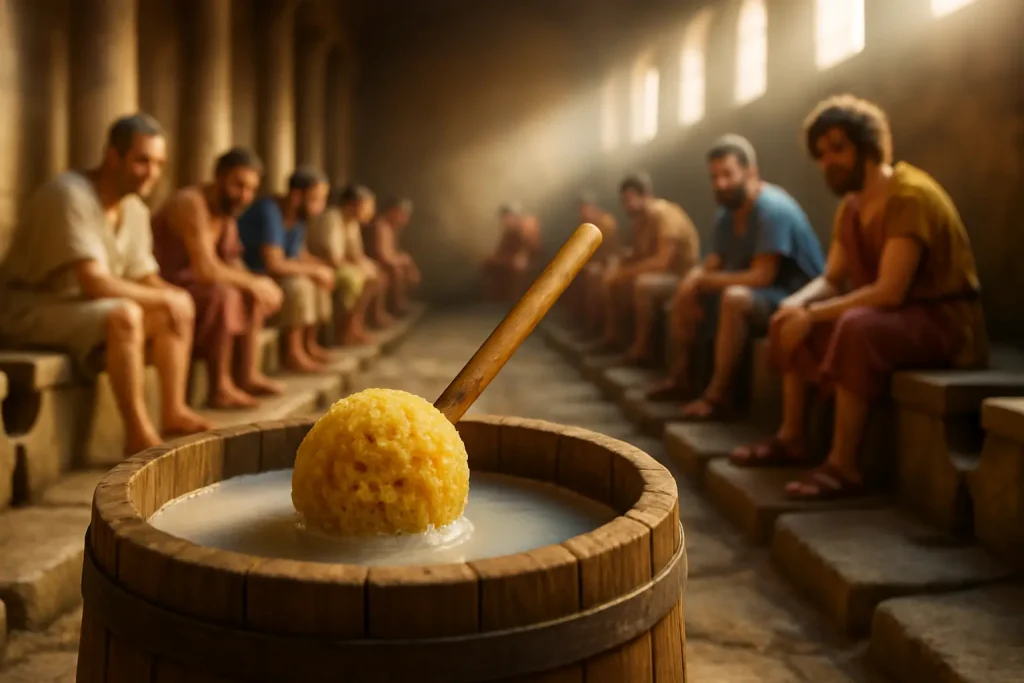
If you ever wondered what creative solutions people used before paper was widespread, the answer varies across ages. Each era had its own – sometimes ingenious, often improvised – approach. In Christian times, especially during the Roman era, people didn’t just sit around pondering philosophy. They gave us the tersorium: a sponge fixed to a stick, stored in a bucket of salty water or vinegar, ready for communal cleaning duties. Unromantic? Sure. Functional? You bet – and quite possibly the ancestor of the modern toilet brush. Those Romans thought of everything!
The Middle Ages: Making Do with What You’ve Got
The Middle Ages didn’t fuss too much about backside hygiene. In fact, it was far from a priority. People used whatever was handy: hay, tree leaves, or, a bit more sheepishly, the corner of their own shirt. Waste not, want not, as the saying goes (though, perhaps, with a slightly different emphasis back then).
- Hay: easily found for peasants and castle-dwellers alike
- Leaves: nature’s original wipes (pick wisely!)
- Shirt corners: less orthodox, but certainly resourceful
Suffice it to say, luxurious comfort was not the order of the day.
Velvet, Satin, or… Manuscripts? Hygiene for the Well-to-Do
By the sixteenth century, the hygiene game changed for the wealthy. They graduated from makeshift nature-based solutions to tow – a fibrous cloth made from hemp and linen. For the height of softness, velvet or satin were occasionally deployed for their renowned gentle touch. Legend even recalls lace wipes much favored by the famous Comtesse du Barry. Forget silk sheets; imagine lace wipes instead! The likes of these decadent solutions were clearly reserved for the fortunate few.
But here’s the million-dollar question: Why not use paper? Well, paper was both rare and shockingly expensive, mostly the preserve of precious books or important correspondence. The notion of throwing it away for mere personal hygiene would have been almost heretical. There’s even archaeological evidence: fragments of manuscripts found in latrines suggest letters occasionally doubled as makeshift toilet paper – but only, we can imagine, after a thorough read.
The Modern Revolution: Finally, a Roll in Every Home
It took until 1857 for toilet paper – as we know (and cherish) it – to make an entrance. Enter Joseph Gayetty, an American with a vision (and a solution to an age-old problem). Not long after, the Scott brothers took that concept up a notch, introducing conveniently separated sheets wrapped around a roll – sound familiar? This ultra-practical, hygienic leap forward soon outperformed slippery newspaper substitutes, especially as households switched to plumbed flush toilets.
And so, the humble toilet paper roll became a fixture, proof at last that progress is sometimes measured not by philosophy or inventions, but by the simple, everyday comfort of a soft, reliable sheet in a moment of need.
Moral of the story: If you ever run out, remember – your ancestors survived with hay, sponges, and worse. But if you’re lucky enough to have a roll handy, count your blessings, and maybe spare a kind thought for the Comtesse’s lace wipes next time you reach for the paper!
You might also like:
- Ban on wet wipes: why consumers must push back now
- Neither obligation nor right: why cafés can deny restroom access if you don’t buy anything
- Only 2 showers a week after 65? Dermatologists reveal the surprising truth
- Waterless toilet for astronauts could help solve global sanitation crisis
- Use aluminum foil to defrost your freezer in minutes and cut energy bills fast

David Miller is an entertainment expert with a passion for film, music, and series. With eight years in cultural criticism, he takes you behind the scenes of productions and studios. His energetic style guides you to the next big releases and trending sensations.


Remember when Aunt Edna swore by those fancy velvet wipes? Said they were posh! Who knew Romans used sponges on sticks? Talk about a fancy loo routine. Gives new meaning to clean up on aisle five.
Back in the day, folks used velvet, newspapers, even manuscripts for cleanin up! Can you imagine swipin with a fancy velvet square? Bet that felt posh… or weird. #ToiletTales
I remember my grandma telling me about using corn cobs for toilet paper back in the day. Reading about Roman sponges and velvet now, makes me appreciate my two-ply rolls more than ever!
Come on, back in the day, wiping your bum with a sponge on a stick or a handful of leaves? Id take my fluffy toilet paper any day! But hey, at least weve come a long way in the hygiene department, right?