
Show summary Hide summary
Saturday’s matchup between Notre Dame and Miami has taken on a bigger life than a typical early-season game — it’s become a referendum of sorts on the College Football Playoff and the narratives that follow it. What started as a T‑shirt joke decades ago has resurfaced in a new form, and with both programs carrying sky‑high expectations and bruised résumés, the stakes in South Bend feel unusually large.
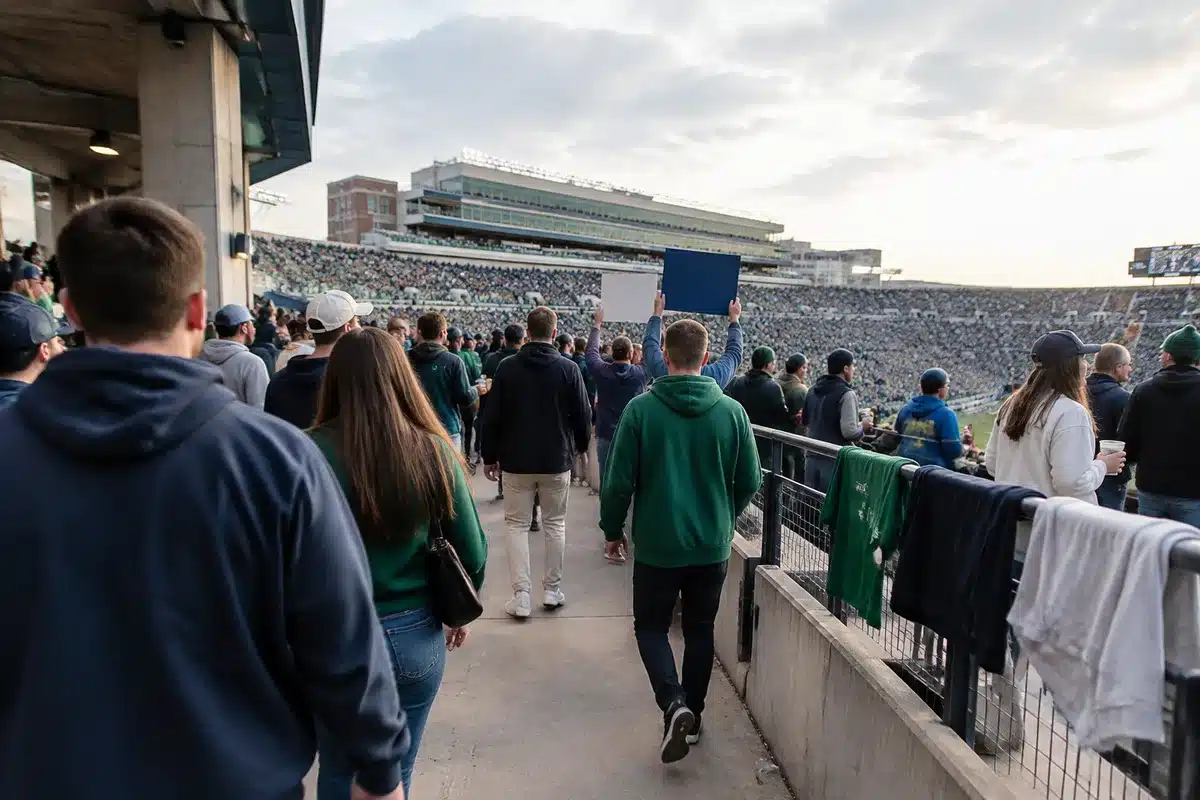
Fans, alumni and media are circling the contest not just for football reasons but because of what a win or loss could mean for the Irish’ Playoff hopes and for perceptions of fairness in the selection process. Add the crowd, the history and a coach who’s preached big‑game energy, and you have a matchup that’s shaping up to be one of Notre Dame’s most consequential home dates in recent memory.
The Growing Demand for Data-Driven Decision Making in Silicon Valley
He quit, ran out of money, and begged to come back — here’s how his boss reacted
Why the shirts keep coming back and what they represent
The “Catholics vs. Committee” slogan Katie Bell revived last December taps into a long, sometimes controversial tradition of college‑football banter. The original idea dates back to 1988 when Notre Dame students coined the sharper, more infamous phrase. Since then, the motif has been repurposed for different matchups and moments — sometimes playful, sometimes pointed — resurfacing whenever the sport’s culture collides with postseason debate.
That revival in 2025 was born from frustration: Notre Dame felt snubbed when a College Football Playoff berth went to Miami instead. The shirts served as both a rallying cry and a protest — and now they serve as narrative fuel heading into Saturday’s game between two teams whose paths have crossed frequently over the years.
How Miami’s 2025 season reshaped expectations
Miami’s last season gave the Hurricanes leverage in the eyes of many voters and selection committees. There are clear reasons why the program opened this cycle at No. 1 in the Playoff rankings.
- They beat Notre Dame 27‑24 in the season opener — a head‑to‑head result that is hard to ignore.
- Miami advanced all the way to the national title game, a run that validated their standing on a national scale.
- The Hurricanes finished their non‑conference schedule clean and avoided damaging losses within a strong ACC slate.
Those achievements helped silence some critics who questioned Miami’s spot in the expanded Playoff field the year before. Even when the Hurricanes needed time to put away conference opponents, their résumé and key wins made the top billing in the initial rankings a defensible position.
Notre Dame’s ranking gap and why Saturday feels like a must‑win
The Playoff committee’s placement of Notre Dame at No. 11 surprised many observers — it dropped the Irish several rungs below their Associated Press ranking published days earlier. That divergence matters: a top‑four game in one poll and an 11th‑place slot in another isn’t just an academic difference, it reshapes the path the Irish must take if they want to reach the postseason.

Put simply: Saturday’s contest is a high‑leverage opportunity for Notre Dame. The Irish lack a decisive signature win on their résumé, and with calendar constraints looming, opportunities to earn one are dwindling. Unless an underdog like SMU breaks into the Top 25 by mid‑November, Miami may be Notre Dame’s best remaining chance to add the kind of marquee victory that playoff committees value.
What the Irish need to accomplish on game day
- Deliver a clear, quality win over a top opponent that voters can point to on résumés.
- Play disruptive, error‑free football that minimizes turnovers and quick scoring by the Hurricanes.
- Use home‑field advantage to actively complicate Miami’s communication and tempo.
Those goals are simple to list and hard to achieve. The game will test Notre Dame’s ability to perform under national scrutiny.
Marcus Freeman’s message and the role of Notre Dame Stadium
Coach Marcus Freeman has embraced the intensity of these matchups, describing them as the kinds of contests players crave. He’s been clear about the advantage a boisterous crowd can provide — not just in spirit but in practical terms, by making it tougher for Miami to operate its offense and maintain communication across the line.
Freeman has spoken publicly about creating an atmosphere that becomes a tactical asset: when the stadium roars at the right moments, timing and signals can break down for visiting quarterbacks and play callers. The coach emphasized that these aren’t just “fun games” in the abstract — they’re tests of composure, preparation and noise management.
What to watch beyond the scoreboard
Saturday’s drama will play out on several levels. Pay attention to momentum shifts driven by crowd reaction, how well each offense handles high‑pressure third downs, and whether the Irish can manufacture a signature play or series that changes perception outside South Bend. The rivalry’s historical context and the postseason implications make every turnover and explosive drive feel magnified.
The matchup has pulled together cultural flashpoints, postseason politics and raw football stakes into one night. How Notre Dame answers those tests — both on the field and in the stands — will shape conversations about their Playoff viability for weeks to come
You might also like:
- Notre Dame ranked over Miami sparks debate about college football rankings
- Carson Beck leads Miami Hurricanes past Notre Dame in debut
- Carson Beck leads Miami Hurricanes past Notre Dame in debut
- College football rivalry week: 3 teams facing the most pressure
- Notre Dame No. 6 ranking tested as freshman QB CJ Carr debuts vs Miami

John Davis is a sports journalist focused on the NBA, NFL, and major global championships. With seven years of live coverage, he breaks down performances and key strategies. His expertise gives you a clear view of every game and its impact.

