

Show summary Hide summary
- How the new puberty-blockers trial is set up and why experts are uneasy
- What this study won’t be able to answer about long-term harms or benefits
- Why some experts argue observational data could have been more informative
- Ethical objections and the question of consent
- Social forces propping up controversial practices in child gender care
- Practical consequences for young people in schooling and social life
- Key actors in the debate and the role of advocacy groups
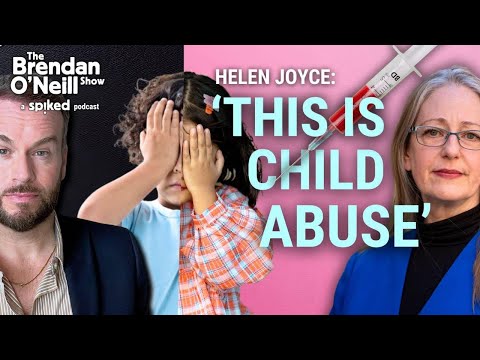
The U.K. has quietly shifted from shutting down a high-profile pediatric gender clinic to green-lighting a new experiment that will test puberty-blocking drugs on a small group of children. What was presented as an end to risky “gender-affirming” interventions has turned into a tightly scoped clinical trial — and critics say it raises serious scientific and ethical questions.
Formerly closed after the Cass Review exposed major failures at the NHS Gender Identity Development Service, the contentious treatments at the center of this debate — particularly puberty blockers — are again being examined under the authority of government-backed research. Supporters call the study a necessary step to build evidence; opponents call it a flawed design that won’t answer the biggest questions about long-term safety and outcomes.
The Growing Demand for Data-Driven Decision Making in Silicon Valley
He quit, ran out of money, and begged to come back — here’s how his boss reacted
How the new puberty-blockers trial is set up and why experts are uneasy
The trial announced by ministers recruits a few hundred minors who present with gender distress and randomizes them into two groups: some receive puberty-suppressing medication immediately, while others are deferred for roughly a year. The stated aim is to compare outcomes between those who start treatment at once and those who wait, producing controlled data where earlier care had none.
Yet the trial’s architecture creates unavoidable limitations. Because puberty suppression produces visible physical effects, neither participants nor observers can be blinded to who received the drug — compromising the controls that make randomized trials the gold standard in medicine. The follow-up window is short, limited to around two years, which means the study cannot track many of the outcomes critics say matter most.
- Short duration: the trial will not capture adult health consequences or lifetime trajectories.
- Visible intervention: treatment is obvious to patients and clinicians, undermining blinding.
- Small sample: roughly 200–220 children is unlikely to detect rarer or delayed adverse effects.
What this study won’t be able to answer about long-term harms or benefits
Even proponents concede the trial is limited. It cannot settle crucial questions about lasting physical and cognitive effects because those only appear or can be measured over many years.
- Will puberty blockers change bone density permanently?
- Are there measurable impacts on brain development, IQ, or learning?
- How many children will proceed to cross-sex hormones and later irreversible surgeries?
- Will regret or satisfaction rates emerge in adulthood?
Critics emphasize that a two-year window and small cohort cannot provide robust answers to these items. As one observer put it, the trial may produce data, but probably not the evidence needed to guide national policy on child gender medicine.
Why some experts argue observational data could have been more informative
There are already thousands of young people who have been given puberty blockers in past years. Observational follow-up of these larger groups — even if imperfect — could reveal patterns and signal unexpected harms or safety. Collecting current health metrics from that population would offer immediate, real-world information.
Drawbacks exist: prior patients often lack standardized baseline testing (IQ, bone density, hormonal baselines), making causal inference harder. Still, if widespread bone or cognitive deficits appeared among treated cohorts, that would be difficult to dismiss as random variation. Yet policymakers opted to prioritize a fresh randomized design rather than intensively examine the accumulated clinical record.
Ethical objections and the question of consent
From an ethical standpoint, the trial has drawn sharp criticism. Medical research involving children is justified when the potential benefits outweigh risks and when there is no better way to get answers. Detractors argue this study fails that test because the harms being measured could be delayed and severe, while the presumed benefits are uncertain.
Another core concern is consent: children and adolescents may be swayed by advocacy messaging or social pressures, and the irreversible consequences of later interventions complicate any claim of informed assent. The scarcity of long-term evidence — the very rationale for the trial — also raises the question of whether it’s responsible to expose minors to treatments where durable safety data are lacking.
Who reviewed and approved the study?
- Clinical researchers designed the protocol.
- Research ethics committees cleared the application on technical grounds.
- Government ministers signaled political support, citing a need for evidence.
Critics argue that responsibility was diffused across institutions: no single authority took broader moral responsibility for whether this is the right path, leaving a structural gap where technical approvals happened without a full, public reckoning of the social and ethical trade-offs.
Social forces propping up controversial practices in child gender care
Beyond the trial design, the debate is fuelled by cultural dynamics that make reversal or restraint difficult. Some defenders of gender medicine point to compassion and autonomy. Others say the movement benefits from momentum and institutional investment that create resistance to change.
Two recurring themes explain persistence despite mounting doubts:
- Sunk costs and reputational investment: clinics, clinicians and advocacy networks have invested time and credibility in these pathways, making an abrupt retreat politically fraught.
- Reluctance to set limits: in modern social discourse, there is a strong tendency to prioritize affirmation and avoid denying requests, even when refusal may be in a child’s longer-term interest.
Critics contend this environment discourages clinicians, regulators and politicians from saying “no,” even when the evidence base is weak. The result is what some describe as a culture of therapeutic optimism that outpaces the data.
Practical consequences for young people in schooling and social life
For a child enrolled in the trial, the social dimension can be as consequential as the physiological one. Puberty suppression changes outward appearance and may influence how peers and adults respond, but it doesn’t legally or functionally transform social access. Issues such as access to sex-segregated spaces, sports participation, and legal recognition remain constrained by societal rules and laws.
The central critique: promising a pathway to a social status the broader society cannot — or will not — fully recognize places young people in a precarious position. This, opponents argue, risks setting unrealistic expectations and exposing children to stigma, exclusion, or later disappointment when systemic change does not materialize.
Key actors in the debate and the role of advocacy groups
Voices across the spectrum are engaged: clinicians, researchers, government ministers, ethics panels, patient advocates, and civil-society organizations. Advocacy groups have played a visible role in shaping public perceptions and recruitment patterns; some critics say messaging has framed puberty blockers as “life-saving,” which may influence families’ choices.
Others defending the trial argue that refusing to test these interventions leaves clinicians without evidence to inform care and denies future patients the protections that arise from solid, prospective research. The disagreement is less about whether evidence is needed and more about what kind of evidence is ethical and adequate.
You might also like:
- Transgender children face another experimental treatment amid growing controversy
- Stonewall treachery must never be forgotten
- Acupuncture for back pain in seniors: effective treatment often covered by Medicare
- Post-surgery walking 1,000 extra steps a day speeds recovery
- Prostate cancer scans make cells glow: can eliminate invasive biopsies and false diagnoses

Robert Johnson is a dedicated columnist focusing on political and social debates. With twelve years in editorial writing, he provides nuanced, well‑argued perspectives. His commentaries invite you to form your own views and engage in critical issues.


Man, this puberty blockers trials kinda sketchy, innit? Safety concerns, ethics debates… feels like theyre playing with fire. Gotta protect the kids, yknow? Better safe than sorry, right?
Mate, I hear ya! Its like a rollercoaster of opinions out there. Safety first, always, especially with the younguns. But man, these debates are like watching a tennis match, innit? Back and forth, back and forth. Wonder where this rides gonna take us next, eh?
Man, this puberty blockers trial mess got me all riled up. Safety? Ethics? Feels like a ticking time bomb. Whos looking out for these kids? Its a whole messy stew, aint it?
Man, this whole puberty blockers trial thing? Its like playing with fire, you know? Safety and ethics should be top priority. Gotta think about the consequences here. Lets not rush into something we might regret later on.
Man, these puberty blockers got me thinking. Its a real ethical maze, innit? Like, how can we be sure about long-term effects? Need some solid answers before we mess with kids lives.
Man, this whole puberty blockers trial thing gives me the heebie-jeebies. Safety and ethics? Yeah, we should definitely pump the brakes on this one. Whos really looking out for these kids?
Mate, totally get what youre sayin! Puberty blockers makin us all raise an eyebrow, right? Safety and ethics, man, those are some big words. Like, whos really got these kids backs in all this mess? Its like we need a superhero to swoop in and sort it out, huh?
Man, this trial with puberty blockers? Sketchy vibes. Ethics and safety? Big concerns. Feels like a gamble with kids lives. Gotta pump the brakes on this, yknow? Its like playing with fire in a dry forest.
Man, this whole puberty blockers trial thing got me thinking. When I was a teen, all I worried about was acne and crushes, not messing with my body chemistry. Safety first, people!
I remember when I was younger, decisions felt like they were out of my hands. But messing with puberty? Thats a whole new level. Safety first, folks. Lets not play dice with the future.
Man, this puberty-blockers trial hoopla got me thinkin—safety and ethics, huh? Cant just roll the dice with kids health. Gotta tread carefully. Better safe than sorry, yknow?
Man, this whole puberty blockers trial sounds like a rollercoaster of ethical dilemmas. Feels like a messy soap opera. Cant they figure out a smoother way to handle this? Its like watching a reality show gone wrong.
I remember when I was a teen, decisions felt like life or death. Messing with puberty aint no joke. Safety first, people! Lets not gamble with kids health. Time to think twice.
Man, I totally get what youre saying about teenage decisions feeling like life or death. Puberty can be a wild ride, no doubt. Gotta watch out for those curveballs! Its all about keeping those kids safe and sound. Time to hit the brakes and think twice, right?
Man, these puberty blockers trials sound like a mess. Safety and ethics concerns are no joke. Its like theyre playing with kids lives. Hope they sort it out before its too late.
Yeah, its a real mess. Kids lives shouldnt be a gamble for anyones agenda. Hopefully, they get their act together soon. Gotta prioritize those little ones well-being over everything else, right?
Man, the whole puberty blockers trial giving me the heebie-jeebies! Ethics and safety concerns? Thats no joke. Gotta pump the brakes on this one before it goes all haywire. Whos even keeping an eye on this stuff?!