
Show summary Hide summary
In Fort McMurray, Alberta, an experiment in accountability and healing is reshaping how a small, tight-knit community handles crime. What began as a youth-focused pilot has spread to adults and is now producing striking results: reoffending rates that are almost non-existent among participants.
Officials say the approach — centered on repairing harm rather than simply punishing offenders — has practical advantages in a place where incarcerating a neighbor has outsized consequences for families and social networks. Local leaders and law enforcement describe the shift as a quiet revolution in public safety that prioritizes responsibility, repair, and reintegration.
Why Fort McMurray Turned to Restorative Justice
The Growing Demand for Data-Driven Decision Making in Silicon Valley
He quit, ran out of money, and begged to come back — here’s how his boss reacted
The Wood Buffalo region faces the same pressures as many rural areas: limited social services, close personal ties, and the strain of managing youth and adult offenses without creating lasting harm to families. Instead of defaulting to criminal convictions that carry permanent records and often worsen outcomes, community leaders opted for a program that asks offenders to confront the impact of their behavior and make amends.
The result: Out of more than a hundred participants, only a single person has reoffended — a statistic that has convinced skeptics the model deserves wider use.
How the Program Works on the Ground
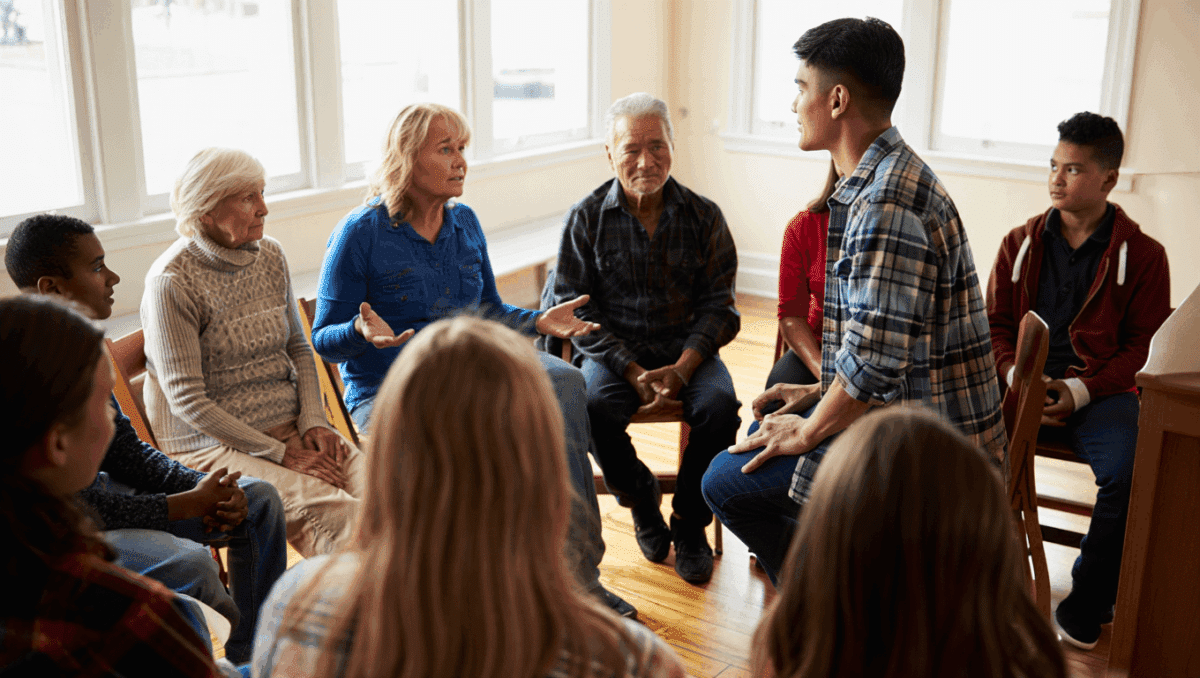
Restorative justice in this region operates through a few core practices that emphasize voluntary participation, direct accountability, and community involvement.
- Offenders must acknowledge responsibility for the harm they caused.
- Victims must consent to participate and typically attend meetings where the impact is discussed openly.
- Agreements focus on tangible reparations — not only punishments — such as apologies, community service, or actions that restore trust.
Step-by-step: A Typical Restorative Process
- Referral to a restorative coordinator after an incident.
- Separate meetings with victim and offender to outline concerns and goals.
- Facilitated face-to-face session where impacts are voiced and a restitution plan is negotiated.
- Follow-up to ensure commitments are met and relationships are repaired where possible.
Officials emphasize that the process is voluntary and requires honest participation from both parties. That willingness to be accountable — and to listen to those harmed — is central to the program’s success.
A Personal Example: A Teen Given a Second Chance
One case that illustrates the program’s practical effects involves a youth — identified only as Sam for privacy — whose impulsive reaction to a family dispute escalated to an attempted assault with a kitchen knife. Rather than being routed through the juvenile justice system for a formal conviction, Sam was referred to restorative services.
Through facilitated meetings with his victim and family, he accepted responsibility and agreed to reparative measures. Over the following months he obtained a driver’s license, secured employment, and rebuilt trust with family members to the extent that he continued living at home. Community coordinators point to this trajectory as evidence that restorative practice can prevent a one-time mistake from becoming a lifelong criminal label.
Expansion, Leadership, and Provincial Results
The Royal Canadian Mounted Police (RCMP) in the region played an active role in scaling the program. After observing promising outcomes in other jurisdictions, senior officers supported implementing restorative services across Fort McMurray and the surrounding Wood Buffalo area.
Provincewide data from Alberta indicates the model is catching on: there are now multiple organizations administering restorative programs in a range of communities, and evidence suggests these initiatives divert people from the formal criminal system while maintaining community safety.
- 21 organizations currently deliver restorative services in 11 Alberta communities.
- Law enforcement leaders report improved victim satisfaction and reduced repeat offending among participants.
Voices from the Field: How Practitioners and Officials View the Change
Some law enforcement staff were initially skeptical, seeing restorative work as too lenient. After years of hands-on experience, many have changed their stance, noting that the model can produce meaningful repair for victims and true accountability for offenders.
One senior RCMP official observed that offenders often find the restorative encounter more challenging than a court appearance: they must face the person they harmed and listen to the real consequences of their actions. For victims, the process offers a path to voice harm and participate in shaping how it is mended.
Related Restorative Justice Efforts to Watch
Across North America, similar programs are gaining traction and demonstrating varied benefits.
- Montana programs that bring youth face-to-face with victims report sharp declines in recidivism.
- Novel initiatives in correctional settings — such as family engagement events — have helped incarcerated people reconnect with loved ones and reenter society with stronger support.
- Rehabilitative projects that pair inmates with animal care or community service often improve behavior and provide skills that lower the chance of reoffending.
You might also like:
- Montana juvenile program cuts recidivism after victim-offender meetings
- Man jailed two years for throwing plastic bottle
- Grooming gang victim falsely framed as criminal
- New Jersey cop charged in murder probe after allegedly ordering pizza instead of investigating
- Florida man accused of killing and eating pet peacocks during feud with neighbor

Michael Thompson is an experienced journalist covering U.S. and global news. With ten years on the front lines, he breaks down political and economic stories that matter. His precise writing and keen attention to detail help you grasp the real‑world impact of every event.


Man, I remember when ol Fort McMurray turned to restorative justice. People were skeptical, but look at em now! Near-zero reoffending? Thats some real change, like a phoenix rising from the ashes.
Man, this restorative justice thing, its like a game-changer, you know? Zero reoffending? Thats some next-level stuff. But hey, how do they make it work so well? Sounds almost too good to be true!
Man, the power of second chances is real! I remember when my cousin got caught up in some mess, but restorative justice turned it around. Seeing this program cut reoffending rates is proof that empathy and understanding can make a real difference.
Man, restorative justice? Thats like a unicorn in the justice system, right? But hey, if its slashing reoffending rates to near zero, maybe its time for other towns to take notes. Second chances for the win!
Man, why cant more places get on the restorative justice train? Fort McMurrays onto something real here. Zero reoffending? Thats like finding a unicorn in your backyard, but better. Hope this spreads like wildfire.
Man, I remember when ol Fort McMurray was all over the news for the fires. Now theyre making headlines for cutting reoffending rates to near zero with restorative justice? Thats some turnaround, huh? Kudos to em!
Yeah, dude, its wild how Fort McMurrays making a comeback, aint it? From blazing fires to blazing a trail in restorative justice – talk about a plot twist! Wonder whats next on their redemption arc. Exciting stuff!
Dude, this restorative justice thing in Fort McMurray? Its like some next-level wizardry, man. Theyre out here turning offenders into model citizens. Can you imagine if this caught on everywhere? Crime rates would be as low as my GPA in math!
Man, I hear ya! Its like watching some real-life magic show, right? Turning troublemakers into role models? Wild stuff! If only this spread like a meme, wed have crime rates lower than my motivation to hit the gym. Imagine that, a world where criminals trade in their bad habits for halo emojis. *poof* Mind blown!
Man, its like a real-life superhero movie plot! Restorative justice swooping in, slashing reoffending rates to near zilch. Cant believe were not shouting this from the rooftops! Cheers to second chances and making things right.
Man, seeing Fort McMurray slash reoffending rates with restorative justice? Thats some next-level stuff! Imagine if more places hopped on this train instead of the same old punitive merry-go-round. Lets sprinkle some of that magic everywhere!
Man, Fort McMurrays onto somethin good with this restorative justice stuff. Cutting reoffending rates to near zero? Thats some next-level community healing right there. Wish more places would hop on this train.
Man, this restorative justice thing is like a breath of fresh air in a stuffy room. About time we ditched the old ways and tried something new, huh? Cutting reoffending rates to near zero? Thats some next-level magic right there.
You know what, man? I feel you on this one. Its like finally cracking open a window in a stuffy room full of outdated ideas. Restorative justice is that game-changer weve been waiting for. Its all about breaking the cycle, right? And hey, if it means slashing reoffending rates to near zero, count me in for some of that next-level magic!
Man, I gotta say, the way this towns tackling crime with restorative justice is mind-blowing. Zero reoffending? Thats unheard of! Hats off to Fort McMurray for trying something different and making it work. Other places should take notes, seriously.
Man, if every town hopped on this restorative justice train, wed be living in a different world! Zero reoffending? Thats like finding a unicorn at a bus stop! Gotta spread the word like my grandma spreads gossip at bingo night.
Man, I remember when ol Fort McMurray had a reputation for trouble. Now, with this restorative justice thing, theyre practically crime-free? Thats like a plot twist in a B-grade movie – too good to be true!
Man, restorative justice is like a superhero cape for real life. Fort McMurrays onto something! Zero reoffending? Thats like finding a unicorn in your backyard. Bet those kids are getting a shot at redemption, and thats whats up.
Dang, fam, restorative justice be out here like a real-life superhero cape, swoopin in to save the day! Fort McMurrays onto somethin big with that zero reoffendin statistic. Its like findin a unicorn chillin in your backyard, you feel me? Them kids gettin a shot at redemption is whats really good. Its all about givin folks a second chance, am I right?
Man, I remember growing up in a place where folks believed in second chances, but it was all talk. This restorative justice thing? Sounds like theyre actually making it happen. Maybe theres hope for us after all.
Man, back in my day, people talked a big game about giving others another shot, but it was all just hot air, yknow? This whole restorative justice deal sounds like theyre actually walking the walk. Maybe, just maybe, theres a glimmer of hope for humanity yet.