
Show summary Hide summary
- Why critics describe Spain’s politics as drifting toward a “woke autocracy”
- Where policy changes are most visible: education, the courts and public institutions
- How political opponents are organizing their response
- How supporters defend the reforms and why they matter to many voters
- Balancing protections and rights: the legal and social tightrope
- Signals to watch: court rulings, EU responses and elections
- Why the debate matters beyond labels
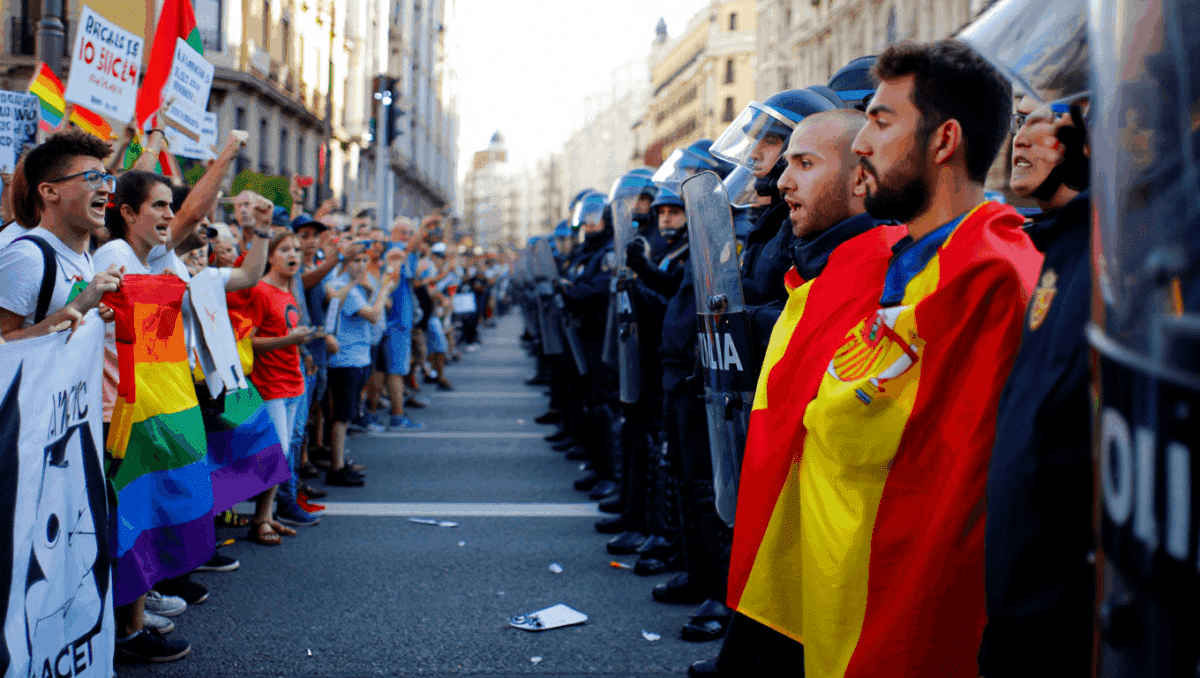
Spain is in the middle of a fierce cultural and political tug‑of‑war. On one side, lawmakers and activists are pushing ambitious social reforms framed as correcting historic injustices; on the other, opponents warn those same measures are reshaping institutions in ways that edge toward central control of speech, education and civic life. The debate is loud, emotional and increasingly framed in global terms — as part of a broader fight over what some call “woke” politics and what others call basic civil rights.
That friction is not only rhetorical. It plays out in parliaments, courtrooms and classrooms, and it is driving new alliances and protests across the country. Below, we map how these controversies are unfolding, why critics use the phrase “woke autocracy,” what defenders say in response, and the concrete policy areas that will determine how Spain’s political balance looks in the months ahead.
Why critics describe Spain’s politics as drifting toward a “woke autocracy”
Many opponents of the government’s social agenda use the term “woke autocracy” to signal two linked concerns: that progressive cultural policies have been imposed at speed, and that they have been enforced in ways that limit dissent. Their arguments typically include:
The Growing Demand for Data-Driven Decision Making in Silicon Valley
He quit, ran out of money, and begged to come back — here’s how his boss reacted
- Rapid legislation and executive action on sensitive cultural issues, they say, can bypass broad public consensus and democratic deliberation.
- New administrative powers to sanction speech or behavior deemed discriminatory are framed as necessary protections by supporters but as tools for silencing by detractors.
- Pressure on universities, media outlets and municipal institutions to endorse specific narratives, critics contend, threatens institutional independence.
These critics point to a pattern rather than a single law: a cluster of initiatives — from hate‑speech enforcement and memory laws to gender and identity policies — that, taken together, create a perception of top‑down cultural engineering. That perception is amplified in partisan media and on social networks, where accusations of censorship and overreach travel quickly.
Where policy changes are most visible: education, the courts and public institutions
Policy shifts are most visible in a handful of public spheres. Each domain raises distinct legal and political questions:
Education and curriculum
- Curriculum revisions aimed at inclusivity and anti‑discrimination have become battlegrounds in local school boards and regional governments.
- Teachers and school administrators face new guidance on language, sex education and diversity training, prompting debates about parental rights and academic autonomy.
Judicial and regulatory reforms
- Proposals to change how judges are appointed or how hate‑speech cases are processed have drawn scrutiny from legal experts and opposition parties.
- Independent oversight bodies and courts remain key arenas where the balance between protecting vulnerable groups and preserving free expression will be tested.
Public funding, culture and memory
- Arts and cultural grants have sometimes been conditioned on alignment with certain historical narratives or inclusion goals, prompting accusations of partisan favoritism.
- Memory laws and policies dealing with historical injustices are catalyzing disputes over who decides public commemorations and how history is taught.
How political opponents are organizing their response
Right‑leaning and some centrist parties have seized on these controversies to mobilize voters and frame the government as overreaching. Their tactics include:
- Using parliamentary inquiries and legislative amendments to slow or reverse contentious measures.
- Launching legal challenges in domestic courts and appealing to European institutions on questions of judicial independence and civil liberties.
- Staging public demonstrations and targeted media campaigns to keep the issues in the spotlight ahead of regional and national votes.
These moves aim to convert cultural unease into political gain. Several opposition groups are packaging criticisms of identity policy and administrative enforcement as part of a broader defense of free speech, local autonomy and traditional social norms.
How supporters defend the reforms and why they matter to many voters
Advocates of the government’s agenda argue that the changes address real inequalities and protect groups historically marginalized in Spanish society. Their main points include:
- Strengthening legal protections against discrimination and hate speech is presented as necessary to ensure safety and equal access to public life.
- Inclusive curricula and recognition policies aim to reduce stigma and provide a more representative education for students from diverse backgrounds.
- Targeted cultural investments and memory initiatives are framed as corrective measures that acknowledge past abuses and promote social reconciliation.
Supporters also stress that many of these measures are contested but legitimate outcomes of democratic processes — enacted by elected officials and subject to judicial review. For them, the “woke autocracy” label is a rhetorical device that exaggerates administrative intent and ignores the participatory mechanisms that produced the laws.
Balancing protections and rights: the legal and social tightrope
What separates robust protections from authoritarian overreach is often procedural and institutional — not merely the policy goals themselves. Key concerns for legal scholars and civil‑society watchdogs include:
- Due process: Are enforcement mechanisms paired with clear standards, appeal routes and judicial oversight?
- Proportionality: Do sanctions or restrictions match the harm they aim to prevent, or do they risk chilling legitimate debate?
- Transparency: Are funding decisions, curricula changes and administrative guidelines open to public scrutiny and consultation?
When any of these safeguards are weak, critics argue, even well‑intentioned policies can have illiberal effects. Conversely, strong procedural protections can reduce the risk that contested cultural reforms undermine democratic norms.
Signals to watch: court rulings, EU responses and elections
The next phase of this debate will be shaped by several concrete indicators:
- Court decisions that interpret the scope of anti‑discrimination laws and the limits of administrative sanctions.
- European Union assessments or recommendations concerning judicial independence and the protection of fundamental rights.
- Electoral results at local, regional and national levels that reveal whether voters prioritize cultural issues over economic and governance concerns.
- Mobilization by civil society groups on both sides — including legal challenges, public campaigns and coalition building.
These events will clarify whether current tensions represent a temporary flare‑up in partisan rhetoric or a structural shift in how Spanish democracy balances rights, governance and cultural change.
Why the debate matters beyond labels
Calling Spain a “woke autocracy” is a powerful rhetorical move, but it obscures more than it reveals unless paired with detailed scrutiny of laws, procedures and outcomes. The real questions for citizens and institutions are practical: are reforms protecting vulnerable people without trampling basic liberties? Are institutions preserving impartiality while responding to social demands? Are citizens able to contest policy without fear of reprisals?
The answers will be found less in slogans than in the slow work of litigation, parliamentary oversight, media investigation and civic engagement — arenas where Spain’s future political character will be negotiated in full daylight.
You might also like:
- Sandie Peggie’s heroic stand for women prompts response from Graham Linehan
- ECHR exit needed to protect women’s rights, advocates say
- Jamie Michael’s never-ending punishment continues to draw scrutiny
- Samuel Paty: how betrayal by classmates and online posts led to his murder
- Trans rights debate with TERFs continues as clashes intensify

Robert Johnson is a dedicated columnist focusing on political and social debates. With twelve years in editorial writing, he provides nuanced, well‑argued perspectives. His commentaries invite you to form your own views and engage in critical issues.


Man, Spains really turning heads with their woke autocracy vibe, huh? Its like theyre trying to juggle progressivism and control, but its a slippery slope. Wonder how far theyll go before it backfires.
Man, Spains on a rollercoaster ride with these woke policies. Are they paving the way to an autocracy or just shaking things up? Its like watching a drama series – education, courts, public institutions – wheres this plot twist going next?
Man, Spains gone all in on this woke autocracy thing, huh? Reminds me of that one time my aunt got into yoga and suddenly everything was about chakras and meditation. Balance is key, people!
Man, Spains really stirring the pot with these woke policies. Feels like walking on eggshells these days. Wonder if theyll strike a balance or go full steam ahead. Time will tell, I guess.
Man, Spains going full speed ahead on the woke train, huh? Wonder where itll all lead. Education, courts, public institutions…sounds like theyre trying to flip the script real quick. Hope they know what theyre doing.
Dang, Spain really diving headfirst into the woke ocean, huh? I mean, its like theyre on a mission to revamp everything overnight. Education, courts, public stuff… whole shebang! Wonder if theyre playing with fire or onto something big. Guess well just have to sit back with some popcorn and see where this wild ride takes em!
Man, Spains really stirring the pot with these woke policies. Feels like a sitcom plot, but IRL. Wonder if this trendll spread or hit a roadblock. Cant deny, its got people talking!
Man, Spains gone off the deep end with this woke autocracy label. Cant imagine the uproar in the tapas bars. Education, judiciary, institutions—everythings fair game. Wonder whats next in this political rollercoaster.
Man, Spains on a whole new level with these woke policies. Are they really leading to an autocracy, or is it just a bunch of noise? Gotta wonder how far theyll take this whole thing.
Man, Spains politics are like a rollercoaster, aint they? One minute its all about woke policies, the next folks are shouting authoritarian drift. Cant keep up, but it sure makes for one wild ride!
Man, Spains flipping the script with these woke policies. But aint it a slippery slope to an autocracy? Gotta keep an eye on that fine line between progress and power-tripping, you feel me?
Yo, bro, totally get what you mean about Spains moves. Its like, on one hand, theyre all about that woke life, but on the other, gotta watch out for that slippery slope to autocracy, right? Its like walking on a tightrope between progress and power-tripping. Gotta keep our eyes peeled for any shady moves, you know what Im saying?
Listen, I get it, change can be scary. But maybe Spains shaking things up for the better. Woke policies might ruffle feathers, but maybe its just what the country needs to evolve. Lets give it a chance, eh?
Man, Spains taking a wild turn with these woke policies. Are they heading towards a woke autocracy? Its like a rollercoaster of controversy in education, courts, and institutions. Whats next, woke monarchy?
Dude, Spains on a rollercoaster ride with these woke policies, huh? Its like theyre trying to switch up the game completely. But, a woke monarchy? Thatd be a whole new level of woke-ness! Who knows whats next, a woke soccer team? Gotta keep an eye on those Spanish surprises!
Man, Spains going all in on the woke scene, huh? Gotta be careful not to tip that scale too far. Its like watching a tightrope walker with a sudden gust of wind. Will they keep their balance, or is a fall inevitable?
Man, Spains really diving headfirst into the whole woke deal, huh? Its like theyre walking a thin line between progress and a faceplant. Wonder if theyve got the moves to pull it off or if a tumbles just waiting to happen.
Man, Spains really going all-in on this woke autocracy vibe, huh? Wonder where this road leads. Education, courts, public institutions… sounds like theyre shaking things up. Hope its for the best, but you never know with these big changes.
Man, Spains on some wild ride, huh? Its like watching a soap opera unfold with all these woke autocracy accusations. Cant deny the drama, but lets hope they find some balance in all this chaos.
Man, Spains going full speed ahead with these so-called woke policies. Are they really striving for progress, or is it a slippery slope towards authoritarianism? Gotta keep an eye on those power dynamics!
Yo, have yall noticed Spains new vibe? Some say theyre goin full woke mode, but others think its like, too much control. Whats your take on this whole woke autocracy sitch they got goin on?
Man, Spains push for woke policies got folks talking! Its like watching a pendulum swing from one extreme to the other. Wonder if theyll find the right balance without tipping over into authoritarian territory.