
Show summary Hide summary
- How the ceasefire reshapes control in northeastern Syria
- Why Washington’s backing matters — and why it’s controversial
- The Kurdish role in defeating and containing ISIS
- How regional dynamics left the Kurds isolated
- Security risks: detainees, prison camps and the prospect of renewed jihadist violence
- Why many see this as betrayal — and what’s at stake
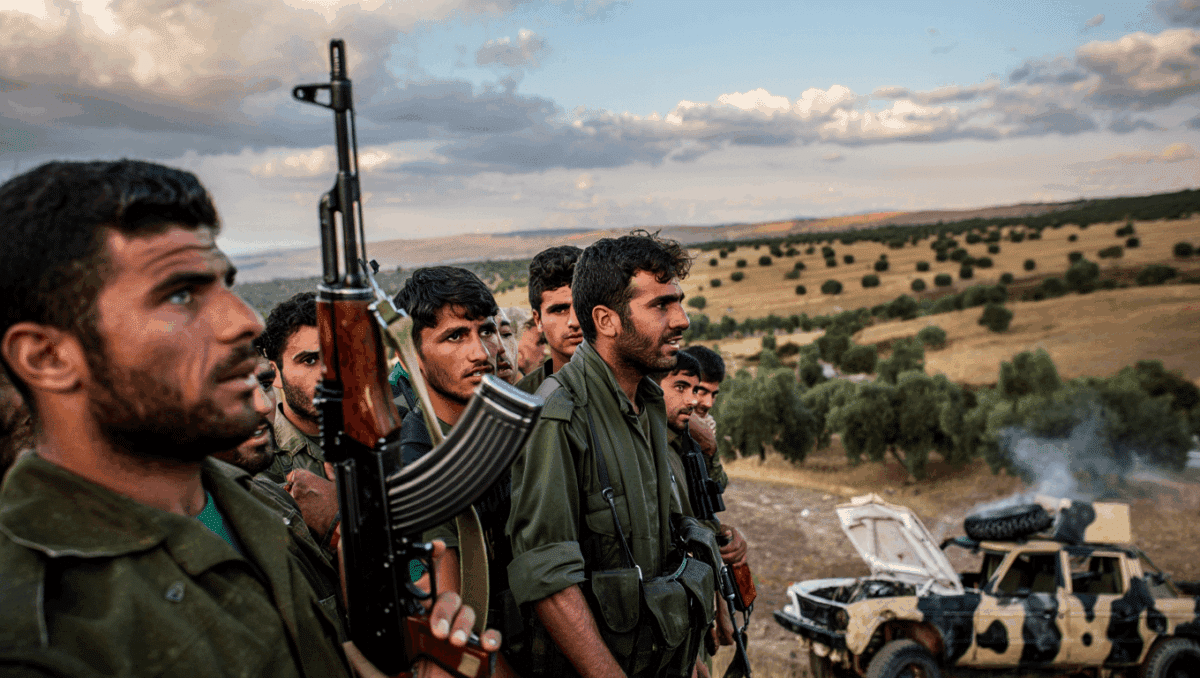
In a surprising turn in northeastern Syria, a U.S.-backed ceasefire has set in motion the transfer of territory long held by Kurdish forces to Damascus-aligned authorities. For many of the fighters who spent years confronting ISIS at great cost, the agreement feels less like reconciliation and more like abandonment.
The initial stages of the deal unfolded as Syrian government units moved into Hasakah and other cities once administered by Kurdish-led authorities. The planned outcome: the dismantling of the Syrian Democratic Forces (SDF) as an independent power and the absorption of its fighters into the national army under the interim presidency of Ahmed al-Sharaa.
The Growing Demand for Data-Driven Decision Making in Silicon Valley
He quit, ran out of money, and begged to come back — here’s how his boss reacted
How the ceasefire reshapes control in northeastern Syria
The new arrangement, brokered and publicly supported by U.S. representatives, paves the way for a rapid change in governance across the resource-rich northeast. Key elements include the handover of local administration, security responsibilities and the prisons holding jihadist detainees. Implementation began with government forces entering Hasakah, signaling the start of a wider transition.
Not everyone has accepted the deal. Some SDF units, including sections of the all-female Women’s Protection Units (YPJ), have resisted the takeover. Still, they face overwhelming odds as regular Syrian forces advance and administrative structures are re-established.
Immediate practical changes on the ground
- Syrian government forces are reclaiming cities and checkpoints previously managed by the SDF.
- Authorities plan to integrate former SDF fighters into national military structures.
- Control of detention facilities holding ISIS suspects and their families is being transferred to Damascus-aligned authorities.
Why Washington’s backing matters — and why it’s controversial
U.S. officials framed the deal as a step toward national reconciliation. Tom Barrack, a U.S. envoy, described the ceasefire as a milestone for unity and stability. Yet many Kurds and their supporters interpret the move as a geopolitical pivot that sacrifices long-standing partners.
Critics argue that U.S. support for the agreement effectively sides with Ahmed al-Sharaa, a figure with a controversial past who at one point led an al-Qaeda affiliate. That alignment raises difficult questions about short-term security trade-offs versus long-term trust with local partners who fought alongside Western forces against ISIS.
The Kurdish role in defeating and containing ISIS
Throughout the Syrian conflict, Kurdish-led formations bore a major share of the combat burden against ISIS, clearing territory, disrupting networks and detaining fighters and affiliates. After the militant group’s battlefield collapse in 2017, Kurdish units continued counter-insurgency work and maintained custody of thousands of suspects.
Detention camps such as al-Hol and facilities in al-Shaddadi became focal points for post-ISIS security—and for the humanitarian and stabilization challenges that followed. Kurdish authorities have also championed policies that attracted international attention: relatively secular administrations, multi-ethnic governance and prominent roles for women in security and civic life.
How regional dynamics left the Kurds isolated
The Kurds’ geopolitical position has long been precarious. With roughly 40 million people spread across several states, Kurdish aspirations for self-rule have repeatedly clashed with neighboring governments’ interests. In this episode, regional actors have not lined up behind the Kurdish administration.
Turkey, in particular, maintains a deep opposition to Kurdish militia autonomy and has consistently targeted groups it associates with the PKK. Ankara’s priorities complicate any prospect of robust regional support for Kurdish self-administration and make compromises with Damascus more likely.
Political sympathy and the international reaction
Global public attention has also been uneven. While some international movements energetically advocate for other causes in the Middle East, Kurdish struggles for autonomy and protection have often failed to galvanize the same level of activism. Observers note this inconsistency is driven by political alignments, differing narratives and the Kurds’ relatively secular governance model.
Security risks: detainees, prison camps and the prospect of renewed jihadist violence
One of the most worrying practical consequences of the handover is the fate of tens of thousands of people held in detention facilities and camps. The U.S. military has already started moving as many as 7,000 ISIS detainees to Iraq to reduce the risk of mass breakouts during the transition, a sign that authorities recognize the danger.
Analysts warn that shifting custody of these facilities could create security gaps that jihadist networks might exploit, especially as ISIS activity appears to be resurging in parts of Iraq, Syria and beyond. The transfer of control raises immediate operational questions about guarding high-risk detainees and preventing escape or reorganization.
- Prison facilities to watch: al-Hol, al-Shaddadi and other detention centers holding militants and their families.
- Immediate threats: mass escapes, coordinated attacks to free prisoners, and exploitation of transitional security vacuums.
- Long-term dangers: strengthened extremist recruitment and regional instability if containment weakens.
Why many see this as betrayal — and what’s at stake
For the Kurdish fighters who partnered with U.S. and coalition forces to defeat ISIS, the deal feels like a political cost they did not expect to pay. Many observers argue that abandoning a battlefield ally undermines trust in future partnerships and could discourage local cooperation in future counterterrorism operations.
Beyond the immediate political and moral dimensions, this recalibration could have strategic repercussions. If the handover weakens secure custody of extremists or diminishes local support for anti-jihadist efforts, it may accelerate a regional environment more conducive to violent Islamist groups reasserting themselves.
Kunwar Khuldune Shahid is a writer based in Pakistan.
You might also like:
- US abandons Syrian Kurds, raising concerns about their safety
- Terrorist state: leader says we can’t make peace
- Trump deals devastating blow to anti-Israel sentiment
- Pakistan-Afghanistan clashes: what sparked the recent cross-border fighting?
- Coalition of wishful thinking undercuts chances for meaningful reform

Robert Johnson is a dedicated columnist focusing on political and social debates. With twelve years in editorial writing, he provides nuanced, well‑argued perspectives. His commentaries invite you to form your own views and engage in critical issues.


Man, this whole situation with the Kurds is a real mess. Its like one of those plot twists in a movie where the supposed good guys turn their backs on the underdogs. Hard to trust anyone these days.
Man, its like a bad breakup. Kurds stuck by the West, fought ISIS together, then bam, left hanging. Whats loyalty these days, right? Hope they find their footing in this mess.
Man, I cant believe how quickly alliances shift in the Middle East. The Kurds fighting ISIS with U.S. support, then suddenly left hanging. Its like a messy breakup that affects an entire region. Crazy times we live in.
I know, right? It’s like watching a soap opera unfold in real life. One minute theyre all buddy-buddy, the next its See ya, wouldnt wanna be ya! Talk about drama on an international scale. Keeps us on our toes, thats for sure. Who needs reality TV when youve got the Middle East?
Man, the way the West ditched the Kurds feels like that friend who ghosts you when things get tough. Its a mess out there. Hope they find some stability amidst all this chaos.
Man, the Kurds keep gettin the short end of the stick, huh? The Wests fickle alliances aint helpin anyone. Its like a messy breakup in the school cafeteria, with everyone watchin. Chaos in the sandbox, for real.
Man, seeing the Kurds getting the short end of the stick again, its like a bad movie sequel no one wanted. The West needs to step up its game and not leave them hanging. Regional stability? More like regional mess-ups.
Man, the Kurds always end up on the short end of the stick. Its like a bad movie sequel – the West promises support, then ghosts them when things get messy. Cant trust anyone these days.
Man, the Kurds always get the short end of the stick. Its like deja vu all over again. The West needs to step up and do right by them for once. Cant keep playing with peoples lives like its a game.
Man, the Kurds always get the short end of the stick. Its like history keeps repeating itself. Cant believe the West just turned their backs on them like that. What a mess.
Man, its like the Kurds are stuck in a never-ending loop of betrayal. History really knows how to play a cruel joke on them. The West turning their backs? Classic move. Its like a bad rerun of a show you never wanted to watch in the first place. What a mess indeed.
Man, the Kurds always get the short end of the stick. Cant believe the West is pulling this move. Its like watching a bad reality show where the good guys get betrayed every dang time. Shameful, really.
Man, the Kurds deserve better. They fight ISIS, then get the cold shoulder? Big powers need to step up. Its like watching a movie where the hero gets dissed after saving the day. Not cool, world.
Man, the betrayal of the Kurds feels like a sucker punch. They fought ISIS like champs, then got ditched like yesterdays news. Whats up with that? Trust shattered, alliances broken… a mess for sure.
Dang, totally feel you on that one, bro. Kurds got the short end of the stick big time. Its like they were the heroes in a movie, then the sequel came out and they were nowhere to be found. Real messed up, man. Makes you wonder whos really got your back when push comes to shove, right?
Man, its like that classic movie plot where the ally turns against you. Kurds deserved better after fighting ISIS. The Wests move is a messy script for real life. Wheres the sequel? #unfair
Man, its like watching a messy breakup unfold in real-time. The Kurds stood strong against ISIS, now the Wests pulling the rug. Betrayal hurts, and the regions stability? Its hanging by a thread. Wild times were living in.
Man, the West always pulls this kinda stunt, leaving allies stranded. Kurds deserve better, for real. The mess in Syria aint gonna fix itself. Betrayal never looked good on anyone.
Man, seeing the Kurds get betrayed again hits hard. Its like that friend who always has your back, but youre never there for them. Hope we learn from this mess.
Man, I feel you on that. Kurds always getting the short end of the stick. Its like theyre the loyal sidekick in a movie who never gets the spotlight. Lets hope this time we actually wise up and dont repeat the same ol mistakes. Its like déjà vu, but with a lesson attached, right?