
Show summary Hide summary
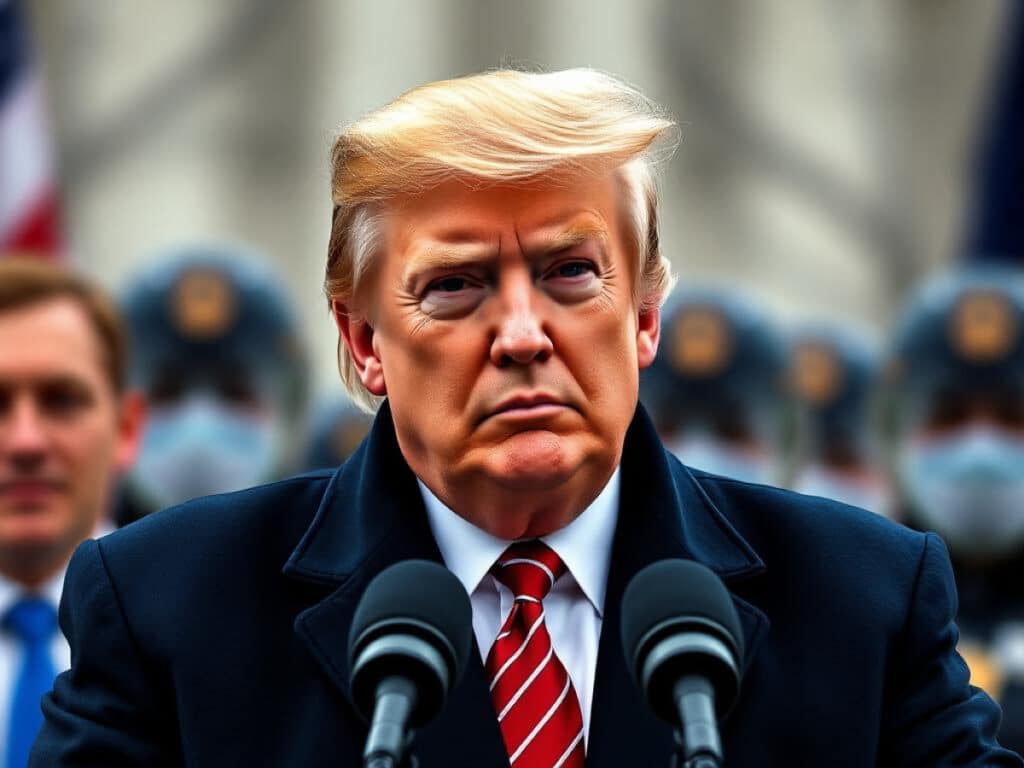
In a bold and controversial move, President Donald Trump announced the federal takeover of law enforcement duties in Washington, D.C., declaring the city a “crime emergency” zone. This dramatic step, articulated during a press conference, involves the deployment of the National Guard and places the city’s police under the authority of Attorney General Pam Bondi. Trump’s decision, which he claims is necessary to combat rampant crime and restore order, has sparked a wave of reactions across the political spectrum.
The Federal Government Steps In
During his announcement, President Trump invoked the District of Columbia Home Rule Act as the legal basis for his actions, expressing his intention to “rescue our nation’s capital from crime, bloodshed, bedlam, and squalor.” In an additional move, the administration appointed Terry Cole, the current administrator of the Drug Enforcement Agency, as the head of D.C. Metropolitan Police. These changes, Trump argued, are essential to deal with what he perceives as a severe threat to public safety.
The Growing Demand for Data-Driven Decision Making in Silicon Valley
He quit, ran out of money, and begged to come back — here’s how his boss reacted
Contradictory Crime Statistics
Despite Trump’s dire descriptions, recent official statistics suggest a significant decline in violent crime rates in the capital. However, the president dismissed these figures as misleading, citing specific violent incidents to bolster his claim that the city is in peril. These incidents include the assault on a former federal employee and the murder of a congressional intern, which Trump used to illustrate his point about the city’s supposed lawlessness.
Local Responses and National Implications
DC Mayor Muriel Bowser, a Democrat, vehemently disputed Trump’s portrayal of Washington, D.C., labeling his statements as “hyperbolic and false.” She denied any crime emergency in the city, challenging the president’s narrative and expressing concerns about the implications of federal intervention on local governance and community relations.
Broader Plans for Urban Security
President Trump also hinted at future expansions of this federal intervention model to other major cities, including New York and Chicago, suggesting a potential shift in how urban safety and law enforcement might be handled during his administration.
Legal Foundations and Future Prospects
The District of Columbia Home Rule Act grants the president the authority to assume control over the city’s police force during special emergency circumstances, allowing unilateral control for up to 30 days. Any extension beyond that period would require Congressional approval, setting the stage for possible political confrontations should the situation escalate or the policy expand to other cities.
This unprecedented step by President Trump to intervene in the local affairs of Washington, D.C., reflects a broader strategy to assert federal power in cities facing safety and security challenges. It remains to be seen how this approach will resonate with the residents of D.C., and how it will affect the overall political landscape as other cities watch closely, potentially bracing for similar federal interventions in their own jurisdictions.
You might also like:
- It’s Official: It’s Now the Last Chance for Our Government to Avoid a Shutdown
- Lula Blasts Trump on Brazil Tariffs: Accuses Bolsonaro of Betrayal!
- Trump’s Unexpected Visit to the Falklands: Political Motives Unveiled?
- New York City shootings hit historic low last year
- Trump Eyes Tri-Nation Summit With Putin After Zelensky Meeting: Diplomacy in Action!

Robert Johnson is a dedicated columnist focusing on political and social debates. With twelve years in editorial writing, he provides nuanced, well‑argued perspectives. His commentaries invite you to form your own views and engage in critical issues.

