
Show summary Hide summary
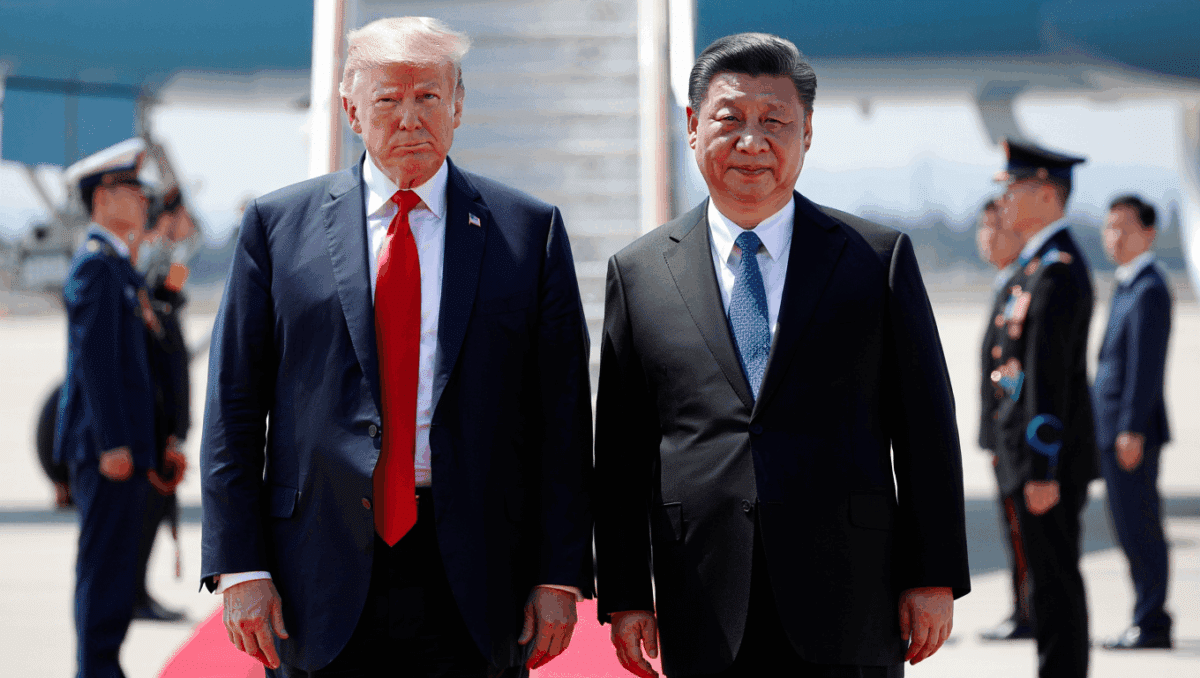
The brief, high-profile meeting between President Donald Trump and Chinese leader Xi Jinping at Gimhae Air Base in South Korea felt more like a diplomatic photo op than the start of a breakthrough. Both men exchanged smiles and statements, but beneath the handshake lies a far deeper rivalry — a new Cold War between the United States and China that will shape global politics for years to come.
What unfolded during and after the 100-minute summit showed limited realignment: a handful of practical agreements, an extended truce on tariffs, and a lot of unresolved friction on the most dangerous questions, especially Taiwan and strategic competition. The headlines celebrated détente; the reality is messier and more transactional.
What the leaders actually agreed to at Gimhae
The Growing Demand for Data-Driven Decision Making in Silicon Valley
He quit, ran out of money, and begged to come back — here’s how his boss reacted
The summit delivered several discrete, pragmatic outcomes rather than a sweeping reset. U.S. and Chinese officials described progress on trade and law-enforcement cooperation, but most long-term strategic disputes were left untouched.
- Trade truce extended: The tariff standstill that was due to expire next month was pushed out for another year, signaling a preference for managed stability over renewed escalation.
- Chinese purchases of U.S. agricultural goods: Beijing agreed to increase purchases of U.S. soybeans, easing tensions in a sector hit hard by the earlier trade war.
- Critical-minerals rhetoric softened: China stepped back from threats to curb exports of minerals crucial to high-tech manufacturing, reducing the immediate risk to global supply chains.
- Fentanyl enforcement commitment: Both sides announced a deal aimed at cracking down on fentanyl trafficking — a politically useful development for Washington given the opioid crisis.
What the summit didn’t solve: Taiwan and wider security risks
Despite the limited list of deliverables, the most perilous flashpoints remain unresolved. Taiwan sits at the heart of the strategic contest, and the conversation between the two leaders offered no clear path to avoiding crisis.
- Beijing has signaled an intent to pursue reunification with Taiwan by 2028 if necessary, increasing the risk of military confrontation.
- The United States continues to officially practice “strategic ambiguity” about defending Taiwan, leaving allies and adversaries uncertain about the likely American response.
- In an unmistakable show of force, President Trump ordered what was described as the first U.S. nuclear weapons test in 33 years hours before the summit — a reminder that deterrence rhetoric remains central to Washington’s playbook.
That combination — an explicit Chinese timetable for Taiwan and public U.S. demonstrations of military resolve — underscores how easily diplomatic calm can shift into escalation.
How media and analysts parsed the outcome
Coverage varied, but many outlets judged the meeting a tactical win for Xi or, at best, a stalemate. Commentators noted that the summit left trade relations and strategic calculations largely intact, rather than producing dramatic change.
Several analysts pointed to deeper structural advantages Beijing appears to be consolidating:
- China’s leadership is often portrayed as a disciplined, state-driven machine that learns from setbacks and adapts policy tools quickly.
- By contrast, critics argue U.S. political dysfunction — from budget gridlock to uneven crisis management in recent decades — weakens Washington’s ability to sustain long-term geopolitical initiatives.
That reading helps explain why some observers see Xi as better positioned to convert tactical gains into strategic leverage over time.
Why this summit matters for markets and supply chains
Beyond geopolitics, investors and companies are watching for any shifts that might affect global trade, minerals, and agricultural flows. The Gimhae meeting offered a short respite for several sensitive markets.
- Minerals and semiconductors: The rollback of export threats reduced the immediate chance of supply shocks to critical components used in electric vehicles, batteries, and chips.
- Agriculture: Renewed Chinese purchases of soybeans will ease pressure on American farmers and commodity markets.
- Tariff uncertainty: The one-year extension of a trade truce still leaves firms with a calendar of possible changes that could alter investment and sourcing decisions.
In short, businesses gained time to plan, but not the clarity needed for long-term reshoring or supply-chain redesign.
Voices from the financial and strategic community
Major financial houses and think tanks described the post-summit environment as cyclical tension rather than a stable peace. One prominent investment bank summed it up as a pattern of “tension, escalation and truce,” suggesting this uneasy rhythm may be the new baseline for U.S.-China relations.
Policy experts are warning that while limited agreements reduce immediate shocks, they do little to lower the long-term probability of confrontation over strategic issues like Taiwan, semiconductors, and influence in global institutions.
What to watch next
- Military maneuvers and airspace activity around Taiwan for signs of escalation.
- Follow-through on fentanyl enforcement and whether it leads to measurable seizures or prosecutions.
- Trade and commodity flows — especially critical minerals and agricultural purchases — to see if commitments become lasting contracts.
- Domestic political developments in Washington and Beijing, which will shape how durable any agreements prove to be.
For now, the Gimhae summit offers a pause, not a peace. The leaders walked away with pragmatic, limited deals — enough to calm markets and headline writers — but not nearly enough to dissolve the strategic rivalry that defines the U.S.-China relationship.
You might also like:
- Trump Eyes Tri-Nation Summit With Putin After Zelensky Meeting: Diplomacy in Action!
- Donald Trump dominates World Economic Forum agenda
- Huawei and Xiaomi’s secret weapon revealed: how China stunned the U.S. tech world
- Iran economy: Tehran far from victory in economic war
- Huawei and Xiaomi lead China’s rapid semiconductor advance, challenging U.S. tech dominance

Robert Johnson is a dedicated columnist focusing on political and social debates. With twelve years in editorial writing, he provides nuanced, well‑argued perspectives. His commentaries invite you to form your own views and engage in critical issues.


Man, after that Trump Xi meeting, Im like a detective with a magnifying glass. Whats the deal with U.S.-China relations now? Feels like a game of chess where the pieces keep changing places. Cant wait to see how this plot twist unfolds.
Man, this whole Trump Xi meeting got me thinking. Are they just playing 5D chess or solving world issues over tea? Hard to say, but Im keeping an eye on those U.S.-China relations, gotta stay woke!
I mean, who knew a summit could stir up so much speculation, right? U.S.-China relations always keep us on our toes. Wonder what the real deal is behind closed doors… Let the guessing games begin!
Man, this Trump Xi thing got me thinking. Will their pow-wow really make a dent in those U.S.-China tensions, or are we in for more drama? Cant wrap my head around it, but hey, gotta stay tuned.
Man, that Trump Xi meeting got me feeling like watching a reality show crossover. Wonder what those two cooked up this time. Are we in for some surprise twists or just more reruns of the same ol drama?
Man, that Trump Xi meetings like a reality show mashup! Wonder if theyre plotting some epic twists or just serving us the same old drama reruns. Its like waiting for a sequel that might just flop or surprise us all. Just hope its worth the watch this time.
Man, this whole Trump Xi meeting got me feeling like Im watching a game of political chess. Wondering what moves theyre plotting next. Hope its not just a stalemate this time.
Man, these two are like oil and water, aint they? Trump and Xi mixin it up again. Wonder what kinda mess theyll stir this time. Place your bets, folks!
Theyre like a couple of toddlers fighting over a toy truck! Trump and Xi, always up to no good. Honestly, I wouldnt be surprised if they end up causing a global pillow fight this time. Whos your bet on, the Twitter warrior or the poker-faced diplomat? Place your bets, folks!
Man, Trump and Xi always stir things up. Cant help but wonder how this rendezvous impacts U.S.-China relations. Are they really playing nice, or is it all just smoke and mirrors? Time will spill the tea, folks.
Man, these leaders always makin deals behind closed doors. Who knows what they really agreed to? Hope its good for everyone… but I aint holdin my breath. Trust issues, yknow?
Man, that Trump Xi meeting got me thinking. Are they just playing 3D chess while were stuck on checkers? Whats the real deal behind the scenes, yknow? Gotta watch closer next time.
Man, this whole Trump Xi meeting got me thinking. Its like a chess game, yknow? Wonder what theyre really up to. Hope its not just a show for the cameras. Time will tell, I guess.
Man, watching Trump and Xi trying to figure out U.S.-China relations is like watching my parents argue over dinner. One minute its all smiles, the next its icy glares. Can they just make up already?