
Show summary Hide summary
- Signs that community cohesion is fraying in the UK
- Why understanding “culture” as mere cuisine is a mistake
- Two rival misconceptions about culture: multicultural cheerleading and market cosmopolitanism
- Immigration, elites and the politics of silence
- Why Brexit is not a convenient catch-all for economic woes
- A cultural note: Bryan Magee on television philosophy and John Searle’s challenge
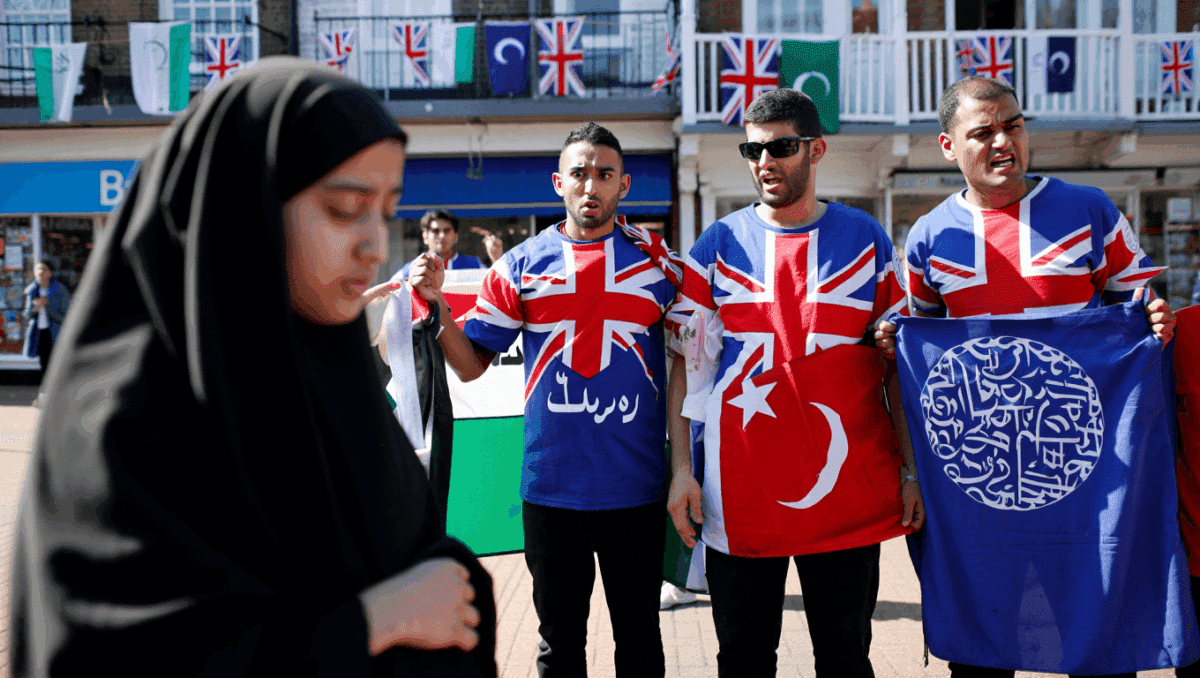
For decades “diversity” was sold as an unquestioned public good. Lately, however, visible divisions across towns and cities have made many people wonder whether that promise has actually hollowed out shared civic bonds rather than strengthened them.
From street flags that mark out neighborhoods to clashes over public gatherings, recent episodes have exposed a fragile social fabric and raised questions about how political elites and institutions have responded.
The Growing Demand for Data-Driven Decision Making in Silicon Valley
He quit, ran out of money, and begged to come back — here’s how his boss reacted
Signs that community cohesion is fraying in the UK
Across the country there are growing reports of communities living largely separate lives: local symbols and signage that signal identity, leaders who operate as if managing rival fiefdoms, and parts of towns perceived as hostile to outsiders. When authorities limit supporters from attending a football match for fear of violence—such as the decision to stop Maccabi Tel Aviv fans from traveling to an Aston Villa fixture—it felt, to many observers, like a watershed moment. That choice reinforced a worry that state institutions sometimes concede to pressure rather than assert public order.
- Visible markers that delineate neighborhoods
- Parallel institutions—schools, places of worship, social clubs—serving distinct groups
- Localized enforcement decisions that vary by community and event
These developments are being blamed on a range of causes: rapid immigration since the 1990s, economic strains, and what critics call the timidity of liberal policymakers unwilling to confront difficult cultural issues for fear of being branded intolerant.
Why understanding “culture” as mere cuisine is a mistake
Much public debate treats culture as shallow décor: food, festivals, clothing. But culture also refers to the systems of values that shape behavior, laws and social expectations. When policymakers focus exclusively on employment statistics or social services, they risk overlooking how deeply held beliefs determine whether different groups can live together on shared terms.
Culture includes the values we teach and transmit—how we settle disputes, what freedoms we protect, and the basic civic rules everyone is expected to follow. In Britain, many people point to core civic principles that have evolved over centuries and undergird public life:
- Freedom of expression and conscience
- Equality before the law
- Tolerance of differing beliefs and lifestyles
When actions or demands directly clash with these principles—whether through targeted violence, seeking special legal exemptions based on identity, or tolerating criminal conduct within communities—the backlash is often not about race or religion alone, but about perceived violations of common expectations.
Two rival misconceptions about culture: multicultural cheerleading and market cosmopolitanism
Those who champion multiculturalism in an upbeat, celebratory register have sometimes treated cultural difference as harmless color—meals, holidays, music—expecting everyone to eventually converge toward a shared secular liberal outlook. Conversely, ardent free-market advocates often cast individuals as mobile economic agents who need not be anchored by national or cultural loyalties. Both positions can be blind to the reality that culture carries deep moral codes and practical norms.
What was missing from much official thinking was an anthropological lens: an appreciation that culture organizes moral life and social coordination. Policies that ignore the transmission of values—through families, schools, religious institutions and civic rituals—are likely to create gaps where suspicion and competition can take root.
Immigration, elites and the politics of silence
Rapid population change places pressure on shared institutions, and how elites discuss those pressures matters. Critics argue that political and cultural leaders have sometimes chosen silence or euphemism over frank debate because of the risks of being accused of prejudice. That reluctance, they say, prevents practical conversations about integration, community standards and enforcement of the law.
Addressing these challenges requires clear-eyed analysis, not scapegoating. It also demands policies that reinforce common institutions while protecting minorities from discrimination—balancing social cohesion with individual rights.
Why Brexit is not a convenient catch-all for economic woes
Assigning all current economic troubles to Britain’s departure from the European Union simplifies a much more complicated picture. Forecasts and retrospective estimates—such as projections by fiscal watchdogs—have been repeatedly cited as proof that leaving the EU depressed growth by several percentage points. But long-term economic performance is shaped by many events and policy choices.
- Global shocks: the Covid pandemic and Russia’s invasion of Ukraine
- Domestic fiscal and tax policy decisions
- Structural changes in supply chains and investment patterns
Singling out Brexit as the sole cause ignores wider trends: other large European economies face serious challenges too, from political turmoil in France to deep slowdowns in Germany. Economic narratives that reduce complex trajectories to a single headline are convenient but often misleading.
A cultural note: Bryan Magee on television philosophy and John Searle’s challenge
Television once brought big philosophical debates into living rooms. The revival of Bryan Magee’s programs on BBC Four has reminded viewers how accessible serious ideas can be. Magee’s conversations with thinkers such as John Searle crystallized a dispute that still matters: whether our knowledge of the world is filtered entirely through social and linguistic frameworks, or whether we can meaningfully refer to an objective reality.
Searle defended a version of realism that insists on an external world we can grasp, even if perception and language shape how we report it. Magee pushed back, warning against reducing ordinary experience to linguistic categories that erase the immediacy of perception. The exchange remains a lively prompt to ask how much of our shared life is built from raw experience and how much from the labels and concepts we impose on that experience.
Try this
Look away from these words for a moment and take in your surroundings. Do you perceive a constellation of distinct items—each with a name and history—or a blur of shapes and sensations? That simple check invites reflection on how language and perception work together to make a world intelligible.
Patrick West is a columnist for spiked. His most recent book is Get Over Yourself: Nietzsche for Our Times, published by Societas.
You might also like:
- Gertrude Himmelfarb: conservative historian who shaped today’s culture wars
- Civic nationalism must be revived to heal U.S. political divides
- Kemi Badenoch takes on the uniparty in UK politics
- Britain: has it already fallen? Melanie Phillips on national decline
- Wes Streeting would make a comically bad UK prime minister, critics say

Robert Johnson is a dedicated columnist focusing on political and social debates. With twelve years in editorial writing, he provides nuanced, well‑argued perspectives. His commentaries invite you to form your own views and engage in critical issues.


Mate, Ive seen this coming for ages. The divides been growing, innit? Cant just slap a multicultural sticker on everything and hope for the best. Time to stop the cheerleading and face the music.
Man, its like everyones on a hair-trigger these days, ready to pounce on anything that smells like division. Can we just, I dunno, chill for a sec? Sectarian state, fraying cohesion… bring on the drama.
I hear ya, man! Everyones walkin on eggshells these days, ready to jump on any ol thing that smacks of conflict. Cant we all just take a breather and vibe for a sec? Dramas so overrated… Lets sprinkle some peace and love, yknow?
Man, its like everyones on edge lately, innit? Sectarian tensions in the UK? Thats a slippery slope. Cant we all just chill and vibe together, without all this drama and division? Peace and love, man.
Mate, its like watching a car crash in slow-mo. UKs heading towards a right mess with this sectarian stuff. Cant they see were all in this together? Time for a reality check, innit?
Mate, its like a cultural minefield out here. One wrong move, and youre labeled this or that. Cant we all just enjoy our fish and chips without the drama? Just a bunch of folks trying to get by.
Mate, its like everyones got their knickers in a twist over this whole sectarian state business. Like, cant we all just get along and have a proper brew together? Whats with all the fuss, eh?
I remember when we used to argue about football teams, not religions. Now its all about who prays to what. Cant we all just get along and focus on what really matters? #UnityInDiversity
Man, these critics gotta chill! UKs got variety, not division. Were all mix-and-match, like a cultural buffet. Embrace the spice, ditch the saltiness. Harmonys the real flavor here!
I remember growing up in a tight-knit community where neighbors had each others backs, regardless of backgrounds. Now, reading about the UKs alleged shift towards sectarianism is disheartening. When did we forget that unity is our strength?
Man, its like a bad movie plot but real – UK turning into a sectarian state? Feels like were living in a dystopian novel. How do we even get out of this mess? *grabs popcorn*