
Show summary Hide summary
- How social media turned a fatal accident into a spectacle
- Who Paul Lumber was and why his story resonated locally
- Raise the Colours: neighborhood décor or political provocation?
- When symbols become proxies for class contempt
- Practical consequences: education, employment, and who gets help
- How this episode echoes broader patterns of selective empathy
- What the debate reveals about British social divisions
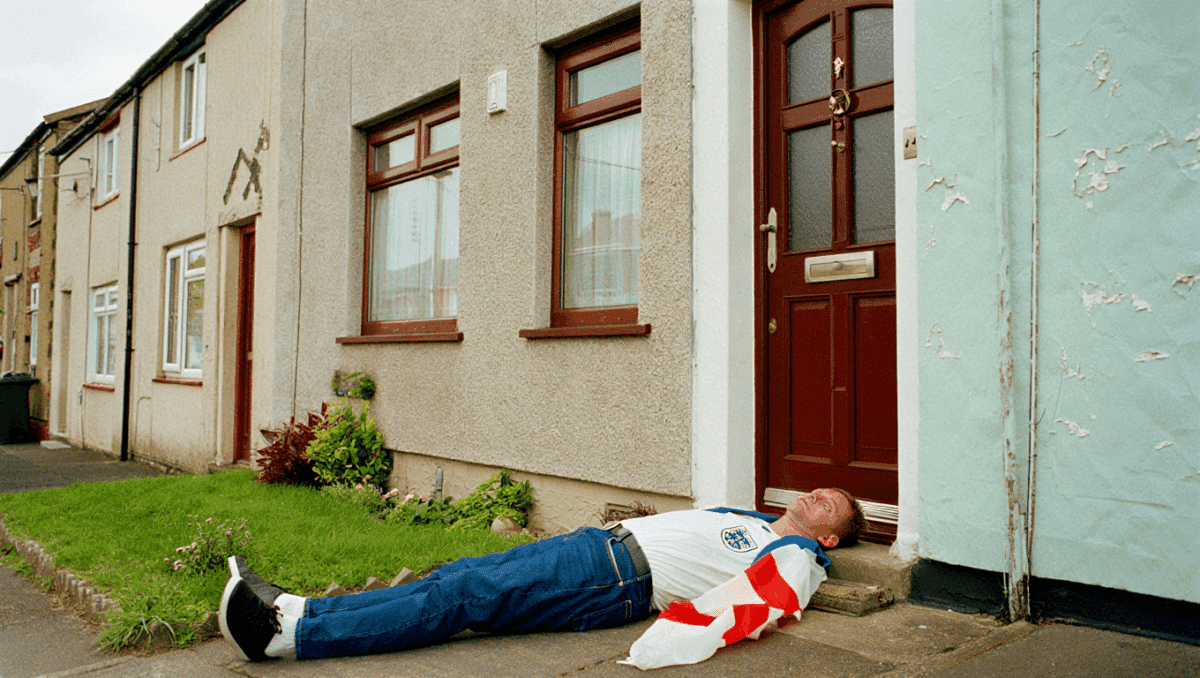
The death of Paul Lumber while putting up an England flag outside his home in south Bristol has revealed a raw seam of class hostility in Britain’s public life. Instead of condolences, much of the early online response was cruel: mocking, gloating and treating a man’s tragic accident like entertainment. That reaction says as much about the social attitudes of those laughing as it does about the man who died.
This episode has forced a wider conversation about who we pity, who we scorn, and how class prejudice shapes the way tragedies are reported and received. Below I unpack the incident, the campaign behind the flags, and the deeper cultural dynamics that make public grief so uneven.
How social media turned a fatal accident into a spectacle
Online platforms filled quickly with derisive comments after news of Lumber’s fall circulated. Rather than immediate compassion, many users reacted with schadenfreude — celebrating someone’s death because he embodied a social type they dislike.
The Growing Demand for Data-Driven Decision Making in Silicon Valley
He quit, ran out of money, and begged to come back — here’s how his boss reacted
- Several posts framed the incident as a deserved outcome, using language that equated personal risk-taking with moral failing.
- Some responses treated the accident like a punchline, sharing jokes and mocking emojis rather than condolences.
- A smaller but vocal group argued the visibility of certain political symbols justified the tone of the conversation.
This pattern demonstrates how digital outrage and cultural contempt can combine to erase basic human sympathy. When a person belongs to a stigmatized group — in this case, the white working class — empathy is often the first casualty.
Who Paul Lumber was and why his story resonated locally
Lumber was known in Bristol for his involvement in local football culture and for writing about his experiences with 1980s football groups. That background made him both a familiar figure to many in his community and an easy target for outsiders who see working-class identity as a stereotype.
People who knew him describe someone outspoken and proud of his roots, the kind of local character who turns up at events and rallies support for neighborhood causes. He helped raise funds to pay for flags in the “Raise the Colours” campaign — a grassroots effort to display national symbols on street posts and bring visual life to neglected areas.
Raise the Colours: neighborhood décor or political provocation?
The campaign itself sits at the crossroads of civic pride and cultural anxiety. For many residents, the flags are simply decorative: a lift for run-down high streets and estates that few public funds have helped restore.
People who appreciate the flags often mention:
- Brightening tired neighborhoods
- Fostering a sense of local solidarity
- Reminding residents of a shared identity during sporting events
Critics, however, have framed the campaign as exclusionary or as signaling a hostile politics. That interpretation has intensified the moral judgments attached to anyone visibly involved in flag-raising. But local conversations suggest most residents experienced the flags as small civic improvements rather than political provocations.
When symbols become proxies for class contempt
The anger directed at Lumber appears less about flags themselves than at the social group associated with them. Middle-class commentators and influencers are more likely to view white working-class patriotism through a lens of suspicion — a stereotype that paints this population as reactionary, irrational, or dangerous.
This dynamic surfaced most starkly after the Brexit referendum, when deindustrialized areas that voted to leave were publicly derided. The pattern repeats here: when a cultural symbol is associated with a social class that elites fear or misunderstand, its participants are pathologized rather than engaged with.
Dehumanizing an entire social group makes it easier to ignore their struggles and to withhold resources. When you treat people as caricatures, it becomes easier to explain away educational underachievement, job scarcity, and the decay of local services as their own fault rather than outcomes of policy and disinvestment.
Practical consequences: education, employment, and who gets help
Class stigmatization has measurable consequences. Communities with high concentrations of white working-class families often face:
- Lower educational outcomes for children
- Fewer opportunities to secure stable, well-paid employment
- Higher rates of neglected public infrastructure
When public narratives blame or mock these communities, it provides political cover for cutting back support and ignoring long-term investment. Rather than addressing structural harms, the discourse shifts to personal moralizing.
How this episode echoes broader patterns of selective empathy
The public relish at Lumber’s misfortune is structurally similar to how some corners of society respond when other vulnerable groups suffer. There is a troubling symmetry between the dismissive reaction to a working-class man’s death and the callousness sometimes shown toward refugees or the homeless — groups whose pain is also too often met with indifference or glee.
Selective empathy is a political problem as much as a moral one. It shapes which deaths make headlines, which communities receive aid, and which tragedies are used to score cultural points. If the public — and the media that amplify these reactions — want a healthier civic life, they must reckon with the ways class prejudice informs everyday responses to human suffering.
What the debate reveals about British social divisions
At its core, the coverage and commentary around Paul Lumber’s death expose deep social fissures. The split is not only economic but cultural: who is allowed dignity in death, whose neighborhood displays are deemed acceptable, and which forms of civic expression attract sympathy versus scorn.
Lisa McKenzie, a scholar who identifies as working-class, has argued that these attitudes are rooted in long-standing contempt for the white working class — a contempt that affects policy, media portrayal, and interpersonal behavior. The incident around the flags is a small but telling example of how easily a community’s humanity can be diminished by prevailing social narratives.
You might also like:
- Hannah Spencer (Greens) accused of abandoning working-class voters
- Brexit spirit alive after Reform victory in UK
- Sadiq Khan accused of online trolling after heated exchange with critics
- Elsewheres: who they are after anywheres vs somewheres
- Trump protests spark millennial backlash

Robert Johnson is a dedicated columnist focusing on political and social debates. With twelve years in editorial writing, he provides nuanced, well‑argued perspectives. His commentaries invite you to form your own views and engage in critical issues.


Man, seeing how Paul Lumbers death was turned into a sideshow on social media just shows how messed up things are. The guy deserved better, respect for his family at least. Lets not lose our humanity in the online chaos.
Man, its a wild world out there. I hear ya, bud. Social media can turn even the most heartfelt moments into a circus. Paul Lumbers definitely deserves more respect than that. Its like people forget there are real lives behind those screens sometimes. Gotta keep it real and humane in this online jungle, you know?
Man, societys messed up when even in death, the white working class gets dehumanized. Paul Lumber deserved better. His story aint just some spectacle. Its a harsh reality check. When will we start seeing people as people, not just stats?
Man, its messed up how Paul Lumbers death became a circus on social media. The guy deserved respect, not to be reduced to clickbait. The working class aint just a storyline for peoples entertainment.
Ill tell you, mate, its a shame how some folk cant even get respect in death. Paul Lumber deserved better, not to be some social media sideshow. Raise the Colours? Nah, raise your standards!
Man, I feel you on that one. Its messed up how people cant show some basic respect, especially when someones passed on. Paul Lumber didnt deserve to be some online circus act. People need to remember theres more to life than likes and retweets, yknow? Its like, have some decency, folks!
Man, its messed up how even in death, the white working class gets dehumanized. Social media turns tragedy into a circus. Paul Lumbers story hits hard locally. When did neighborhood decor become political ammo? Symbols shouldnt equal class hate.
Man, its so messed up how society treats the working class, even in death. Paul Lumbers story hits hard. People need to show more respect and empathy instead of turning everything into a spectacle.
Man, seeing how social media blew up about Paul Lumbers accident got me thinkin. Why are we so quick to judge and dehumanize the white working class, even in death? Its like tragedys just another spectacle for us to gawk at.
Man, I hear ya. Its crazy how quick folks are to jump on a bandwagon when it comes to pointing fingers. Its like empathy flew out the window and judgment set up camp instead. We all gotta remember were human first, labels come second. Lets spread some love, not gossip, right?
Man, aint it messed up how society treats the white working class, even in death? Paul Lumber deserved respect, not to be a social media sideshow. Lets show some humanity, folks.
Man, thats so true. Paul Lumber deserved better, not to be some headline for clicks. Its like people forget he was a real person, not just some story to gossip about. Societys got a weird way of showing respect these days, huh?
Man, saw that story bout Paul Lumber. Aint right how the media treats working-class folks. Even in death, they aint given respect. Makes me wonder how we let it get this far.
Man, social media really knows how to turn tragedy into a circus. Paul Lumber deserved respect, not this spectacle. The way the working class gets treated, even in death, just shows how messed up things are.
I knew a guy like Paul Lumber, workin hard, strugglin daily. Yknow what irks me? How folks treatin his death like a show. Aint right, man. Let the man rest.
Man, its messed up how society treats the working class, even in death. Paul Lumbers story hits hard. Social media turning his tragedy into a sideshow? Disrespectful. Let the man rest in peace.
Man, reading about how the white working class gets disrespected even in death hits too close to home. Paul Lumbers story shows how society can turn tragedy into a sideshow. We need more empathy, less judgment.
Man, societys really got a knack for turning everything into a circus, huh? Its like were all just waiting for the next tragedy to parade around like its entertainment. Empathy seems to be in short supply these days. Makes you wonder where we lost our way, doesnt it?
Man, its like nobody cares bout the struggles of the white working class until its too late. Paul Lumber didnt deserve to be turned into a sideshow for clicks. Shows how twisted social media can be, exploitin tragedy like that.
I hear ya, mate. Its like everyones busy chasing the next viral moment, forgetting real folks and their struggles. Paul Lumbers story got lost in the social media circus. Sad how tragedy becomes just another clickbait headline. Makes you wonder, innit?