
Show summary Hide summary
- Why the Opening Scene Stings — and What It Signals
- Heathcliff’s Race: Textual Clues and Scholarly Debate
- How Fennell Cast Heathcliff — And Why It Sparked Outrage
- Race-Bent Supporting Roles: Nelly and Edgar Recast
- Fennell’s Version Is a Personal Fantasy — and Not a Neutral One
- Sex, Power, and the Risks of Reimagining Dangerous Desire
- Where the Film Succeeds: Chemistry, Visuals, and Theatrical Excess
- Performances Beyond the Leads
- Why Some Critics Say Energy Is Better Spent Elsewhere
- Who Might Enjoy This Adaptation — and Who Might Walk Away Frustrated
- Questions the Film Raises About Adaptation and Responsibility
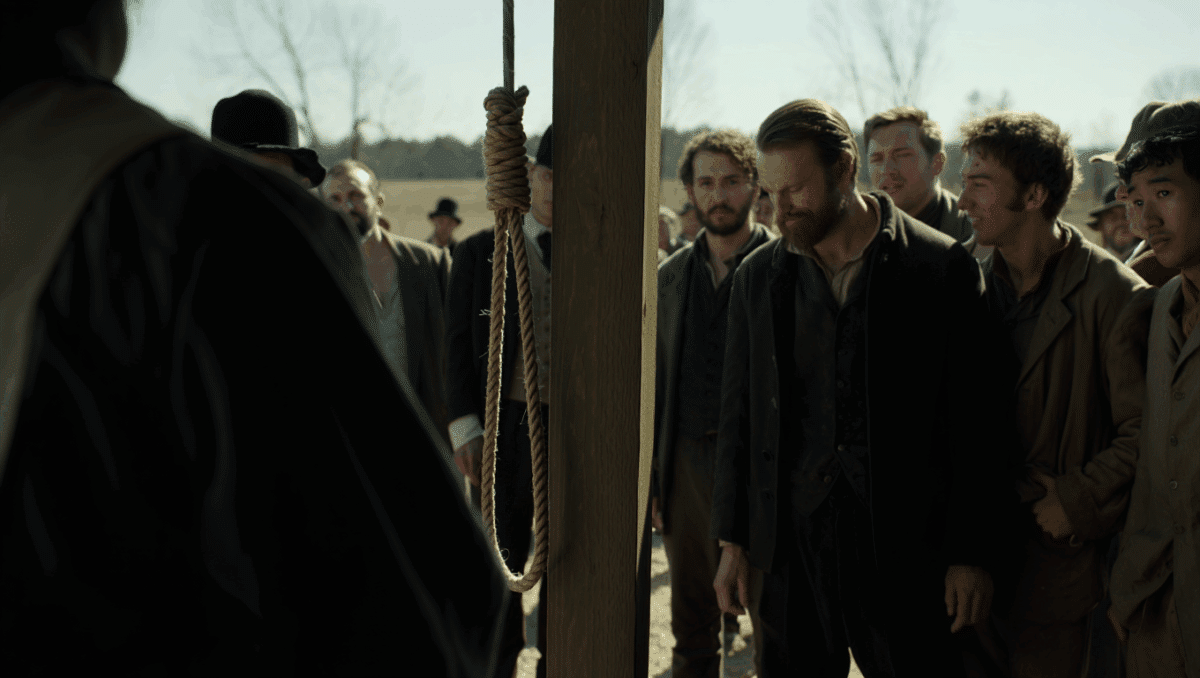
Emerald Fennell’s new take on Wuthering Heights opens with a jolting image that had me squirming in my seat: a public hanging observed with morbid curiosity and crude humor. That first scene sets an abrasive tone — and if it felt like a gimmick designed to shock, the rest of the film slowly earns its moments, even as it raises complicated questions about race, adaptation, and whose visions of classic literature get to dominate the screen.
Fennell’s version is a stylized, sometimes campy reimagining rather than a faithful Victorian retelling. It leans hard into fetishized romance, lurid spectacle, and the director’s personal taste — including the contentious decision to cast Jacob Elordi as Heathcliff. The result is a movie that can be both thrilling and troubling, depending on what you expect from a beloved, fraught novel.
Why the Opening Scene Stings — and What It Signals
The Growing Demand for Data-Driven Decision Making in Silicon Valley
He quit, ran out of money, and begged to come back — here’s how his boss reacted
The film’s opening sequence — a condemned man dangling from a gallows while onlookers react with crude jokes — landed as an intentional provocation. It’s a choice that reads as both tonally risky and narratively shorthand: Fennell wants viewers to know they’re entering a world that is irreverent, eroticized, and often uncomfortably gleeful about suffering.
For some viewers, the scene feels like a cheap bid for attention. For others, it’s an attempt to prime the audience for the dark blend of desire and violence that runs through Emily Brontë’s story. Either way, it’s a loudly stated creative decision that colors everything that follows.
Heathcliff’s Race: Textual Clues and Scholarly Debate
Debates about Heathcliff’s ethnicity aren’t new. In Brontë’s pages he’s described with phrases like “dark-skinned” and “a gypsy in aspect,” lines readers and critics have long parsed to infer his background. Academics have argued the character could plausibly be brown or of African descent, pointing to historical contexts — such as Liverpool’s role in the slave trade and Britain’s encounters abroad — as evidence that Brontë may have conceived Heathcliff as racially marked.
But the historical record and the text can support different readings. Scholars have proposed a range of models for Heathcliff’s origins, from connections to Indian or Ashanti figures to echoes of other Victorian characters with colonial ties. The upshot: depending on which details you foreground, Heathcliff can be understood as nonwhite, racially ambiguous, or intentionally mysterious.
How Fennell Cast Heathcliff — And Why It Sparked Outrage
In Fennell’s film, Heathcliff is portrayed onscreen by Jacob Elordi (and as a child by Owen Cooper), both white actors. That choice is an unmistakable instance of whitewashing: a canonical character often read as racially Other is played by white performers. Critics and fans quickly called out the decision.
Fennell’s defenders argue various points:
- Some say the director remade the book as a vehicle for her own aesthetic and worldview, privileging her creative prerogative.
- Others worry about the optics and implications of showing a Black or brown man in obsessive, violent dynamics with a white woman, especially given modern racial histories of sexualized criminalization.
- There are also practical industry realities — star power, bankability, and the way studios package literary adaptations for mass audiences.
All of these factors help explain the choice, though they don’t make it democratically uncontroversial. Casting Heathcliff white changes how certain scenes land, and it erases one historically plausible way to read the novel.
Race-Bent Supporting Roles: Nelly and Edgar Recast
Fennell’s film doesn’t simply leave the cast uniformly white. She recasts other characters — for example, Nelly, the Earnshaw household’s maid, is played by Hong Chau, and Edgar Linton is played by Pakistani-British actor Shazad Latif. In the book, these roles are typically read as white, and the film nods to their difference only briefly.
Key issues with those choices:
- The movie doesn’t consistently explore how race affects social standing, power dynamics, or the characters’ interactions.
- A few throwaway lines hint at race or gratitude but stop short of developing the historical or social implications of a multiracial cast in a period setting.
- That gap leaves potential themes about class and colonial legacies largely unexamined.
In short, race is visually acknowledged in places, but rarely interrogated in a way that reshapes the story’s moral or political center.
Fennell’s Version Is a Personal Fantasy — and Not a Neutral One
Fennell herself has framed adaptations as inevitably personal: every reader imagines their own movie when they turn the pages. Her Wuthering Heights is very much that — a stylized vision filtered through the director’s sensibilities. In her telling, Heathcliff becomes the tall, white heartthrob Elordi embodies, which aligns with the director’s idea of desire and cinematic allure.
That matters because the adaptation is not race-neutral. When a filmmaker shapes a classic into a personal fever dream, choices about race and power reveal which perspectives will be centered and which will be sidelined.
Sex, Power, and the Risks of Reimagining Dangerous Desire
The film foregrounds sexual obsession, kink-adjacent intimacy, and corrosive power plays — especially in the way Heathcliff pursues Cathy and the way he dominates other characters. Some of those moments are played for dark comedy, some for shock, and others for eroticism. When a white actor performs the role, viewers experience these scenes differently than they might if Heathcliff were played by an actor of color, given historical stereotypes about racialized masculinity.
Handling this material responsibly would require nuance and a filmmaker capable of interrogating the racial subtext. In Fennell’s hands, the movie dramatizes sexual transgression and emotional cruelty more as a stylized spectacle than as a site for complex racial commentary.
Where the Film Succeeds: Chemistry, Visuals, and Theatrical Excess
Despite the controversies, the movie has elements that work. The lead pairing of Jacob Elordi and Margot Robbie creates an undeniable spark: their performances sell the idea that these two people are compulsively drawn to one another. For many viewers, their chemistry is the engine of the picture — raw, restless, and convincing enough to carry otherwise indulgent scenes.
Costume and production design lean into extravagance. Outfits provoke audible reactions in the theater, and the film’s palette and framing mix moody landscapes with bursts of color and theatricality. If you respond to cinematic flamboyance, the movie delivers.
- Standout strengths: intense lead chemistry, striking costume moments, lush cinematography.
- Trade-offs: visual flair sometimes comes at the expense of moral or historical nuance.
Performances Beyond the Leads
Supporting actors add texture. Hong Chau’s Nelly brings exasperation and moral clarity at moments; Shazad Latif’s Edgar is quietly sympathetic and affable; Alison Oliver’s Isabella is compelling in her vulnerability and theatrical volatility. These performances cushion some of the film’s harsher choices and give audiences human anchors amid the spectacle.
The cast’s strengths make it easier to enjoy the movie’s excesses, even if the narrative decisions remain problematic for some viewers.
Why Some Critics Say Energy Is Better Spent Elsewhere
There’s an argument circulating among viewers and critics: calling out whitewashing is necessary, but pouring unending attention into one compromised adaptation isn’t the only or best way to respond. Instead, many suggest directing energy and resources toward elevating Black and Brown filmmakers and writers, so their visions of literary and historical stories have equal budgets, star power, and cultural reach.
Examples of alternatives people want to see supported:
- Original stories by filmmakers of color given high production value and marketing
- Adaptations by directors who can interrogate race and power rather than sidestep them
- Investment in historically underfunded genres — like period romance and prestige literary films — led by diverse creators
Who Might Enjoy This Adaptation — and Who Might Walk Away Frustrated
If you come for bold stylistic choices, heightened sensuality, and electrifying lead chemistry, this Wuthering Heights offers a lot to savor. Viewers attracted to camp, costume spectacle, and a modern, provocative spin on a classic may find the film entertaining.
On the other hand, if you hoped for a careful, historically attentive reassessment of race, class, and colonial context in Brontë’s novel, this version will likely feel insubstantial. The movie gestures at race by casting diversely in places, but it rarely commits to exploring the implications of those choices.
Questions the Film Raises About Adaptation and Responsibility
Fennell’s adaptation makes clear that remaking canonical texts is always an act of interpretation — and that interpretation carries ethical weight. Who gets to retell a classic? Which elements are preserved, and which are reshaped to fit a director’s fantasies? When race and power are involved, those choices aren’t merely aesthetic.
Fennell’s Wuthering Heights challenges viewers to decide whether they’ll accept a visually bold, thematically narrow reimagining — or whether they’ll instead demand adaptations that both dazzle and engage with the hard questions of history and representation.
You might also like:
- Margot Robbie on Wuthering Heights: why Cathy and Isabella are fighting
- Supergirl review: Milly Alcock’s chaotic performance is a delightful disaster
- People we meet on vacation movie vs book: key differences
- Swiped movie review: girlboss-era comedy leaves viewers conflicted
- Voicemails for Isabelle on Netflix: Zoey Deutch and Nick Robinson say it’s more than a rom-com

David Miller is an entertainment expert with a passion for film, music, and series. With eight years in cultural criticism, he takes you behind the scenes of productions and studios. His energetic style guides you to the next big releases and trending sensations.


Man, that opening scene in Wuthering Heights was like a slap in the face. Whitewashing Heathcliff? Come on, Fennell. Lets give classic characters the respect they deserve. #RepresentationMatters
I watched that Wuthering Heights flick, and let me tell ya, that opening scene aint it. They really went all-in on the whitewashing, huh? Heathcliff deserves better, man. Disappointed is an understatement.
Man, I was all hyped for a fresh take on Heathcliff, but this? Felt like they served me a bland sandwich when I ordered a spicy taco. Hope they course-correct quick cause messing with classics aint no joke.
Man, as a die-hard Brontë fan, seeing Heathcliff whitewashed in Wuthering Heights hurts. Gotta stick to the source material, yo! Lets keep it real and honor Emilys vision, you know what Im sayin?
Yo, as a die-hard Brontë fan myself, I totally feel you on that one! Heathcliff getting whitewashed in Wuthering Heights just aint it, right? Gotta stay true to Emilys vision, keep it real, ya know? Lets honor the OG characters just like she intended. Whats your take on other adaptations?
Man, I was ready for a fresh take on Wuthering Heights, but whitewashing Heathcliff? Come on, Fennell! That opening scene hit different, and not in a good way. Time to rethink some casting choices, huh?
Man, I was hyped for Wuthering Heights, but that opening scene? Its like they forgot what Heathcliffs about. Disappointing. Hope they fix it quick.
Man, the opening scene in Wuthering Heights had me fumin! Whitewashing Heathcliff? Not cool, Emerald Fennell. Lets call out these filmmakers on their blind spots, cause representation matters, yall!
Man, watching that opening scene made me cringe. Whitewashing Heathcliff? Come on, lets give the original story the respect it deserves. Cant believe they missed the mark so bad. Smh.
Man, watching Wuthering Heights with a whitewashed Heathcliff felt like a slap in the face! The opening scene? Ugh! Its like they missed the whole point! Cant believe they messed up such a classic character like that.
Man, I was so hyped for Wuthering Heights, but that opening scene? Really? Whitewashing Heathcliff is a big oof. They missed the mark big time. Lets hope the rest isnt a trainwreck too.
Man, that opening scene in Wuthering Heights was like a punch in the gut, am I right? Emerald Fennell really stirred the pot with that one. Cant wait to see if the rest of the film lives up to the hype or falls flat.
Oh, mate, that scene was a proper gut-punch, innit? Emerald Fennell really knows how to shake things up! Cant wait to see if the rest of the movie keeps us on our toes or fizzles out like a damp firework. Fingers crossed for some more intense moments!
Man, its like they tried to make Heathcliff into some watered-down version. The opening scene? Pfft, that was weak. They gotta do better than that. Give us the raw, intense Heathcliff we deserve!
Man, that opening scene was like a slap in the face! How can they whitewash Heathcliff in this day and age? Emerald Fennell better have a good reason for this, cause its got folks fired up!
Man, as a long-time fan of the original novel, seeing Heathcliff portrayed as a white dude in the opening scene of Wuthering Heights was a major letdown. Its like they missed the whole point of his character. Disappointing, to say the least.
Man, I totally feel ya on that one! Heathcliffs character is so deeply tied to his background in the novel, its like a core part of who he is. The casting couldve brought a whole new layer by staying true to that. Its like they missed a golden opportunity to really dig into his complexity. Its such a shame when adaptations overlook those key elements, right?