
Show summary Hide summary
Wicken Fen, a long-cultivated patch of fenland in Cambridgeshire, has quietly crossed a major biodiversity milestone: more than 10,000 species have now been officially recorded there. That landmark was reached after the sighting of a rare moth that mimics a wasp, a tiny celebrity whose discovery sent local naturalists celebrating the reserve’s biological richness.
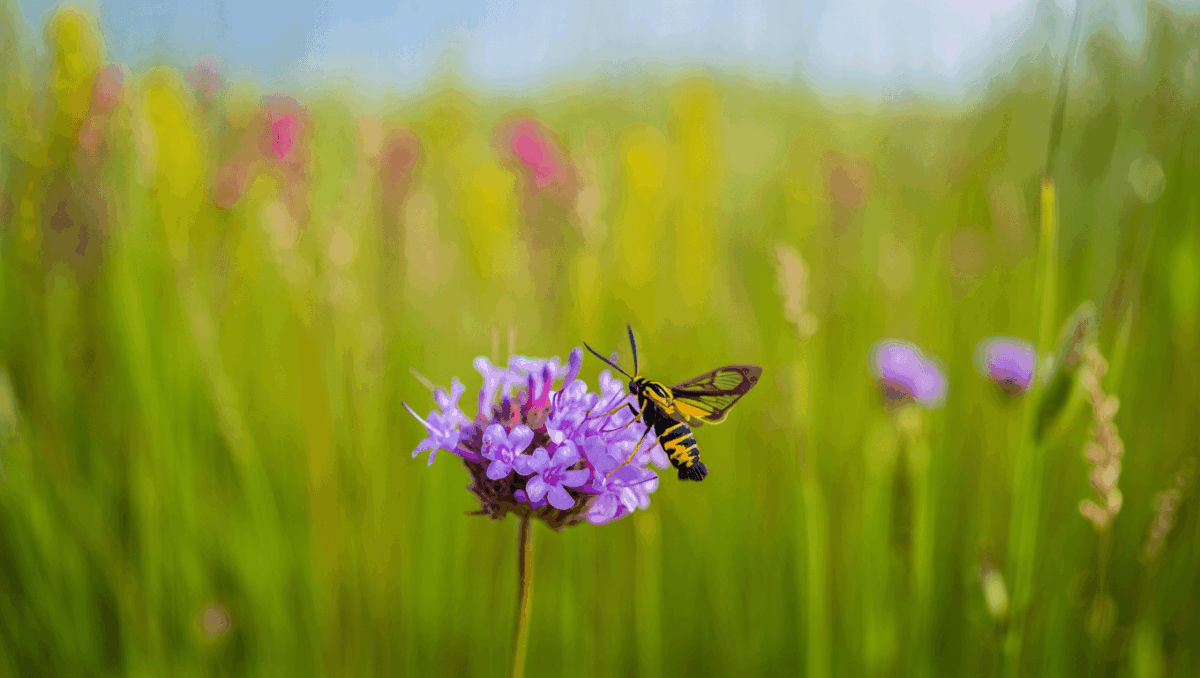
The six-belted clearwing moth, scientifically known as Bembecia ichneumoniformis, was photographed and logged on the reserve for the first time, pushing the total species count past the 10,000 mark. The find underscores how patient habitat protection and active recording can reveal an astonishing breadth of life, even in well-studied landscapes.
Milestone moment: how a mimic moth pushed the tally over 10,000
The Growing Demand for Data-Driven Decision Making in Silicon Valley
He quit, ran out of money, and begged to come back — here’s how his boss reacted
The moth that clinched the milestone wears its defense on its back: six yellow bands on a dark abdomen that imitate a stinging wasp and deter predators. Its arrival at Wicken Fen is the latest in a long line of discoveries that have swelled the site’s species list.
Managers at the National Trust say the record is a tribute to generations of volunteers, visiting naturalists, and staff who have kept careful lists and contributed sightings. Alan Kell, a manager at the National Trust, described the achievement as a proud moment for everyone involved with the reserve, emphasizing that ongoing observation and recording are what made the milestone possible.
From a two-acre purchase to a sprawling biodiversity hotspot
When the National Trust bought the first parcel of Wicken Fen in 1899, it was just a couple of acres purchased for a nominal sum. Over more than a century, the charity expanded and restored wetland habitats, creating a mosaic of reedbeds, fens, scrub, and wet grassland. Today the protected area spans more than 2,000 acres, with documented increases in species richness tied closely to this expansion.
In 1999 the trust compiled a centralized checklist to track the site’s biodiversity more systematically. Since then, the reserve rose from about 225 hectares to roughly 820 hectares, and the rate of new records has accelerated—especially in the past 25 years—thanks to better surveying and wider participation from citizen scientists.
Noteworthy species that call Wicken Fen home
- Glow-worm
- Fen nettle
- Water vole
- Cuckoo
- Silver-barred (silver barren) moth
- Water scorpion
- Greater bladderwort
- Norfolk hawker dragonfly
Recent additions and surprising visitors
Wicken Fen’s recent discoveries read like a naturalist’s treasure list. Among new or scarce species recorded recently are the ant beetle and grass vetchling, a plant in the pea family that is uncommon in the region. Moth enthusiasts added another curiosity to the books with a sighting of the chamomile shark moth. Birdwatchers also reported extraordinary visits:
- A white-tailed eagle briefly roosted on the reserve in 2022.
- A white stork returned several times during the summer of 2023.
Across two centuries of records, Wicken Fen has even yielded 13 species that were new to science during the 20th century—evidence of how little we sometimes know about even familiar places.
Peatland restoration and a new conservation partnership
Conservation efforts at Wicken Fen have stepped up with a major partnership with The Nature Recovery Project, focusing on restoring lowland peat across the site and beyond. Peatlands store vast amounts of carbon and support unique wetland species, so their recovery has both biodiversity and climate benefits.
James Berry, Head of Strategy at The Nature Recovery Project, highlighted the strategic goal: demonstrating that healthy peatlands can exist alongside productive farming. If that model proves scalable, it could be rolled out to degraded peatlands throughout the country to help cut emissions from one of the nation’s largest natural carbon sources.
Why peat restoration matters
- Carbon storage: Re-wetting peat stabilizes stored carbon and reduces emissions from degraded soils.
- Wildlife habitat: Restored peatlands increase habitat connectivity and support species that rely on wet conditions.
- Climate resilience: Healthy peatlands improve landscape resilience to droughts and floods.
Connecting habitats to boost resilience and species movement
Creating wildlife corridors and expanding habitat patches are central to boosting Wicken Fen’s ecological value. Managers and partners argue that linking restored peat, wet grasslands, and reedbeds gives mobile species places to move as the climate changes and local conditions shift.
Encouragingly, the reserve’s expanding network of habitats not only increases the chance of more rare and unexpected sightings, but also supports everyday species that form the backbone of resilient ecosystems. The National Trust and its partners continue to monitor, record, and manage the site, urging more informed land use across the lowlands to replicate successful outcomes elsewhere.
You might also like:
- Flat-headed cats seen in Thailand for first time in 30 years, thought extinct
- French Guiana protects 370,000 acres of rainforest and granite peaks
- Bolivia protects 660 square miles of biodiverse forest
- Coastal golf course converted to vital wetland habitat for seabirds
- Coal mining applications cleared in UK after Carmarthenshire council rejects last proposal

Michael Thompson is an experienced journalist covering U.S. and global news. With ten years on the front lines, he breaks down political and economic stories that matter. His precise writing and keen attention to detail help you grasp the real‑world impact of every event.


Man, can you believe theres like 10,000 species chillin in Wicken Fen? And this wasp-like moth? Its out here playin the MVP, pushin that tally over the edge. Natures full of surprises, aint it?
Dang, I know, right? Nature be wildin out there with all its surprises. 10,000 species vibin in Wicken Fen, and this wasp-like moth stealin the show? Its like Mother Natures got her own little talent show goin on. Who knew bugs could be such rockstars, huh?
I remember spotting a peculiar moth like that once in my grandmas garden. Its wild to think about all the different species hanging out in one spot. Nature is full of surprises, man.
Man, 10,000 species in one nature reserve? Thats wild! Makes me think of my grandmas garden, where Im still trying to ID all the bugs. Maybe Ill find a rare moth too, who knows?
Oh man, 10,000 species in a single nature reserve? Thats insane, dude! Must be like a whole Bugs Life movie happening there! And hey, your grandmas garden sounds like a mini wildlife adventure too. Who knows, maybe youll discover a moth straight out of a fairy tale there! Keep up the bug hunt, you might just stumble upon something magical!
I always thought moths were just those annoying fluttery things that mess up your porch light. But 10,000 species in one reserve? Thats wild! Who knew they were such diverse little critters? Nature never ceases to amaze me.
Man, Wicken Fens like a treasure trove, innit? I remember spotting the wasp-like moth there last summer. Natures full of surprises, keeps us on our toes. Cant wait to see what else pops up!
Man, talk about a nature flex! Wicken Fen aint playin around with 10,000 species on the roster. That wasp-like moth pullin its weight, pushin the tally over the edge. Natures showin off, and I aint mad at it.
I remember spotting a moth that looked like a tiny wasp while trekking through Wicken Fen. Natures tricks, man! Makes you wonder how many other sneaky mimics are out there fooling us, right?
Man, imagine stumbling upon a wasp-like moth in the wild! Nature is full of surprises. Wicken Fen sounds like a real gem. Makes you appreciate the biodiversity we often overlook, huh?
Ah, mate, 10,000 species in one nature reserve? Thats like a whole jungle in the UK! Bet even the wasp-like moth is doing a victory dance. Natures full of surprises, innit?
Man, I remember spotting a weird bug in the Fen last summer, thought it was a wasp on steroids! Turns out it was one of those mimic moths. Cool to see theyre part of this mega species count now. Natures full of surprises!
Man, I remember spotting one of those moth look-alikes last summer. Thought it was a wasp at first! Crazy how many critters call Wicken Fen home. Natures full of surprises, aint it?
I remember roaming Wicken Fen as a kid, bugs everywhere! Now to hear bout 10,000 species there, like this wasp-like moth, its mind-blowin. Natures full of surprises, aint it?