
Show summary Hide summary
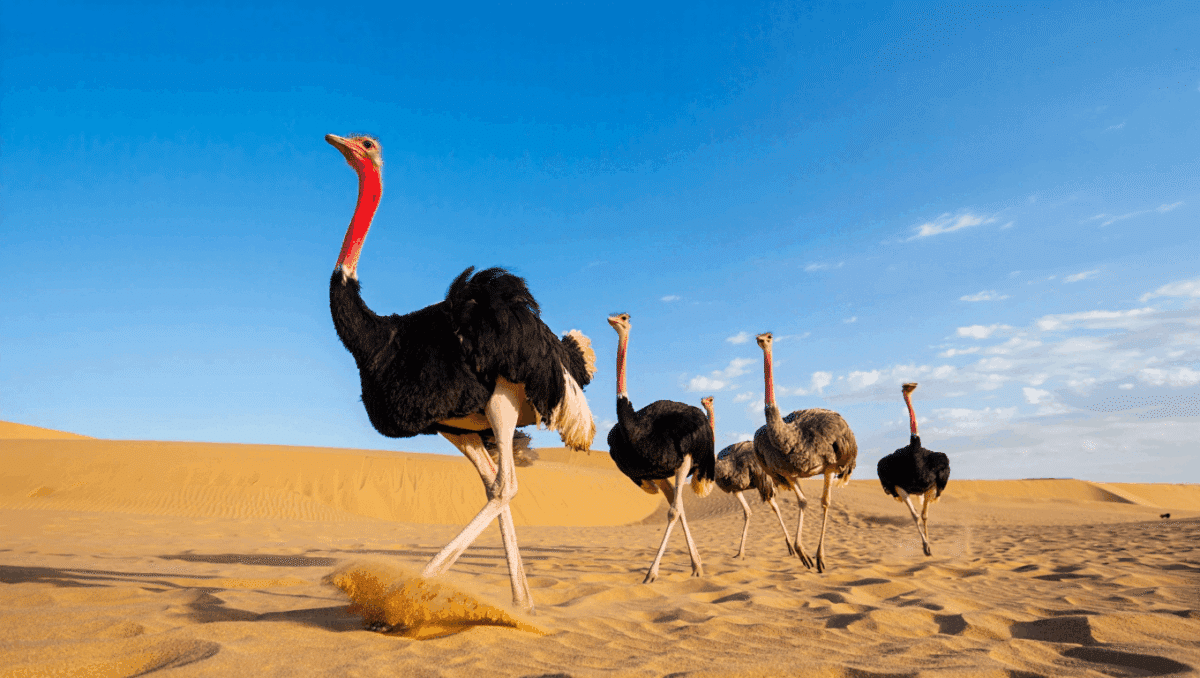
After a century-long absence, a towering presence has returned to Saudi Arabia’s empty interiors: the red-necked ostrich. Conservation teams released a small founding group into one of the kingdom’s largest protected areas, a deliberate step in a broader campaign to bring back species that once roamed the Arabian deserts.
The move is part of an ambitious restoration program that blends science, culture, and land-scale planning. Officials hope these birds will not only reestablish a lost chapter of natural history but also help rebuild fragile desert ecosystems.
Large-scale rewilding: the project and the place
The Growing Demand for Data-Driven Decision Making in Silicon Valley
He quit, ran out of money, and begged to come back — here’s how his boss reacted
Conservationists introduced five red-necked ostriches into the Prince Mohammed bin Salman Royal Reserve, a protected landscape spanning roughly six million acres. This release is embedded in ReWild Arabia, a multi-year initiative aiming to restore the peninsula’s historic megafauna.
The ostrich release represents a visible milestone: the species is the 12th reintroduction so far in a program targeting 23 animals historically native to the region. Managers have already returned other emblematic species, and the reserve serves as the primary staging ground for those efforts because of its vast uninhabited stretches and relatively low human pressure.
Why the red-necked ostrich was chosen to return
Scientists favored the red-necked ostrich because it is the closest living relative to the long-lost Arabian (or Syrian) ostrich and because it is adapted to survive in extreme arid conditions. With fewer than about 1,000 individuals left across parts of Africa’s Sahel, the species is listed as Critically Endangered, and new secure habitats can help relieve pressure on its remaining populations.
Placing them in Saudi Arabia provides two strategic advantages: expansive, sparsely populated tracts with few poaching risks, and desert conditions similar enough to the ostrich’s native range to give them a chance to thrive until other range states stabilize conservation on the ground.
Ecological roles these birds can play
- Seed dispersal: Ostriches travel long distances, carrying seeds in droppings that increase plant spread and genetic exchange across isolated patches of vegetation.
- Soil and vegetation dynamics: Their foraging disturbs surface soils and vegetation, which can enhance nutrient cycling and create microhabitats for other species.
- Food-web support: By stirring up insects and small animals, they indirectly feed insectivores and other predators, helping to rebalance trophic interactions.
Release details and conservation strategy
The initial cohort of five birds will be closely monitored by reserve staff and ecologists to track movement patterns, survival, and breeding prospects. ReWild Arabia is designed as a stepwise program: managers release small founding groups, monitor outcomes, and scale up as habitats and protections demonstrate success.
This careful approach mirrors earlier efforts in the reserve. In 2024, the Persian onager (Asiatic wild ass) was reintroduced after a century away from the landscape, showing the reserve’s capacity to reintegrate large desert-adapted species.
Planned species and restoration goals
- Restore a full assemblage of historic megafauna—examples include leopards, cheetahs, and the Arabian oryx.
- Use the reserve as a regional sanctuary to support population recovery while range-wide conditions improve.
- Monitor ecological responses to reintroductions, including vegetation recovery, prey-predator dynamics, and genetic connectivity.
Cultural resonance and ancient connections
The return of the ostrich carries cultural weight as well as ecological promise. These birds have long appeared in Arabian poetry, oral histories, and the neolithic rock art that dots the peninsula’s dry plateaus. Historically admired for speed and endurance, ostriches were woven into regional storytelling and symbolism.
Reserve leadership has emphasized that reintroducing such an iconic species restores more than biodiversity—it reconnects people to a natural and cultural past. As the program’s managers note, bringing the ostrich back can help revive landscapes that sustained human communities and inspired artistic traditions for millennia.
What scientists will watch for next
Over the coming months and years, biologists will track several indicators to judge the program’s success:
- Movement and home-range patterns to see how the birds use the reserve’s habitat.
- Survival and reproductive rates to determine whether the population can self-sustain.
- Ecological impacts such as changes in plant regeneration, soil condition, and interactions with other reintroduced species.
Intensive monitoring, community engagement around the reserve, and continued protections against illegal hunting will be essential if the birds are to become a lasting part of the Arabian wilds.
You might also like:
- Zoo saves 21 snails from extinction, returns hundreds to pristine Atlantic island
- 158 giant endangered tortoises released on Galápagos island after being extinct for 180 years
- Azerbaijan bison rebound: 25 wild calves born in seven-year recovery from one surviving male
- 10,000 species recorded in UK nature reserve: wasp-like moth helps reach milestone
- Endangered red and yellow mountain frogs bred for first time after years of conservation work

Michael Thompson is an experienced journalist covering U.S. and global news. With ten years on the front lines, he breaks down political and economic stories that matter. His precise writing and keen attention to detail help you grasp the real‑world impact of every event.


I remember hearing about those majestic ostriches in Saudi Arabia ages ago! Its wild theyre making a comeback after a century. Hope they thrive in their old stomping grounds. Natures full of surprises, aint it?
Oh man, those ostriches making a comeback in Saudi Arabia after a century? Thats like when your old favorite band reunites for a concert outta nowhere. Natures full of surprises, aint it?
I remember as a kid hearing tales bout ostriches roaming the sands of Saudi Arabia. Now theyre back after a century? Thats wild, man. Natures got its own rhythm, I guess. Hope they thrive this time around!
Man, talk about a comeback! Ostriches struttin back to Saudi Arabia after a century? Thats some serious rewilding magic. Cant wait to see these majestic birds making their mark in the desert once again.
Man, those ostriches are like the prodigal sons of Saudi Arabia, returning after a century. Natures got its own surprises, huh? Wonder if theyll throw a welcome-back party with the local wildlife. Imagine the gossip among the desert critters!
Man, those ostriches makin a comeback in Saudi after a century? Thats like a real-life sequel, nature edition! Hope the locals dont get spooked by these big birds strollin around like they own the desert!
Oh boy, here we go again with the ostriches making a grand comeback! Its like a soap opera, I tell ya. But hey, good for Saudi Arabia and those ostriches, hope they stick around this time.
Man, I remember when Saudi Arabia was all about oil, now theyre bringing back ostriches after a century? Thats wild! Wonder how these birds will fit in the desert scene this time around. Hope they thrive!
I remember watching a documentary about ostriches back in the day. Saudi Arabia bringing them back after all these years? Thats some next-level rewilding! Cant wait to see how these majestic birds shape the environment there.
Man, talk about a comeback! Saudi Arabias desert is really stepping up its game with those ostriches making a grand return after a century. Natures full of surprises, innit? Wonder what else is in store for us!
Man, ostriches back in Saudi after a century? Thats wild! Imagine the stories they have! Hope they dont get lost in the desert like me looking for my keys… Congrats, ostriches, hope you enjoy the sand!
Whoa, ostriches struttin back to Saudi Arabias desert after a century? Thats like a top-tier rewilding show! Can these big birds shake things up and reclaim their old turf? Lets see nature do its wild dance!
Whoa, these ostriches struttin like they own the desert, huh? Its like theyre back for a reunion tour or somethin! Can you imagine the drama if they start reclaiming their turf? Natures about to throw one wild party, my friend!
I heard about those ostriches makin a comeback in Saudi Arabia! Natures really showin off, huh? Hope they thrive and strut their stuff in the desert like they own the place. Go, ostriches!