
Show summary Hide summary
In a quiet Alpine village, a decades-old medical mystery has finally found an unsettling answer. After years of puzzling over a spike in a rare neurodegenerative disease, researchers have traced the cause back to something that might be sitting on your dinner plate — a wild mushroom with a dangerous secret.
A small village, a worrying pattern
Back in 2009, in Montchavin — a picturesque spot in the French Alps — a local GP noticed something deeply troubling: she had diagnosed amyotrophic lateral sclerosis (ALS), also known as Lou Gehrig’s disease, in three unrelated patients. In a village this small, that wasn’t just a coincidence — it was a red flag.
The Growing Demand for Data-Driven Decision Making in Silicon Valley
He quit, ran out of money, and begged to come back — here’s how his boss reacted
That discovery sparked a full-scale medical investigation. Over the course of a decade, researchers uncovered 14 confirmed cases of ALS between 1991 and 2013 — many of whom had already passed away. These individuals ranged from 39 to 75 years old, were not biologically related, but all lived in close proximity and, crucially, knew each other.
A familiar clue from halfway across the world
With no genetic link between the patients, researchers turned to environmental factors. They tested everything: water quality, soil contamination, air pollution, even levels of radon and heavy metals in homes. Nothing pointed to a culprit.
Then came a breakthrough — not from France, but from Guam. Decades ago, the Pacific island had experienced a similarly mysterious surge in ALS cases. There, scientists eventually linked the condition to the traditional consumption of cycad seeds, which are toxic. The connection caught the attention of Dr Peter Spencer, a neurotoxicologist from Oregon Health & Science University, who had studied the Guam cases.
But Montchavin wasn’t eating cycads. So what was the link?
The mushroom with a hidden danger
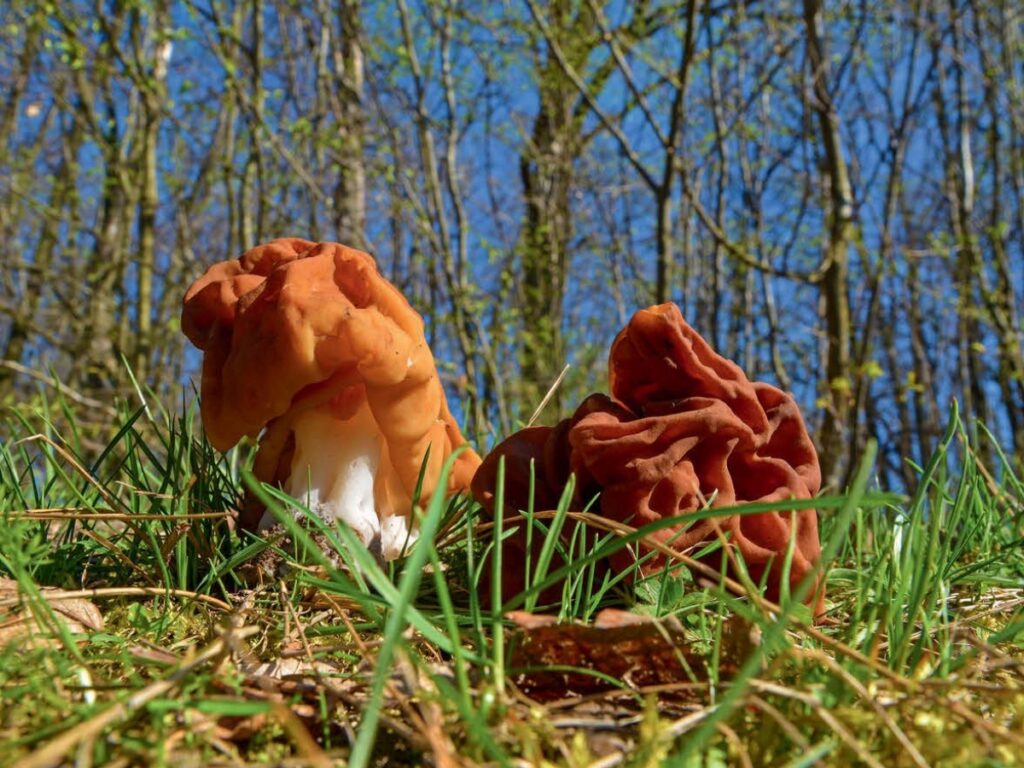
Spencer and his Franco-American team began to explore a local culinary habit: eating wild mushrooms. One species stood out — the false morel (Gyromitra gigas), a mushroom that resembles the prized true morel but is notorious for its toxicity.
Despite being banned from sale in France since 1991, false morels still find their way into kitchens — especially among locals accustomed to foraging. Several of the ALS patients recalled consuming the mushrooms multiple times in the past, often in hearty meals that included both true and false morels.
The toxic compound in these mushrooms bears a striking similarity to the neurotoxins found in cycad seeds. It attacks the nervous system in ways scientists are only beginning to fully understand. Importantly, none of the unaffected villagers reported eating the false morel — making the connection even more compelling.
An unsettling pattern in Finland
Montchavin isn’t alone. In Finland, where the false morel is still considered a delicacy, researchers have noted a similar uptick in ALS diagnoses in regions where the mushroom is popular.
Meanwhile, on Guam, where cycad seeds have been largely removed from the local diet, the number of ALS cases has dropped significantly — further strengthening the theory that certain natural neurotoxins, consumed over time, can contribute to the development of this devastating illness.
What this means for your next meal
The takeaway is both simple and serious: foragers and food lovers need to be cautious with wild mushrooms — no matter how delicious or traditional the recipe may be. The line between edible and poisonous is often a thin one, and in this case, the risk may extend far beyond food poisoning.
While more research is needed to confirm causality, the pattern is clear enough for scientists to urge caution. So if you’re ever offered a plate of foraged mushrooms, it might be worth asking exactly which kind they are. Because in some rare cases, what starts as dinner could lead to far more lasting consequences.
You might also like:
- Alpha-gal syndrome: possible first death linked to tick-induced meat allergy
- Mushrooms create music with bionic arms using their own energy
- Seeds hear rain: MIT study finds sound waves speed germination
- New discovery could help save children from deadly disfiguring condition
- Seed vault in Atacama Desert frozen to preserve Chile’s plant diversity

David Miller is an entertainment expert with a passion for film, music, and series. With eight years in cultural criticism, he takes you behind the scenes of productions and studios. His energetic style guides you to the next big releases and trending sensations.


Man, I always knew those funky mushrooms were up to something shady! Now theyre out here causing ALS? Gotta watch out for those sneaky fungi, theyre not as innocent as they look!
A conspiracy nut:
Whoa, hold up! A fungus tied to ALS cases? This smells fishy, man. Gotta dig deeper… Is Big Pharma hiding something? Are we breathing in spores of doom? Time to connect the dots, people!
Wait, are you telling me that a little fungus might be connected to ALS? Thats some wild news. Makes you wonder what else is hiding in plain sight, right under our noses. Time to keep an eye out for the unexpected!
Dude, imagine a fungus messin with ALS, thats some sci-fi level craziness. Natures like, Oh, you thought ALS was tough? Hold my mushroom. Natures playing a twisted game, man.
Man, talk about a creepy twist in the plot! Fungi causing ALS? Sounds like a sci-fi flick gone wrong. Better keep an eye on those mushrooms, who knows what else theyre cooking up.
I remember Aunt Mabels farm had this weird fungus growing everywhere. Shed say its harmless, but now I read about ALS links. Makes you wonder whats lurking in plain sight. Scary stuff!