Show summary Hide summary
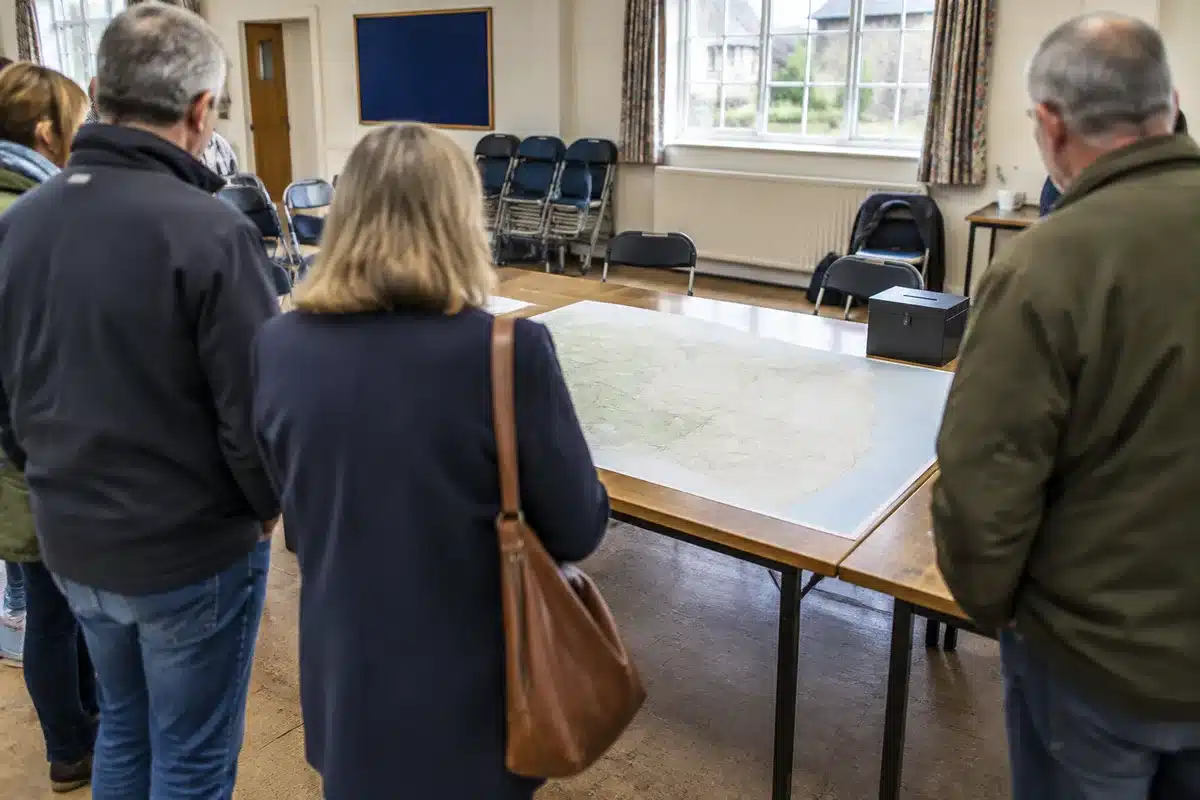
Barnham, a Suffolk village of about 600 people, has voted 257 to 16 to declare independence from the United Kingdom. The Saturday referendum won’t move a border or take the village out of the country. It was a protest against a government proposal to house up to 930 asylum seekers at nearby RAF Barnham, a military site that could accommodate more people than live in the village itself.
The organizers even gave their would-be territory a name: the Bailiwick of Barnham. But the dispute behind the joke is practical. As the government looks to move asylum seekers out of hotels and into larger facilities, residents want to know how officials choose those sites, what support they’ll provide, and whether local objections can still change a decision.
Why RAF Barnham is on the government’s asylum housing list
RAF Barnham was one of three military sites the government identified in June as possible locations for asylum accommodations. The search is part of a wider effort to end the use of migrant hotels and reduce the burden on some of the lower-income communities that have hosted them. Using a military site would change where people are housed, but it would also shift responsibility for preparing for a large new facility to a different part of the country.
The Growing Demand for Data-Driven Decision Making in Silicon Valley
He quit, ran out of money, and begged to come back — here’s how his boss reacted
In Barnham, the number driving the debate is 930 proposed places in a village of roughly 600 residents. The comparison explains why the proposal has attracted attention, though it doesn’t tell residents how the facility would operate. A maximum capacity isn’t an opening-day head count, and the population figures alone don’t show what demand the site might place on transportation, health care, or other services. Those are questions a detailed operating plan would need to address.
The dispute also brings together two issues that are often discussed as if they were the same: how the United Kingdom manages small-boat crossings and how it houses people while their asylum claims are considered. A decision about RAF Barnham concerns the second issue. For residents who see the site as a consequence of failures on the first, however, that distinction does little to take the heat out of the local debate.
How Barnham borrowed an independence campaign from Oxfordshire
Barnham’s organizers took their cue from Piddington, an Oxfordshire village of about 350 people that held its own symbolic secession vote in September. Rather than stage a conventional protest against an asylum housing proposal, campaigners in both villages turned the question around: If local residents couldn’t decide what happened at a site near their homes, why not hold a vote about who governed the village?

Barnham’s campaigners say they intend to seek Crown dependency status, pointing to Jersey, Guernsey, and the Isle of Man. Those jurisdictions are self-governing and linked to the British Crown without being part of the United Kingdom. For the organizers, the comparison lets them make a point about the reach of the Home Office without casting their campaign as a rejection of the monarchy.
The distinction is symbolic, not legal. The referendum doesn’t alter Barnham’s status or give the village a veto over the proposed facility. Its immediate effect was to turn a local dispute into a story that traveled well beyond Suffolk. The vote count records a decisive result among those who took part, though it doesn’t establish how every resident feels about the proposal.
What the protest reveals about the move away from migrant hotels
Before Barnham and Piddington made headlines, protests over asylum accommodations were often centered on hotels in working-class towns. Moving away from hotels may answer a longstanding complaint in some of those communities. It also brings the policy to places that haven’t previously been at the center of the debate, where the scale of a proposed site can make national decisions feel especially immediate.
Local consultation is one question; the operation of a facility is another. Residents can ask when the government expects to make a decision, whether the site would open in phases, and who would be responsible for transportation and on-site services. Those details matter to people already living nearby and to the asylum seekers who could be moved there. They are also more useful for assessing the proposal than assumptions about the people who might be housed at the site.
Why a rare bird ended up on Barnham’s flag
The most distinctly local feature of the campaign is a stone-curlew, the rare bird pictured on the flag of the self-declared bailiwick. Organizers say the proposed facility could disturb the species. By putting the bird on their flag, they gave their campaign a visual identity and called attention to an issue that would matter in other land-use disputes, too: how a change at a site could affect nearby wildlife.
The flag makes that concern memorable, but it doesn’t establish what the environmental impact would be. Assessing the claim would require looking at where the birds are found in relation to the proposed facility and whether changes in nighttime lighting, vehicle traffic, or activity on the site could disturb them.
You might also like:
- Waitrose moms roar in Piddington
- Oxfordshire village erupts over illegal immigration: residents clash with authorities
- Piddington women face public backlash and abandonment
- Trump Renames Defense Department: Now Called “Department of War”
- Shropshire migrant street tears up social contract

Robert Johnson is a dedicated columnist focusing on political and social debates. With twelve years in editorial writing, he provides nuanced, well‑argued perspectives. His commentaries invite you to form your own views and engage in critical issues.