
Show summary Hide summary
- How the demonstrations have grown and what protesters are asking for
- Violence, chaos, and the swirl of unverified reports
- Why large Western newsrooms have been cautious — and why caution isn’t an excuse for silence
- BBC Persian and the unrealized advantage of local language services
- Online theories, geopolitical speculation, and competing explanations
- The Trump post that suddenly refocused Western attention
- Why the developments in Iran are globally consequential
- What reporters and editors should be doing now
- About the author
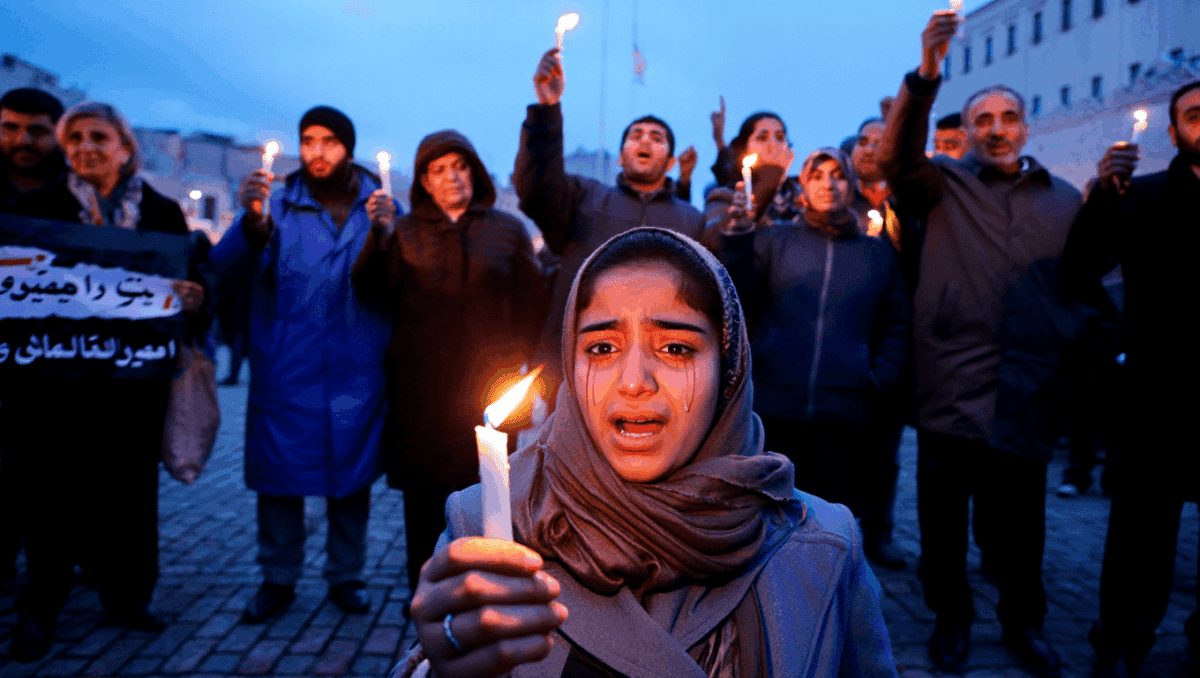
Protests that erupted around Christmas have quickly become the widest anti-government movement Iran has seen in years, spreading into cities large and small and sharpening political demands that many assumed were off the table. Footage and posts circulating across social platforms show crowds confronting security forces, while messages from Iranians inside the country and abroad sketch a picture of unrest that could reshape the country’s future.
At the same time, major Western news organizations have been conspicuously restrained in their coverage. That silence has prompted frustration online and raised questions about why an event of such potential geopolitical significance has so far received limited attention from outlets that usually lead global reporting.
The Growing Demand for Data-Driven Decision Making in Silicon Valley
He quit, ran out of money, and begged to come back — here’s how his boss reacted
How the demonstrations have grown and what protesters are asking for
What began as a local flare-up has, by most accounts, escalated into nationwide unrest. Reports and clips shared on social platforms indicate protest activity across provinces, with different cities joining in at different moments. Participants’ slogans and banners reveal a broadening agenda:
- Calls for the end of rule by the clerical establishment.
- Demands for civilian political freedoms and human rights.
- Surprisingly visible public support in some quarters for restoring the monarchy that was eliminated after the 1979 revolution.
Observers stress caution in accepting every post as fact, but multiple independent eyewitness accounts and videos suggest the movement is more geographically widespread and politically ambitious than previous waves, including the 2022 women-led protests.
Violence, chaos, and the swirl of unverified reports
There are credible reports of security forces — including elements of the Islamic Revolutionary Guard Corps — moving into cities to disperse crowds and, in some cases, using live ammunition. Local government buildings have reportedly been breached in several places, and some demonstrators have been shot. Conversely, in other locations police appear to have withdrawn in the face of mass demonstrations.
The fog of conflict has also produced rumors that should be treated skeptically. Among the claims circulating are that clerics have shed religious garments to blend into crowds, that senior clerical figures have retreated to strongholds such as Qom, and that Tehran’s airport has been closed either to receive foreign shipments or to facilitate evacuations. None of these reports is independently confirmed across the board, but together they illustrate how rapidly narratives form during civil unrest.
Why large Western newsrooms have been cautious — and why caution isn’t an excuse for silence
There are understandable journalistic reasons for restraint. Newsrooms must avoid amplifying propaganda, becoming a tool for political actors, or unintentionally encouraging escalation. Reporting from within Iran is logistically difficult: foreign correspondents face strict restrictions and the risk of detention.
Still, professional caution should not be a blanket reason for near-absence. Careful, verified reporting is precisely what large outlets are built to do — to sift reliable signals from online noise and provide context that social media alone cannot offer. Even if direct access is limited, established media have methods to corroborate evidence, protect sources, and tell the story without becoming part of it.
BBC Persian and the unrealized advantage of local language services
One limitation often cited is lack of firsthand material. Yet broadcasters with dedicated Persian-language services — notably the BBC Persian service — possess unique channels into Iranian society. These teams, which have long been a thorn in the side of Tehran and have faced threats to journalists and sources, could play a central role in verifying footage and testimony coming from inside the country.
If such resources are not being leveraged or highlighted by parent organizations in London and elsewhere, the result is a missed opportunity to bring informed, verified coverage to global audiences. Having Persian-language reporting should, in theory, reduce—not increase—the information gap.
Online theories, geopolitical speculation, and competing explanations
In the absence of sustained mainstream reporting, social platforms have been quick to offer explanations — some plausible, others conspiratorial. Common narratives include:
- Western governments deliberately keeping quiet because they prefer the status quo with Tehran.
- Claims that Israel or other regional actors have an interest in preserving the current Iranian leadership.
- Simple logistical excuses: reporters are away for the holidays, and it’s difficult to embed journalists in Iran.
These stories reflect a mix of genuine skepticism about media behavior, geopolitical distrust, and the tendency of online communities to fill informational voids with theory.
Practical arguments versus inconsistent coverage
Some defenders of limited mainstream coverage point to competing global stories — such as recent high-profile tragedies in Europe — and the calendar clash with the holiday season. Yet the same outlets have recently used citizen footage and local reporting to cover other conflict zones in depth, including graphic accounts from Gaza built on material produced by local journalists and on-the-ground witnesses. That inconsistency raises questions about editorial judgment and priorities.
The Trump post that suddenly refocused Western attention
The situation shifted when a social-media post by former President Donald Trump promised U.S. support for Iranian demonstrators should the government “use deadly force.” That post made the unrest a political talking point in Washington and prompted renewed, if limited, attention from international broadcasters.
For many viewers, this illustrates how external political voices can reframe a foreign event for Western audiences. It also exposes another dimension of the silence: whether European and British leaders were waiting for a U.S. lead before issuing statements or whether they preferred to avoid public comment.
Why the developments in Iran are globally consequential
Iran is home to roughly 90 million people and has been in a fraught relationship with the West for decades. Its geographic position and regional influence make events there of more than national interest. Even partial or symbolic changes inside Iran could influence regional alignments, energy markets, and diplomatic calculations. For that reason, many analysts argue that reporting on such unrest is not just a domestic story but a matter of international significance.
What reporters and editors should be doing now
Given limitations on in-country access, reputable outlets can still:
- Verify and curate citizen footage through established verification techniques.
- Use Persian-language teams and diaspora contacts to corroborate accounts.
- Interview regional experts to explain potential domestic and international implications.
- Report transparently about what is known, what remains unverified, and how claims are being checked.
Filling the information gap requires combining caution with initiative. Audiences need authoritative accounts, not either-or choices between propaganda and silence.
About the author
Mary Dejevsky is a journalist and broadcaster who has served as a foreign correspondent in Moscow, Paris, Washington and Beijing. She reported from Moscow for The Times from 1988 to 1992 and has written and spoken widely on international affairs.
You might also like:
- Reform and the Greens signal the death of the uniparty
- Immigration and crime: are politicians gaslighting the public?
- Iran protests: Iranians rise up against brutal Islamist rulers
- Western hypocrisy over sympathy for Iran’s Islamic Republic
- Iran threatens UK: what it means for British security and diplomacy

Robert Johnson is a dedicated columnist focusing on political and social debates. With twelve years in editorial writing, he provides nuanced, well‑argued perspectives. His commentaries invite you to form your own views and engage in critical issues.


Hmm, reminds me of that time they overlooked the local elections in my town for a baking competition. People want real news, not just the flashy stuff. BBC, step up your game! Time for a reality check, folks.
Man, I feel ya! It’s like theyre serving us a gourmet meal with all the fancy garnishes, but forgetting the main dish. We want the real deal, not just the appetizers! BBC, time to bring out the big guns and give us the scoop we crave. Who needs a baking competition when were hungry for some hard-hitting news, right? Let’s hope they tune in and get back on track!
Man, BBC, missing out on the real action in Iran? Seriously dropping the ball there. People fighting for their rights, and theyre like, Meh, lets talk about something else. Smh, gotta step up the game, BBC.
Man, I remember when the news was all about the people, the real stuff. Now its like theyre sleepin on important things happenin in Iran. Come on, BBC, step up your game and cover the uprisings properly!
Man, I feel ya on that one! Remember when news was about real stuff and not just clickbait drama? Its like theyre missing the big picture in Iran. BBC, get your act together and give us the real deal! Time to wake up and smell the news, right?
Man, BBC missing the Iranian uprisings is like a chef forgetting the salt – the flavors just off. People out there risking it all, and the big newsrooms playing hide and seek? Cmon, step up the game!
Man, BBC really dropped the ball on this one. Ignoring Iranian uprisings? Come on, thats like missing the grand finale of a fireworks show. People are out there fighting for their rights, and all we get is crickets? Not cool, BBC. Not cool at all.
Man, aint it frustrating when big news outlets overlook important stuff like the Iranian uprisings? BBC, come on, step up your game and give these protests the coverage they deserve. People need to know whats going on out there!
Man, the BBC missing the Iranian uprisings? Thats like a chef forgetting the salt. Cant ignore important stuff just cause its messy. Time to step up, BBC!
I mean, seriously, BBC?! How can you miss out on the Iranian uprisings like that? Its like a barista forgetting the coffee in a latte – just not right! Time to wake up and smell the news, BBC!
Man, its like watching a movie with half the scenes missing. BBC, youre dropping the ball on the Iranian protests. People need to know whats going on! Time to step up the game and give these uprisings the coverage they deserve.
Man, BBC really dropped the ball on covering those Iranian uprisings. They missed a big chance to shed light on important stuff. Hope they step up their game cause people deserve to know whats going on.
Man, BBC missed the mark big time on the Iranian uprisings. Its like theyre wearing blinders or something. Local language services couldve given them a leg up, but nope, they chose to sit this one out. Smh.
Man, the BBC missed a beat ignoring the Iranian uprisings. Its like a DJ dropping the hottest track but forgetting to turn on the speakers. Step up, BBC, dont let the protesters voices fade into silence.
Man, BBC missed the bus big time with the Iranian protests. Its like theyre sporting blinders or something. Local language services like BBC Persian wouldve been perfect for diving into the heart of the action. Time for a wake-up call!