
Show summary Hide summary
- Why people are in the streets: economic collapse meets political frustration
- From the bazaar to the barricades: how the protests unfolded
- Echoes of past uprisings: continuity and escalation
- Political players and power centers: who actually calls the shots
- Media, NGOs and the international reaction: attention, silence and politics
- Regional stakes: how unrest in Tehran reverberates across the Middle East
- How protesters are organizing and what they’re demanding
- What to monitor next
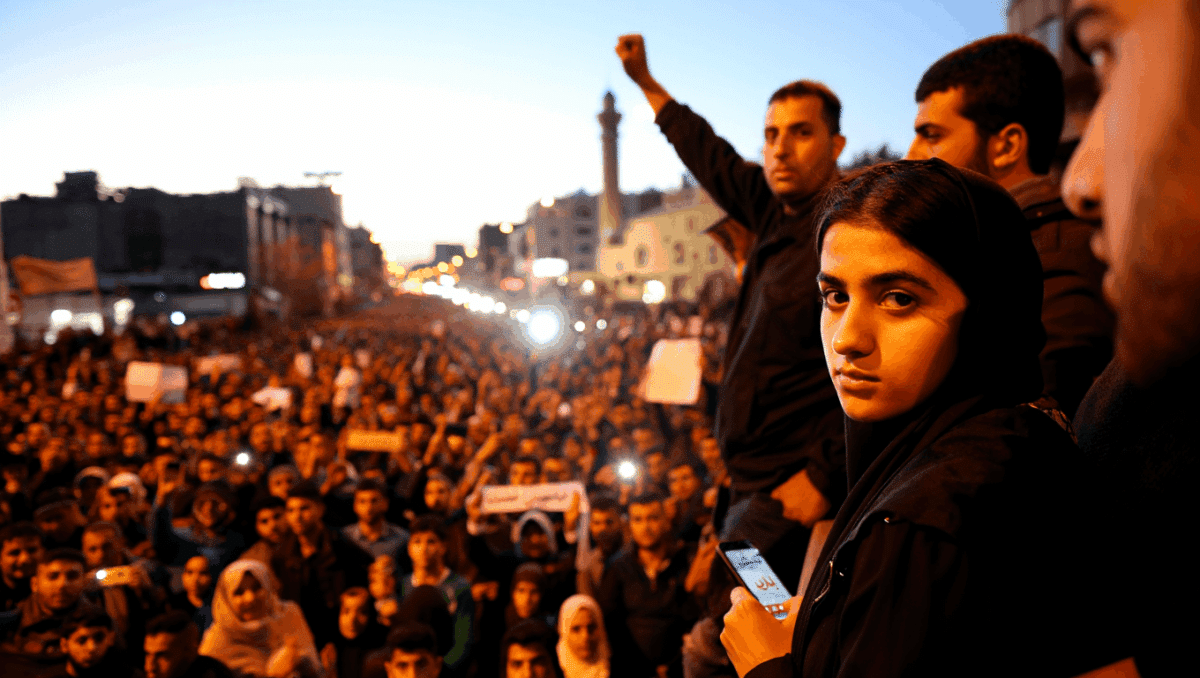
The streets of Iran have erupted again, this time over a collapsing economy and the daily squeeze facing ordinary families. What began as a coordinated stoppage by Tehran merchants has widened into demonstrations across cities, forcing Iranians to confront the limits of a system that has long prioritized regional ambitions and ideological control over basic living standards.
Coverage outside Iran has been uneven: some outlets only picked up the story days after crowds gathered, and many international activists and organizations have been quieter than expected. Still, the scenes on the ground — chants, shuttered shops and confrontations with security forces — are unmistakable signs of a country under stress and a population testing the edges of the Islamic Republic’s authority.
Why people are in the streets: economic collapse meets political frustration
Economic shock is the immediate trigger. Years of sanctions, frozen foreign assets and restricted access to global markets have combined with domestic mismanagement to erode living standards fast. For many Iranians, the crisis is no longer abstract — it is a daily struggle to afford food, medicine and basic goods.
The Growing Demand for Data-Driven Decision Making in Silicon Valley
He quit, ran out of money, and begged to come back — here’s how his boss reacted
- Currency tumble: The rial has fallen sharply against the dollar over recent months, dramatically reducing purchasing power for average citizens.
- Inflation bite: Prices for essentials have surged, with food and healthcare inflation far outpacing wages and pensions.
- Sanctions and frozen assets: International restrictions and limited export revenue have hamstrung government finances, making imports and foreign exchange scarce.
- Perceived priorities: Many Iranians resent the regime’s continued funding of proxy groups and regional operations while domestic needs go unmet.
These hardships are tangled with longstanding political grievances. Theocratic controls, restrictions on personal freedoms, and a powerful security apparatus that can crush dissent have all fed public anger. For many protesters, the economic collapse is the spark that exposes deeper resentment toward a system they view as corrupt, repressive and out of touch.
From the bazaar to the barricades: how the protests unfolded
The flashpoint came when a network of Tehran shopkeepers decided to stop trading, locking their doors and refusing to sell electronics and cell phones. That act of economic protest quickly spread beyond a single neighborhood.
- Local shop closures spread into larger walkouts at the historic Grand Bazaar.
- Workers, students and residents joined the protests, turning marketplaces into protest hubs.
- Demonstrators adopted potent slogans, heard previously in earlier uprisings, signaling broader political demands.
- Security forces responded with tear gas, water cannons and live fire in some locations, and authorities have reported fatalities amid the clashes.
Chants echoing past rebellions — including calls against the country’s supreme leadership and slogans demanding freedoms for women — underlined the transition from economic grievance to political confrontation. The police and paramilitary units, including forces affiliated with the Islamic Revolutionary Guard Corps (IRGC), moved to reassert control, setting the stage for a tense and potentially violent standoff.
Echoes of past uprisings: continuity and escalation
This unrest is part of a pattern. Major waves of protest in recent years — notably the 2019 uprisings that erupted after a fuel price hike and the 2022 movement sparked by the death of Mahsa Amini in custody — revealed widespread dissatisfaction that cuts across social classes. Each round of unrest has left a residue of grievance that resurfaces when new crises hit.
What’s different this time
- Economic collapse is the immediate trigger rather than a single policy change or incident, which broadens participation.
- Organized merchant actions, like simultaneous shop closures, give protests an economic leverage that can spread quickly.
- Public memory of earlier protests has sharpened slogans and tactics, making the messaging both political and highly visible.
Despite periodic hopes for reform, power in Iran remains concentrated. The presidency has limited authority compared with the supreme leader and the IRGC, meaning electoral changes rarely translate into deep structural reform. The government’s focus on external influence and security expenditures while living standards deteriorate has widened the credibility gap between rulers and the ruled.
Political players and power centers: who actually calls the shots
Understanding the balance of power inside Iran helps explain why protest movements face such entrenched resistance.
- The Supreme Leader: Ultimate constitutional authority, with control over the judiciary, security services and many senior appointments.
- The Islamic Revolutionary Guard Corps (IRGC): A powerful military, economic and political actor with deep influence over internal security and regional operations.
- Presidential office: Holds visible executive functions but is constrained by unelected institutions and the supreme leader’s oversight.
Elections can change personnel but rarely the system. The selection of a new president in 2024 did little to calm the public mood because systemic levers of power remain firmly in the hands of unelected institutions. Iranians are well aware of where real authority lies, and protests that challenge those centers of power face a steep uphill battle.
Media, NGOs and the international reaction: attention, silence and politics
International coverage of the unrest has been uneven, with some outlets providing immediate reporting and others lagging behind. Several prominent human-rights groups and progressive commentators have been criticized for responding tepidly or diverting attention to other causes at a time when Iranian streets are in turmoil.
- Delayed coverage: Major outlets were slow in some cases to report the earliest demonstrations, despite their scale and significance.
- Selective focus: Some international activists and NGOs emphasized other issues during the same period, drawing criticism for apparent indifference.
- Political constraints: Western progressive debates over cultural sensitivity, anti-imperialism and identity politics complicate straightforward support for Iranian protesters who reject religious controls.
Meanwhile, state responses from outside actors are politically fraught. Threats of intervention or public declarations of support can raise the stakes for protesters and complicate the diplomatic landscape. For Iranians, foreign rhetoric can be double-edged — sometimes providing moral encouragement, other times offering the regime a pretext to claim foreign meddling.
Regional stakes: how unrest in Tehran reverberates across the Middle East
Iran’s domestic stability is closely tied to regional dynamics. Tehran’s ability to project power through allied groups is anchored in internal resources and legitimacy. When domestic challenges mount, the regime’s regional posture and the alliances it maintains — with groups across Lebanon, Gaza, Yemen and beyond — may be affected.
- Proxy networks: Funding and support for militias and allied political movements could come under pressure as Tehran faces economic constraints and political pushback.
- Regional security: Shifts inside Iran could alter the calculations of neighboring states and non-state actors, potentially changing conflict dynamics.
- Diplomatic relations: International negotiations and regional diplomacy may be affected if Iran prioritizes internal stability over external engagements.
Observers watching Tehran know that domestic upheaval rarely stays contained. Changes in public sentiment, cracks in elite consensus, or even a sustained wave of industrial action and civil disobedience could have knock-on effects across a region already reshaped by decades of Iranian involvement.
How protesters are organizing and what they’re demanding
The current unrest blends spontaneous acts with organized labor and merchant actions. Direct economic pressure — like coordinated closures — is one tactic, while rallies and chants articulate deeper demands for political and social freedoms.
- Coordinated economic stoppages by shopkeepers and workers.
- Public demonstrations in bazaars, university areas and city centers.
- Revival of slogans that link gender rights, personal freedom and opposition to authoritarian rule.
- Calls that target institutional power rather than just policy changes.
Protesters are drawing on lessons learned in previous movements, using symbolic locations and powerful slogans to amplify their message. That makes the demonstrations not simply reactions to price hikes or exchange-rate swings, but assertions of wider demands for dignity and political space.
What to monitor next
Already, there are key signals that analysts and journalists are watching for as events unfold.
- Expansion or contraction of protest geography: whether demonstrations spread to more cities and towns.
- Economic fallout: disruptions to commerce, supply chains and public services affecting daily life.
- State response: levels of force used, arrests, and any attempts to cut communications or impose curfews.
- Elite behavior: signs of dissent within security forces, clerical circles or political factions.
If unrest persists or escalates, its implications will reach beyond immediate street battles — influencing Iran’s internal balance, its regional posture, and how external powers engage with the country and its people.
You might also like:
- Iranians protest nationwide against Iran’s clerical regime
- Iran: neither the ayatollah nor the shah alone explains its modern history
- BBC criticized for ignoring Iranian uprisings: why coverage fell short
- Islamic Republic human rights abuses: new report exposes systemic repression
- Iran’s new supreme leader to follow father’s hardline policies

Robert Johnson is a dedicated columnist focusing on political and social debates. With twelve years in editorial writing, he provides nuanced, well‑argued perspectives. His commentaries invite you to form your own views and engage in critical issues.


Whoa, these Iran protests feel like a real-life thriller movie unfolding, ya know? The bravery of these Iranians standing up against oppressive rulers is just mind-blowing. Cant help but root for them from afar. Hope they stay safe and strong.
Dang, those Iran protests are like a powder keg waiting to blow! The people are fed up with the rulers, man. Its like watching a pot of rice boiling over – you know its gonna be messy.
Man, those Iranian protests are intense! Its like history repeating itself, but with a modern twist. Hope the people stay safe and get the change theyre after. Power to the people!
Man, these Iran protests got me feeling some type of way. Its like a mix of hope and worry, you know? Hoping for change but worried about the consequences. Historys watching, thats for sure.
Man, I feel you on that rollercoaster ride of emotions when it comes to those Iran protests. Its like a tug-of-war between hope and worry, right? Change is desperately needed, but dang, the aftermath can be nerve-wracking. Historys definitely got its eyes on this one, no doubt.
Man, these protests in Iran really hit close to home. Reminds me of the power of people coming together for change. Hope they can make a difference this time. Solidarity from afar.
Man, these Iranian protests are like a pressure cooker about to blow! The frustration and anger finally boiling over. Wonder how the rulers will try to squash this one. Time to grab the popcorn and watch it unfold!
Man, those Iranians aint playin around. Rising up against their rulers like its nobodys business. Its like a real-life revolution movie, but with all the dramatic twists and turns. Wonder how this storys gonna unfold next!
Man, these protests in Iran are no joke. Its like the whole countrys had enough and is saying, Nah, were not playing this game anymore. The world better pay attention cause things are heating up over there.
Man, these protests in Iran remind me of the time I accidentally started a fire in my kitchen… Things spiraled out of control real quick, just like these demonstrations. Hope they find a way to douse those flames without getting burned.
Dang, thats quite a story! Starting a fire in the kitchen? Talk about a spicy cooking experience! Lets hope those protests in Iran simmer down before things get too heated. Stay safe out there, buddy.
Man, these Iran protests hit different. The bravery, the unity, its like a shot of adrenaline. Hope the worlds watching, cause this is history in the making. Power to the people!
Man, these Iranian protesters got some serious guts, standing up to their rulers like that. Reminds me of that time I challenged my boss at the office party… Lets hope they get the change theyre fighting for.
Man, those Iranian protesters are the real MVPs, aint they? Standing up to their rulers like that takes some serious courage. I bet your boss didnt see it coming at the office party! Lets keep our fingers crossed they get the change theyre fighting for.
I remember when my cousin in Tehran talked about these protests. Its like a snowball rolling downhill, getting bigger and louder. Its a whole mix of anger, hope, and frustration stirring up the streets. Stay safe, everyone.
Man, these Iranian protests are like a wildfire, spreading fast and fierce. From the bazaar to the barricades, the people are making their voices heard. Its like a modern-day revolution in the making. Wonder where this will all lead.
Man, these Iranian protests remind me of that time I saw a squirrel steal a whole bag of peanuts from the park. Wild and unexpected, you know? Its like the whole country just decided, Hey, lets shake things up! Wonder if itll fizzle out or spark something big.
Man, these protests in Iran are like a wake-up call for the world, yknow? Its like watching history unfold in real-time. Wonder how thisll all play out in the end. Crazy times were living in.
I remember when we stood up, too. Its like a cycle, you know? Frustration boiling over, voices rising, demanding change. Irans protests hit deep – echoes of history, but whats different this time?