
Show summary Hide summary
- How “twee” became a political mood in 2025
- Digital exits and frayed friendships: culture wars move offline
- When childhood icons become sacred symbols
- Disparate punishments, symbolic justice and public reactions
- Twee-inspired protest tactics: aestheticized vandalism
- “Mr Blobby patriotism”: a catalog of national comforts
- Patronizing dialogue and the limits of sentimental outreach
- Why sentimental politics can be risky in difficult times
- About the author
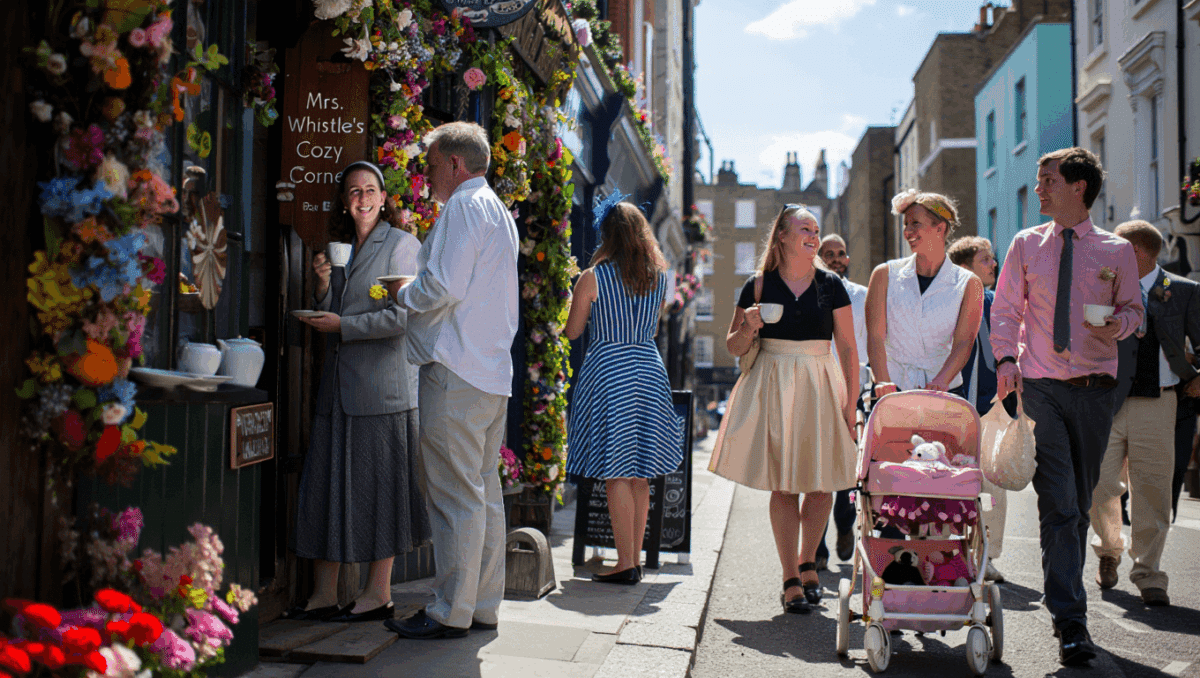
Something quietly strange swept Britain in 2025: an inward turn toward comfort, whimsy and performative niceness that felt less like political strategy and more like cultural retreat. What started as cozy nostalgia hardened into a defensive posture among progressive circles, transforming jokes about custard creams and eccentric TV moments into a public aesthetic with surprising real-world consequences.
Across courts, social media and opinion pages, small acts and sentimental gestures began to function as political signals. From vandalism of beloved icons to earnest essays celebrating banal national quirks, the year revealed a new, contagious strain of what might be called twee culture — and it’s reshaping how Britain argues about identity, outrage and values.
How “twee” became a political mood in 2025
The Growing Demand for Data-Driven Decision Making in Silicon Valley
He quit, ran out of money, and begged to come back — here’s how his boss reacted
There’s no official metric for national twee-ness, but 2025 felt markedly softer than previous years. The strain of progressive politics that once leaned on moral certainty appeared to recoil, adopting a language of gentle ridicule and domestic comfort instead of forceful policy debate. That shift showed up everywhere: think-pieces, viral videos, social-media flouncing and even protest tactics that traded fire for frosting.
“Omicron Twee” might be an over-the-top label, but it captures the phenomenon: a variant of political expression built around nostalgia, tiny pleasures and a reluctance to confront hard realities head-on. Where earlier activism aimed to mobilize, this mood often seemed to soothe — a kind of political lullaby that left large questions unanswered.
Digital exits and frayed friendships: culture wars move offline
The migration of some progressive users from mainstream platforms to alternatives such as Bluesky was mirrored by a more personal trend: public friend-breakups. Social media exiles were accompanied by performative walkouts from real-life relationships. People announced rifts and trimmed social circles as if curating a playlist, and those gestures became another form of cultural signaling.
- Online departures worked as ideological resets: leaving a feed felt like leaving a camp.
- Public flounces from friendships created a new etiquette of disagreement — theatrical, moralizing and often irreversible.
- These behaviors fed back into the broader retreat toward sentimentalism: if politics couldn’t be won, it could at least be softened.
When childhood icons become sacred symbols
Small acts of vandalism this year took on outsized meaning because certain cultural objects had been elevated to totemic status. The attack on a Paddington Bear statue in Newbury, for instance, landed its perpetrators in court — and the judge framed the incident as an assault on a symbol of kindness and social cohesion. The rhetoric around the trial treated the bear almost as a secular relic, standing in for values some felt were slipping away.
That move toward sacralizing a childhood character highlights a broader tendency: when a political movement loses faith in larger narratives — history, institutions, shared civic purpose — it sometimes elevates the small and comforting to fill the void. The Paddington moment was emblematic of how sentiment can become a proxy for social authority.
Disparate punishments, symbolic justice and public reactions
2025 also exposed inconsistent public reactions and legal outcomes around symbolic damage. The destruction of the Sycamore Gap tree — an act that led to a multi-year prison sentence for the perpetrators — was treated with intense emotional weight by preservationists and parts of the media.
Contrast that with other high-profile cases where the legal response felt disproportionate to some observers: sentences and public outrage did not always align with the moral severity of offenses. That disparity fed the sense that society was assigning sacramental value unevenly, prioritizing certain symbols of collective memory over other forms of harm.
Twee-inspired protest tactics: aestheticized vandalism
Political performance in 2025 sometimes leaned into the twee sensibility itself. A public stunt that smeared crumbly dessert on the container holding the Crown Jewels — carried out by activists who styled themselves as earnest students — read like satire: dessert as metaphor, mess as manifesto. The act suggested a future in which protest increasingly takes on playful, Instagram-ready forms rather than confrontational or policy-driven approaches.
Expect more of this kind of spectacle — protests that prioritize imagery and cleverness over sustained organizing. Such gestures are media-savvy and instantly shareable, but they also risk trivializing the causes they claim to champion.
“Mr Blobby patriotism”: a catalog of national comforts
One defining document of the year came from a writer connected to a climate-focused community project. In an essay meant to celebrate “things I love about Britain,” she compiled an affectionate list of cultural touchstones: familiar TV moments, snack foods, working-class humor, advertisers and eccentric television personalities. The piece aimed to reclaim a modest, unthreatening patriotism rooted in everyday pleasures.
Paraphrased, the list included categories such as:
- Iconic advertising and television figures that evoke nostalgia
- Comfort foods and supermarket rituals
- Local in-jokes and regional language quirks
- Sports montages and the communal thrill of big matches
Written in the wake of rising tensions — public disorder near asylum housing, nationalist marches and a violent attack on a synagogue — the essay offered consolation through familiarity rather than policy prescriptions. Readers divided: some found comfort in the tone; others saw it as an inadequate response to escalating threats.
Patronizing dialogue and the limits of sentimental outreach
Parts of the twee approach rested on an assumption that gentle conversation and curiosity can bridge deep social divides. Anecdotes were offered as proof: a homeowner asking a tradesperson about their worries, then steering the exchange toward empathy and understanding. The intent is admirable, but the execution often read as condescending — the well-meaning urbanite playing therapist to a working-class interlocutor.
There’s a fine line between building rapport and mansplaining empathy. In practice, these encounters can reproduce power imbalances: one person performs “curiosity” while the other is put on the spot to explain their fears. Sentiment alone rarely remedies systemic issues.
Why sentimental politics can be risky in difficult times
It’s natural to seek comfort when society feels unsettled — to dig out old routines and cultural touchstones that feel safe. But turning those comforts into the centerpiece of political life can be perilous. Aesthetic nostalgia doesn’t make policy, and while shared jokes or TV references can knit communities together, they can’t substitute for concrete responses to violence, displacement and inequality.
Twee functions as a warm blanket; it can soothe, but it also can obscure the chill. When the blanket becomes the message, public debate risks flattening into rearranged domesticity—plenty of charm, precious little direction.
About the author
Gareth Roberts is a screenwriter and novelist known for his television work, including episodes of Doctor Who.
You might also like:
- Two-tier policing: why we must fight unequal law enforcement
- Southport scandal: how woke culture may have enabled an alleged offender
- Durham miners being forced to celebrate Palestine?
- Middle-class left’s zombie socialism explained
- Britain’s Islamo-left gains momentum

Robert Johnson is a dedicated columnist focusing on political and social debates. With twelve years in editorial writing, he provides nuanced, well‑argued perspectives. His commentaries invite you to form your own views and engage in critical issues.


Man, remember when twee meant quirky cafes and vintage dresses? Now its like a political statement! Societys gone full circle. Bet even unicorns are protesting now. Whats next, puppies running for office?
Mate, I swear, twee culture is like that one song stuck in your head for days. Cant shake it off! Wonder if its a fad or here to stay. Thoughts, anyone?
Man, back in 25, the whole twee vibe was so thick, you could cut it with a butter knife. Everything turned into a Pinterest board, even politics! Its like we all collectively decided to live in a Wes Anderson movie. Groovy or cringy, you decide.
Ah, dude, totally remember that era! It was like we all collectively entered a vintage movie set. I mean, Pinterest was the new political battleground, man! Life became this quirky, symmetrical mess straight out of a Wes Anderson flick. Groovy or cringy? Its like we all turned into hipster extras without even trying, huh? Whats your take on the twee overload back then?
Man, this whole twee culture wave is like a giant marshmallow engulfing Britain. Its cute and all, but are we turning into a nation of oversized kids? Whats next, bedtime stories in Parliament?
Mate, I hear ya! Its like were all stuck in a never-ending episode of Teletubbies with Boris Johnson playing the role of Tinky Winky. Wonder if well soon see Big Ben chiming bedtime stories while members of Parliament snuggle up in blankies. The cuteness overload might just be too much for our stiff upper lips to handle, innit? Who needs debates when you have lullabies, right?
Man, I remember when twee was just a quirky music genre, now its all over politics? Whats next, politicians showing off their sticker collections? Britain 2025 sounds like a real-life Wes Anderson movie.
Mate, this twee wave is like that one time my aunt went full vintage, but on a national scale. Cant decide if its cute or cringe. Politics in pastels—whats next, tea parties in parliament?
Mate, in 2025, everythings gone full twee in Britain. Its like a competition of who can be the quirkiest, most vintage, and nostalgic. Cant tell if its endearing or just a massive eyeroll waiting to happen.
Oh mate, I hear ya! Its like everyones on a mission to out-quirk each other these days. The vintage vibes and nostalgia overload can be a bit much, innit? Makes you wonder if its genuine charm or just a big eye-roll waiting to happen. Like, are we in 2025 or a time machine to the past? Its a fine line between cute and cringey in this twee-fest, aint it?
Mate, if I see one more twee cafe with pastel colors and vintage vinyl, I might lose it. Can we bring back some edge or is everything gonna be all rainbows and unicorns in 2025?
Man, twee culture taking over Britain? Its like the whole country turned into a vintage postcard! Feels like were all stuck in this quirky, pastel-colored bubble. Is this the new normal, or just a phase? Curious to see how this plays out.
I mean, I get it, but like, isnt this twee trend kinda like when your mom starts using slang to be cool? Its like, cute at first, but then its just… too much, yknow? Wheres the edge in all this sweet stuff?
Dude, totally get what youre saying. Its like watching your aunt bust out the dab at Thanksgiving – cute at first, but then its like, whoa, chill a bit, right? Wheres the realness in all this sugary stuff? Can we get a sprinkle of edge in there, please?
Man, this whole twee culture wave in Britain 2025? Its like everyones trying to out-cute each other. Cant decide if its endearing or overkill. Feels like a Pinterest board exploded all over the place.
Mate, twee culture takin over like mold in a damp flat! Everyones all about pastel colors, vintage stuff, and tiny cafes. Cant swing a cat without hittin a twee influencer these days. What a time to be alive, eh?
Man, the whole twee vibe taking over Britain in 2025 is like living in a never-ending Wes Anderson movie. Cant decide if its charming or suffocating. Either way, its definitely a trip down a pastel-colored rabbit hole.
Man, this twee craze is like a virus, infecting everything! Remember when folks just liked things without turning it into a political statement? Now, even childhood icons are sacred symbols. Whats next, Care Bears for president?
I remember when twee wasnt all the rage. Now, its like everyones trying too hard to be cute and nostalgic. Can we just embrace the present without drowning in vintage teacups and polaroids?