
Show summary Hide summary
- What leaders announced at the summit and why it mattered
- How big would these forces really be?
- Who’s actually ready to send soldiers?
- Why critics call it political theater rather than a credible security architecture
- Moscow’s stance: unlikely to accept NATO-style guarantees on Ukrainian soil
- Long-term risks for Ukraine and possible alternatives
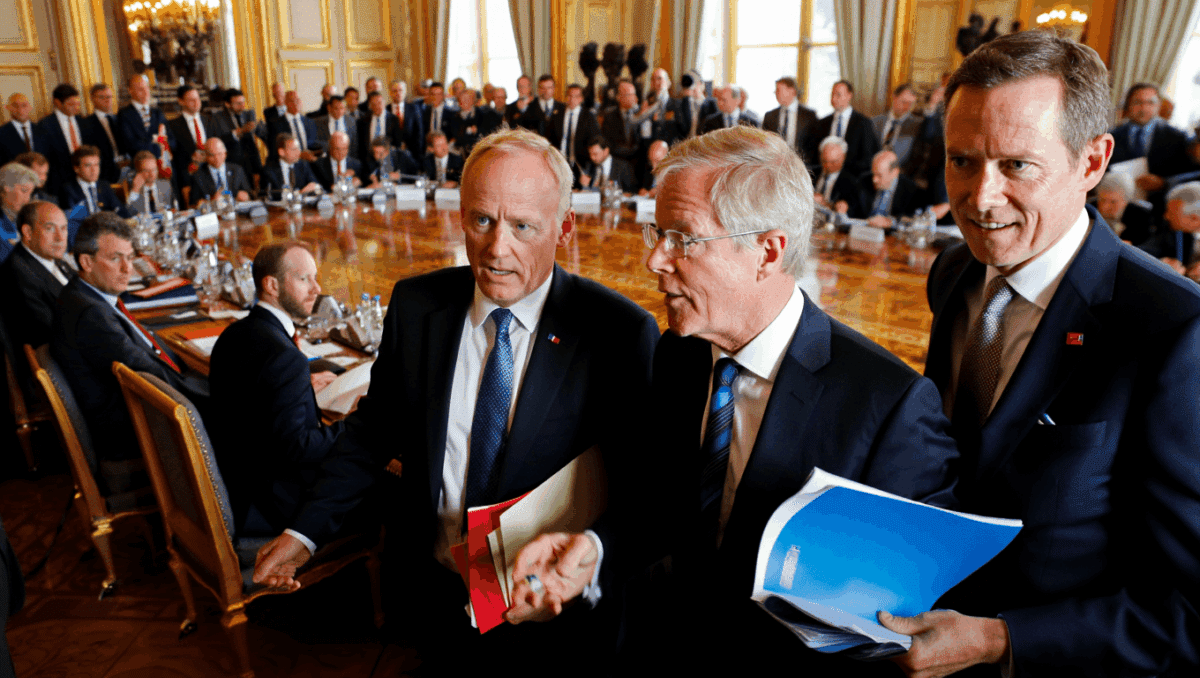
The Élysée Palace hosted a high-profile gathering this week that looked and sounded like a breakthrough: dozens of European leaders and senior US envoys assembled for talks on Ukraine, and Britain and France unveiled a plan billed as a fresh security guarantee. Leaders posed for photographs, issued a joint “declaration of intent” and promised to set up military hubs, training programs and reassuring deployments in Ukraine — but only once a ceasefire is in place.
Behind the fanfare, however, the proposal raises more questions than answers. What was presented as a new multinational shield for Ukraine risks being little more than political theater: limited in manpower, conditional, and dependent on Kremlin agreement. For a country still fighting for survival, gestures that hinge on an uncertain future may offer more optics than protection.
What leaders announced at the summit and why it mattered
The Growing Demand for Data-Driven Decision Making in Silicon Valley
He quit, ran out of money, and begged to come back — here’s how his boss reacted
At the gathering, French president Emmanuel Macron and British prime minister Keir Starmer declared an Anglo-French-led initiative to provide “reassurance measures” in Ukraine’s air, sea and land space. The proposal included commitments to help rebuild and modernize Ukraine’s armed forces and to create secure military and logistical hubs on Ukrainian soil — but only if and when a ceasefire is achieved. For the first time in months, senior US envoys signaled support for the idea, lending the announcement extra diplomatic weight.
- Multinational deployments described as “reassurance measures” rather than combat operations.
- Plans for military hubs and weapons facilities to assist in the regeneration of Ukraine’s armed forces.
- Contingent activation: forces would move in only after a formal cessation of hostilities.
- Broad diplomatic attendance, but thin on concrete national commitments.
How big would these forces really be?
Public statements skirted specifics. Officials spoke of brigade-sized contingents and partner forces, but the realities of modern European militaries complicate such ambitions. Britain’s Army is smaller than at any time since the Napoleonic era, and credible estimates suggest London could only muster a formation in the order of a few thousand troops for an expeditionary commitment. France, stretched by multiple global obligations, would likely contribute only limited numbers as well.
That scale matters: a handful of battalions stationed well behind the front lines does not equate to an effective deterrent against a large, experienced, and nuclear-armed opponent.
Practical limits and the “behind the line” caveat
Macron repeatedly emphasized that any deployed personnel would be positioned “a long way behind the contact line,” signaling an intention to avoid direct clashes with Russian forces. On its face, this reduces the risk of immediate escalation — but it also sharply limits what the deployments could credibly accomplish.
- Troops stationed far from the front would be confined largely to training, logistics and symbolic presence.
- Key defensive infrastructure placed well rearward cannot prevent breakthroughs or blunt major offensives.
- Any “regeneration” tasks for Ukraine’s army depend on sustained supply and secure lines of communication.
Who’s actually ready to send soldiers?
Despite the summit’s optics, several major European states signaled reluctance or refusal to deploy forces inside Ukraine. Germany’s chancellor specified that Berlin would only join missions based outside Ukrainian territory. Italy ruled out troop deployments entirely. Finland and Poland — both acutely sensitive to Russian coercion — said they needed to retain their forces for national defense and would not be sending soldiers abroad.
The patchwork of responses reveals a gulf between diplomatic support and operational willingness, leaving Macron and Starmer with promises that may be politically palatable at home but operationally thin abroad.
Why critics call it political theater rather than a credible security architecture
There are two intertwined critiques. First, the initiative is highly conditional: deployment is contingent on a ceasefire that Russia may well refuse unless its demands are met. Second, the numbers and positioning envisioned would give far more in the way of symbolism than strategic substance.
Beyond those practical problems is a political argument: for leaders such as Macron and Starmer, a high-visibility international initiative offers domestic benefits — a chance to project leadership and resolve — even where follow-through may be limited. Observers fear the plan functions more as a PR vehicle than as a durable solution for Ukraine’s security needs.
Moscow’s stance: unlikely to accept NATO-style guarantees on Ukrainian soil
Russia has consistently rejected the idea of foreign troops on Ukrainian territory. Senior Russian diplomats have made clear that the presence of NATO member forces in Ukraine would be unacceptable and likely to derail negotiations. Because the proposed deployments are designed to take place only after a ceasefire, the plan depends on Moscow agreeing to peace terms while the specter of future foreign forces looms — a scenario Moscow has shown little willingness to entertain.
This creates a paradox: the plan requires a peace deal to activate, yet Moscow’s opposition to foreign deployments makes it unlikely to sign such a deal if the deployments are part of the negotiating calculus.
Long-term risks for Ukraine and possible alternatives
Ukraine’s core need is the capacity to defend its territory and deter future aggression. Short-term, symbolic measures will not replace long-term investment in Ukrainian force structure, air defenses, munitions stockpiles, and logistical resilience. If the Coalition’s initiative does not deliver sustained materiel support and a credible deterrent posture, it may leave Kyiv exposed and vulnerable to renewed hostilities.
Possible complementary approaches include:
- Substantive, sustained military aid packages focused on air defense, artillery, and ammunition replenishment.
- Multilateral security guarantees that are legally binding and synchronized with diplomatic pathways acceptable to all parties.
- Regional cooperation frameworks that strengthen Ukraine’s ability to train and equip domestically, reducing reliance on contingent foreign deployments.
Ukraine needs durable capabilities, not just declarations. Any future security arrangement must balance deterrence with the political realities on the ground — and must be crafted so it can actually be implemented, not merely announced for the cameras.
You might also like:
- Ukraine war: four years of horror, Europe’s missed chances
- Zelensky corruption scandal threatens presidency and Ukraine’s international support
- Trump Eyes Tri-Nation Summit With Putin After Zelensky Meeting: Diplomacy in Action!
- EU drone wall unrealistic and ineffective, experts warn
- Terrorist state: leader says we can’t make peace

Robert Johnson is a dedicated columnist focusing on political and social debates. With twelve years in editorial writing, he provides nuanced, well‑argued perspectives. His commentaries invite you to form your own views and engage in critical issues.


Man, these leaders need a reality check! Its like a bunch of kids planning a superhero team-up without any powers. Wishful thinking wont solve real problems. Time for some tough love and actual solutions, folks.
Man, these leaders are like a bunch of kids at a talent show with no talent, thinking theyre Beyoncé. Time for some tough love and less lip-syncing, folks. Lets get some real stars up in here!
Man, these leaders keep talkin big, but is anyone really gonna send soldiers where it matters? Feels like a game of chicken, but the stakes are real. Hope they figure it out before its too late.
Man, its like everyones got their own agenda at this summit. Are they really in it for reform or just wishful thinking? Hope they sort it out before its too late.
Man, this whole summit feels like a bunch of kids planning a secret club in a treehouse. Whos really gonna show up with soldiers? Wishful thinkings great for dreams, but lets get real about reform here.
Man, its like watching a dance-off between stubborn toddlers. Leaders need to cut the theatrics and get real. Action over wishful thinking, folks. Lets see some backbone!
Man, these leaders talk a big game, but behind the scenes, its all wishful thinking and empty promises. How can we expect real change when they cant even agree on the basics? Its like herding cats, I tell ya.
Man, its like watching a movie where everyones talking about saving the world but cant even agree on what snacks to order. So much wishful thinking, not enough real action. Cant reform with that vibe, my dudes.
Man, this summit was like watching a bunch of kids playing dress-up. Everyone talking big, but whos really gonna step up when push comes to shove? Wishful thinking wont cut it in the real world. Time for some serious action!
Man, the summit was like a class group project gone wrong. Everyones got big ideas, but when it comes down to action, its all talk. Cant build a house with just blueprints, yknow? Time for some real elbow grease.
Man, these leaders actin like theyre playin a game of pretend. Summit after summit, talkin big, but when its time to step up, whos really walkin the talk? Same old story, different day.
Man, these leaders keep talking but wheres the real action? Its like a fancy show with no substance. I bet everyones just patting themselves on the back while real issues fade into the background. *eye roll*
I remember when we all thought those big shots had it figured out. Now its just a mashup of wishful thinking. Time for some real action, not just talk and empty promises. Lets see some backbone, people!
Man, it’s like a train wreck in slow motion. Leaders talk big, but where’s the real action? We need substance, not just wishful thinking. Time to step up or step out.
Ah, mate, I feel you on this one. Its all talk but no walk, like a broken record stuck on repeat. Wheres the beef, right? Time to put up or shut up. Cant keep dishing out empty promises and expecting us to buy it all, yknow?
I mean, come on, we all want change, but a coalition of wishful thinking? Sounds like a recipe for disaster. Cant we get real for once? Its like trying to build a sandcastle during a storm. Good luck with that!
Oh, I get what youre saying, mate. Its like trying to teach a cat to fetch, right? A coalition of wishful thinking does sound like a bit of a long shot. But hey, who knows? Sometimes those crazy ideas end up surprising us. Maybe its worth a shot, even if it feels like building a sandcastle in a storm. Lifes full of unexpected wins.
Man, this whole coalition of wishful thinking thing feels like a bad sitcom plot. Like, are we really relying on a group of daydreamers for reform? Sounds like a recipe for disaster. Lets hope someone wakes up soon.
Man, this whole Coalition of wishful thinking chat got me thinking. Are we really gonna see some change, or is it all just smoke and mirrors? Time to separate the talkers from the walkers, I guess.
Man, this whole Coalition of wishful thinking chat got me feeling some typa way, yknow? Its like, are we really gonna witness some legit change or is it all just a bunch of smoke and mirrors? Time to separate the real deal from the hot air, I guess. Lets see whos just talking the talk or actually walking the walk. Lets hope for the best, but hey, staying cautious aint a bad move either.
Man, these leaders always talk the talk, but do they walk the walk? Its like a broken record, everyone saying what should be done, but whos really gonna step up and make it happen? Time for some action, not just empty promises.